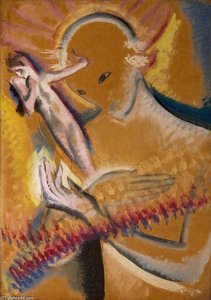
Ritratto di Charles Henry Sims

I 67 dipinti più famosi di Charles Henry Sims, una selezione della galleria

Aggiornato Novembre 2026 · classificato in base al nostro punteggio di popolarità (ricerche, visite e ordini per ogni opera) · 67 opere di Charles Henry Sims nel nostro catalogo

In breve

Tra tutti gli originali lasciati da Charles Henry Sims, il più famoso è The little faun (1905), nella collezione del Fitzwilliam Museum. Subito dopo troviamo Bacchanalia (1900) e Sacrifice (1918). Il nostro catalogo contiene 67 opere di Charles Henry Sims; la galleria ha conservato le 67 che il mondo ammira di più, ognuna presentata con la sua data, il suo museo e la sua storia.

1873 – 1928, Islington Impressionism Più opere: Fitzwilliam Museum

I 10 migliori dipinti di Charles Henry Sims: la scelta della galleria

1
The little faun (1905) di Charles Henry Sims

The little faun

1905 · Oil · Fitzwilliam Museum

Step into this garden scene, where the light feels almost tangible, as if the warmth of a summer afternoon has been captured and held within the oil paint. We find ourselves in an outdoor setting, a social gathering framed by lush, organic greenery and the soft, dappled shadows of a large tree. At the center of this composition, a table draped in a white cloth acts as an anchor for…

2
Bacchanalia (1900) di Charles Henry Sims

Bacchanalia

1900 · Oil On Canvas · Museo dell'Ermitage, San Pietroburgo

In Bacchanalia by Charles Henry Sims, a circular, tondo-like format captures a sudden surge of motion. The scene, likely inspired by classical Bacchic themes, centers on a group of figures caught in a rhythmic, energetic dance. A prominent woman draped in red reaches upward, her form pulling the eye toward the sky. Around her, other figures move through a shallow space, their bodies overlapping in a crowded, spirited arrangement. The…

3
Sacrifice (1918) di Charles Henry Sims

Sacrifice

1918 · Oil On Canvas · Museo della Guerra Canadese, Ottawa

The painting titled Sacrifice was created by Charles Henry Sims about 1918. This work emerged from a period of profound personal and global upheaval. The artist, born in Islington, United Kingdom, in 1873, sought to translate the heavy atmosphere of his era onto the canvas. His life, which concluded in 1928 in St. Boswells, Scotland, was marked by a transition from the polished surfaces of Edwardian portraiture to a more…

La selezione di Charles Henry Sims continua, da 11 a 67

I dipinti più famosi di Charles Henry Sims, periodo per periodo

I soggetti che hanno catturato lo sguardo di Charles Henry Sims

I quattro soggetti che ricorrono più spesso in questi originali, ognuno con il suo esempio più raffinato.

I musei che conservano gli originali di Charles Henry Sims

I 5 musei che ospitano la maggior parte dei dipinti presenti in questa pagina.

Musei Città Opere di Charles Henry Sims Dipinti di questo elenco
Fitzwilliam MuseumFitzwilliam Museum 2 The little faun, Study Of A Dead Rail
Museo dell'Ermitage, San PietroburgoMuseo dell'Ermitage San Pietroburgo 1 Bacchanalia
Museo della Guerra Canadese, OttawaMuseo della Guerra Canadese Ottawa 1 Sacrifice
Chartwell, WesterhamChartwell Westerham 1 Two Girls Seated - Diana, And Sarah Churchill
Galleria Nazionale di Ritratto Scozzese, EdimburgoGalleria Nazionale di Ritratto Scozzese Edimburgo 1 George V

Charles Henry Sims anno dopo anno: gli originali che definiscono ogni fase

Da 1900 a 1918, Charles Henry Sims ha lavorato per 19 anni: la selezione segue questo lungo percorso anno dopo anno, attraverso i suoi capolavori originali più significativi.

Opere per anno

Scegli un anno per vedere gli originali.

Domande dei collezionisti sulle opere di Charles Henry Sims

Per quale opera è più famoso Charles Henry Sims?Scopri la risposta

The little faun (1905), Fitzwilliam Museum. Seguono Bacchanalia (1900) e Sacrifice (1918).

Che età aveva Charles Henry Sims quando è stata realizzata The little faun?Scopri la risposta

32 anni: The little faun risale al 1905, e Charles Henry Sims è nato/a nel 1873.

Quali sono i dieci dipinti più famosi di Charles Henry Sims?Scopri la risposta

The little faun, Bacchanalia, Sacrifice, Two Girls Seated - Diana, And Sarah Churchill, My Pain Beneath Thy Sheltering Hand, A Spiritual Idea, Guardian Hands, The Fountain, Saints And Sinners e Aspiration. La classifica sopra riporta l'anno e il museo di ciascuna opera.

Quante opere ha lasciato Charles Henry Sims?Scopri la risposta

Il nostro catalogo comprende 67 opere di Charles Henry Sims, datate da 1900 a 1918.

In quali musei sono esposti i capolavori di Charles Henry Sims?Scopri la risposta

Principalmente in Fitzwilliam Museum, Museo dell'Ermitage (San Pietroburgo) e Museo della Guerra Canadese (Ottawa). La tabella dei musei sopra li elenca tutti.

Quali sono le prime e le ultime opere originali famose di Charles Henry Sims?Scopri la risposta

In questa pagina, il più antico risale al Bacchanalia (1900) e il più recente al Sacrifice (1918).

Quali soggetti ha scelto più spesso Charles Henry Sims?Scopri la risposta

Women (8), Children (6) e Men (3), tra le 67 opere in questa pagina.

Quale tecnica ha utilizzato maggiormente Charles Henry Sims?Scopri la risposta

Oil, per 2 delle 67 opere in questa pagina.

A quale movimento artistico appartiene Charles Henry Sims?Scopri la risposta

Impressionism e Expressionism, a giudicare dagli originali presenti in questa pagina.

Quali opere di Charles Henry Sims sono esposte al Fitzwilliam Museum?Scopri la risposta

The little faun e Study Of A Dead Rail: il Fitzwilliam Museum custodisce 2 delle opere presenti in questa pagina.

Charles Henry Sims: vita e opera

Charles Henry Sims (1873-1928): A Painter Beyond Convention

Charles Henry Sims, born in Islington, London, on January 28th, 1873, remains a captivating enigma within British art history—a painter whose journey traversed the polished surfaces of Edwardian society to confront the unsettling realities of personal tragedy and ultimately embraced an artistic vision that defied conventional boundaries. His life was interwoven with both professional acclaim and profound sorrow, factors that indelibly shaped his distinctive aesthetic sensibility. Initially destined for a mercantile path mirroring his family’s drapery business, Sims decisively rejected societal expectations, pursuing formal training at South Kensington College of Art before honing his craft in Paris at the Académie Julian—a pivotal decision that propelled him toward artistic excellence.

Early Influences and Artistic Formation

Sims' formative years were profoundly impacted by a physical ailment—a congenital lameness resulting from an infantile injury—which instilled within him a lifelong preoccupation with movement and physicality. This disability served as a catalyst for his artistic exploration, informing his stylistic choices and driving him to depict subjects imbued with dynamism and grace. His initial training encompassed the study of anatomy alongside artistic technique, equipping him with the foundational knowledge necessary to translate observation into compelling visual representations. Notably, he benefited from the mentorship of Alberto Mazzucato at the Conservatorio di Milano—a renowned pedagogue whose influence extended beyond mere instruction, fostering a deep appreciation for expressive artistry and shaping Sims’ artistic worldview.

The Edwardian Landscape: Light, Color, and Impressionistic Vision

Sims swiftly established himself as a prominent portraitist during the Edwardian era—capturing the elegance and refinement of London society with meticulous detail and subtle psychological insight. His canvases glowed with the luminous hues characteristic of Impressionism, reflecting his fascination with capturing fleeting moments of light and atmosphere. Works such as *The Vine* exemplify this stylistic hallmark, demonstrating Sims’ mastery of color palettes and brushwork—techniques that conveyed emotion and immediacy alongside visual accuracy. He skillfully blended observation with imagination, creating landscapes imbued with a dreamlike quality that transcended mere topographical representation.

A Surreal Turn: Exploring Inner Landscapes

Following the devastating loss of his son during World War I—a trauma that profoundly altered Sims’ emotional landscape—his artistic trajectory underwent a dramatic transformation. Rejecting representational conventions altogether, he embarked on an exploration of inner psychological states—drawing inspiration from Surrealism and embracing symbolic imagery to convey profound existential themes. This stylistic shift culminated in the creation of his final paintings—the “Spiritual Ideas”—a series that challenged conventional aesthetic standards and provoked considerable debate among critics and fellow artists. These canvases featured nude figures against abstract backgrounds, reflecting Sims’ preoccupation with spirituality and confronting viewers with unsettling visions of cosmic grandeur and human vulnerability.

Legacy and Recognition: An Outsider Artist

Sims' uncompromising artistic vision—characterized by a rejection of academic dogma and an embrace of personal expression—earned him recognition as a precursor to the Outsider Art movement. Institutions like the Tate Gallery and the British Museum now hold examples of his work, ensuring that his distinctive style continues to resonate with contemporary audiences. His contribution to St Stephen’s Hall’s “Building of Britain” series—though initially met with criticism—stands as testament to his audacious artistic courage. Charles Henry Sims' story serves as a poignant reminder of the transformative power of art and the enduring legacy of an artist who dared to transcend convention, leaving behind a body of work that continues to provoke contemplation and inspire admiration.