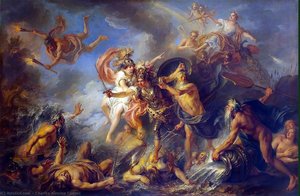
L'Eredità di Charles Antoine Coypel: Un Ponte tra le Epoche
Nel grande arazzo della storia dell'arte francese, poche figure incarnano la delicata transizione dalla pesante grandiosità del Barocco alla spensierata eleganza del Rococò con la stessa grazia di Charles Antoine Coypel. Nato a Parigi nel 1694 in una stirpe di distinzione artistica, Coypel era destinato alla grandezza. Figlio del celebre Antoine Coypel e nipote di Noël Coypel, la sua stessa esistenza era intrisa delle tradizioni dell'Académie Royale. Questo retaggio familiare gli offrì molto più di un semplice nome; gli garantì un apprendistato intimo con i maestri del suo tempo, permettendogli di ereditare una profonda comprensione della composizione classica e quel vigore drammatico richiesto dalla corte francese.
La formazione giovanile di Coypel sotto la guida di Nicolas Frémiet lo dotò di un versatile repertorio tecnico, che spaziava dalla precisione dell'acquaforte alla fluida maestria della pittura a olio. Questa versatilità divenne la pietra angolare della sua carriera, consentendogli di navigare le mutevoli correnti estetiche del primo Settecento. Sebbene le sue fondamenta fossero saldamente radicate nello stile monumentale e spesso teatrale del tardo Barocco, egli possedeva una sensibilità unica verso il nascente spirito Rococò. Iniziò così a infondere nelle sue opere una nuova leggerezza, utilizzando delicate palette pastello, composizioni asimmetriche e un fascino ornamentale che avrebbe presto definito l'estetica francese per i decenni a venire.
Un Maestro della Narrazione e delle Commissioni Reali
L'apice della vita professionale di Coypel fu segnato dalla prestigiosa nomina a Premier Peintre du Roi (Primo Pittore del Re). Servendo la corte di Luigi XIV e dei suoi successori, egli divenne il principale narratore visivo della monarchia francese. Il suo talento si estendeva ben oltre la tela; era un progettista visionario che comprendeva come l'arte potesse animare interi spazi architettonici. Uno dei suoi traguardi più mozzafiato si può ammirare nei suoi contributi alla Cappella di Versailles, dove le sue opere affrescate — come la rappresentazione di Dio Padre in Gloria — utilizzavano magistrali tecniche di trompe-l'oeil per creare prospettive celestiali che sembravano dissolvere il soffitto stesso nel firmamento.
Oltre le mura delle cappelle reali, l'influenza di Coypel permeò le arti decorative attraverso le sue estese collaborazioni con la Manifattura dei Gobelins. Egli possedeva una rara capacità di tradurre narrazioni epiche in monumentali disegni per arazzi. Il suo lavoro su serie ispirate all'Iliade e all'<Odissea> di Omero dimostrò un profonda padronanza del colore e del movimento, trasformando i fili tessuti in poemi epici di luce e ombra. Forse l'impresa più audace e rivoluzionaria fu la sua serie illustrata per il Don Chisciotte di Miguel de Cervantes. In questo progetto, Coypel si allontanò dalla rigida formalità per abbracciare un approccio alla narrazione più dinamico e incentrato sui personaggi, colmando efficacemente il divario tra l'illustrazione classica e l'arte narrativa moderna.
Significato Artistico e Influenza Duratura
Il significato storico di Charles Antoine Coypel risiede nel suo ruolo di mediatore artistico. Egli non fu un semplice testimone della transizione da un'era all'altra; la plasmò attivamente. Fondendo l'integrità strutturale e il peso drammatico del Barocco con la grazia capricciosa e aerea del Rococò, egli fornì una continuità stilistica che permise all'arte francese di evolversi senza perdere il proprio senso di maestosità. I suoi ritratti, come l'evocativo Democrito, continuano a affascinare gli spettatori per la loro capacità di bilanciare la dignità regale con una profonda intensità psicologica.
Sebbene la sua vita sia stata interrotta prematuramente nel 1752, l'impatto della sua opera rimane impresso nella storia della pittura europea. La sua eredità si ritrova:
- Nell'evoluzione del ritratto francese: muovendosi da una rigida formalità verso una rappresentazione del soggetto più espressiva ed emotiva.
- Nel design tessile e decorativo: elevando le opere tessili su larga scala allo status di alta arte narrativa attraverso le sue commissioni ai Gobelins.
- Nell'integrazione degli stili: sintetizzando con successo la scala monumentale del XVII secolo con le sensibilità decorative e intime del XVIII secolo.
Oggi, le opere di Coypel fungono da finestra su un periodo trasformativo della creatività umana, ricordandoci un'epoca in cui l'arte veniva utilizzata per colmare il divario tra lo splendore terreno dei re e le aspirazioni divine dell'anima.
Domande e risposte
In quale città e in quale paese è nato/a Charles Antoine Coypel?
Charles Antoine Coypel è nato a Parigi, in Francia.
Posso sfogliare le opere di Charles Antoine Coypel per tecnica?
Le opere di Charles Antoine Coypel possono essere consultate per tecnica nella pagina Per tecnica dell'artista.
Di dove è Charles Antoine Coypel?
Charles Antoine Coypel è nato/a in Francia.