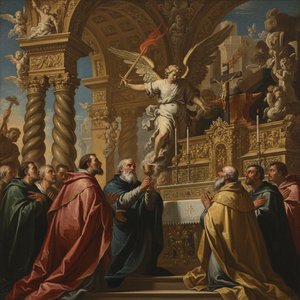
Francisco José de Artiga y Orús: A Renaissance Polymath Embodied in Paint and Stone
Francisco José de Artiga y Orús (1645 – 1711) represents a singular convergence of artistic talent and intellectual curiosity—a figure whose influence resonated throughout the Spanish Baroque era, shaping not only visual art but also architectural design, scientific inquiry, and literary discourse. Born in Huesca, Aragon, he transcended the conventional boundaries of his time, becoming a true humanist scholar who left an indelible mark on the cultural heritage of Spain.
Early Life & Education: The Foundations of Vision
Artiga’s formative years were nurtured by the Universidad de Huesca, where he distinguished himself as a professor of mathematics—a discipline that would profoundly inform his artistic sensibilities. This academic grounding instilled within him an unwavering commitment to precision and proportion—principles that manifested themselves most notably in his paintings. The meticulous application of perspective, mirroring mathematical calculations, elevated Artiga’s canvases beyond mere representation; they achieved a palpable sense of spatial realism, reflecting the burgeoning Renaissance spirit within the Baroque framework. His understanding of classical ideals was not merely theoretical but actively integrated into his artistic practice—a testament to his intellectual breadth and transformative vision.
Painting: Landscapes of Spirit and Biblical Narrative
Artiga’s prolific artistic output encompassed a remarkable diversity of subjects, yet he is particularly celebrated for his landscapes—works imbued with an arresting atmospheric depth that captured the majesty of the Spanish countryside. These paintings weren't simply depictions of scenery; they were expressions of profound contemplation, conveying a sense of sublime beauty and spiritual resonance. Simultaneously, Artiga excelled in portraying biblical scenes – Sibyls, Annunciations, and Conception – demonstrating his sensitivity to detail and masterful command of artistic technique. His canvases skillfully blended classical influences with Baroque dynamism—a stylistic hallmark that distinguishes him from many of his contemporaries. The Museo Central del Banco de España houses one of his engravings, offering visitors a tangible connection to this extraordinary polymath’s artistic vision.
Architectural Innovation: Transforming Huesca's Facade
Perhaps Artiga’s most enduring legacy resides in his transformative contribution to the Universidad de Huesca—a monumental undertaking that fundamentally reshaped the city’s architectural landscape. Recognizing the limitations of Gothic styles prevalent at the time, he spearheaded a daring redesign of the university’s façade, embracing the principles of Renaissance architecture and elevating it to a level of grandeur previously unattainable. This ambitious project stands as a beacon of innovation—a bold assertion of humanist ideals and a testament to Artiga's unwavering belief in the power of art to inspire progress and elevate human understanding.
Engraving & Literary Pursuits: Beyond Canvas and Stone
Beyond his artistic endeavors, Artiga possessed considerable skill as an engraver, producing striking prints that disseminated architectural designs and celebrated artistic subjects—further solidifying his reputation as a multifaceted intellectual figure. Moreover, he authored several books exploring diverse disciplines—a treatise on perspective offering groundbreaking insights into visual representation; a poetic work demonstrating his mastery of rhetoric; and an analysis of monetary policy reflecting his intellectual curiosity. These writings underscore Artiga’s commitment to fostering knowledge and promoting humanist values—demonstrating that his genius extended far beyond the realm of artistic creation.
Historical Significance & Legacy
Francisco José de Artiga y Orús's influence extends beyond individual artworks; it resides in the transformative impact he had on architectural design, educational reform, and the dissemination of scientific knowledge – securing his place as a pivotal figure in Spanish Renaissance art and intellectual history. His unwavering dedication to reason and artistic excellence continues to inspire admiration for its fusion of artistic skill and humanist intellect—a legacy that transcends time and resonates powerfully within the annals of Spanish cultural heritage.