The Architecture of Dreams: Defining the Surrealist Landscape
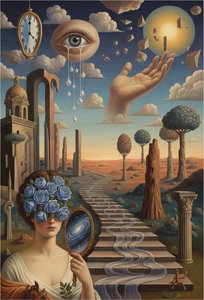
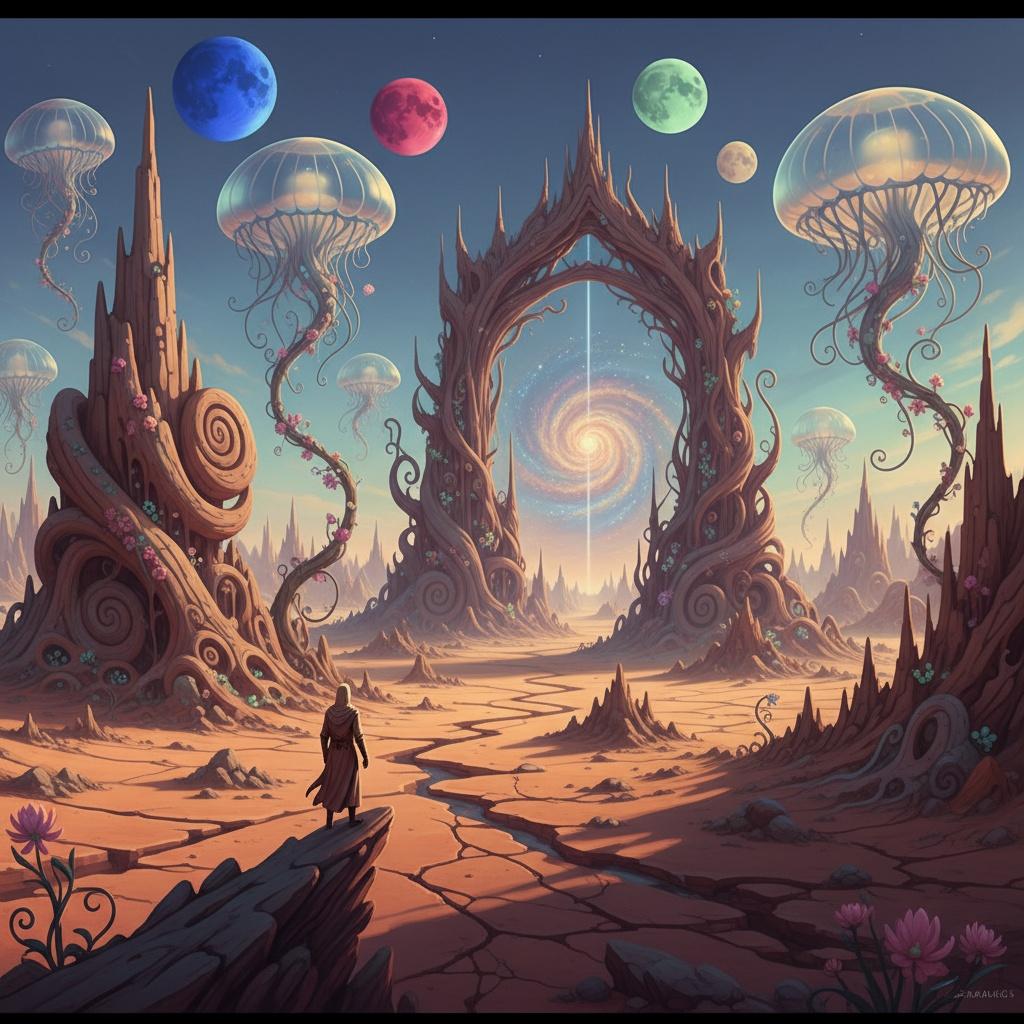
To step into a Surrealist landscape is to abandon the safety of the horizon line and enter a realm where the laws of physics are merely suggestions. Unlike the traditional landscapes of the Impressionists, which sought to capture the fleeting dance of light upon a recognizable meadow, Surrealism constructs an architecture of the impossible. It is a deliberate departure from the tangible world, replacing the familiar topography of hills and valleys with vistas that defy logic. Here, the ground may dissolve into liquid, or mountains may float suspended in a sky of bruised violet.
This genre does not merely depict a place; it depicts a state of mind. The landscape serves as a stage for the subconscious, where the boundaries between the internal psyche and the external environment are irrevocently blurred. When we gaze upon these works, we are not looking at a scene, but rather peering into a dream. The structural elements—the way a shadow falls unnaturally long across a desert or how an object appears both solid and translucent—work together to create a sense of profound disorientation. It is a landscape built from the fragments of our deepest desires and most unsettling fears, rendered with a clarity that makes the impossible feel hauntingly real.
Unlocking the Subconscious: Key Techniques and Visual Metaphors
The magic of the Surrealist landscape lies in its mastery of visual paradox. To achieve this, artists employed a variety of sophisticated techniques designed to bypass the rational mind. One of the most potent methods is the use of juxtaposition—the placement of two completely unrelated objects in a shared space to create a new, often jarring, meaning. A telephone resting upon a lobster or a train emerging from a fireplace disrupts our cognitive expectations, forcing us to seek a deeper, symbolic truth beneath the surface level of the imagery.
Furthermore, the use of scale and perspective plays a crucial role in this visual alchemy. By manipulating proportions, an artist can make a tiny insect appear as a towering monolith, or render a vast desert with the claustrophobic intimacy of a small room. This distortion of space evokes the disorienting sensation of dreaming, where distances are unreliable and objects shift in size as we move through them. Through these metaphors—the melting clock representing the fluidity of time, or the hollowed-out figure representing the fragility of identity—the landscape becomes a coded language, inviting the viewer to decode the mysteries of their own hidden thoughts.
Masters of the Uncanny: A Journey Through Dalí and Beyond
No exploration of Surrealist landscapes would be complete without paying homage to the incomparable Salvador Dalí. Often regarded as the movement's most iconic figure, Dalí possessed an uncanny ability to render the most bizarre hallucinations with a meticulous, almost academic precision. His "paranoiac-critical method" allowed him to tap into a state of induced delirium, capturing images that felt both hyper-realistic and utterly alien. In his works, we encounter the famous melting clocks that drape over barren branches like soft wax, and vast, desolate plains that seem to stretch into eternity, inhabited by creatures that are part organic and part mechanical.
Yet, while Dalí remains the titan of the movement, the landscape of Surrealism is populated by many other visionaries. We see different textures of the uncanny in the works of others—some focusing on the eerie stillness of empty, architectural spaces, while others lean into the organic, biological mutations of the earth itself. These artists collectively contributed to a lexicon of imagery that transcends individual style, creating a shared universe where the familiar is stripped of its meaning and rebuilt into something much more profound and unsettling.
The Psychology of Space: How Surrealism Challenges Our Perception
At its core, the Surrealist landscape acts as a psychological mirror. By presenting us with environments that lack a stable foundation, these artworks challenge our fundamental trust in our senses. When we see a landscape where gravity is absent or where solid stone behaves like flowing water, we are forced to confront the instability of our own perceptions. This tension between what we know to be true and what we see on the canvas creates a unique form of aesthetic tension that keeps the viewer perpetually engaged.
This challenge to perception is not merely an intellectual exercise; it is an emotional one. The vast, empty expanses found in many Surrealist works can evoke feelings of profound loneliness or existential dread, while the more vibrant, metamorphic landscapes might stir a sense of wonder and rebirth. By stripping away the comfort of a predictable environment, Surrealism invites us to explore the depths of our own vulnerability. It reminds us that beneath the surface of our ordered, rational lives, there exists a wild, untamed landscape of emotion and instinct that is just as real as the world we inhabit during the daylight hours.
Bringing the Dream Home: Curating Surrealist Art in Modern Interiors
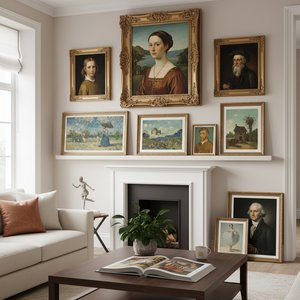
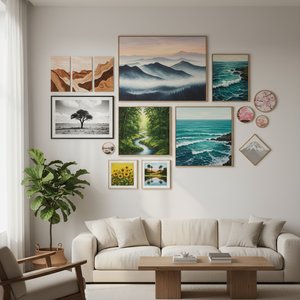
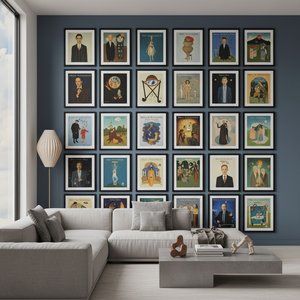
Integrating Surrealist art into a contemporary living space requires a thoughtful approach to curation. Because these pieces are so visually potent and conceptually dense, they often serve as the "soul" of a room—the singular focal point that dictates the energy of the entire environment. In a minimalist setting, a large-scale Surrealist reproduction can provide much-needed depth and narrative, breaking the monotony of clean lines with its complex textures and unexpected forms.
When selecting pieces for your collection, consider the interplay between the artwork's color palette and your existing decor. A landscape dominated by deep, nocturnal blues might pair beautifully with velvet furnishings and dark wood, creating a moody, contemplative atmosphere. Conversely, a more brightly lit, dreamlike vista can breathe life into a sun-drenched room, acting as a window into another dimension. The key is to allow the artwork enough "breathing room" to command attention, ensuring that its intricate details and evocative symbolism are not lost amidst other visual distractions.
At OriginalUniqueArt.com, we specialize in preserving this sense of wonder for the modern collector. Whether you are drawn to the meticulous oil textures of a Dalí-inspired masterpiece or seeking a custom transformation of your own imagery into a Surrealist dreamscape, our mission is to bring the museum experience into your home. From high-fidelity Giclée prints to hand-painted oil reproductions that capture every tactile brushstroke, we provide the tools and expertise to help you curate a collection that transcends reality.