Introduction
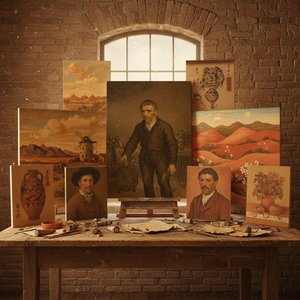
To step into a gallery dominated by rosy brown tones is to enter a space of profound warmth and quiet introspection. There is a particular alchemy in this palette—a delicate marriage between the grounded, earthy stability of umber and sienna and the fleeting, ethereal blush of a sunset or a bruised petal. It is a color language that speaks of autumn afternoons, of aged parchment, and of the soft, human glow found in the candlelight of a Renaissance studio. When an artist masters this spectrum, they do more than apply pigment; they evoke a sense of nostalgia and permanence that resonates deep within the viewer.
Historically, these warm, muted tones have served as the emotional backbone of many of the world's most significant movements. From the chiaroscuro mastery of the Baroque era, where deep browns provided the necessary shadows to pull figures into the light, to the soft, atmospheric hazes of the Romantic period, this palette has been used to ground the sublime in the tangible. These works were often born from a desire to capture the weight of history and the dignity of the human condition, using earth-derived pigments that mirrored the very soil from which the subjects emerged.
< P>Today, these masterpieces remain deeply meaningful because they offer a sanctuary of stillness in an increasingly frenetic digital age. The subtle transitions between a rich mahogany and a dusty rose invite us to slow our gaze, encouraging a meditative state that modern, high-contrast imagery rarely permits. They remind us of the beauty found in decay, in maturity, and in the quiet strength of the earth.In the following curation, we shall journey through ten canonical masterpieces that define this aesthetic. Each selection has been chosen not merely for its fame, but for the way it utilizes the rosy brown spectrum to tell a story of light, shadow, and soul. Prepare to encounter works where the canvas seems to breathe with a warm, rhythmic pulse, guiding you through a landscape of pigment and memory.
The kiss - Gustav Klimt
 The kiss - Gustav Klimt
While many view Gustav Klimt’s The Kiss as a purely romantic gesture, the masterpiece was born from a profound spiritual obsession; Klimt was deeply moved by the shimmering, mosaic-like splendor of Byzantine icons, which inspired his legendary "Golden Phase." This work stands as a pinnacle of the Art Nouveau movement, where the heavy use of gold leaf meets a palette of deep, earthy undertones. Within this composition, the rosy brown tones and warm ochres found in the floral meadow provide a grounded, organic contrast to the celestial brilliance of the lovers' gilded cloak.
The technical genius lies in the tension between the rigid, geometric patterns representing masculinity and the fluid, swirling motifs symbolizing femininity, all unified by a sense of eternal embrace. The way the light interacts with these warm, sepia-adjacent hues creates a luminous, dreamlike atmosphere that transcends time. Bringing a hand-painted reproduction of this masterpiece into your study or home office does more than decorate a wall; it introduces an aura of focused elegance and historical depth, fostering a sophisticated environment ripe for contemplation and creative productivity.
Olympia - Édouard Manet
 Olympia - Édouard Manet
In Édouard Manet’s 1863 masterpiece, Olympia , the viewer is not merely an observer but a participant, met by a gaze so unapologetic and piercing it feels as though the subject is reading your very thoughts. This painting stands as a cornerstone of our collection of famous paintings dominated by rosy brown tones , utilizing a sophisticated palette where warm, fleshy pinks meet deep, earthy umbers and rich chocolate shadows. The interplay of these muted, organic hues creates a sense of grounded realism that was scandalous in its era.
Beyond the controversy, there is a profound psychological depth found in the way the light catches the rumpled, neutral-toned linens, contrasting against the dark, silhouetted forms of the composition. This balance of light and shadow offers a meditative quality; hanging a high-quality oil reproduction of this work can transform a private study or sanctuary into a space for deep reflection and intellectual engagement. The subtle rosy brown warmth provides a sophisticated anchor for modern interiors, inviting a sense of historical weight and quiet, commanding elegance into your home.
American Gothic - Grant Wood
 American Gothic - Grant Wood
In the silent, stoic gaze of American Gothic by Grant Wood, time seems to hold its breath amidst the rolling hills of the American Midwest. This 1930 masterpiece earns its place among the top paintings dominated by rosy brown tones through its profound use of a muted, earthy palette that evokes a sense of grounded permanence and somber dignity. The composition is anchored by deep umbers and warm, weathered browns found in the farmer’s overalls and the rustic textures of the landscape, subtly balanced by the soft, fleshy tones of the figures' faces.
Wood’s meticulous technique, inspired by the Flemish masters, creates a sensory experience where the sharp geometry of the pitchfork and the Carpenter Gothic window meet the organic warmth of the soil-toned background. This harmony of structured lines and autumnal hues brings a sophisticated, historical gravity to modern interiors, offering a window into an era of resilience. For those seeking to anchor a room with cultural depth, a hand-painted oil reproduction of this icon provides a tactile connection to the very soul of American Regionalism.
The Blue Boy (Jonathan Buttall) - Thomas Gainsborough
 The Blue Boy (Jonathan Buttall) - Thomas Gainsborough
To encounter The Blue Boy by Thomas Gainsborough is to witness a masterclass in the delicate balance of color and character. While its namesake azure silk commands immediate attention, the painting’s true brilliance lies in its sophisticated interplay with the earthy, rosy brown undertones of the English landscape. This tonal harmony creates a profound sense of depth, where the warm, weathered textures of the background ground the luminous figure in a moment of timelessness.
Gainsborough’s fluid, alla prima brushwork breathes life into the sitter—believed to be Jonathan Buttall—transforming a formal aristocratic portrait into an evocative study of youth and melancholy. The subtle transitions between the rich, shadowed earth tones and the vibrant blue fabric offer a sensory experience that resonates deeply within modern luxury interiors, where such classical elegance provides a sophisticated focal point. For the discerning collector, owning a hand-painted oil reproduction of this masterpiece brings not just a piece of 18th-century history into a home, but a legacy of refined taste and the enduring beauty of the Rococo spirit.
Mandola - Georges Braque
 Mandola - Georges Braque
Georges Braque’s Mandola (1910) serves as a profound cornerstone of Analytical Cubism, representing the moment when art ceased to merely mirror reality and began to dissect it. As a vital entry in our exploration of paintings dominated by rosy brown tones, this work exemplifies how a muted, earthy palette can achieve immense intellectual depth. Braque utilizes interlocking planes of ochre, sienna, and warm umber to deconstruct the musical instrument into a rhythmic dance of geometric facets.
This masterpiece transcends simple representation; it is a philosophical inquiry into the nature of perception, inviting viewers to reconstruct the subject through multiple viewpoints simultaneously. The subtle interplay of light and shadow within these warm, autumnal hues creates a sense of structural permanence and quiet introspection. For the discerning collector, bringing a hand-painted reproduction of Mandola into a modern space offers more than mere decoration; it introduces a timeless conversation between historical innovation and contemporary architectural elegance, grounding a room with the sophisticated, somber beauty of the Cubist revolution.
Gilles - Jean-Antoine Watteau
 Gilles - Jean-Antoine Watteau
In Jean-Antoine Watteau’s 1719 masterpiece, Gilles , the lines of the Rococo era are not merely drawn; they are choreographed . This is not a static portrait but a dance frozen in time, where the melancholic Pierrot stands as a silent anchor amidst a swirling, atmospheric landscape. The painting earns its place among the top paintings dominated by rosy brown tones through its masterful use of earth-toned shadows and warm, sun-drenched highlights that bleed into the hazy, theatrical backdrop.
Watteau utilizes a palette of deep umbers, soft sienna, and muted rose to evoke a sense of wistful nostalgia. The way the light catches the heavy folds of the costume creates a rhythmic interplay of shadow and warmth, making the canvas feel as though it is breathing with a quiet, rhythmic pulse. What if your living room could hold that same balance? What if your walls could breathe rhythm ? For those seeking to bring this historical elegance home, our museum-quality, hand-painted oil reproductions capture every delicate brushstroke and tonal nuance of Watteau’s original vision.
Anthropometry of the blue period - Yves Klein
 Anthropometry of the blue period - Yves Klein
In Anthropometry of the blue period by Yves Klein, the eye is immediately drawn to the visceral, textured surface where the off-white gesso meets the heavy, rhythmic imprints of human form. While this piece is celebrated for its profound use of ultramarine, it earns its place in our study of tonal depth through the subtle, earthy undertones found within the textured, pale background—a muted, almost rosy brown warmth that anchors the spectral blue silhouettes. This work represents a radical departure from traditional brushwork; Klein utilized a revolutionary technique where models, coated in pigment, pressed their bodies directly onto the canvas to create these primal, archetypal shapes.
At OriginalUniqueArt.com, we believe such monumental innovation deserves more than a flat print. Our master artists meticulously recreate this tactile, three-dimensional quality , using hand-applied oil paints on cotton canvas to capture the raw, impasto energy and the delicate, weathered texture of the original. For the collector seeking to bring the profound spiritual weight of Nouveau Réalisme into a modern interior, our reproductions offer a window into Klein's legendary blue world.
Great Scene of Agony - Max Beckmann
 Great Scene of Agony - Max Beckmann
Acquiring a piece as profound as Great Scene of Agony by Max Beckmann is more than an aesthetic choice; it is a deliberate investment in the legacy of German Expressionism and a testament to a collector's discerning taste. As a pivotal work from 1906, this masterpiece anchors its position among the top 10 most significant paintings defined by somber, earthy palettes. Beckmann utilizes a heavy, textured impasto to weave together deep ochres, shadowy umbers, and those characteristic rosy brown tones that evoke a sense of visceral human vulnerability.
The composition, featuring figures caught in a moment of profound psychological tension, uses light and shadow to create an atmosphere of haunting intimacy. The way the warm, muddy pigments interact with the spectral, dark backgrounds creates a depth that is both unsettling and mesmerizing. For the modern connoisseur, bringing this level of historical gravity into a contemporary space is transformative. A high-quality, hand-painted oil reproduction of this work carries the same aesthetic authority and emotional weight, serving as a sophisticated focal point that commands respect within any luxury interior.
Impression, Sunrise - Claude Monet
 Impression, Sunrise - Claude Monet
In Claude Monet’s 1873 masterpiece, Impression, Sunrise , one does not merely observe a harbor; one feels the profound, quiet pulse of a world awakening. The painting captures a fleeting moment of transition, where the heavy, misty atmosphere of the Le Havre port meets the first piercing light of day. While the composition is anchored by cool blues and hazy greys, it is the sudden, rhythmic intervention of warm, earthy tones—the rosy brown shadows of distant silhouettes and the burnt orange glow reflecting off the water—that provides its emotional heartbeat.
This interplay of light and shadow serves as a universal mirror for the human experience, reflecting those quiet moments of dawn in our own lives when clarity emerges from uncertainty. The way the sun’s warmth bleeds into the darker, more somber tones creates a sense of hope amidst the fog. Bringing a high-quality oil reproduction of this iconic work into your home can transform a personal sanctuary into a space for profound reflection, allowing the soft, impressionistic textures to invite a permanent state of calm and contemplative grace.
Rocky Mountains - Albert Bierstadt
 Rocky Mountains - Albert Bierstadt
In Rocky Mountains by Albert Bierstadt, one does not merely view a landscape; one experiences a profound sense of spiritual awe. The painting captures an overwhelming emotion of tranquility intertwined with the sublime, where the rugged majesty of the American West meets a soft, celestial light. As a cornerstone of our collection of famous paintings dominated by rosy brown tones , this work utilizes a warm, earthy palette—rich umbers, deep siennas, and glowing ochres—to ground the ethereal sunset hues of pink and gold.
The psychological depth of Bierstadt’s vision lies in its ability to act as a universal mirror for the human soul, reflecting our own longing for peace and permanence amidst a changing world. The way the warm, rosy light kisses the jagged peaks creates a sanctuary of warmth that can transform any personal study or living space into an area for profound reflection. To bring this masterpiece into your home, we offer exquisite hand-painted oil reproductions on 100% cotton canvas, meticulously crafted to preserve every luminous brushstroke and the textured, atmospheric depth of the original Hudson River School style.
Conclusion
As the light fades on our exploration of these sepia-toned wonders, we are reminded that a painting is never truly finished once the artist lays down their brush; it continues to live through every gaze that meets its surface. The warm, rosy browns that define these masterpieces do more than merely occupy space—they provide an emotional anchor, a sense of groundedness and quiet intimacy that transcends the centuries. These tones evoke the hearth, the earth, and the soft shadows of memory, creating a sanctuary of warmth within the modern home.
To bring one of these canonical works into your own environment is to invite an eternal dialogue between history and your everyday life. Whether it is the profound depth of a Renaissance portrait or the atmospheric haze of an Impressionist landscape, these paintings act as living presences, shaping the very soul of a room and offering a window into the shared human experience of beauty and melancholy. They remind us that even in a rapidly changing world, there is a timeless comfort to be found in the familiar embrace of light and shadow.
We invite you to continue this journey through the warmth of art history by exploring our full collection . Let these storied pigments inspire your space, turning a simple wall into a profound connection with the masters who first captured the heartbeat of the world in shades of amber, umber, and rose.