Introduction
To step into the world of the Baroque is to surrender to the drama of light and the profound weight of human emotion. It is an era that refused to be quiet, a period where the stillness of the Renaissance gave way to a breathtaking theatricality that sought to overwhelm the senses and stir the very soul. Imagine walking through a darkened cathedral, where a single, piercing beam of sunlight cuts through the gloom to illuminate a weeping face or a muscular, twisting form; this is the essence of the Baroque—a deliberate mastery of chiaroscroll and movement designed to bridge the gap between the earthly and the divine.
Emerging in the late 16th century, the Baroque movement was born from a landscape of intense religious fervor and political transformation. As the Counter-Reformation sought to reassert the power of the Catholic Church, art became a vital instrument of persuasion, using grandeur and visceral realism to inspire awe in the faithful. From the sun-drenched palaces of European monarchs to the intimate, shadow-filled canvases of the Dutch Masters, this movement captured a world in flux, celebrating both the monumental triumphs of empire and the quiet, psychological depths of the individual.
These masterpieces remain profoundly meaningful today because they speak a universal language of tension and release. They do not merely depict scenes; they capture moments of peak intensity—the split second before a blow falls, the breathless pause in a religious ecstasy, or the fleeting glint of light on a silk sleeve. In an age of digital perfection, the palpable texture of Baroque oil paintings, with their visible brushstrokes and deep, resonant tones, offers a tactile connection to our shared human experience.
In the following curation, we invite you to journey through ten definitive works that embody this spirit of grandeur. Each painting selected represents a pinnacle of technical achievement and emotional storytelling, serving as a window into an age where art was not merely observed, but felt. As we explore these canonical treasures, you may find yourself moved to bring this timeless drama into your own space through our hand-painted oil reproductions , preserving the legacy of the masters within the walls of a modern home.
Night Watch - Rembrandt van Rijn
 Night Watch - Rembrandt van Rijn
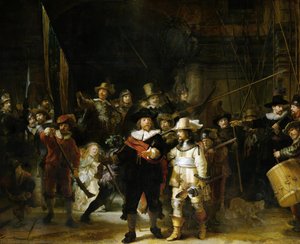
In Rembrandt van Rijn’s The Night Watch , one does not merely observe a scene; one is thrust into the very heart of 17th-century Amsterdam. The painting vibrates with an almost audible commotion, as if the clatter of muskets and the rustle of heavy silk are echoing through the gallery. Rembrandt masterfully employs chiaroscuro , using dramatic spotlights to pierce through deep, velvety shadows, illuminating Captain Cocq and his lieutenant amidst a sea of organized chaos. This interplay of light and dark creates a psychological depth that transcends the mere depiction of a civic militia; it captures the tension between public duty and individual humanity.
The rich, earthy palette of ochre, deep blacks, and sudden bursts of crimson invites a sensory immersion into the Dutch Golden Age. To display such a monumental work is to invite a sense of theatrical grandeur and profound reflection into your home. Whether through a large-scale oil reproduction or a meticulously crafted print, bringing this masterpiece into your personal sanctuary transforms a wall into a window onto history, offering a space for quiet contemplation of the light that persists even in the deepest shadows.
The Calling of Saint Matthew - Caravaggio
 The Calling of Saint Matthew - Caravaggio
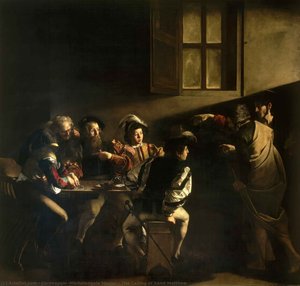
Imagine standing in the dim, hallowed silence of Rome’s San Luigi dei Francesi, where a single, piercing beam of light cuts through the gloom to reveal a moment of profound spiritual crisis. This is the breathtaking essence of The Calling of Saint Matthew by Caravaggio . As one of the most defining works of the Baroque era, this masterpiece revolutionized art through the mastery of tenebrism —a technique where violent contrasts between deep, swallowing shadows and brilliant highlights create an almost cinematic tension.
Caravaggio rejects the idealized heavens, instead placing the divine within a gritty, contemporary tavern. You can almost feel the weight of the heavy fabrics and the tactile reality of the tax collectors' worn clothing. The palette is somber, dominated by earthy ochres, deep blacks, and muted reds, yet it is electrified by Christ’s outstretched hand, which echoes Michelangelo’s divine spark. This painting does more than depict history; it captures the visceral shock of transformation. To possess a high-quality oil reproduction of such a work is to bring this eternal drama of light overcoming darkness into your own home, allowing the Baroque spirit to transform a modern space into a sanctuary of contemplation.
Narcissus - Caravaggio
 Narcissus - Caravaggio
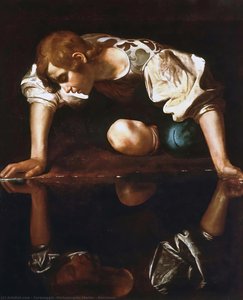
In Caravaggio’s Narcissus (1599), light is not merely an illumination; it is a psychological language. The artist does not simply paint light—he composes it with the precision of a master musician, using his signature tenebrism to carve form out of an abyssal darkness. As you stand before this Baroque masterpiece, notice how the stark chiaroscuro focuses relentlessly on the youth’s face, capturing the exact moment where beauty meets the tragedy of self-obsession.
Caravaggio rejects the polished idealism of the Renaissance, opting instead for a raw, visceral realism that defines the very soul of the Baroque movement. The deep ochres and warm creams of the skin contrast against the cool, dark ripples of the water, creating a sensory experience of profound melancholy. This painting does not just reflect light; it invents an atmosphere of inescapable destiny. To bring this dramatic intensity into your own collection, consider a hand-made oil reproduction . Our artists meticulously recreate every visible brushstroke and tonal depth, allowing this portal of historical inspiration to spill its transformative light into your home.
The Musicians - Caravaggio
 The Musicians - Caravaggio
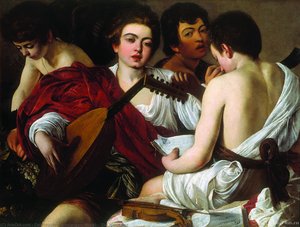
In The Musicians by Caravaggio, a deep, velvety shadow dominates the canvas, establishing a mood of intimate, nocturnal mystery. This profound use of darkness is not merely an absence of light, but a foundational element of the Baroque movement's revolutionary tenebrism . By isolating the vibrant, sun-kissed tones of the boys' skin and the warm, polished wood of the lute against an encroaching gloom, Caravaggio achieves a sculptural realism that defines this masterpiece.
The palette—rich with earthy ochres, deep crimson, and sudden bursts of luminous light—captures a sense of youthful harmony and sensory indulgence. For the modern collector, integrating a high-quality reproduction of this work into a dining room or study can transform the atmosphere; its dramatic chiaroscuro provides an anchor for sophisticated, low-light interior design, evoking a sense of timeless elegance. Whether you are drawn to the tactile textures of his brushwork or the symbolic depth of the composition, owning a hand-painted oil version allows the emotional intensity of the Baroque era to breathe within your own curated space.
The Anatomy Lecture of Dr. Nicolaes Tulp [1632] - Rembrandt van Rijn
![The Anatomy Lecture of Dr. Nicolaes Tulp [1632]](/media/artworks/images/thumbnails/12/01/1201b3f0503f4444b89f31dad3941765.jpg) The Anatomy Lecture of Dr. Nicolaes Tulp [1632] - Rembrandt van Rijn
The Anatomy Lecture of Dr. Nicolaes Tulp [1632] - Rembrandt van RijnIn 1632, a young Rembrandt van Rijn did not merely paint a scene; he orchestrated a drama of enlightenment. In The Anatomy Lecture of Dr. Nicolaes Tulp , light is not just illumination—it is a language used to bridge the gap between mortality and discovery. Through his masterful use of chiaroscuro , Rembrandt directs our gaze from the somber, shadowed faces of the Amsterdam Guild of Surgeons directly to the stark, pale reality of the dissected forearm.
The atmosphere is thick with the tension of scientific inquiry, where deep blacks and earthy umbers collide with sudden, brilliant highlights. You can almost feel the heavy silence of the room, broken only by the focused intensity of the observers. This painting defines the Baroque era by transforming a clinical procedure into a profound meditation on human existence. It does not just reflect light; it invents a sense of revelation that remains breathtaking centuries later. For those seeking to bring this same intellectual gravity into their own spaces, our hand-painted oil reproductions capture every meticulous brushstroke and dramatic shadow, allowing this portal of the Dutch Golden Age to live within your home.
The Surrender of Breda (Las Lanzas) - Diego Velázquez
 The Surrender of Breda (Las Lanzas) - Diego Velázquez
In the quiet breath between conflict and peace, The Surrender of Breda by Diego Velázquez exists as a profound meditation on dignity, where light and shadow negotiate the terms of victory. As one of the top 10 masterpieces that defined the Baroque art movement , this work transcends mere historical documentation of the Eighty Years’ War to capture something eternal: the grace found in mutual respect. Velázquez employs a masterful palette of earthy ochres, muted grays, and brilliant highlights that breathe life into the textures of steel armor and heavy fabrics.
The composition is a triumph of Baroque realism; the vertical rhythm of the lances creates a structural elegance that guides the eye toward the symbolic exchange of keys. This interplay of light and movement offers a sophisticated atmosphere that brings a sense of historical weight and intellectual calm to any modern collection. Whether through a large-scale oil reproduction or a curated print, bringing this moment of captured honor into your home allows the nuanced shadows and soulful realism of the Spanish Golden Age to inspire a timeless, cultured aesthetic.
The Burial of the Count of Orgaz - El Greco
 The Burial of the Count of Orgaz - El Greco
In 1586, Doménikos Theotokópoulos, known as El Greco, captured a moment where the veil between heaven and earth dissolves. The Burial of the Count of Orgaz is not merely a painting; it is a profound spiritual spectacle that bridges the transition from Mannerism to the dramatic intensity of the Baroque. The composition is a masterclass in dual realms: below, a somber, earthly gathering of Toledo’s nobility draped in heavy, dark tones; above, a celestial swirl of light-drenched saints and ethereal angels descending to perform a miracle.
El Greco utilizes elongated figures and a striking chiaroscuro to guide the eye upward, creating a sense of divine ascension. The flickering light and expressive, almost restless brushwork imbue the scene with an emotional fervor that feels alive. Owning a reproduction of this masterpiece is more than a decorative choice; it is an inheritance of a grand artistic lineage. At OriginalUniqueArt.com, we allow you to bring this legacy into your own home through meticulous, hand-painted oil recreations that preserve every dramatic shadow and celestial glow of El Greco’s vision.
The Grand Canal and the Church of the Salute - Canaletto
 The Grand Canal and the Church of the Salute - Canaletto
While many view his vistas as mere postcards of the past, Canaletto achieved a level of optical truth that bordered on the scientific. Using the camera obscura , he did not simply paint Venice; he projected its very soul onto his canvas, capturing the precise interplay of light and shadow that defines the late Baroque era. In 1730, The Grand Canal and the Church of the Salute emerged as a triumph of this technique, where the monumental dome of Santa Maria della Salute anchors a composition teeming with life. The water becomes a mirror for the sky, reflecting the rhythmic movement of gondolas and the bustling commerce of a maritime empire.
His mastery lies in the delicate balance between architectural precision and atmospheric romance—a technical leap that transformed the veduta genre into a global phenomenon. To hang such a masterpiece in a modern study is to invite a sense of structured grandeur and clarity. The painting’s disciplined perspective and luminous palette foster an environment of profound focus and sophisticated tranquility, perfect for inspiring deep thought and professional excellence.
Vertumnus (Vertumno) - Giuseppe Arcimboldo
 Vertumnus (Vertumno) - Giuseppe Arcimboldo
In the transition from Mannerism to the early Baroque, Giuseppe Arcimboldo’s Vertumnus stands as a profound psychological and visual marvel. This is not merely a portrait; it is an intricate allegory of abundance, where the boundaries between humanity and the natural world dissolve. As you gaze upon this figure, you do not see skin and bone, but a meticulously assembled mosaic of the earth's bounty—ripe fruits, seasonal vegetables, and delicate flora woven into a singular, imposing presence.
The painting utilizes a dramatic, dark background to push the vibrant textures of the harvest toward the viewer, creating a sense of three-dimensional depth that anticipates the theatricality of the Baroque era. Each element, from the smooth curve of a peach to the rough skin of a gourd, is rendered with academic precision, celebrating both the grotesque and the beautiful. Owning a reproduction of Vertumnus is an inheritance of this surrealist lineage; it brings a conversation piece of immense historical weight into your home. At OriginalUniqueArt.com, we capture every meticulous brushstroke on 100% cotton canvas, ensuring that the tactile soul of Arcimboldo’s mastery remains a living legacy upon your walls.
Self-Portrait with Two Circles - Rembrandt van Rijn
 Self-Portrait with Two Circles - Rembrandt van Rijn
In the dim, amber-hued quiet of a 17th-century Amsterdam studio, Rembrandt van Rijn confronts his own reflection. Self-Portrait with Two Circles is not merely a likeness; it is a profound psychological study captured through the masterful chiaroscuro that defines the Baroque era. As you gaze into the artist's weathered features, the dramatic interplay of light and shadow sculpts a face etched with wisdom, weariness, and an unyielding creative spirit.
Rembrandt’s signature impasto technique lends a tactile, sculptural quality to the canvas, where thick layers of oil paint catch the light, mirroring the rugged textures of his skin and heavy garments. The two mysterious circular forms in the background add a sense of cosmic depth, inviting deep introspection. This masterpiece serves as a cornerstone of the Baroque movement, moving beyond mere representation to explore the very soul of the creator. Bringing such a powerful work into a modern home—perhaps as a high-quality hand-painted oil reproduction —infuses a space with an atmosphere of timeless dignity and intellectual gravity, offering a window into the enduring human experience.
Conclusion
As the light fades on our journey through the Baroque era, we are left not merely with a list of historical milestones, but with the enduring resonance of human emotion captured in pigment and shadow. These masterpieces—defined by their dramatic chiaroscuro , their theatrical movement, and their profound intimacy—transcend their centuries to remain living presences in our modern consciousness. They remind us that the tension between light and dark, of the divine and the earthly, is a story that never truly ends.
To bring this sense of grandeur into a contemporary space is to invite history to breathe alongside you. At OriginalUniqueArt.com , we serve as a creative partner for architects, interior designers, and collectors who seek to transform hotels, villas, and refined residences into curated sanctuaries of culture. Whether you are designing a large-scale hospitality project requiring architectural murals or seeking a singular, hand-painted oil reproduction to anchor a private study, our mission is to provide museum-quality works that turn every interior into an artistic statement.
Through our professional digital mockup service, we allow you to visualize these heavy, textured canvases within your specific design palette, ensuring that the dramatic energy of the Baroque era harmonizes perfectly with your vision. We invite you to explore our full collection and discover how the timeless soul of the masters can become a permanent part of your world.