The Alchemy of Elements: Understanding the Essence of Metal Artistry
The transformation of raw, terrestrial ore into a work of transcendent beauty is perhaps the most profound metaphor in the history of human creativity. To understand metal art is to witness an ancient alchemy, where the violent application of heat and the rhythmic percussion of the hammer serve as catalysts for metamorphosis. This process, often referred to as being forged in fire, transcends mere manufacturing; it is a ritualistic dialogue between the artist and the elemental forces of nature. When we observe a masterfully crafted piece, we are not merely looking at iron or bronze, but at the captured energy of the furnace and the disciplined intent of the maker. The symbolism inherent in metalwork is deeply rooted in our collective psyche. Metal represents both the unyielding strength of the earth and the fluid potential of molten liquid. This duality allows artists to explore themes of permanence and change simultaneously. A sculpture may possess a heavy, grounded presence that anchors a room, yet through intricate piercing or delicate filigree, it can achieve an ethereal lightness that seems to defy gravity. It is this tension between the industrial and the organic, the brutal and the beautiful, that grants metal art its unique psychological depth, making it a compelling subject for those who seek meaning in their collections.Industrial Strength Meets Organic Grace: The Sculptural Versility of Metal
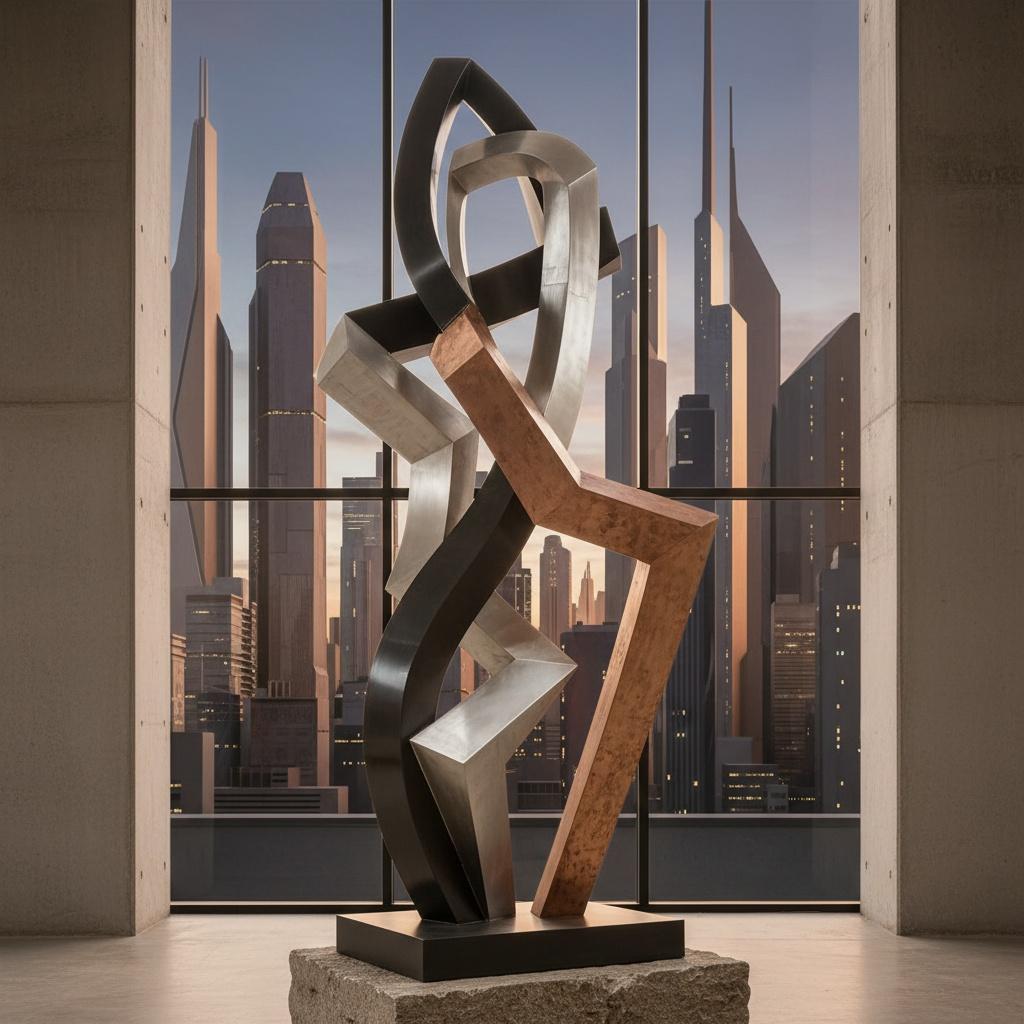
In the contemporary landscape of fine art, the boundaries between the mechanical and the natural are increasingly blurred. Metal art excels in this intersection, offering a sculptural versatility that few other mediums can replicate. We see this most clearly in works that utilize the rigid, structural properties of iron to mimic the delicate curves of a blooming flower or the undulating movement of a flame. For instance, an Elegant Iron Flame Sculpture serves as a testament to this capability, where the heavy, textured metal is manipulated to evoke the flickering, transient nature of fire, standing nearly two meters tall with a commanding yet graceful silhouette. This versatility allows for a vast spectrum of expression, ranging from the minimalist to the hyper-complex. The medium can support massive, monolithic forms that command architectural attention, or it can be refined into delicate wall hangings that interact subtly with the surrounding atmosphere. This adaptability is particularly prized by collectors who curate spaces that require a balance of weight and airiness. By utilizing the inherent strength of metal, artists can create cantilevered forms and sweeping arcs that would be structurally impossible in stone or clay, pushing the limits of what a three-dimensional composition can achieve within a modern interior.A Symphony of Texture and Light: Reflective Surfaces in Modern Metalwork
One of the most captivating dimensions of metal art is its sophisticated relationship with light. Unlike the matte finish of traditional canvas, metal surfaces possess a reactive quality that changes according to the time of day and the lighting conditions of the room. Through techniques such as polishing, patination, and the application of precious metals, artists create a symphony of reflections. Consider the Metal & Paper Flower Wall Sculpture, which utilizes gold, bronze, and silver tones to catch and refract light, creating a dynamic visual experience that shifts as the viewer moves through the space. The interplay of texture and luminosity adds a layer of sensory richness to the viewing experience. A highly polished, mirror-like surface can dissolve the boundaries of the sculpture itself, reflecting the room and integrating the artwork into its environment. Conversely, a heavily textured or oxidized surface absorbs light, creating deep shadows and a sense of ancient, weathered history. This ability to manipulate light allows metal art to function as a living component of an interior design, providing a focal point that is never static, but rather a continuous dialogue between the object, the light, and the observer.Curating Permanence: Integrating Metal Masterpieces into Sophisticated Interiors
For the discerning collector, selecting artwork is an exercise in long-term vision. Metal art offers a unique promise of permanence; it is a medium that resists the decay of time, making it an ideal cornerstone for a curated collection. When integrating these pieces into a sophisticated interior, one must consider the architectural dialogue between the metal's weight and the room's composition. A large-scale metallic abstract piece, such as a Flowing Form Resin Sculpture in metallic gray, can introduce a modern, industrial edge to a minimalist setting, providing a sense of structural integrity and "edge" to otherwise soft environments. The integration process is most successful when the metalwork is treated as an architectural element rather than mere decoration. The use of multi-panel layouts or large-format wall sculptures can transform a plain expanse of wall into a dramatic feature, much like a fresco or a mural. Whether it is the bold statement of a tall iron sculpture in a grand foyer or the subtle shimmer of metallic accents in a private study, metal art provides a sense of "anchored luxury." It brings a tactile, physical presence to a room that complements fine textiles, polished woods, and stone surfaces, creating a cohesive and multi-sensory environment.The Collector's Perspective: Evaluating Craftsmanship, Material, and Longevity
To approach metal art as an investment requires a keen eye for technical mastery and material integrity. A true connoisseur looks beyond the initial aesthetic impact to evaluate the skill involved in the manipulation of the medium. The quality of the forge, the precision of the welds, and the complexity of the patina are all indicators of the artist's academic excellence and dedication. One must examine how the artist has managed the transitions between different textures and how they have utilized the inherent properties of the chosen alloy to support the work's structural and conceptual goals. Furthermore, longevity is a critical consideration in the valuation of metalwork. The chemistry of the finish—whether it be a protective Damar-like varnish or a specialized oxidation process—determies how the piece will age. A collector must consider the resistance of the material to environmental factors such as moisture and atmospheric pollutants. When an artwork is crafted with such meticulous attention to detail that it is designed to endure for generations, it ceases to be a mere object of beauty and becomes a legacy. In the world of fine art, where true mastery is rare, metalwork stands as a testament to the enduring power of human skill and the timeless allure of the elemental.At OriginalUniqueArt.com, we celebrate the intersection of tradition and innovation. From the meticulous recreation of historical masterpieces to the curation of contemporary sculptural wonders, our mission is to connect passionate collectors with works of unparalleled quality. Whether you are seeking a bespoke commission or exploring the depths of art history, OriginalUniqueArt provides the expertise, transparency, and global reach necessary to elevate your collection to new heights of sophistication.