Post-Impressionism · 1924
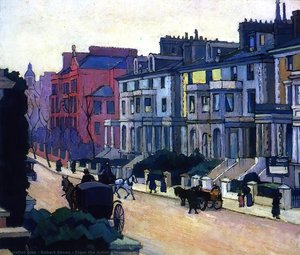
Mount Stephen, Devon (Robert Polhill Bevan, 1924)
Robert Polhill Bevan (1865–1925) ha realizzato Mount Stephen, Devon. Risale al 1924. Fa parte del movimento Post-Impressionism. È realizzato in Oil On Canvas. Le dimensioni sono 56 × 76 cm.
- 1924
- Oil On Canvas
- 56 × 76 cm

 Anteprima in scala reale

 Dipinto a olio fatto a mano
 Invia
 Condividi
 Scheda didattica


 Scarica
 Simili
 Radiografia
 Slideshow
 Domande e risposte

 Statistiche
Mount Stephen, Devon, in breve
- Titolo
- Mount Stephen, Devon
- Artista
- Robert Polhill Bevan (1865–1925)
- Artista nato a
- Hove, Regno Unito
- Date
- 1924
- Tecnica
- Oil On Canvas
- Dimensioni
- 56 × 76 cm
- Movimento
- Post-Impressionism
- Epoca
- Modern
- Soggetto
- devon village, rural england, coastal scene, british art, village life, impressionism
Cosa raffigura Mount Stephen, Devon?
Identification of Mount Stephen, Devon
Mount Stephen, Devon is an oil on canvas painting by the artist Robert Bevan. This work was created in 1924. The piece measures 56 x 76 cm. It depicts a scene in Devon, England, featuring a red brick building in the foreground and two figures standing outside the structure.
The subject matter focuses on a small village setting. The composition includes residential architecture, specifically houses with thatched roofs, chimneys, and windows. Two people are positioned on the sidewalk, engaged in conversation. The perspective is slightly elevated, looking down a sloping street toward the sea. The sky is covered by clouds, which creates diffused lighting across the scene. This lighting casts soft shadows and highlights the various colors present in the village architecture and the surrounding landscape.
The Composition and Visual Elements
The composition presents a balanced arrangement of clustered buildings situated under a cloudy sky. The perspective is slightly elevated, looking down a sloping street that leads toward the sea. In the foreground, a red brick building anchors the scene. Two people stand outside this structure, positioned on the sidewalk near the architecture. The subject matter focuses on residential architecture, including houses characterized by thatched roofs, chimneys, and windows.
The arrangement of the village in Devon, England, relies on a series of rectangular shapes and organic lines. The rooflines of the houses create a structured pattern against the sky. Lines define the edges of the buildings, while the sloping street provides a sense of depth through atmospheric perspective. Distant elements appear paler and less distinct, establishing a clear recession into the background. The lighting is diffused by the overcast sky, casting soft shadows across the surfaces of the buildings and the street.
Technique and Artistic Style
The style of this work is reminiscent of the Post-Impressionist movement. It utilizes bold colors and geometric shapes to define the architecture and the landscape. The composition relies on rectangular forms for the buildings and organic shapes for the roofs. Visible brushstrokes are used throughout the piece, creating a sense of texture. On the walls and roofs, the paint appears thick and impasto-like, suggesting a deliberate layering of the medium.
The lighting in the scene is diffused, a result of the overcast sky. This soft light avoids harsh shadows and instead highlights the various colors across the village. Depth is achieved through the use of atmospheric perspective, where distant elements appear paler and less distinct than those in the foreground. This technique establishes a sense of space between the red brick building in the front and the elements further back in the composition.
Related Works by Robert Bevan
The artist's engagement with the Devon landscape is evident in other compositions from different periods. Landscape in the Blackdown Hills, Devon was painted in 1917. This work focuses on the rolling topography and the relationship between the land and the sky. Other depictions of the region include Devonshire Valley, No. 2, which was painted in 1913. This piece features a sweeping vista of a verdant valley where a small stone cottage with a pink-hued roof sits among dark trees.
Earlier works also demonstrate the artist's interest in atmospheric conditions and specific technical approaches. Haze over the Valley was created in 1913. In different studies, the artist utilized a divisionist technique, as seen in The Turn-Rice Plough. These varied approaches to color and form reflect a career spent exploring the structural elements of the English countryside and the application of light across different terrains.
Immagini ad alta risoluzione di Mount Stephen, Devon

Pubblico dominio: l'artista è deceduto nel 1925.
Altre dimensioni, ritagli e citazioni →Robert Polhill Bevan, Mount Stephen, Devon (1924).
Robert Polhill Bevan (1865–1925), Mount Stephen, Devon, 1924, oil on canvas. Pubblico dominio Immagine di OriginalUniqueArt.com.
Domande su Mount Stephen, Devon, risposte
In che anno è stata realizzata l'opera "Mount Stephen, Devon" di Robert Polhill Bevan?
L'opera "Mount Stephen, Devon" di Robert Polhill Bevan risale al 1924.
Quale tecnica è stata utilizzata per "Mount Stephen, Devon" di Robert Polhill Bevan?
La tecnica utilizzata per "Mount Stephen, Devon" di Robert Polhill Bevan è Oil On Canvas. Le riproduzioni mirano a restituire l'aspetto di questa tecnica.
Quali sono le dimensioni reali di "Mount Stephen, Devon" di Robert Polhill Bevan?
L'originale "Mount Stephen, Devon" di Robert Polhill Bevan misura 56 x 76 cm.
Cosa rappresenta "Mount Stephen, Devon" di Robert Polhill Bevan?
I temi presenti in "Mount Stephen, Devon" di Robert Polhill Bevan includono devon village, rural england, coastal scene, british art, village life, impressionism, colorful painting, elementi che insieme sintetizzano il soggetto dell'opera.
L'immagine di "Mount Stephen, Devon" di Robert Polhill Bevan può essere riprodotta liberamente?
"Mount Stephen, Devon" di Robert Polhill Bevan è di pubblico dominio - il copyright è scaduto. Questo stato determina le modalità con cui l'immagine dell'opera può essere riprodotta.
Chi ha creato "Mount Stephen, Devon"?
L'artista che ha creato "Mount Stephen, Devon" è Robert Polhill Bevan. L'opera è catalogata sotto il nome di Robert Polhill Bevan.
A quale corrente artistica appartiene "Mount Stephen, Devon" di Robert Polhill Bevan?
"Mount Stephen, Devon" è un'opera di Post-Impressionism. Il movimento indica la tradizione artistica di cui l'opera fa parte.
A quale fase della carriera di Robert Polhill Bevan appartiene "Mount Stephen, Devon"?
"Mount Stephen, Devon" appartiene al Mature Period della carriera di Robert Polhill Bevan. Questa classificazione riconduce l'opera all'evoluzione dell'artista.
Quanti anni aveva Robert Polhill Bevan quando ha creato "Mount Stephen, Devon" nel 1924?
Robert Polhill Bevan aveva 59 anni quando ha creato "Mount Stephen, Devon" nel 1924. L'età è calcolata sulla base dell'anno di nascita dell'artista, 1865.
Informazioni sull'artista, Robert Polhill Bevan

1865–1925, Regno Unito
Robert Polhill Bevan
Primi Anni e Formazione Artistica Nascita: Hove, Regno Unito (1865) Morte: 1925 Origini Familiari: Robert Polhill Bevan nacque in una famiglia quacchera con legami bancari. I suoi genitori erano Richard Alexander Bevan e Laura Maria Polhill. Educazione Iniziale: Studiò alla Westminster School of Art sotto la guida di Fred Brown. Successivamente, frequentò l'Académie Julian a Parigi dove incontrò artisti influenti come Paul Sérusier, Pierre Bonnard, Édouard Vuillard e Maurice Denis.
Su Robert Polhill Bevan Opere celebri di Robert Polhill Bevan
Altre opere di Robert Polhill Bevan
 Dalla finestra dell'artista1915
 Commercianti di Cavalli (Vendita presso il deposito Ward n. 1)1918
 Valle di Devonshire, n. 21913
 Paesaggio nelle Blackdown Hills, Devon1917

Saggi su Mount Stephen, Devon
 10 dipinti mozzafiato che ritraggono colline e paesaggi naturaliScopri 10 opere iconiche tra Renoir e Munch che celebrano le colline. Esplora la collezione su OriginalUniqueArt.com per riproduzioni di al…
 Le 25 opere più importanti di Pierre Puvis de Chavannes: la guida completaScopri le 25 opere chiave di Pierre Puvis de Chavannes e il Simbolismo. Esplora la collezione completa su OriginalUniqueArt.com.
 I 25 capolavori di Bernardo Bellotto: la luce e l'anima delle cittàScopri i 25 capolavori di Bernardo Bellotto tra vedute e luce. Esplora la collezione su OriginalUniqueArt.com per riproduzioni di alta qual…