Impressionism · 1931
Peterhof (Pëtr Petrovič Končalovskij, 1931)
Pëtr Petrovič Končalovskij (1876–1956) ha realizzato Peterhof. Risale al 1931. Fa parte del movimento Impressionism. È realizzato in Watercolor. Le dimensioni sono 39 × 52 cm.
- 1931
- Watercolor
- 39 × 52 cm

 Anteprima in scala reale

 Dipinto a olio fatto a mano
 Invia
 Condividi
 Scheda didattica


 Scarica
 Simili
 Radiografia
 Slideshow
 Domande e risposte

 Statistiche
Peterhof, in breve
- Titolo
- Peterhof
- Artista
- Pëtr Petrovič Končalovskij (1876–1956)
- Artista nato a
- Slov"jans'k, Ucraina
- Date
- 1931
- Tecnica
- Watercolor
- Dimensioni
- 39 × 52 cm
- Movimento
- Impressionism
- Epoca
- Modern
- Soggetto
- russian architecture, park landscape”, “watercolor painting”, “historic palace”, “impressionist style”, “peterhof gardens”
Cosa raffigura Peterhof?
Identification of the Artwork and Artist
In this watercolor, we encounter Peterhof, a work created by Pyotr Konchalovsky around 1931. The piece offers a quiet study of the intersection between architecture and nature, focusing on a large red brick building situated within a park-like setting. It captures a specific sense of place through a lens that balances the structured lines of the facade with the organic, fluid forms of the surrounding trees.
Pyotr Konchalovsky was a significant figure in the Russian and Soviet art scenes, moving through various stylistic movements throughout his career. This particular work reflects a period in his development where his approach to form and color had become increasingly grounded. The composition relies on a sense of distance between the viewer and the building, using perspective to establish a tranquil atmosphere within the landscape.
Visual Composition and Subject Matter
In this watercolor, the viewer is presented with an exterior view of a large red brick building, positioned within a quiet, park-like setting. The composition is anchored by the building’s facade, which is framed and softened by the surrounding trees. Through a careful use of perspective, the artist creates a sense of depth, drawing the eye into the space between the architectural forms and the organic lines of the foliage. It is a subtle blending of urban and natural elements, where the geometry of the structure meets the fluid, irregular shapes of the landscape.
The subject matter suggests a moment of stillness. There is a certain tranquility in the way the building sits amidst the greenery, offering a nostalgic view of a historic setting. The interplay between the man-made brickwork and the natural environment creates a balanced, quiet atmosphere. Rather than focusing on sharp, rigid details, the work emphasizes the relationship between the architecture and the light of an overcast day, capturing the essence of the site through soft transitions and a sense of distance.
Artistic Technique and Materials
In this watercolor, the artist utilizes a wet-on-wet application to achieve soft transitions and blended colors. This method allows the pigments to bleed into one another, creating a sense of atmosphere that suggests a diffused, overcast light. The texture is built through a layered effect, where visible brushstrokes interact with various washes of color to establish depth within the park-like setting.
The approach is reminiscent of impressionistic or post-impressionistic sensibilities. Rather than focusing on precise architectural detail, the work relies on fluid and expressive lines to define the building's facade and the organic forms of the surrounding trees. These lines provide a sense of movement to the branches and the structural elements of the red brick building. The medium of watercolor on paper allows for a certain transparency, capturing the interplay between the architecture and the natural elements through light and subtle tonal shifts.
Related Works by Pyotr Konchalovsky
To understand the breadth of Konchalovsky’s development, one might look toward his earlier explorations of form and color. In 1912, he painted Family Portrait (Siena), a work that offers a striking portrayal of domesticity. This large-scale oil painting transcends a simple depiction of a family, employing a flattened perspective and simplified forms characteristic of early 20th-century Modernism. The scene centers on a mother, child, and an older man seated around a table within an interior setting.
His output during the 1930s demonstrates a transition toward a more monumental style. He produced Bakhchisaray in 1930 and View on Beshtau place duel with Lermontov in 1938. These works align with the evolving aesthetic of the era, moving away from the fragmented planes of his youth toward a more solid, grounded representation of life. Even his still life compositions, such as Still Life with a Coffeepot from 1919, reveal a consistent interest in the physical presence of his subjects and the weight of their forms.
Immagini ad alta risoluzione di Peterhof

Pubblico dominio: l'artista è deceduto nel 1956.
Altre dimensioni, ritagli e citazioni →Pëtr Petrovič Končalovskij, Peterhof (1931). Pubblico dominio
Domande su Peterhof, risposte
In che anno è stata realizzata "Peterhof"?
"Peterhof" risale al 1931. Questa data colloca l'opera all'interno della carriera di Pëtr Petrovič Končalovskij e del suo periodo storico.
Quale tecnica è stata utilizzata per "Peterhof" di Pëtr Petrovič Končalovskij?
"Peterhof" è realizzata con Watercolor.
Quali sono le dimensioni reali di "Peterhof" di Pëtr Petrovič Končalovskij?
"Peterhof" misura 39 x 52 cm nella sua forma originale. Le dimensioni originali sono un utile riferimento per scegliere la dimensione di una riproduzione.
Cosa rappresenta "Peterhof" di Pëtr Petrovič Končalovskij?
"Peterhof" di Pëtr Petrovič Končalovskij raffigura: russian architecture, park landscape”, “watercolor painting”, “historic palace”, “impressionist style”, “peterhof gardens”, “1930s art”.
"Peterhof" di Pëtr Petrovič Končalovskij è di pubblico dominio?
Per quanto riguarda il copyright, "Peterhof" è di pubblico dominio - il copyright è scaduto.
A quale artista è attribuito "Peterhof"?
"Peterhof" è stata creata da Pëtr Petrovič Končalovskij. Le informazioni contenute in questa pagina descrivono l'opera originale di Pëtr Petrovič Končalovskij.
A quale stile appartiene "Peterhof"?
"Peterhof" è un'opera di Impressionism. Il movimento indica la tradizione artistica di cui l'opera fa parte.
A quale fase della carriera di Pëtr Petrovič Končalovskij appartiene "Peterhof"?
All'interno della carriera di Pëtr Petrovič Končalovskij, "Peterhof" appartiene al Mature Period. Questa fase permette di confrontarla con le altre opere dell'artista.
Quanti anni aveva Pëtr Petrovič Končalovskij quando ha creato "Peterhof" nel 1931?
Pëtr Petrovič Končalovskij aveva 55 anni quando ha creato "Peterhof" nel 1931. L'età è calcolata sulla base dell'anno di nascita dell'artista, 1876.
Informazioni sull'artista, Pëtr Petrovič Končalovskij
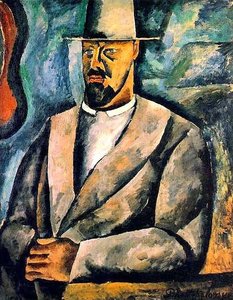
1876–1956, Ucraina
Pëtr Petrovič Končalovskij
Infanzia, Famiglia e Formazione Artistica La storia di Pietro Konçalovskij ha inizio nel villaggio di Slavianka, situato nel Governatorato di Kharkov all'interno dell'Impero Russo. Nato il 21 febbraio 1876, egli entrò in un mondo in cui i confini tra arte e intelletto erano già tracciati da chi lo circondava. Suo padre, Pyotr Petrovich Konchalovsky, era un uomo di lettere e un editore d'arte, una professione che garantì alla casa un profondo immersione nei flussi visivi e letterari dell'epoca. Questo ambiente offrì un'introduzione naturale, seppur discreta, alla vita di un creatore, mentre la famiglia si trasferiva infine a Mosca, dove l'abitazione divenne un punto di ritrovo per molte figure significative della scena artistica russa.
Su Pëtr Petrovič Končalovskij Opere celebri di Pëtr Petrovič Končalovskij
Altre opere di Pëtr Petrovič Končalovskij
 Il Ponte ad Abramtsevo1911
 Matador Manuel Gartha1910
 Piazza della Signoria a Siena1912
 San Gimignano1912
Saggi su Peterhof
 Emozione e Colore: i 25 Capolavori di Alexej von JawlenskyScopri i 25 capolavori di Alexej von Jawlensky e l'essenza dell'Espressionismo. Esplora la collezione su OriginalUniqueArt.com.
 Opere ucraine degli anni 1910Scopri il Suprematismo di Malevich e il realismo di Repin. Esplora i capolavori ucraini su OriginalUniqueArt.com.
 Opere russe degli anni 1890Scopri i capolavori russi degli anni 1890 tra Shishkin e Vrubel. Esplora la collezione su OriginalUniqueArt.com.