Expressionism
Self-portrait (Paula Modersohn-Becker)
Paula Modersohn-Becker (1876–1907) ha realizzato Self-portrait. Fa parte del movimento Expressionism. È realizzato in Oil On Canvas.
- Oil On Canvas

 Anteprima in scala reale

 Dipinto a olio fatto a mano
 Invia
 Condividi
 Scheda didattica


 Scarica
 Simili
 Radiografia
 Slideshow
 Domande e risposte

 Statistiche
Self-portrait, in breve
- Titolo
- Self-portrait
- Artista
- Paula Modersohn-Becker (1876–1907)
- Artista nato a
- Dresda, Germania
- Tecnica
- Oil On Canvas
- Movimento
- Expressionism
- Epoca
- Modern
- Soggetto
- woman, brown hair, necklace, smiling, people, background
Cosa raffigura Self-portrait?
Identification of the Self-portrait Artwork
The gaze of the artist meets us directly in Self-portrait, a work by the German Expressionist painter and draftswoman Paula Modersohn-Becker. This piece emerges from the vast body of work she produced throughout her active life, a period of intense creation that defined her presence in the art world. Within this painting, the subject turns her eyes toward the viewer, offering a direct encounter with her own likeness and a quiet, intense presence.
Paula Modersohn-Becker was born on 8 February 1876 in Dresden, Germany. Her creative spirit moved through many stages before she passed away on 30 November 1907 in Worpswede. This specific self-representation captures a moment of profound introspection, existing as a vital part of her ongoing exploration of identity and the human condition.
Visual Composition and Subject Matter
A woman with brown hair occupies the center of the frame, her gaze meeting the viewer with a direct and smiling expression. A necklace rests around her neck, catching the light as she holds her position. The scene feels lived-in and active, as if a momentary pause has been captured amidst a social gathering. In the background, two other figures add a sense of depth to the space. One person lingers on the left side of the composition, while another is positioned on the right, both appearing caught in their own private conversations or activities.
The arrangement of these figures creates a layered environment where the subject remains the clear focus despite the presence of others. The background figures do not compete for attention but instead provide a sense of atmosphere and context to her presence. This spatial depth allows the viewer to feel as though they are standing within the same room, witnessing a quiet, joyful moment of connection. The interaction between the subject and the viewer remains the heart of the image, anchored by her steady, smiling look.
Technical Details and Artistic Style
The oil on canvas breathes with a heavy, tactile presence. Thick applications of paint create a surface where impasto and textured tempera applications meet, giving the work a physical weight. Every stroke feels deliberate, as if the artist is carving her own likeness out of the pigment. The colors appear deep and saturated, building a sense of substance through their sheer density. One can sense the movement of the brush in the way the paint sits upon the surface, creating a landscape of ridges and valleys that catch the light.
A striking simplicity defines the forms within the frame. Rather than chasing the fine, delicate lines of academic tradition, the artist relies on bold brushwork to establish shape and volume. This approach strips away unnecessary detail, focusing instead on the essential weight of the figure. The simplified forms lend the portrait a monumental quality, making the subject feel grounded and permanent. There is a raw, directness in the way the paint is laid down, favoring the emotional truth of a shape over the precision of a line.
Related Works by the Artist
The artist's exploration of the self continues through other intimate encounters with her own image. In 1906, she presents herself in Self-Portrait on 6th Wedding Anniversary, a work that captures a specific moment of her life. This same year, she also creates Self-Portrait Nude with Amber Necklace, where the focus shifts toward the physical presence of the body. These pieces exist alongside her Self-Portrait with Two Flowers, which further develops her unique way of seeing.
Other compositions reveal her evolving language through different subjects and settings. The Self Portrait with Camellia Branch resides in the Museum Folkwang, Essen. Each of these works reflects her movement toward a more subjective and emotionally charged style, moving away from mere representation to find a deeper truth within the paint.
Immagini ad alta risoluzione di Self-portrait
Pubblico dominio: l'artista è deceduto nel 1907.
Paula Modersohn-Becker, Self-portrait. Pubblico dominio
Domande su Self-portrait, risposte
Con quale tecnica è realizzata "Self-portrait" di Paula Modersohn-Becker?
La tecnica utilizzata per "Self-portrait" di Paula Modersohn-Becker è Oil On Canvas. Le riproduzioni mirano a restituire l'aspetto di questa tecnica.
Cosa rappresenta "Self-portrait" di Paula Modersohn-Becker?
"Self-portrait" di Paula Modersohn-Becker raffigura: woman, brown hair, necklace, smiling, people, background.
"Self-portrait" è di pubblico dominio?
Per quanto riguarda il copyright, "Self-portrait" è di pubblico dominio - il copyright è scaduto.
Chi ha creato "Self-portrait"?
"Self-portrait" è stata creata da Paula Modersohn-Becker. Le informazioni contenute in questa pagina descrivono l'opera originale di Paula Modersohn-Becker.
A quale stile appartiene "Self-portrait"?
Il movimento associato a "Self-portrait" di Paula Modersohn-Becker è Expressionism. Questa classificazione colloca l'opera tra artisti e opere d'arte correlati.
"Self-portrait" di Paula Modersohn-Becker è di pubblico dominio? E perché?
Lo stato del copyright di "Self-portrait" - di pubblico dominio - il copyright è scaduto - è determinato dalla data di morte dell'artista, avvenuta nel 1907.
In che modo "Self-portrait" si inserisce nei temi e nello stile di Paula Modersohn-Becker?
"Self-portrait" appartiene alla produzione Expressionism di Paula Modersohn-Becker, i cui temi ricorrenti includono cézanne, gauguin, van gogh, identity and femininity, self-exploration, pioneering expressionism.
Che posto occupa "Self-portrait" tra i temi ricorrenti di Paula Modersohn-Becker?
Tra i temi ricorrenti di Paula Modersohn-Becker - cézanne, gauguin, van gogh, identity and femininity, self-exploration, pioneering expressionism - "Self-portrait" pone un particolare accento su woman, brown hair, necklace, smiling, people, background.
Informazioni sull'artista, Paula Modersohn-Becker

1876–1907, Germania
Paula Modersohn-Becker
Una Visionaria dell'Intimo: La Vita e l'Arte di Paula Modersohn-Becker Paula Modersohn-Becker, un nome che risuona con una forza silenziosa negli annali dell'arte moderna iniziale, fu un’artista che osò guardare dentro sé stessa. Nata Minna Hermine Paula Becker l'8 febbraio 1876 a Dresda, in Germania, la sua vita fu tragicamente breve – si spense il 30 novembre 1907 a Worpswede – ma in quei tre decenni forgiò un percorso di notevole innovazione artistica e coraggio personale. La sua storia non è quella di un successo immediato o di un ampio riconoscimento durante la sua vita; piuttosto, è una testimonianza della duratura forza di una voce individuale che sfidò le convenzioni ed esplorò le profondità dell'esperienza umana con onestà implacabile. Proveniente da un’educazione relativamente privilegiata in una famiglia segnata da un’ombra sottile – suo zio aveva tentato di assassinare il re di Prussia – le inclinazioni artistiche di Paula furono coltivate, sebbene non senza aspettative sociali che premevano su di esse.
Su Paula Modersohn-Becker Opere celebri di Paula Modersohn-Becker
Altre opere di Paula Modersohn-Becker
 Ritratto di una giovane donna con cappello rosso1900
 Ritratto a mezzo busto di un vecchio contadino1903
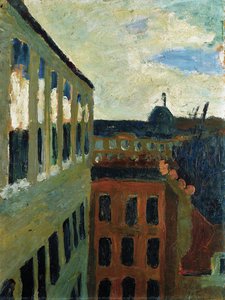 Vista dalla finestra dello studio dell'artista a Parigi1900
 Natura morta con pianta, limone e arancia1906
Saggi su Self-portrait
 Opere tedesche degli anni 1900Scopri l'Espressionismo di Max Beckmann e Franz Marc. Esplora i capolavori tedeschi del 1900 su OriginalUniqueArt.com.
 25 opere di Paula Modersohn-Becker: ritratti e forme che hanno cambiato l'arte modernaScopri 25 opere di Paula Modersohn-Becker e l'espressionismo tedesco. Esplora la collezione su OriginalUniqueArt.com.
 The Luster of Vermeer: Examining the Artistry of Pearl and Light in Dutch Baroque PortraitureExplore the technical mastery of Vermeer's light and pigments in Dutch Baroque art. Discover the secrets of the Old Masters today.