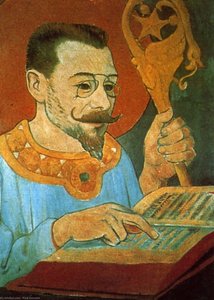
Anteprima in scala reale
 Condividi
 Condividi
 Dettagli
 Guida stampabile

 Scarica
 Articoli simili
 Radiografia
 Slideshow
 Statistiche
Celtic Tale
 Oil On Canvas
- WallArt
- Synthetist Painting
 1894
1894- 19th Century
 110.0 x 101.0 cm
 Dallas Museum of Art
 Leggi tutto
Riproduzione a olio fatta a mano
Olio su tela dipinto a mano nelle tue dimensioni e con la tua cornice, realizzato su ordinazione dai nostri artisti. ( Passa alle stampe Passa all'immagine digitale)




P118B €10

P118H €10

P118W €10

P438Z €10

P508JH €12

P508YH €12

P805H €10

P805Z €10

P919BZ €10

P919G €10

P919XJ €10

P959ZH €10

P968JZ €12

W106C €8

W218G €10

W218JH €8

W218Y €10

W307PJ €10

W316G €10

W316PJ €8

W316Y €10

W398PJ €8

W4111J €10

W500HY €15

W500JH €15

W692G €12

W849H €8

W940BG €15

W953PJ €8




Scegli tra le nostre dimensioni predefinite, che rispettano le proporzioni originali dell'opera d'arte.

Inserisci la larghezza e l'altezza di cui hai bisogno, per adattarle alla tua cornice o alla tua parete. Trattandosi di un'opera dipinta a mano, in caso di dimensioni con una forma differente, l'artista può dipingere un po' più oltre i bordi dell'immagine o ritagliare leggermente — la scelta spetta a te. Ti invieremo un mockup digitale da approvare prima che la pittura abbia inizio. L'immagine mostrata in questa pagina non rappresenta il risultato reale — solo il mockup lo fa.
Dopo l'ordine, il team di OriginalUniqueArt.com contatterà il cliente via e-mail per ricevere le istruzioni e fornirà un'anteprima del mockup
Consegna in tutto il mondo () in 3/4 settimane anziché nelle normali 5 settimane. (23 Ottobre). Nessun compromesso sulla qualità.

Spedizione espressa gratuita in tutto il mondo

Tela in lino di alta qualità

Assicurazione completa sulla spedizione

Garanzia di rimborso dei dazi doganali

Garanzia di perfetta fedeltà cromatica

Politica di reso entro 100 giorni (solo per difetti di fabbricazione)

Garanzia di rimborso al 100%

Sconto per acquisti multipli
 L'opzione vetro è disponibile solo per dimensioni inferiori a 110 cm

Celtic Tale
Tecnica di riproduzione
Dimensioni della riproduzione
-


Prezzo totale
€ 264
Paul Sérusier’s “Celtic Tale”: A Window into Synthetist Vision
Paul Sérusier's "Celtic Tale," painted in 1894, isn’t merely a depiction of a forest scene; it’s a profound exploration of light, color, and the nascent principles of abstract art. This oil on canvas, now residing within the Dallas Museum of Art, offers a captivating glimpse into the artist's innovative approach to capturing the essence of nature – a style he would later define as Synthetism. Born in Paris in 1864, Sérusier’s artistic journey was marked by a restless pursuit of new forms of expression, culminating in his groundbreaking work with the Nabis movement and his pioneering experiments with Cloisonnism.
The painting immediately draws the eye with its vibrant palette. Bold swathes of emerald green, sapphire blue, and ochre yellow dominate the composition, creating a sense of luminous intensity. These colors aren’t applied realistically; instead, Sérusier employs them in a flattened, almost geometric manner – a hallmark of Synthetism. He deliberately rejects traditional perspective, opting for simplified forms and strong contours that delineate shapes rather than mimicking their three-dimensional appearance. This technique, reminiscent of the decorative art of cloisonné enamelwork (hence “Cloisonnism”), creates an arresting visual effect, pulling the viewer into the heart of the scene.
The Spirit of Pont-Aven: Synthetism and its Roots
Sérusier’s artistic evolution was profoundly shaped by his summer sojourn in 1888 to Pont-Aven, a small village in Brittany. There, he encountered Paul Gauguin, who became a mentor and introduced him to the principles of Synthetism. Gauguin encouraged Sérusier to abandon academic realism and instead focus on capturing the *feeling* of a subject – its essence rather than its literal representation. This shift is powerfully evident in "Celtic Tale," where the forest itself becomes a symbolic entity, imbued with an almost mystical quality.
The painting’s composition echoes the work of Seurat and Signac, key figures in Pointillism and Neo-Impressionism, both movements that influenced Sérusier's development. However, unlike their meticulous application of tiny dots of color, Sérusier utilizes broader brushstrokes and bolder blocks of pigment to achieve a similar effect – creating an impression of light and atmosphere through the manipulation of color itself. The figures within the scene are deliberately simplified, almost dissolving into the surrounding landscape, further emphasizing the painting’s abstract qualities.
Symbolism Within the Scene: Nature, Community, and Mystery
Beyond its formal innovations, “Celtic Tale” is rich in symbolic meaning. The gathering of individuals amidst the forest evokes a sense of community and shared experience – a celebration of life and connection with nature. The two dogs present add to this feeling of warmth and conviviality. However, there’s also an underlying current of mystery and perhaps even melancholy. The cloaked figures, their faces obscured, suggest a ritualistic gathering, hinting at ancient Celtic traditions and the enduring power of myth.
The dappled sunlight filtering through the trees creates a sense of ethereal beauty, while the dark, rocky outcrop in the background provides a stark contrast, representing both obstacles and hidden depths. The painting’s overall mood is one of serene contemplation – an invitation to lose oneself in the beauty of the natural world and reflect on its timeless mysteries. It's a testament to Sérusier's ability to translate complex emotions and ideas into a visually arresting and deeply resonant work of art.
A Legacy of Innovation: Paul Sérusier’s Enduring Influence
Paul Sérusier’s “Celtic Tale” stands as a pivotal work in the history of modern art. It represents a crucial step towards abstraction, demonstrating the power of color and form to convey emotion and meaning independently of representational accuracy. His pioneering use of Synthetism paved the way for subsequent movements such as Fauvism and Cubism, solidifying his place as one of the most important figures in the development of 20th-century art. Reproductions of this captivating painting continue to inspire artists and collectors alike, offering a window into the visionary world of Paul Sérusier.
Domande e risposte
Quali tecnica e stile caratterizzano "Celtic Tale" di Paul Sérusier?
"Celtic Tale" è realizzata in Oil On Canvas, nello stile Synthetist Painting.
Quale tecnica è stata utilizzata per "Celtic Tale" e quando è stata realizzata?
"Celtic Tale" è stata realizzata nel 1894 con la tecnica Oil On Canvas. Il materiale e la data descrivono come e quando è stata creata l'opera originale.
Quale stato d'animo esprime "Celtic Tale" di Paul Sérusier all'interno di Synthetist Painting?
L'emozione Reflective di "Celtic Tale" accompagna il suo stile Synthetist Painting.
Biografia dell'artista
Primi anni e formazione
Paul Sérusier, nato Louis-Paul-Henri Sérusier il 9 novembre 1864 a Parigi, intraprese un percorso artistico che lo avrebbe portato a pioniere dell'arte astratta e a ispirare il movimento d’avanguardia dei Nabi, il sintetismo e il cloisonnismo. Studiò all'Académie Julian, dove divenne monitor negli anni '80 dell'Ottocento.Carriera Artistica
Nell'estate del 1888, Sérusier si recò a Pont-Aven, dove si unì a un piccolo gruppo di artisti incentrato attorno a Paul Gauguin. Sotto la stretta supervisione di Gauguin, dipinse "Il Talismano", un esercizio estremo nel cloisonnismo che si avvicinava alla pura astrazione. Quest'opera presentò il suo stile innovativo e la sua volontà di sperimentare nuove tecniche. Come pittore post-impressionista, Sérusier faceva parte del gruppo Les Nabis, insieme a Pierre Bonnard, Édouard Vuillard e Maurice Denis. Sebbene non sia ampiamente riconosciuto come alcuni dei suoi pari, i contributi di Sérusier allo sviluppo dell'arte astratta sono innegabili.Opere Principali e Eredità
Tra le opere più significative di Sérusier si annoverano:- L’Averse (1893), Musée d'Orsay, Parigi
- Ritratto di Paul Ranson (1890), Musée d'Orsay, Parigi
- Melanconia (1890)
- I mangiatori di serpenti (1894), Muzeum Narodowe, Varsavia
Influenze e Movimenti Artistici
Il lavoro di Sérusier fu influenzato dal cloisonnismo, uno stile caratterizzato da forme audaci e piatte separate da contorni scuri. Questo movimento, emerso alla fine del XIX secolo, ha svolto un ruolo significativo nella formazione dello sviluppo dell'arte moderna. Sérusier si è anche ispirato alle teorie di Gauguin sul sintetismo, che incoraggiavano gli artisti a semplificare la natura e ad esprimere le proprie emozioni attraverso colori audaci e forme stilizzate. Il suo coinvolgimento con i Nabi ha portato alla sperimentazione con simbolismo, decorazione e una ricerca di armonia tra arte e vita.Sviluppo Artistico e Significato Storico
L'evoluzione artistica di Sérusier può essere tracciata attraverso la sua transizione da un approccio più realista a uno sempre più astratto. "Il Talismano" segna un punto cruciale in questa evoluzione, dimostrando il suo impegno per una rappresentazione non oggettiva della realtà e aprendo la strada all'arte astratta. Il suo ruolo come leader dei Nabi ha contribuito alla diffusione di nuove idee artistiche e ha influenzato generazioni successive di artisti. La sua enfasi sull’espressione personale e sulla sintesi tra arte, natura e spiritualità lo rende una figura chiave nella storia dell'arte moderna.
Paul Sérusier
1864 - 1927 , Francia
Informazioni rapide
- Artisti Influenti:
- Paul Gauguin
- Émile Bernard
- Artisti Influenzati:
- Maurice Denis
- Pierre Bonnard
- Édouard Vuillard
- Data Di Nascita: 9 novembre 1864
- Luogo Di Nascita: Parigi, Francia
- Movimento Artistico: Post-Impressionismo, Nabis
- Nazionalità: Francese
- Nome Completo: Paul Sérusier
- Opere Notevoli:
- L'Averse (1893)
- Ritratto di Paul Ranson (1890)
- Melanconia (1890)
- I mangiatori di serpenti (1894)
Articoli correlati
Beyond Impressionism: Exploring the Emotional Depth of Post-Impressionist Painting
Explore the profound emotional depth & innovative techniques of Post-Impressionism with OriginalUniqueArt. Discover Cézanne, Van Gogh, Gauguin & more – and their lasting impact on modern art.

Paul Klee: Le 25 Opere Più Iconiche per Arricchire la Tua Casa con l'Arte
Esplora le 25 opere più iconiche di Paul Klee, maestro dell'arte astratta e del colore. Scopri la storia, lo stile unico e il significato dei suoi capolavori. Trova riproduzioni d'arte di alta qualità per decorare casa con OriginalUniqueArt.com.
Paul Sérusier: Il Pioniere del Sintetismo e la Rivoluzione Simbolica dei Nabis
Scopri Paul Sérusier, il pioniere del Sintetismo e la sua rivoluzionaria influenza sui Nabis. Analisi approfondita di 'Le Talisman' e l'esplorazione del Simbolismo nell'arte post-impressionista.

Paul Cézanne: I 25 Capolavori che Hanno Rivoluzionato l'Arte Moderna | OriginalUniqueArt
Esplora i 25 capolavori di Paul Cézanne, il maestro dell'impressionismo e post-impressionismo. Scopri la storia, le tecniche e i colori iconici dietro opere come 'Le grandi bagnanti' e 'Mont Sainte-Victoire'. Trova riproduzioni artistiche di alta qualità per decorare la tua casa su OriginalUniqueArt.com.

Impressionismo: I 10 Capolavori che Rivoluzionarono la Pittura | OriginalUniqueArt
Esplora i 10 capolavori dell'Impressionismo con OriginalUniqueArt. Scopri Monet, Renoir e Degas: storia, tecnica e colori che hanno rivoluzionato l'arte. Stampe di alta qualità per la tua casa! Esplora la collezione online.