Neoclassicism
A Muse (John Vanderlyn)
John Vanderlyn (1775–1852) ha realizzato A Muse. Fa parte del movimento Neoclassicism. È realizzato in Drawing.
- Drawing

 Anteprima in scala reale

 Dipinto a olio fatto a mano
 Invia
 Condividi
 Scheda didattica


 Scarica
 Simili
 Radiografia
 Slideshow
 Domande e risposte

 Statistiche
A Muse, in breve
- Titolo
- A Muse
- Artista
- John Vanderlyn (1775–1852)
- Artista nato a
- Kingston, Stati Uniti d'America
- Tecnica
- Drawing
- Movimento
- Neoclassicism
- Epoca
- 19th Century
- Soggetto
- woman, dress, bird, flying, black and white
Cosa raffigura A Muse?
Identification of the Artwork and Artist
A Muse is an artwork by John Vanderlyn. The artist, born in Kingston, United States, in 1775, sought a path through the academies of Europe to define a new American aesthetic. His hand moved between the precision of portraiture and the grand scale of historical scenes, always anchored by a sense of classical order.
Vanderlyn lived a life of significant movement, traveling from the studios of Philadelphia to the refined atmosphere of Paris. He eventually returned to his roots, passing away in Kingston, New York, on September 23, 1852. His work remains a quiet record of an era when American art first began to look toward the structured beauty of the old world.
Visual Composition and Subject Matter
A black and white drawing captures a woman suspended in mid-air. She wears a flowing dress that ripples around her form. Her arms are outstretched, reaching into the empty space as if caught in a moment of flight. She possesses the likeness of a goddess or a muse, drifting through a void of pale paper. Near the top left corner, a single bird occupies the composition, a small presence against the expanse.
The surface of the work is marked by several numbers scattered throughout the image. These digits appear as precise notations, perhaps measurements or proportions used to guide the hand. They sit amidst the lines of the figure, grounding the ethereal movement in the logic of study. The paper carries an old-fashioned quality, its texture suggesting a relic of a previous era. A quiet stillness remains in the wake of her flight.
Immagini ad alta risoluzione di A Muse
Pubblico dominio: l'artista è deceduto nel 1852.
John Vanderlyn, A Muse. Pubblico dominio
Domande su A Muse, risposte
Con quale tecnica è realizzato "A Muse"?
John Vanderlyn ha utilizzato la tecnica del Drawing per "A Muse". La tecnica definisce la natura materica dell'opera originale.
Cosa rappresenta "A Muse" di John Vanderlyn?
"A Muse" di John Vanderlyn raffigura: woman, dress, bird, flying, black and white.
"A Muse" di John Vanderlyn è di pubblico dominio?
Stato del copyright per "A Muse" di John Vanderlyn: l'opera è di pubblico dominio - il copyright è scaduto. Ciò determina se sia possibile effettuare liberamente riproduzioni dell'immagine.
A quale artista è attribuito "A Muse"?
L'artista che ha creato "A Muse" è John Vanderlyn. L'opera è catalogata sotto il nome di John Vanderlyn.
A quale corrente artistica appartiene "A Muse" di John Vanderlyn?
Il movimento associato a "A Muse" di John Vanderlyn è Neoclassicism. Questa classificazione colloca l'opera tra artisti e opere d'arte correlati.
"A Muse" di John Vanderlyn è di pubblico dominio? E perché?
"A Muse" di John Vanderlyn è di di pubblico dominio - il copyright è scaduto. La durata del copyright decorre dalla morte dell'artista, avvenuta nel 1852.
In che modo "A Muse" si inserisce nei temi e nello stile di John Vanderlyn?
All'interno della produzione di John Vanderlyn, "A Muse" si inserisce nello stile Neoclassicism, affiancandosi ai temi di neoclassicism, parisian training, classical forms, historical painting, idealized beauty.
In che modo il soggetto di "A Muse" si relaziona ai temi abituali di John Vanderlyn?
I temi ricorrenti di John Vanderlyn includono neoclassicism, parisian training, classical forms, historical painting, idealized beauty; "A Muse" si concentra su woman, dress, bird, flying, black and white.
Informazioni sull'artista, John Vanderlyn

1775–1852, Stati Uniti d'America
John Vanderlyn
Primi Anni e Formazione Nato: 15 ottobre 1775, Kingston, New York Origini Familiari: Nipote del pittore di ritratti coloniali Pieter Vanderlyn. Primo Impiego: Lavorò per un venditore di stampe a New York City. Istruzione Iniziale: Studiò sotto Archibald Robinson, un artista scozzese. Connessione con Gilbert Stuart: Copiò ritratti di Gilbert Stuart e trascorse del tempo nel suo studio, sviluppando abilità nella ritrattistica.
Altre opere di John Vanderlyn
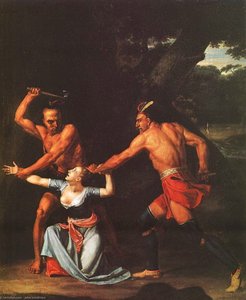 La morte di Jane McCrea1804
 Oliver Wolcott, Jr. (1760-1833), B.A. 1778, LL.D. 18191820
 Roger Strong (1762–1836)1802
 Theodosia Burr (Mrs. Joseph Alston, 1783-1813)1802
Saggi su A Muse
 Sogni su tela: comprendere il Surrealismo Automatista e il Surrealismo VeristaScopri le differenze tra Surrealismo Automatista e Verista con la nostra guida esperta. Impara a distinguerli subito!
 Art Nouveau vs. Art Deco: come distinguere questi due stili iconiciScopri le differenze tra Art Nouveau e Art Deco con la nostra guida esperta. Impara a distinguere questi due stili iconici ora.
 Pittori neoclassici americaniScopri i maestri del neoclassicismo americano come Copley e Stuart. Esplora la collezione su OriginalUniqueArt.com per riproduzioni di alta…