Neoclassicism
Wesley (John Jackson)
John Jackson (1778–1831) ha realizzato Wesley. Fa parte del movimento Neoclassicism. È realizzato in Oil On Canvas.
- Oil On Canvas

 Anteprima in scala reale

 Dipinto a olio fatto a mano
 Invia
 Condividi
 Scheda didattica


 Scarica
 Simili
 Radiografia
 Slideshow
 Domande e risposte

 Statistiche
Wesley, in breve
- Titolo
- Wesley
- Artista
- John Jackson (1778–1831)
- Artista nato a
- Lastingham, Regno Unito
- Tecnica
- Oil On Canvas
- Movimento
- Neoclassicism
- Epoca
- Early Modern
- Soggetto
- portrait, clergy, dignified, formal, neoclassical, authority
Cosa raffigura Wesley?
Identification of the Portrait of Wesley
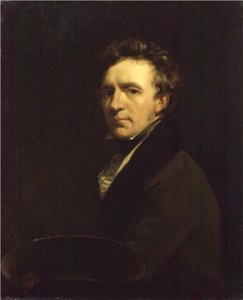
In this portrait, titled Wesley, the artist John Jackson presents a formal and dignified depiction of his subject. The work focuses on an elderly man, whose presence suggests the weight of a significant role, likely that of a clergyman or a judge. There is a quiet authority in his steady, contemplative expression, which meets the viewer with a sense of seasoned wisdom. The portrait captures a moment of stillness, focusing on the character and intellect of the sitter through a direct and serious gaze.
The subject is rendered in traditional clerical attire, which provides immediate insight into his social standing and professional life. He wears a long white wig and a black robe, accented by a stole that emphasizes his religious or judicial vocation. This specific choice of clothing, combined with the formal composition, establishes the sitter as a man of importance and discipline. The dark, indistinct background ensures that the viewer's attention remains fixed entirely upon the man and the textures of his garments.
Composition and Visual Elements
The composition is centered on the subject's head and shoulders, creating an immediate sense of presence. This focused arrangement draws the eye directly to the man's face, where a serious and contemplative expression suggests a life of deep thought. He is dressed in traditional clerical attire, characterized by a long white wig and a black robe that anchors the figure within the frame. The background remains dark and indistinct, a murky expanse that prevents distraction and pushes the subject into the foreground.
Lighting is used with a deliberate, dramatic intent. Strong highlights strike the face and the folds of the robes, carving out the form against the shadows. This chiaroscuro effect provides a sense of volume and weight to the figure. While the portrait feels intimate, the perspective is linear, utilizing subtle converging lines to suggest a sense of depth within the space. The interplay of light and shadow defines the contours of the clothing and the texture of the hair, grounding the figure in a tangible, physical reality.
Technique and Artistic Materials
The work is executed in oil paints on canvas, a choice that allows for a profound sense of depth and presence. Jackson employs a meticulous technique, characterized by careful observation and skillful brushwork that defines the contours of the face and the heavy folds of the clerical attire. There is a deliberate precision in how the light is handled, creating a sense of solidity through the careful application of pigment.
The texture of the piece is notably rich and layered. Through the use of impasto techniques, the artist has built up the surface to create a tangible quality, particularly visible in the rendering of the white wig and the heavy robes. This tactile approach provides a physical weight to the subject, ensuring that the interplay of light and shadow feels grounded and real rather than merely painted.
Related Works by John Jackson
Beyond this portrait, Jackson’s oeuvre reveals a consistent interest in the psychological depth of his subjects. His catalog includes Reginald Macdonald, a work that reflects his ability to handle formal portraiture. He also produced several self-portraits, which offer a more intimate look at the artist himself, providing a glimpse into his own character and the introspective nature of his practice. These works demonstrate his capacity to move between the public persona of a sitter and the private reality of the individual.
The artist’s technical range is further evidenced by his various studies, such as Flaxman. In these pieces, one can observe his command over oil textures and his specific approach to directional lighting. His ability to manipulate light and shadow is a recurring element across his various commissions. Whether working on a formal portrait or a focused study, Jackson maintained a commitment to capturing the essential presence of the person before him.
Immagini ad alta risoluzione di Wesley
Pubblico dominio: l'artista è deceduto nel 1831.
John Jackson, Wesley. Pubblico dominio
Domande su Wesley, risposte
Con quale tecnica è realizzata "Wesley" di John Jackson?
La tecnica utilizzata per "Wesley" di John Jackson è Oil On Canvas. Le riproduzioni mirano a restituire l'aspetto di questa tecnica.
Qual è il soggetto di "Wesley"?
I temi presenti in "Wesley" di John Jackson includono portrait, clergy, dignified, formal, neoclassical, authority, wisdom, religious, elementi che insieme sintetizzano il soggetto dell'opera.
L'immagine di "Wesley" di John Jackson può essere riprodotta liberamente?
"Wesley" di John Jackson è di pubblico dominio - il copyright è scaduto. Questo stato determina le modalità con cui l'immagine dell'opera può essere riprodotta.
Chi è l'artista dietro "Wesley"?
L'artista che ha creato "Wesley" è John Jackson. L'opera è catalogata sotto il nome di John Jackson.
A quale movimento artistico appartiene "Wesley" di John Jackson?
Il movimento associato a "Wesley" di John Jackson è Neoclassicism. Questa classificazione colloca l'opera tra artisti e opere d'arte correlati.
A quale fase della carriera di John Jackson appartiene "Wesley"?
All'interno della carriera di John Jackson, "Wesley" appartiene al Mature Period. Questa fase permette di confrontarla con le altre opere dell'artista.
"Wesley" di John Jackson è di pubblico dominio? E perché?
"Wesley" di John Jackson è di di pubblico dominio - il copyright è scaduto. La durata del copyright decorre dalla morte dell'artista, avvenuta nel 1831.
In che modo "Wesley" si inserisce nel percorso artistico di John Jackson?
"Wesley" condivide con le altre opere di John Jackson lo stile Neoclassicism e i temi ricorrenti: reflects jackson's skill, demonstrates mastery, typical of his portraits, established style, classical ideals, roman portraiture, neoclassical style, formal composition.
In che modo il soggetto di "Wesley" si relaziona ai temi abituali di John Jackson?
I temi ricorrenti di John Jackson includono reflects jackson's skill, demonstrates mastery, typical of his portraits, established style, classical ideals, roman portraiture, neoclassical style, formal composition; "Wesley" si concentra su portrait, clergy, dignified, formal, neoclassical, authority, wisdom, religious.
Informazioni sull'artista, John Jackson
1778–1831, Regno Unito
John Jackson
Gli Anni Più Precoci e l'Apprendistato: Un Inizio Riluttante John Jackson, nato nel pittoresco villaggio del Yorkshire di Lastingham il 31 maggio 1778, intraprese un cammino molto lontano dal suo destino iniziale. Suo padre, un pratico sarto, immaginava una professione simile per suo figlio, e il giovane John fu apprendista di conseguenza. Tuttavia, anche tra i tessuti e le cuciture, germogliò in lui un'indubbia inclinazione artistica. Disegnava segretamente ritratti di amici e conoscenti, una quieta ribellione contro le aspettative familiari.
Altre opere di John Jackson
 Ritratto di un uomo1822
 Reverendo William Holwell Carr1827
 Ritratto di un gentiluomo1810
 Frederick, Duca di York (1763-1827)1822
Saggi su Wesley
 L'Arte e il Processo della Pittura a Olio su Misura: Dal Concetto alla TelaScopri il segreto della pittura a olio fatta a mano, dalla tecnica dell'impasto alla velatura. Scopri l'arte del su misura con noi.
 I 25 ritratti più iconici di François Clouet: la guida completaScopri i 25 ritratti più celebri di François Clouet e il Rinascimento francese. Esplora la collezione su OriginalUniqueArt.com.
 John Collier: 25 opere iconiche tra ritratti storici e miti pre-raffaellitiScopri i ritratti e i miti di John Collier tra stile pre-raffaellita e realismo. Esplora la collezione completa su OriginalUniqueArt.com.