

 Condividi
 Condividi
 Dettagli
 Guida stampabile

 Scarica
 Articoli simili
 Slideshow
 Statistiche
Molière


 Leggi tutto
Giclée / Stampe d'arte
Stampa giclée o su tela di qualità museale, con produzione rapida e diverse opzioni di finitura. ( Ordina la riproduzione dipinta a mano Passa all'immagine digitale)




































Scegli tra le nostre dimensioni predefinite, che rispettano le proporzioni originali dell'opera d'arte.

Inserisci la larghezza e l'altezza desiderate, per adattarle alla tua cornice o alla tua parete. Una stampa può essere solo ritagliata, mai resa più grande dell'immagine originale; pertanto, un formato con una forma differente comporterà la perdita di una parte dell'opera. Ti invieremo un mockup digitale da approvare prima di procedere con la stampa. L'immagine mostrata in questa pagina non rappresenta il ritaglio reale — solo il mockup lo mostra.
Consegna in tutto il mondo () in 2 settimane invece delle normali 4/5 settimane. (25 Ottobre)

Spedizione espressa gratuita in tutto il mondo

Tela in lino di alta qualità

Assicurazione completa sulla spedizione

Garanzia di rimborso dei dazi doganali

Garanzia di perfetta fedeltà cromatica

Politica di reso entro 100 giorni (solo per difetti di fabbricazione)

Garanzia di rimborso al 100%

Sconto per acquisti multipli
 L'opzione vetro è disponibile solo per dimensioni inferiori a 110 cm

Molière
Giclée / Stampe d'arte
Dimensioni della riproduzione
-


Prezzo totale
€ 70
A Captivating Portrait: Jean-Jacques Caffieri’s Molière
The year is 1787. Paris pulses with artistic fervor, the Rococo style dominating the courts and salons of the aristocracy. Within the hallowed halls of the Louvre, a sculptor named Jean-Jacques Caffiéri meticulously captures the essence of one of France's most celebrated playwrights: Molière. This isn’t merely a likeness; it’s an embodiment of wit, intellect, and theatrical genius, rendered in exquisite detail with a masterful understanding of light, shadow, and human expression. Caffieri’s portrait bust is more than just a work of art—it's a window into the world of 18th-century French culture, offering a glimpse into the life and legacy of a man who continues to entertain and provoke audiences centuries later.
Caffiéri, a pivotal figure in the Rococo movement, was renowned for his ability to imbue his sculptures with a vibrant sense of realism and dramatic flair. Trained within a family steeped in metalworking tradition—his father, Philippe Caffiéri, was a prominent foundryman—Jean-Jacques inherited not only technical skill but also an appreciation for opulent detail and the expressive potential of bronze. His early years were spent honing his craft under his father’s guidance, mastering the intricacies of casting and finishing techniques that would become hallmarks of his distinctive style. This foundation allowed him to flourish as a court sculptor, securing commissions from influential figures like Louis XV and contributing significantly to the lavish decoration of royal palaces.
The Language of Light and Shadow
What immediately draws the eye is Caffiéri’s masterful manipulation of chiaroscuro – the dramatic contrast between light and dark. The sculpture is bathed in a warm, golden glow that highlights Molière's features, emphasizing his thoughtful gaze and the subtle lines etched around his eyes. This technique isn’t simply decorative; it serves to create a sense of depth and volume, lending the portrait an almost three-dimensional quality. Notice how the light catches the folds of his coat, revealing the intricate texture of the fabric, and how it subtly obscures certain areas of his face, adding an element of mystery and intrigue.
The artist’s attention to detail is truly remarkable. From the meticulously rendered wig – a symbol of status and fashion in the 18th century – to the carefully sculpted folds of his clothing, every element contributes to the overall sense of realism. The rich fabrics, the elaborate embroidery, and the subtle sheen of the bronze all speak to the wealth and sophistication of Molière’s world. Caffiéri doesn't just depict a man; he captures an entire era.
Symbolism and Context
Beyond its aesthetic beauty, the portrait is laden with symbolic meaning. Molière, holding a book in his hand, represents not only his profession as a playwright but also his dedication to knowledge and intellectual pursuits. The gesture of his hand – a subtle inclination towards the viewer – suggests both invitation and contemplation, inviting us to engage with his work and ponder its profound themes. The bust was commissioned for the ‘grands hommes’ series, a collection intended to celebrate prominent figures of French history and culture, reflecting the Enlightenment ideals of reason and humanism that were gaining momentum at the time.
Furthermore, the choice of bronze as the medium is significant. Bronze was considered a noble material, associated with strength, durability, and permanence – qualities that mirrored Molière’s enduring legacy as one of France's greatest playwrights. The fact that this particular bust was created for the Louvre, one of the world’s most prestigious museums, underscores its importance and elevates it to an iconic representation of French artistic achievement.
A Timeless Masterpiece
Caffiéri’s portrait of Molière is a testament to his exceptional skill as a sculptor and his deep understanding of human nature. It's a captivating work that transcends its historical context, continuing to resonate with viewers today through its beauty, elegance, and profound symbolism. Whether admired for its technical brilliance or appreciated for its evocative portrayal of a literary giant, this sculpture remains a cornerstone of Rococo art—a vibrant reminder of the power of art to capture both the outward appearance and the inner spirit of a remarkable individual.
Domande e risposte
Per quale uso è consigliata una riproduzione di "Molière" di Jean Jacques Caffiéri?
Una riproduzione di "Molière" di Jean Jacques Caffiéri è consigliata per Statement. Questo suggerimento deriva dal soggetto, dall'atmosfera e dai colori dell'opera.
"Molière" di Jean Jacques Caffiéri è un ritratto, un paesaggio o una composizione quadrata?
"Molière" di Jean Jacques Caffiéri ha un formato Portrait. Il formato descrive le proporzioni della composizione.
Qual è la luminosità percepita di "Molière" di Jean Jacques Caffiéri?
Nel complesso, "Molière" è registrato come deep_shadow. La luminosità percepita descrive quanto l'opera appaia chiara o scura.
Biografia dell'artista
Jean Jacques Caffiéri: A Rococo Sculptor at the Court of Louis XV
Jean Jacques Caffiéri (1678-1755) stands as a pivotal figure in French sculpture during the Rococo period, embodying the opulent aesthetic and masterful craftsmanship that defined the era. Born in Paris to Philippe Caffiéri, a prominent foundryman who established a lineage dedicated to metalworking artistry, Caffiéri’s artistic journey began within a family steeped in tradition—a heritage profoundly shaped by Italian influences. His early training under his father cemented his foundational skills as a fondeur-ciseleur (caster and finisher), granting him access to the prestigious Guilds of Paris that oversaw monumental sculptural projects alongside intricate decorative metalwork. This formative experience instilled in him an unparalleled understanding of technique and material manipulation, qualities that would characterize his entire oeuvre.Early Life & Training
Caffiéri’s upbringing within a family renowned for its artistic prowess ensured he received comprehensive instruction in the art of bronze casting and finishing—skills honed under the watchful eye of Philippe Caffiéri himself. The Caffieri family's dedication to metalworking tradition extended beyond mere craftmanship; it fostered an intellectual curiosity about classical sculpture and design, shaping Caffiéri’s aesthetic sensibilities from a young age. His father imparted invaluable knowledge regarding metallurgical processes and sculptural techniques—skills that would prove instrumental in his subsequent artistic endeavors.Guild Recognition & Initial Commissions
By 1715, Caffiéri achieved maître fondeur-ciseleur status, marking his debut as a sculptor with a commission for the Corporation des Fondeurs-Ciseleurs—a testament to his burgeoning reputation and the esteem held by Parisian artisans. This recognition underscored the importance of Guild affiliation in shaping artistic careers during the eighteenth century, demonstrating Caffiéri’s commitment to upholding established standards of excellence within the sculptural profession. The Corporation's patronage provided him with invaluable opportunities for professional development and enabled him to undertake ambitious projects that showcased his talent and skill.The Caffieri Family’s Legacy: Bronze Sculpture & Decorative Arts
The Caffiéri family's contribution to French sculpture is undeniable, largely attributed to Jacques Caffiéri’s son, Philippe Caffiéri (1714–1777). Together they formed a formidable artistic duo, particularly active in the service of Louis XV. Their workshop in Rue des Canettes produced an astonishing volume of work—primarily gilt-bronze furniture mounts and decorative objects—that adorned residences across Paris and elevated the standards of Rococo craftsmanship. Notably, Caffiéri’s designs for Versailles, Fontainebleau, Marly, Compiegne, and Choisy exemplify the grandeur and elegance synonymous with Louis XV's court. The Château de la Muette retains a remarkable testament to their collaborative spirit—the gilded bronze chimney-piece remains an exemplar of Rococo style, characterized by dynamic movement and graceful ornamentation executed with exceptional skill.- Versailles Projects: Caffiéri’s involvement in the decoration of Versailles solidified his reputation as a sculptor of distinction, contributing significantly to the palace's opulent aesthetic.
- Collaboration with Philippe Caffiéri: The partnership between Jacques and Philippe Caffiéri fostered innovation and elevated the quality of decorative arts during their time.
Royal Patronage & Artistic Achievements
Caffiéri’s dedication to royal service extended beyond architectural embellishments; he undertook numerous commissions for Louis XV, producing portraits and sculptures that captured the spirit of the era. His work gained considerable acclaim during his lifetime, securing him a place among France's most celebrated sculptors. The Wallace Collection houses Caffiéri’s masterpiece—the Royal Commode delivered by Antoine-Robert Gaudreau in 1739 for Louis XV’s bedchamber at Versailles—a stunning example of Rococo design and craftsmanship. Its intricate gilt bronze decorations continue to inspire admiration for their beauty and technical virtuosity.- Wallace Collection Commission: Caffiéri's Royal Commode exemplifies the pinnacle of Rococo artistry, showcasing exceptional skill in metalworking and decorative arts.
- Notable Portraits: Caffiéri’s portraits demonstrate his ability to convey psychological depth and elegance—characteristics that define his artistic legacy.
Influence & Historical Significance
Jean Jacques Caffiéri's influence on subsequent generations of sculptors is considerable, establishing him as a cornerstone of Rococo art history. His meticulous attention to detail, combined with his mastery of bronze casting techniques—inherited from his father—established a tradition that endured for decades after his death in 1755. Caffiéri’s work serves as an enduring symbol of French artistic excellence during the Enlightenment, reflecting the period's fascination with naturalism and refined ornamentation. His legacy continues to inspire artists today, cementing his place among France’s most revered sculptors.
Jean Jacques Caffiéri
1678 - 1755 , Francia
Informazioni rapide
- Artistic Movement Or Style: Rococo
- Artists Who Influenced This Artist: ['Philippe Caffieri']
- Date Of Birth: Paris, Francia
- Date Of Death: 1755
- Full Name: Jean Jacques Caffiéri
- Nationality: Francese
- Notable Artworks:
- Royal Commode
- Chimneypiece Decoration
- Portrait of Claude Adrien Helvétius
- Place Of Birth: Parigi
Articoli correlati

I 10 Dipinti Più Famosi Dominati dal Nero: Maestri e Storie d'Arte
Esplora i 10 dipinti più iconici dominati dal nero, da Caravaggio a Munch. Scopri storie, tecniche e il potere espressivo di artisti come Rembrandt e Goya. Trova stampe d'arte di alta qualità per la tua casa su .
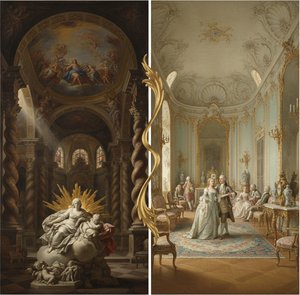
From Grandeur to Grace: Exploring the Evolution of Baroque & Rococo Art
Explore the captivating evolution from Baroque's drama to Rococo's grace! Discover key artists, characteristics & lasting influence of these art movements with expert insights at OriginalUniqueArt.

I 10 Capolavori Barocchi che Hanno Definito un'Epoca | Arte e Decorazioni di Lusso
Esplora i 10 capolavori barocchi di Caravaggio, Bernini e Rembrandt che hanno rivoluzionato l'arte. Scopri storie, tecniche e colori iconici. Trova riproduzioni d'arte di alta qualità per la tua casa su !

The Dramatic Flourish: Exploring the Baroque Movement's Enduring Legacy in Art History
Explore the dramatic world of Baroque art! Discover iconic artists like Caravaggio & Rubens, defining techniques, and its lasting impact on art history. Expert insights for collectors & enthusiasts at OriginalUniqueArt.

Il Dramma Barocco: Portare Splendore ed Emozione negli Interni Contemporanei
Scopri come portare il dramma e lo splendore dell'arte barocca nei tuoi interni con . Riproduzioni di alta qualità, consulenza d'arte personalizzata e ispirazione per uno stile unico.


