Anteprima in scala reale
 Condividi
 Condividi
 Dettagli
 Guida stampabile

 Scarica
 Articoli simili
 Radiografia
 Slideshow
 Statistiche
Stables
 Acrilico
- Arte da parete
- German Expressionism
 1913
1913 73.0 x 157.0 cm
 Leggi tutto
Giclée / Stampe d'arte
Stampa giclée o su tela di qualità museale, con produzione rapida e diverse opzioni di finitura. ( Ordina la riproduzione dipinta a mano Passa all'immagine digitale)




P118B €10

P118H €10

P118W €10

P438Z €10

P508JH €12

P508YH €12

P805H €10

P805Z €10

P919BZ €10

P919G €10

P919XJ €10

P959ZH €10

P968JZ €12

W106C €8

W218G €10

W218JH €8

W218Y €10

W307PJ €10

W316G €10

W316PJ €8

W316Y €10

W398PJ €8

W4111J €10

W500HY €15

W500JH €15

W692G €12

W849H €8

W940BG €15

W953PJ €8




Scegli tra le nostre dimensioni predefinite, che rispettano le proporzioni originali dell'opera d'arte.

Inserisci la larghezza e l'altezza desiderate, per adattarle alla tua cornice o alla tua parete. Una stampa può essere solo ritagliata, mai resa più grande dell'immagine originale; pertanto, un formato con una forma differente comporterà la perdita di una parte dell'opera. Ti invieremo un mockup digitale da approvare prima di procedere con la stampa. L'immagine mostrata in questa pagina non rappresenta il ritaglio reale — solo il mockup lo mostra.
Consegna in tutto il mondo () in 2 settimane invece delle normali 4/5 settimane. (19 Ottobre)

Spedizione espressa gratuita in tutto il mondo

Tela in lino di alta qualità

Assicurazione completa sulla spedizione

Garanzia di rimborso dei dazi doganali

Garanzia di perfetta fedeltà cromatica

Politica di reso entro 100 giorni (solo per difetti di fabbricazione)

Garanzia di rimborso al 100%

Sconto per acquisti multipli
 L'opzione vetro è disponibile solo per dimensioni inferiori a 110 cm

Stables
Giclée / Stampe d'arte
Dimensioni della riproduzione
-


Prezzo totale
€ 70
A Visionary Embrace of Nature’s Essence
Franz Marc’s “Stables,” completed in 1913, stands as a cornerstone of German Expressionism—a movement that sought to convey raw emotion and subjective experience rather than objective representation. More than just a depiction of livestock within a barn, it's an exploration of primal beauty and spiritual contemplation, reflecting Marc’s unwavering belief in the transformative power of art.
- Artist: Franz Moritz Wilhelm Marc (1880-1916)
- Nationality: German
- Movement: Expressionism
- Location: Solomon R. Guggenheim Museum, New York City
Cubist Influences and Bold Color Palette
Marc’s artistic journey was profoundly shaped by his time in Paris, where he encountered the groundbreaking innovations of Picasso, van Gogh, Gauguin, and Matisse—artists who championed expressive color and fractured perspectives. “Stables” embodies this influence, utilizing Cubism's characteristic geometric simplification to dissect forms and present multiple viewpoints simultaneously. However, unlike many Cubist predecessors, Marc abandons strict analytical rigor for a vibrant emotional resonance.
The painting explodes with hues of crimson, sapphire blue, lemon yellow, and verdant green—colors deliberately chosen not merely for visual appeal but as conduits for conveying profound feelings. These shades pulsate with energy, mirroring the dynamism inherent in the animal subjects themselves.
Symbolism Rooted in Observation
Marc’s fascination with animals stemmed from meticulous observation at the Berlin Zoo, where he spent countless hours sketching and studying their forms. Animals weren't simply subjects; they functioned as symbols—representing truth, purity, and beauty—concepts central to Marc’s philosophical worldview. In “Stables,” the horses are rendered in abstracted shapes that merge seamlessly with their surroundings, symbolizing a harmonious connection between humanity and nature.
The geometric abstraction serves not to diminish the animals' presence but rather to elevate them to a realm of spiritual significance. Each color contributes to this overarching message—red representing vitality and passion, blue embodying serenity and contemplation, yellow conveying optimism and illumination.
Historical Context: Facing Uncertainty
"Stables" was conceived during the tumultuous prelude to World War I, a period marked by anxieties about societal upheaval and impending conflict. Yet, despite this backdrop of apprehension, Marc retained an unwavering faith in art’s capacity to inspire regeneration—a conviction that would tragically prove premature when he succumbed to illness at the young age of 36.
Nevertheless, “Stables” continues to resonate powerfully today, securing its place as a seminal work within Expressionism and influencing subsequent movements like Abstract Expressionism. Artists such as Jackson Pollock and Willem de Kooning recognized Marc’s pioneering approach to color and emotion—a legacy that transcends time and reaffirms the enduring power of art to communicate profound spiritual truths.
A Lasting Impression
Franz Marc's "Stables" remains a testament to his artistic vision—a bold declaration of faith in nature’s beauty and an exploration of the human spirit. Its vibrant colors, fractured forms, and symbolic depth continue to captivate viewers, inviting contemplation on themes of truth, purity, and harmony.
Domande e risposte
I colori di "Stables" appaiono intensi o delicati?
L'intensità cromatica di "Stables" è Equilibrato. L'intensità descrive quanto appaiano marcati i colori.
Quante persone visualizzano "Stables"?
Esiste una pagina Statistiche per "Stables". Essa illustra le visite mensili dell'opera e delle altre opere dell'artista, con suddivisioni per paese e lingua.
In che modo i colori di "Stables" di Franz Marc si relazionano alla sua emozione?
La tavolozza Tonalità scure di "Stables" di Franz Marc si sposa con il suo tono emotivo Spirituale. Il colore è uno dei modi in cui un'opera trasmette emozioni.
Biografia dell'artista
Franz Marc: Un Pioniere dell'Espressionismo Tedesco
Primi Anni e Formazione
- Franz Moritz Wilhelm Marc nacque l’8 febbraio 1880 a Monaco di Baviera, Germania.
- Suo padre, Wilhelm Marc, era un pittore paesaggista che inizialmente influenzò le inclinazioni artistiche del figlio.
- Marc considerò brevemente la teologia prima di dedicarsi all'arte, studiando all’Accademia delle Arti Visive di Monaco dopo aver frequentato l’Università di Monaco.
- I primi studi includevano la copia dei maestri del passato e l'esplorazione di varie tecniche artistiche.
Sviluppo Artistico e Influenze
- Inizialmente, le opere di Marc furono influenzate dall’Impressionismo e dagli stili pittorici accademici.
- Un momento cruciale arrivò durante le visite a Parigi dove incontrò le opere di Vincent van Gogh, influenzando profondamente il suo uso del colore ed espressività emotiva.
- Sperimentò con diversi gruppi artistici come la Neue Künstlervereinigung München prima di fondare Der Blaue Reiter.
- Il lavoro di Robert Delaunay influenzò l'esplorazione di Marc di forme astratte e colori vivaci.
Der Blaue Reiter e Opere Chiave
- Nel 1911, Marc co-fondò Der Blaue Reiter (Il Cavaliere Azzurro) con Wassily Kandinsky, una rivista e un gruppo di artisti che divenne centrale per il movimento dell’Espressionismo Tedesco.
- Questo gruppo cercava significato spirituale nell'arte e rifiutava le convenzioni artistiche tradizionali.
- Opere notevoli di questo periodo includono:
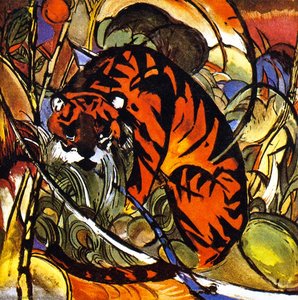
- The Tiger (1912) – che mostra il suo stile in evoluzione e l'uso simbolico degli animali.
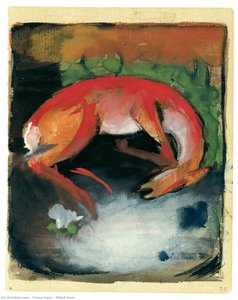
- Red Deer (1912) - dimostrando un crescente interesse per i soggetti animali.
- The Tower of Blue Horses, The Foxes, and Fate of the Animals (1913) – che rappresenta il culmine della sua visione artistica.
Temi e Stile Artistico
- L'arte di Marc è caratterizzata dai suoi colori vivaci, dalle forme semplificate e dalla rappresentazione simbolica degli animali.
- Credeva che gli animali possedessero una purezza e una connessione spirituale con la natura che erano state perse dagli esseri umani.
- Il suo uso del colore non era puramente descrittivo ma espressivo, comunicando emozioni e stati interiori.
- Cercava di rappresentare l'essenza dei suoi soggetti piuttosto che rappresentazioni realistiche.
Prima Guerra Mondiale e Tragico Destino
- Con lo scoppio della Prima Guerra Mondiale nel 1914, Marc fu arruolato nell’esercito tedesco.
- Nonostante cercasse l'esenzione a causa del suo status artistico, prestò servizio come cavaliere.
- Morì tragicamente il 4 marzo 1916 durante la battaglia di Verdun.
- La sua morte interruppe una promettente carriera ma consolidò il suo posto nella storia dell'arte.
Eredità e Significato Storico
- L'opera di Franz Marc rimane altamente influente per il suo uso espressivo del colore, le immagini simboliche e la profondità spirituale.
- È considerato una figura chiave nello sviluppo dell’Espressionismo Tedesco e un precursore dell’arte astratta.
- I suoi dipinti sono esposti nei principali musei di tutto il mondo, tra cui il Lenbachhaus a Monaco, che conserva una vasta collezione delle sue opere.
- La visione artistica di Marc continua a ispirare artisti e a catturare il pubblico oggi.

Franz Marc
1880 - 1916 , Germania
Informazioni rapide
- Artistic Movement Or Style: Espressionismo tedesco
- Artists Or Movements Influenced By This Artist: ['Arte astratta']
- Artists Who Influenced This Artist:
- Vincent van Gogh
- Robert Delaunay
- Date Of Birth: 8 febbraio 1880
- Date Of Death: 4 marzo 1916
- Full Name: Franz Marc
- Nationality: Tedesco
- Notable Artworks:
- Il Tigre
- Cervo Rosso
- La Torre dei Cavalli Blu
- Le Volpi
- Fiori Colorati
- Place Of Birth (City And Country): Monaco di Baviera, Germania
Articoli correlati

Franz Marc: Espressionismo, Spiritualità e il Simbolismo Animale di un Maestro Moderno
Esplora l'universo artistico di Franz Marc: dalle radici dell'Espressionismo tedesco al profondo simbolismo dei suoi animali. Scopri la sua spiritualità e l'influenza del Der Blaue Reiter.
Cubismo Espressionista: 10 Capolavori che Hanno Definito un Movimento Artistico Rivoluzionario
Esplora i 10 capolavori che hanno rivoluzionato l'arte con il Cubismo Espressionista! Scopri Picasso, Braque e altri maestri. Quadri famosi, tecniche innovative e colori audaci ti aspettano su OriginalUniqueArt.com. Trova la tua prossima opera d'arte!

The Enduring Power of Painting: A Historical & Contemporary Exploration of Form and Emotion
Explore the rich history & enduring techniques of oil painting with OriginalUniqueArt. Discover masterpieces, learn about art collecting, and find authentic handmade reproductions crafted by skilled artists.

Espressionismo Tedesco: 10 Capolavori Rivoluzionari per Arredare con Emozione
Esplora i 10 capolavori dell'Espressionismo Tedesco con OriginalUniqueArt.com! Scopri Kirchner, Munch e Nolde, le loro emozioni intense e tecniche rivoluzionarie. Arreda la tua casa con stampe d'arte di alta qualità. Esplora la collezione online!

The Enduring Legacy of Oil on Canvas: Technique, History & Aesthetic Impact
Explore the rich history & techniques of oil painting – from Renaissance masters to Impressionism. Discover pigments, layering methods, and why this timeless medium endures. Expert insights for artists & art enthusiasts.