Mannerist · 1600
Skeleton (Andrea Vesalio, 1600)
Andrea Vesalio (1514–1564) ha realizzato Skeleton. Risale al 1600. Fa parte del movimento Mannerist. È realizzato in Engraving. È conservata presso il Biblioteca dell’Università di Vilnius a Vilnius, Lituania.
- 1600
- Engraving
- Biblioteca dell’Università di Vilnius

 Anteprima in scala reale

 Dipinto a olio fatto a mano
 Invia
 Condividi
 Scheda didattica


 Scarica
 Simili
 Radiografia
 Slideshow
 Domande e risposte

 Statistiche
Skeleton, in breve
- Titolo
- Skeleton
- Artista
- Andrea Vesalio (1514–1564)
- Artista nato a
- Bruxelles, Belgio
- Date
- 1600
- Tecnica
- Engraving
- Dove vederlo
- Biblioteca dell’Università di Vilnius, Vilnius, Lituania
- Movimento
- Mannerist
- Epoca
- Early Modern
- Soggetto
- mortality, death, anatomy, skeletal, renaissance, mannerism
Cosa raffigura Skeleton?
Identification of the Artwork and Artist
We are looking at Skeleton, a work attributed to Andreas Vesalius. This piece is dated about 1600. It offers a quiet, structural view of the human form, captured through the precise hand of an artist who fundamentally changed how we perceive the internal architecture of the body.
Andreas Vesalius was born in Brussels, Belgium, in 1514. His life and his contributions to anatomical study remained central to his identity until his death in 1564. This specific engraving reflects a period of profound inquiry into the mechanics of life and mortality.
Visual Composition and Subject Matter
In this detailed black and white engraving, we find a skeleton seated upon a pedestal. The figure is captured in a moment of quiet contemplation, looking down at a human skull. The composition is complex, utilizing multiple overlapping planes to create a sense of depth and spatial arrangement. This arrangement directs the eye through a series of structural layers, emphasizing the stillness of the scene.
The style is distinctly Mannerist, characterized by a focus on stylized anatomy and expressive gestures. Through this lens, the subject matter addresses the inevitability of death and the human preoccupation with mortality. It is a meditation on the fragility of life, presented through the stark, structural reality of the bone. The interaction between the seated figure and the skull creates a silent dialogue regarding the fate of the human form.
Artistic Technique and Materials
The work is an engraving executed with a precision that reveals the artist's command over the medium. Using primarily ink and paper, the image is constructed through a series of sharp, meticulously rendered lines. These marks do more than define the edges of the form; they build the very substance of the subject. Through the disciplined application of hatching and cross-hatching, a palpable texture is achieved, simulating the hard, matte surface of bone and the subtle folds of fabric. This technical rigor allows for a sophisticated interplay of light and shadow.
The lighting appears to originate from above and slightly in front of the figure, casting shadows that provide a sense of weight and three-dimensionality. This light works in tandem with a linear perspective to establish a convincing sense of space within the composition. The result is a structural clarity that emphasizes the anatomical details through careful shading. The depth of the scene is achieved by layering these elements, creating a quiet, controlled environment for the subject.
Related Works by Andreas Vesalius
To understand the lineage of this piece, one might look toward the artist's other contributions to anatomical study. In 1543, an engraving titled Anatomy was produced, sharing a temporal connection to the era of the De humani corporis fabrica. This work, much like the one before us, captures the silent architecture of bone and muscle through meticulous line work.
There is also the Dissected human body, dated 1543, which is held within the Bibliothèque nationale de France in Paris. This engraving maps the structural reality of the human frame with a similar precision. Another notable piece is the Portrait of Vesalius from his De humani corporis fabrica, which offers a different perspective on the man behind these detailed observations.
- Dissected human body, 1543
- Anatomy, 1543
Current Location of the Artwork
This engraving is held within the Vilnius University Library, situated in Vilnius, Lithuania. It remains a significant part of a collection that is recognized as the oldest and one of the largest academic libraries in Lithuania. The institution has a long history, having been founded in 1570 by the Jesuits.
The library functions as a sanctuary for many historical documents and engravings. Within its walls, this work exists alongside a vast array of manuscripts and incunabula. It is part of a specialized repository that preserves the intellectual history of the region through its extensive holdings.
In quale museo si trova Skeleton?
Biblioteca dell’Università di Vilnius
Vilnius, Lituania
Un Santuario di Inchiostro e Pietra: L'Anima di Vilnius Varcare la soglia della Biblioteca dell’Università di Vilnius significa attraversare un confine tra l'effimero presente e il peso duraturo dei secoli. Non è semplicemente un deposito per la parola scritta, ma un monumento vivo e pulsante del cuore intellettuale e artistico della Lituania. Mentre ci si addentra nelle sue sale sacre, si avverte una sensazione palpabile di essere avvolti dai fantasmi degli studiosi del passato: un'atmosfera silenziosa e reverente, dove il profumo della pergamena antica incontra la grandezza dell'ambizione neoclassica.


Immagini ad alta risoluzione di Skeleton

Pubblico dominio: l'artista è deceduto nel 1564.
Altre dimensioni, ritagli e citazioni →Andrea Vesalio, Skeleton (1600), Biblioteca dell’Università di Vilnius. Pubblico dominio
Domande su Skeleton, risposte
Dove è esposta oggi l'opera "Skeleton" di Andrea Vesalio?
Puoi ammirare l'originale "Skeleton" presso il Biblioteca dell’Università di Vilnius, Vilnius, Lituania.
In che anno è stata realizzata "Skeleton"?
"Skeleton" di Andrea Vesalio è stata creata nel 1600.
Quale tecnica è stata utilizzata per "Skeleton" di Andrea Vesalio?
La tecnica utilizzata per "Skeleton" di Andrea Vesalio è Engraving. Le riproduzioni mirano a restituire l'aspetto di questa tecnica.
Qual è il soggetto di "Skeleton"?
I temi presenti in "Skeleton" di Andrea Vesalio includono mortality, death, anatomy, skeletal, renaissance, mannerism, reflection, human form, elementi che insieme sintetizzano il soggetto dell'opera.
L'immagine di "Skeleton" di Andrea Vesalio può essere riprodotta liberamente?
Stato del copyright per "Skeleton" di Andrea Vesalio: l'opera è di pubblico dominio - il copyright è scaduto. Ciò determina se sia possibile effettuare liberamente riproduzioni dell'immagine.
Chi è l'artista dietro "Skeleton"?
"Skeleton" è stata creata da Andrea Vesalio. Le informazioni contenute in questa pagina descrivono l'opera originale di Andrea Vesalio.
A quale stile appartiene "Skeleton"?
"Skeleton" è un'opera di Mannerist. Il movimento indica la tradizione artistica di cui l'opera fa parte.
A quale periodo della carriera di Andrea Vesalio appartiene "Skeleton"?
"Skeleton" appartiene al Mature Period della carriera di Andrea Vesalio. Questa classificazione riconduce l'opera all'evoluzione dell'artista.
Che età aveva Andrea Vesalio quando ha realizzato "Skeleton"?
Andrea Vesalio ha realizzato "Skeleton" all'età di 86. L'artista è nato nel 1514 e l'opera risale al 1600.
Informazioni sull'artista, Andrea Vesalio

1514–1564, Belgio
Andrea Vesalio
Andreas Vesalius: Il Padre dell'Anatomia Moderna Andreas Vesalius (1514 – 1564) si erge come una figura monumentale nella storia della scienza e dell'arte, avendo alterato irrevocabilmente la nostra comprensione dell'anatomia umana e stabilito un nuovo paradigma per l'illustrazione medica. Nato a Bruxelles, in Belgio, i primi anni di Vesalius furono segnati da una profonda curiosità intellettuale e da una fascinazione per la dissezione, attività che avrebbero infine definito la sua carriera rivoluzionaria. Suo padre, Gerard Vesalius, era un medico che gli trasmise la passione per l'osservazione e lo studio anatomico meticoloso, plasmando la traiettoria delle sue ricerche erudite. Giovinezza e Formazione: Percorsi Accademici a Padova: De Humani Corporis Fabrica: Una Rivoluzione nell'Illustrazione Influenza ed Eredità L'Università di Padova divenne la dimora accademica di Vesalius, dove eccelse come studente di medicina sotto la guida di Alessandro Vesalius (suo zio), approfondendo il suo impegno nell'indagine anatomica.
Altre opere di Andrea Vesalio
 Anatomia1543
 Dissected human body1543
 Title page1543
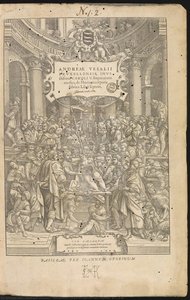 De humani corporis fabrica libri septem, N*.1.1(A)1555

Saggi su Skeleton
 Pittori lituani del 20° secoloScopri i capolavori di Čiurlionis e Lipchitz. Dai un tocco di modernismo lituano alla tua casa con le riproduzioni su OriginalUniqueArt.com.
 Pittori lituani del XIX secoloScopri i capolavori di Isaac Levitan e Kanuty Rusiecki. Esplora la pittura lituana del XIX secolo su OriginalUniqueArt.com.
 The Architecture of Flesh: Mastering Anatomical Precision in Classical Figurative ArtMaster the science of classical figure painting through anatomical study and light. Explore the masters of form today.