San Salvatore: A Venetian Secret Revealed
Nestled within the labyrinthine heart of Venice, far from the clamor of St. Mark’s Square, lies San Salvatore – a church-museum that whispers tales of centuries past and offers an unexpectedly intimate encounter with Venetian artistry and history. Often overlooked by the throngs of tourists, this hidden gem reveals itself as a remarkably preserved testament to the city's enduring cultural legacy, inviting visitors on a journey through sacred art, architectural evolution, and the captivating spirit of Venice itself. It’s more than just a museum; it’s a portal into a bygone era, offering a profound connection to the soul of this extraordinary city.
The building's origins are shrouded in some mystery, though its core structure dates back to the 8th century, initially conceived as a female monastery. This monastic foundation, established by Desiderius and his wife Ansa, quickly gained royal patronage and expanded dramatically over subsequent centuries. The site’s strategic location meant it was built upon layers of history – Roman foundations were cleverly incorporated into the evolving structure, reflecting Venice's unique position at the crossroads of empires. The church itself is a fascinating blend of styles, showcasing elements from the Carolingian period, Romanesque influences, and later Renaissance additions. The bell tower, a striking feature of the skyline, stands as a proud symbol of Venetian resilience and artistic ambition.
A Treasury of Sacred Art
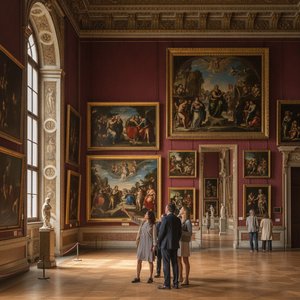
San Salvatore’s collection is centered around its profound religious significance, showcasing a remarkable array of sacred art spanning from the early medieval period to the Renaissance. Among its most prized possessions are frescoes attributed to Maestro di San Gaggio – a pioneering Venetian painter whose innovative use of color and perspective foreshadowed the techniques of the Renaissance masters. These vibrant works depict scenes from the life of Christ and the Virgin Mary, offering a glimpse into the devotional practices of Venice’s elite. The museum also houses a stunning 16th-century processional cross, believed to have belonged to Desiderius himself, adding an aura of royal patronage and spiritual devotion.
Beyond these highlights, visitors will discover a wealth of smaller treasures: intricately carved reliquaries, illuminated manuscripts, and devotional objects that speak volumes about the faith and artistic sensibilities of Venice’s past. The museum's collection isn’t merely static; it breathes with the stories of those who created and venerated these works, offering a tangible connection to the spiritual heart of the city.
Architectural Layers: A Journey Through Time
Exploring San Salvatore is as much an architectural experience as it is an artistic one. The building’s layered history is vividly revealed through its diverse structural elements. The original monastic church, with its simple yet elegant design, forms the foundation upon which subsequent additions were built – a testament to Venice's ability to adapt and evolve over time. The Oratory of Santa Maria in Solario, a jewel of Romanesque architecture, stands as a particularly striking example of early Venetian craftsmanship. The museum’s layout itself is a fascinating narrative, guiding visitors through the successive phases of construction and renovation.
Don't miss the opportunity to examine the remnants of the Roman foundations beneath the monastery – a tangible link to Venice’s ancient past. The carefully preserved mosaics and architectural details offer a unique insight into the city’s layered history, revealing how its artistic traditions evolved over centuries.
Beyond the Walls: Context and Connections
To fully appreciate San Salvatore, it's helpful to consider its place within Venice’s broader cultural landscape. The museum is part of a larger complex that includes the Basilica di Santa Giulia, a former nunnery now housing a fascinating collection of artifacts related to Venetian history and art. Nearby, the iconic Giudecca (Santa Maria della Salute) stands as a powerful symbol of Venice's maritime prowess and artistic ambition. Exploring these interconnected sites provides a richer understanding of the city’s complex past.
Furthermore, research into artists like Grifo di Tancredo – a key figure in Venetian painting during the 13th century – reveals the influence of San Salvatore’s artistic environment. His innovative techniques and stylistic choices demonstrate how this relatively unassuming church played a crucial role in shaping the development of Renaissance art. Salvatore Fergola, another notable painter from the same period, further illustrates the vibrant artistic community that flourished within Venice's walls.
A Unique Venetian Experience
What truly sets San Salvatore apart is its intimate atmosphere and authentic Venetian character. Unlike many of Venice’s more crowded attractions, this museum offers a sense of tranquility and discovery. It’s a place to slow down, reflect on the city's rich history, and connect with the artistic legacy of Venice. San Salvatore isn’t just a museum; it’s a portal into the soul of Venice – a hidden treasure waiting to be uncovered.