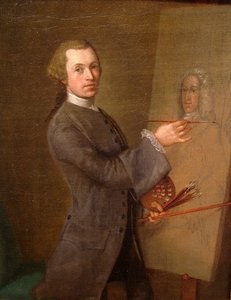
Explore the evocative landscapes & rural life paintings of William Darling McKay (1844-1924). Capturing Scottish scenes, his work reflects Victorian realism.
Nestled within the historic heart of Haddington, the John Muir House stands as more than a mere architectural relic; it is a profound portal into the formative years of a man whose spirit reshaped our global perception of the wild. Designed by the esteemed architect William Burn in 1832, the structure exemplifies the Tudor Revival style, its symmetrical stone façade offering a sense of enduring resilience that mirrors the very landscapes Muir sought to protect. Once serving as the County Buildings upon the site of a former royal palace, the building’s evolution—from a seat of administrative power to a sanctuary for historical memory—tells a story of Scotland’s shifting values, moving from the grandeur of royalty toward a deep-seated reverence for the natural world. The architecture itself, with its deliberate use of stone and classical proportions, provides a dignified stage for the intimate history contained within.
The Intimacy of Discovery: The Collection
Stepping across its threshold, one enters an environment where history is not merely observed but felt through a remarkably intimate collection of artifacts. Unlike grander institutions that overwhelm with scale, the John Muth House captivates through the poignant details of a life lived in pursuit of beauty. Visitors are invited to trace the contours of Muir’s developing philosophy through his personal correspondence and early writings, where handwritten letters reveal an unwavering conviction in the sanctity of nature. For the art lover or the discerning collector, the collection offers a sensory journey into the origins of environmental thought:
Photographic Echoes:
Early photographic prints from Yosemite Valley, capturing the majestic granite cliffs and cascading waterfalls that once ignited Muir’s soul.
The Written Word:
Meticulous notebooks and sketches that document his youthful observations of the Scottish landscape with scientific precision and poetic grace.
Personal Relics:
Artifacts that bridge the gap between the legendary conservationist and the young boy wandering the hills of East Lothian, offering a tangible connection to a restless spirit.
A Sanctuary for the Modern Soul
Beyond its historical and architectural merits, the museum serves as a place of pilgrimage, offering a quietude that is increasingly rare in our modern age. The atmosphere within these stone walls evokes a sense of peace, perhaps a reflection of the tranquility Muir found amidst the wildness of Scotland. It is a space where the landscape of East Lothian—its rolling hills and coastal vistas—meets the global legacy of the Sierra Club. For interior designers and those who curate spaces of inspiration, the museum stands as a masterclass in how environment shapes identity. To visit the John Muir House is to engage in a dialogue with the past, finding within its halls the seeds of a movement that continues to champion the protection of our planet’s most precious treasures. It remains an essential destination for those who seek to understand how a single individual's passion can blossom into a global crusade for conservation.
A OriginalUniqueArt.com szerkesztősége által
Művészeti kvíz
Minden kérdésre csak egyetlen helyes válasz létezik.
Kérdés 1:
Who designed the John Muir House in 1832?
Kérdés 2:
Which architectural style does the John Muir House exemplify?
Kérdés 3:
What was the original purpose of the building before it became a museum?
Kérdés 4:
Which type of photographic prints are included in the museum's collection?
Fedezze fel John Singer Sargent 25 legikonikusabb művészeti alkotását! Portrék, impresszionista stílus és a fény játéka – inspirálódjon Sargent életrajzából és vászonképeiből. Művészeti reprodukciók otthonába a OriginalUniqueArt-on!
Fedezze fel John Constable 25 legszebb művészeti alkotását! Ismerje meg a romantika ikonikus tájképeit, Dedham Vale szépségét és a természet lenyűgöző ábrázolásait. Vászonkép reprodukcióinkkal eleganciát csempészhet otthonába – OriginalUniqueArt.com
Fedezze fel a National Gallery London 25 legikonikusabb remekművét! Monet, Van Gogh és más mesterek festményeinek történeteit olvassa el. Inspirálja otthonát klasszikus művészettel – OriginalUniqueArt.com.