Yefim Volkov portréja

A 31 legnevesebbebb Yefim Volkov festmény, mindegyik egyedistens

Frissítve: november 2026 · rangsorolva népszerűségi pontszámunk alapján (minden mű keresései, látogatásai és megrendelései alapján) · 31 mű Yefim Volkov alkotása a katalógusunkban

Röviden

Marsh in Autumn (1871) az a Yefim Volkov festmény, amely a legtöbb tekintetet felvonja; az eredeti mű a Tretyakov-galéria gyűjteményében található, Moszkva. Ezután a tekintet Flowering Meadow és Evening (1877) elemre irányul. A Yefim Volkov 31 műve közül a katalógusunkban megtalálható 31 legnépesebb alkotás, melyeket az év, a múzeum és az örökévalóságának okai kísérnek.

1844 – 1920, Saint Petersburg A legtöbb mű: Dagestan Fine Arts Museum

A galéria szemével: Yefim Volkov legjobb 10 festménye

1
Marsh in Autumn (1871) (1889) -ja Yefim Volkov

Marsh in Autumn

1871 · Oil · Tretyakov-galéria, Moszkva

Marsh in Autumn by Yefim Volkov presents a tranquil marshland scene set against a backdrop of dense trees. The composition centers on a man positioned on a bridge, looking out over the expanse of water. Further into the distance, a second figure is visible, observing the landscape from a different vantage point. These human elements provide a sense of scale to the natural environment, suggesting a quiet moment of contemplation…

2
Flowering Meadow (1889) -ja Yefim Volkov

Flowering Meadow

The meadow stretches toward a distant line of trees, a sea of lush green grass broken by the sudden, bright punctuation of yellow wildflowers. Sunlight settles upon the field, catching the edges of the petals and the blades of grass. There is a stillness here, the kind found in the pause between a breeze and a breath. The trees in the background provide a soft boundary, grounding the expanse of…

Yefim Volkov híres festményei, 11 és 31 között

A témák, amelyek Yefim Volkov figyelmét meghúzták

A négy leggyakorobban előforduló téma ebben az eredeti művekben, mindegyik a legkiválóbb példájával.

A műemlékek, amelyek Yefim Volkov eredeti műveit őrzik

A 8 olyan múzeum, amely a legtöbb ezen az oldalon szereplő festményet őrzi.

Múzeum Város Yefim Volkov művei Ebből a listából származó festmények
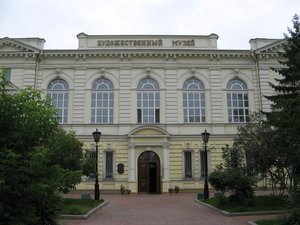
Dagestan Fine Arts Museum, MakhachkalaDagestan Fine Arts Museum Makhachkala 2 Golden Autumn (also known as Landscape with River), Forest Landscape
Tretyakov-galéria, MoszkvaTretyakov-galéria Moszkva 1 Marsh in Autumn
Bryansk Regional Art Museum, BryanskBryansk Regional Art Museum Bryansk 1 Flowering Meadow
The State Museum of Fine Arts of Tatarstan Republic, KazanThe State Museum of Fine Arts of Tatarstan Republic Kazan 1 Forest in Spring
Varsói Nemzeti Múzeum, VarsóVarsói Nemzeti Múzeum Varsó 1 On the way to pasture
Irkutsk Regional Art Museum, IrkutskIrkutsk Regional Art Museum Irkutsk 1 Haymaking
Taganrog Art Museum, TaganrogTaganrog Art Museum Taganrog 1 Landscape with a Pond
Arkhangelsk Regional Museum of Fine Arts, ArchangelskArkhangelsk Regional Museum of Fine Arts Archangelsk 1 Landscape with a Swamp

Yefim Volkov évtizedekig: egy egyedi eredeti mű minden évtizedben

Művek évtizedenként

Váassz ki egy évtizedet, hogy megnézhesd az azt meghatározó eredetiműveket.

Yefim Volkov festményei: kérdések a galériának

Mi a leghíresebb műve Yefim Volkovnek?Fedje fel a választ

Marsh in Autumn (1871), Tretyakov-galéria, Moszkva. Ezután Flowering Meadow és Evening (1877) következik.

Milyen életkorában alkotta meg Yefim Volkov a(z) Marsh in Autumn műszt?Fedje fel a választ

27 éves: Marsh in Autumn 1871-ből származik, Yefim Volkov pedig 1844-ben született.

Melyik tíz festménye Yefim Volkov a leghíresebb?Fedje fel a választ

Marsh in Autumn, Flowering Meadow, Evening, Fishing Boats, Forest in Spring, On the way to pasture, Early Snow, Haymaking, Midday in the Woods és Forest Stream. A fenti rangsor a művek évszamarát és a múzeumát jelzi.

Hány mű alkotása ismert Yefim Volkov nevében?Fedje fel a választ

Katalógusunkban 31 mű található Yefim Volkov alkotótól, 1871 és 1910 év közötti időszakból.

Hol tekinthetők meg a leghíresebb Yefim Volkov eredetijeit?Fedje fel a választ

Leginkább Dagestan Fine Arts Museum (Makhachkala), Tretyakov-galéria (Moszkva) és Bryansk Regional Art Museum (Bryansk) található. A fenti múzeumi táblázatban mindegyik felsorolásra került.

Melyik időszakban alkotta Yefim Volkov a leghíresebb festményeit?Fedje fel a választ

1890s alatt: a jelen laphonon található 31 műből 8 készült ebben az időszakban, köztük Forest Stream.

Melyik híres Yefim Volkov festmény a legkorábbi, és melyik a legutóbb készült?Fedje fel a választ

Ezen az oldalon a leghitelesebb Marsh in Autumn (1871), a legutóbbi pedig Landscape with a Hut in Ukraine (1910).

Milyen anyagokkal festett leggyakrabban Yefim Volkov?Fedje fel a választ

Oil, a jelen oldalon található 31 műből 2 darab esetén.

Milyen Yefim Volkov eredeti műveket láthatok a Dagestan Fine Arts Museum kiállításaiban?Fedje fel a választ

Golden Autumn (also known as Landscape with River) és Forest Landscape: a Dagestan Fine Arts Museum, Makhachkala 2 művet őrzi ezen az oldalon.

Yefim Volkov: a művész portréja

A Soul Captured in Shadow and Light: The World of Efim Volkov

Efim Efimovich Volkov (1844-1920) remains a quietly significant figure within the landscape tradition of 19th-century Russian art. Born into a family of physicians in St. Petersburg, his artistic journey began not with formal training but with an innate sensitivity to the natural world – a quality that would profoundly shape his distinctive style and enduring appeal. Volkov’s work isn't characterized by grand pronouncements or dramatic narratives; instead, he meticulously rendered the subtle poetry of Russian forests, rivers, and meadows, capturing fleeting moments of light and shadow with remarkable precision and emotional depth. His legacy lies not in revolutionary innovation but in a steadfast dedication to observing and translating the quiet beauty of his homeland.

Early Life and Artistic Foundations

Volkov’s early artistic development was largely self-directed, initially focusing on drawing and etching. He enrolled at the Drawing School of the Society for the Encouragement of Arts in 1866, followed by studies at the Imperial Academy of Arts (IAKh) as a non-credit student from 1867 to 1870. While he didn’t pursue a traditional academic path, these formative experiences provided him with fundamental skills and exposed him to the prevailing artistic currents of the time. Notably, his early work demonstrated an immediate affinity for landscape painting, evident in pieces like “View of Petersburg’s Outskirts,” which showcased a nascent ability to capture atmospheric perspective and the delicate interplay of light on urban scenes. His family's background instilled in him a certain appreciation for detail and observation – qualities that would later become hallmarks of his artistic practice.

Travels and Influences: The Crimean Expedition and Beyond

A pivotal moment in Volkov’s career arrived in 1879 when he collaborated with fellow artist, Ilya Repin (later known as I.I. Shishkin), on a journey to the Crimea. This experience proved transformative, exposing him to the diverse landscapes of southern Russia and fostering a deeper understanding of color and light. Subsequent travels – including a trip to Turkey, Syria, Palestine, Egypt, and Greece in 1888 – broadened his artistic horizons further, introducing him to new visual motifs and techniques. These excursions weren’t merely vacations; they were deliberate explorations aimed at enriching his artistic vocabulary and informing his perception of the world. The influence of these travels is subtly woven into his later works, particularly evident in the increased use of atmospheric perspective and a heightened sensitivity to color variations.

A Style Defined by Observation: The Essence of Volkov’s Landscapes

Volkov's artistic style can be characterized as deeply observational and intensely personal. He eschewed grand romantic gestures or dramatic compositions, instead focusing on capturing the quiet details of the Russian countryside. His paintings are often dominated by muted tones – greens, browns, grays – creating a sense of stillness and introspection. He was particularly adept at depicting forests, riversides, and meadows, rendering them with remarkable accuracy and sensitivity. A key element of his technique involved loose, dynamic brushstrokes that conveyed the movement of water and wind, while also suggesting the texture of foliage and earth. His compositions frequently feature a sense of depth achieved through careful attention to atmospheric perspective – creating an illusion of distance and space. Works like “Landscape with a Swamp” and "Golden Autumn" exemplify this approach, offering serene glimpses into the heart of the Russian wilderness.

Legacy and Recognition

Efim Volkov’s contribution to Russian landscape painting is often understated, yet his work holds considerable value. He was elected an academician in 1899 and a member of the Imperial Academy of Arts in 1895, reflecting the recognition of his artistic merit by the established art institutions of the time. Throughout his career, he exhibited extensively at major salons and exhibitions, both in Russia and abroad, including those in Paris, London, and Munich. His paintings are now housed in numerous museums across Russia, testament to their enduring appeal. Volkov’s legacy lies not in revolutionary innovation but in a quiet dedication to capturing the beauty of his homeland with honesty and sensitivity – a reminder that profound art can often be found in the most unassuming details. He represents a crucial link between the earlier Romantic landscape painters and the emerging Impressionist movement, embodying a uniquely Russian sensibility within the broader European artistic context.