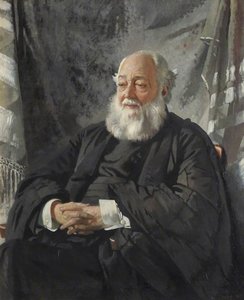
William Orpen portréja

A 100 legnevesebbebb William Orpen festmény, mindegyik egyedistens

Frissítve: november 2026 · rangsorolva népszerűségi pontszámunk alapján (minden mű keresései, látogatásai és megrendelései alapján) · 530 mű William Orpen alkotása a katalógusunkban

Röviden

Winston Churchill (1916) az a William Orpen festmény, amely a legtöbb tekintetet felvonja; az eredeti mű a National Portrait Gallery gyűjteményében található, London. Ezután a tekintet Early Morning (1922) és Field Marshal Sir Douglas Haig (1917) elemre irányul. A William Orpen 530 műve közül a katalógusunkban megtalálható 100 legnépesebb alkotás, melyeket az év, a múzeum és az örökévalóságának okai kísérnek.

1878 – 1931, Stillorgan A legtöbb mű: Imperial War Múzeum

A galéria szemével: William Orpen legjobb 10 festménye

1
Winston Churchill (1916) (1889) -ja William Orpen

Winston Churchill

1916 · Oil On Canvas · National Portrait Gallery, London

The air in the studio feels heavy, thick with the weight of a man caught in a storm. In this 1916 oil on canvas, Sir William Newenham Montague Orpen captures Winston Churchill at a moment of profound isolation. The subject, Winston S. Churchill, sits with a resolute, almost defiant presence, his gaze fixed and steady. There is a palpable sense of gravity in the room, as if the very atmosphere…

2
Early Morning (1922) (1889) -ja William Orpen

Early Morning

1922 · Oil

The quiet stillness of 1922 settles over the scene in Early Morning. This work emerges from the hand of William Orpen, an Irish artist who lived from 1878 to 1931. Within the frame, a woman rests in the soft light of a morning hour, her presence captured in a moment of private repose. She lies on her side upon white sheets, cradling a cup of tea as she sips, seemingly…

3
Field Marshal Sir Douglas Haig (1917) (1889) -ja William Orpen

Field Marshal Sir Douglas Haig

1917 · Acrylic On Canvas · Imperial War Múzeum, London

A Portrait of Courage: William Orpen’s Haig William Newenham Montague Orpen's depiction of Field Marshal Sir Douglas Haig stands as a testament to British resilience during the First World War, capturing not merely an officer’s likeness but also the spirit of leadership forged in the crucible of conflict. Completed in 1917, this monumental portrait transcends mere representation; it embodies the solemn dignity and unwavering resolve demanded by commanding armies on…

4
Lord Riddell (1928) (1889) -ja William Orpen

Lord Riddell

1928 · Akril festmény vászonon · Royal Free Hospital, London

A Szomorú Lord Riddell Megjegyzései – Egy Érdélyes Szerző Társaságának Öröksége William Newenham Montague Orpen, az ír festőművész és építész, aki főleg Лондоне dolgozott (Született: 1878; Halott: 1931), Arthur Herbert Orpen ügyvédi és Anne Caulfield színésznő özvegye gyermeként született Stillorganban, Dublin megyében. Mindkét szülője szerető volt az művészet iránt, ami korán ösztönözte a családjukban az alkotó tevékenységet. Az ő első fivére, Richard Caulfield Orpen építész lett, aki különleges hagyományt alakított…

5
Portrait of Lady Idina Wallace (1916) (1889) -ja William Orpen

Portrait of Lady Idina Wallace

1916 · Oil On Canvas

The portrait presents a woman, Lady Idina Wallace, seated in an ornate chair against a dark, uniform black background. She is positioned slightly to the left of the center, her form defined by soft, diffused lighting that originates from an unseen source. This light creates gentle highlights on her face and clothing, establishing a sense of volume and dimension. Below the chair, a small dog sits on a checkered floor,…

6
Lady on a Couch (1900) (1889) -ja William Orpen

Lady on a Couch

1900 · Oil On Canvas · New Walk Museum - Art Gallery, Leicester

This captivating portrait, titled Lady on a Couch, immediately transports the viewer into an atmosphere of hushed, opulent domesticity. The subject reclines upon a richly appointed chaise lounge, embodying a moment suspended between languor and contemplation. It is more than just a likeness; it is an immersion into the aesthetic sensibilities of the turn of the century. The composition centers with masterful grace on the woman’s figure, drawing the eye…

7
The Chef of the Hotel Chatham, Paris (1889) -ja William Orpen

The Chef of the Hotel Chatham, Paris

Oil On Canvas

The oil on canvas painting titled The Chef of the Hotel Chatham, Paris was executed by the artist William Orpen RA. Created about 1921, the work depicts Eugene Grossrieter, a man known by the nickname ‘Chester’. Grossrieter held the position of second chef at the Hotel Chatham in Paris. The moniker ‘Chester’ originated from the subject's documented dislike of cheese.

8
Francine J. M. Clark (1921) (1889) -ja William Orpen

Francine J. M. Clark

1921 · Oil On Canvas · Sterling and Francine Clark Art Institute, Williamsburg

Sir William Newenham Montague Orpen's "Francine J. M. Clark," painted in 1921, is more than a simple portrait; it’s a carefully constructed tableau of Victorian elegance and subtle psychological depth. The painting captures Francine Clary, a prominent figure within the Sterling and Francine Clark Art Institute, seated with an air of quiet contemplation. Her posture—hands gently clasped in her lap, gaze directed towards the viewer—immediately establishes a connection, inviting us…

9
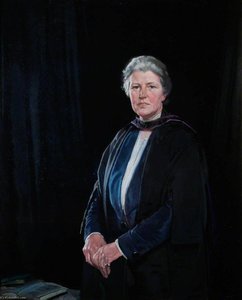
Louisa Brandreth Aldrich Blake (1865–1925) (1925) (1889) -ja William Orpen

Louisa Brandreth Aldrich Blake (1865–1925)

1925 · Oil On Canvas · Royal Free Hospital, London

The woman sits in a quiet, centered stillness. Louisa Brandreth Aldrich Blake faces the viewer with a gaze that holds both intelligence and a certain heavy composure. Her hands are clasped gently in her lap, a gesture of restraint against the dark void surrounding her. The light finds her face and the crisp white of her collar, leaving the rest of the world to the shadows. It is a portrait…

10
Sir Guy Dawber, PRIBA, RA, FSA, RGM (1930) (1889) -ja William Orpen

Sir Guy Dawber, PRIBA, RA, FSA, RGM

1930 · Oil On Canvas · RIBA Library Drawings And Archives Collections, London

The room is still, held in a soft, focused light that spills from the upper left, casting gentle shadows across the face of an older gentleman. He sits at his desk, his attention entirely consumed by the architectural drawings spread before him. There is a profound sense of professional dedication in his posture, a stillness that suggests the world outside has momentarily ceased to exist. He is a man lost…

William Orpen híres festményei, 11 és 100 között

11Sir Ernest John Pickstone Benn, 2nd Bt (1928) (1889) -ja William OrpenSir Ernest John Pickstone Benn, 2nd Bt1928 · National Portrait Gallery 12Sir Hugh Reid (1860–1935), in the Uniform of the Scottish Archers (1929) (1889) -ja William OrpenSir Hugh Reid (1860–1935), in the Uniform of the Scottish Archers1929 13Myron T. Herrick (1925) (1889) -ja William OrpenMyron T. Herrick1925 · National Portrait Gallery 14Lieutenant-General Archibald Cameron Macdonell (1918) (1889) -ja William OrpenLieutenant-General Archibald Cameron Macdonell1918 · Canadian War Museum 15Ganga Singh, Maharaja of Bikaner (1919) (1889) -ja William OrpenGanga Singh, Maharaja of Bikaner1919 16James Staats Forbes, Art Connoisseur and Railway Manager (1900) (1889) -ja William OrpenJames Staats Forbes, Art Connoisseur and Railway Manager1900 · Manchester Art Gallery 17Captain John Shawe-Taylor (1908) (1889) -ja William OrpenCaptain John Shawe-Taylor1908 18Evelyn Marshall Field (Mrs. Marshall Field III) (1921) (1889) -ja William OrpenEvelyn Marshall Field (Mrs. Marshall Field III)1921 · Yale Center for British Art 19The Somme - A Clear Day : (View from the British trenches opposite of La Boisselle , showing German front line and mine craters (1917) (1889) -ja William OrpenThe Somme - A Clear Day : (View from the British trenches opposite of La Boisselle , showing German front line and mine craters1917 20Dame Madge Kendal (1927) (1889) -ja William OrpenDame Madge Kendal1927 · Tate Gallery 21Miss Ellen Charlotte Higgins (1926) (1889) -ja William OrpenMiss Ellen Charlotte Higgins1926 · Royal Holloway 22Charles Buller Heberden, Principal (1889–1920), Vice Chancellor (1910–1913) (1908) (1889) -ja William OrpenCharles Buller Heberden, Principal (1889–1920), Vice Chancellor (1910–1913)1908 · Brasenose College 23Self-Portrait (1913) (1889) -ja William OrpenSelf-Portrait1913 · Saint Louis Art Museum 24The Manchesters, Arras. (1917) (1889) -ja William OrpenThe Manchesters, Arras.1917 · Imperial War Museums 25Major General Hugh M. Trenchard, CB, DSO (1917) (1889) -ja William OrpenMajor General Hugh M. Trenchard, CB, DSO1917 · Imperial War Múzeum 26George C. Beresford (1900) (1889) -ja William OrpenGeorge C. Beresford1900 · National Gallery of Victoria 27The Costermonger (1905) (1889) -ja William OrpenThe Costermonger1905 · Worcester Art Museum 28Window in London Street (1901) (1889) -ja William OrpenWindow in London Street1901 · National Gallery of Ireland 29Portrait of Augusta Gregory (1852-1932), Dramatist and Folklorist (1904) (1889) -ja William OrpenPortrait of Augusta Gregory (1852-1932), Dramatist and Folklorist1904 · National Gallery of Ireland 30Wojeck Halsuijn:The Polish Messenger (1903) (1889) -ja William OrpenWojeck Halsuijn:The Polish Messenger1903 · Rhode Island School of Design Museum of Art 31Selfportrait with model (also known as Summer Afternoon) (1905) (1889) -ja William OrpenSelfportrait with model (also known as Summer Afternoon)1905 · Művészeti Múzeum, Boston 32The Artist as a Young Man (1900) (1889) -ja William OrpenThe Artist as a Young Man1900 33Major General Sir F.O.W. Loomis, KCB, CMG, DSO, and Bar (1910) (1889) -ja William OrpenMajor General Sir F.O.W. Loomis, KCB, CMG, DSO, and Bar1910 · Canadian War Museum 34Portrait of the Artist's Parents (1911) (1889) -ja William OrpenPortrait of the Artist's Parents1911 · National Gallery of Ireland 35The Vere Foster Family (1907) (1889) -ja William OrpenThe Vere Foster Family1907 · National Gallery of Ireland 36Major General Sir Henry Burstall, KCB, CMG (1910) (1889) -ja William OrpenMajor General Sir Henry Burstall, KCB, CMG1910 · Canadian War Museum 37A Canadian Airman (Captain R. T. C. Hoidge, The Military Cross and Bar) (1910) (1889) -ja William OrpenA Canadian Airman (Captain R. T. C. Hoidge, The Military Cross and Bar)1910 · Canadian War Museum 38Lottie of Paradise Walk (1905) (1889) -ja William OrpenLottie of Paradise Walk1905 · Kanadai Nemzeti Galéria 39The Model (1911) (1889) -ja William OrpenThe Model1911 40Lady Orpen (1907) (1889) -ja William OrpenLady Orpen1907 41Ernest Egbert Blyth (1857–1934), Last Mayor First Lord Mayor of Norwich (1910) (1911) (1889) -ja William OrpenErnest Egbert Blyth (1857–1934), Last Mayor First Lord Mayor of Norwich (1910)1911 42Arthur James Balfour (1848–1930), 1st Earl of Balfour, OM, KG, PC, FBA, FRS (1919) (1889) -ja William OrpenArthur James Balfour (1848–1930), 1st Earl of Balfour, OM, KG, PC, FBA, FRS1919 · British Academy 43Portrait of Dr E.J. Dillon, War Correspondent and Publicist (1916) (1889) -ja William OrpenPortrait of Dr E.J. Dillon, War Correspondent and Publicist1916 · National Gallery of Ireland 44Looking at the Sea (1912) (1889) -ja William OrpenLooking at the Sea1912 · National Gallery of Ireland 45The Holy Well (1916) (1889) -ja William OrpenThe Holy Well1916 · National Gallery of Ireland 46Portrait of John L. Severance (1922) (1889) -ja William OrpenPortrait of John L. Severance1922 · Cleveland Museum of Art 47The Right Hon. Louis Botha (1917) (1889) -ja William OrpenThe Right Hon. Louis Botha1917 · National Gallery of Victoria 48Portrait of Avenal St. George (1915) (1889) -ja William OrpenPortrait of Avenal St. George1915 49The Household Brigade Passing to the Ypres Salient, Cassel (1917) (1889) -ja William OrpenThe Household Brigade Passing to the Ypres Salient, Cassel1917 50Sowing new seed (1913) (1889) -ja William OrpenSowing new seed1913 51Mrs Charles S Carstairs (1914) (1889) -ja William OrpenMrs Charles S Carstairs1914 · National Gallery of Art 52The Angler (1912) (1889) -ja William OrpenThe Angler1912 53Major-General Sir David Watson (1918) (1889) -ja William OrpenMajor-General Sir David Watson1918 · Canadian War Museum 54John Joseph Pershing (1919) (1889) -ja William OrpenJohn Joseph Pershing1919 · National Portrait Gallery 55Vivien St. George (1918) (1889) -ja William OrpenVivien St. George1918 56Maurice Pascal Alers Hankey, 1st Baron Hankey (1919) (1889) -ja William OrpenMaurice Pascal Alers Hankey, 1st Baron Hankey1919 · National Portrait Gallery 57Bombing Night (1918) (1889) -ja William OrpenBombing Night1918 58The Refugee (B) (1918) (1889) -ja William OrpenThe Refugee (B)1918 59David Lloyd George (1863–1945) (1919) (1889) -ja William OrpenDavid Lloyd George (1863–1945)1919 60A Peace Conference at the Quai d'Orsay (1919) (1889) -ja William OrpenA Peace Conference at the Quai d'Orsay1919 61Sir Henry Hughes Wilson, 1st Bt (1919) (1889) -ja William OrpenSir Henry Hughes Wilson, 1st Bt1919 62Sunlight (1925) (1889) -ja William OrpenSunlight1925 · National Gallery of Ireland 63Portrait of Sir Herbert Cook (1923) (1889) -ja William OrpenPortrait of Sir Herbert Cook1923 64Paul Mellon (1924) (1889) -ja William OrpenPaul Mellon1924 · Yale Center for British Art 65Portrait of Andrew W. Mellon (1924) (1889) -ja William OrpenPortrait of Andrew W. Mellon1924 66Charles Lawrence, 1st Baron Lawrence of Kingsgate (1927) (1889) -ja William OrpenCharles Lawrence, 1st Baron Lawrence of Kingsgate1927 67The Right Honourable Sir Clifford Allbutt (1920) (1889) -ja William OrpenThe Right Honourable Sir Clifford Allbutt1920 · Fitzwilliam Múzeum 68Sir Thomas Jaffrey, Bt, LLD, Chairman of Aberdeen Art Gallery Committee (1928–1951) (1926) (1889) -ja William OrpenSir Thomas Jaffrey, Bt, LLD, Chairman of Aberdeen Art Gallery Committee (1928–1951)1926 69In Their Cellar in Amiens Captain R. Maude, Department of the Army, Provost Marshal General, Awarded the Croix de Guerre by the French Authorities, and Colonel Du Tiel, Commandant d'Armes, Amiens (1918) (1889) -ja William OrpenIn Their Cellar in Amiens Captain R. Maude, Department of the Army, Provost Marshal General, Awarded the Croix de Guerre by the French Authorities, and Colonel Du Tiel, Commandant d'Armes, Amiens1918 70General Sir John S. Cowans (1862–1921) (1931) (1889) -ja William OrpenGeneral Sir John S. Cowans (1862–1921)1931 71Lottie and the Baby (1907) (1889) -ja William OrpenLottie and the Baby1907 · Walker Art Gallery 72The Signing of Peace in the Hall of Mirrors, Versailles (1919) (1889) -ja William OrpenThe Signing of Peace in the Hall of Mirrors, Versailles1919 · Imperial War Museums 73The Mirror (1900) (1889) -ja William OrpenThe Mirror1900 · Tate Gallery 74Study For A Portrait Of Leonard Stokes (1889) -ja William OrpenStudy For A Portrait Of Leonard Stokes 75German Planes Visiting Cassel (1917) (1889) -ja William OrpenGerman Planes Visiting Cassel1917 · Imperial War Múzeum 76The Household Brigade Passing to the Ypres Salient, Cassel (1917) (1889) -ja William OrpenThe Household Brigade Passing to the Ypres Salient, Cassel1917 · Imperial War Múzeum 77German Sick, Captured at Messines, in a Canadian Hospital (1917) (1889) -ja William OrpenGerman Sick, Captured at Messines, in a Canadian Hospital1917 · Imperial War Múzeum 78Regent Street (1910) (1889) -ja William OrpenRegent Street1910 · Government Art Collection 79The Selecting Jury of the New English Art Club (1909) (1889) -ja William OrpenThe Selecting Jury of the New English Art Club1909 · National Portrait Gallery 80Henry Montagu Butler (1833 1918), Classical Scholar (1911) (1889) -ja William OrpenHenry Montagu Butler (1833 1918), Classical Scholar1911 · Cambridge-i Egyetem 81Arthur Schuster (1851–1934) (1912) (1889) -ja William OrpenArthur Schuster (1851–1934)1912 · A Royal Society 82Robert Sterling Clark (1921) (1889) -ja William OrpenRobert Sterling Clark1921 · Sterling and Francine Clark Art Institute 83Self Portrait (1924) (1889) -ja William OrpenSelf Portrait1924 · Fitzwilliam Múzeum 84A Dead Ptarmigan (1889) -ja William OrpenA Dead Ptarmigan 85Life Class on the Beach (1889) -ja William OrpenLife Class on the Beach 86David Beatty, 1st Earl Beatty (1889) -ja William OrpenDavid Beatty, 1st Earl BeattyNational Gallery of Scotland 87Sir Andrew Lewis, Lld, Lord Provost Of Aberdeen (1889) -ja William OrpenSir Andrew Lewis, Lld, Lord Provost Of Aberdeen 88My Workroom at Cassel (1917) (1889) -ja William OrpenMy Workroom at Cassel1917 · Imperial War Múzeum 89Paul Waterhouse (1861–1924), PRIBA (1923) (1889) -ja William OrpenPaul Waterhouse (1861–1924), PRIBA1923 · RIBA Library Drawings And Archives Collections 90A Grenadier Guardsmen (1917) (1889) -ja William OrpenA Grenadier Guardsmen1917 · Imperial War Múzeum 91Sir William McCormick (1920) (1889) -ja William OrpenSir William McCormick1920 · Tate Gallery 92Mrs Thomas Howarth (1926) (1889) -ja William OrpenMrs Thomas Howarth1926 93Reginald Brabazon, 12th Earl of Meath (1929) (1889) -ja William OrpenReginald Brabazon, 12th Earl of Meath1929 94Lady Orpen (1907) (1889) -ja William OrpenLady Orpen1907 · Tate Gallery 95Soldiers at Cany (1900) (1889) -ja William OrpenSoldiers at Cany1900 · Government Art Collection 96The Girls College, Péronne (1917) (1889) -ja William OrpenThe Girls College, Péronne1917 · Imperial War Múzeum 97The Main Street, Combles (1917) (1889) -ja William OrpenThe Main Street, Combles1917 · Imperial War Múzeum 98The Right Honourable Baron Leverhulme (1851–1925), Honorary Freeman of the Borough, Mayor of Bolton (1918–1919) (1921) (1889) -ja William OrpenThe Right Honourable Baron Leverhulme (1851–1925), Honorary Freeman of the Borough, Mayor of Bolton (1918–1919)1921 · Bolton Town Hall 99Afternoon Sleep (1912) (1889) -ja William OrpenAfternoon Sleep1912 100Beaumont Hamel (1920) (1889) -ja William OrpenBeaumont Hamel1920

William Orpen híres festményei, korszakonként

A témák, amelyek William Orpen figyelmét meghúzták

A négy leggyakorobban előforduló téma ebben az eredeti művekben, mindegyik a legkiválóbb példájával.

A műemlékek, amelyek William Orpen eredeti műveit őrzik

A 8 olyan múzeum, amely a legtöbb ezen az oldalon szereplő festményet őrzi.

Múzeum Város William Orpen művei Ebből a listából származó festmények
Imperial War Múzeum, LondonImperial War Múzeum London 14 Field Marshal Sir Douglas Haig, Major General Hugh M. Trenchard, CB, DSO, German Planes Visiting Cassel
National Gallery of Ireland, DublinNational Gallery of Ireland Dublin 14 Window in London Street, Portrait of Augusta Gregory (1852-1932), Dramatist and Folklorist, Portrait of the Artist's Parents
Canadian War Museum, OttawaCanadian War Museum Ottawa 7 Lieutenant-General Archibald Cameron Macdonell, Major General Sir F.O.W. Loomis, KCB, CMG, DSO, and Bar, Major General Sir Henry Burstall, KCB, CMG
National Portrait Gallery, LondonNational Portrait Gallery London 18 Winston Churchill, Sir Ernest John Pickstone Benn, 2nd Bt, Maurice Pascal Alers Hankey, 1st Baron Hankey
Tate Gallery, LondonTate Gallery London 4 Dame Madge Kendal, The Mirror, Sir William McCormick
Imperial War Museums, LondonImperial War Museums London 6 The Manchesters, Arras., The Signing of Peace in the Hall of Mirrors, Versailles
National Gallery of Victoria, MelbourneNational Gallery of Victoria Melbourne 5 George C. Beresford, The Right Hon. Louis Botha
RIBA Library Drawings And Archives Collections, LondonRIBA Library Drawings And Archives Collections London 4 Sir Guy Dawber, PRIBA, RA, FSA, RGM, Paul Waterhouse (1861–1924), PRIBA

William Orpen évtizedekig: egy egyedi eredeti mű minden évtizedben

Művek évtizedenként

Váassz ki egy évtizedet, hogy megnézhesd az azt meghatározó eredetiműveket.

William Orpen festményei: kérdések a galériának

Mi a leghíresebb műve William Orpennek?Fedje fel a választ

Winston Churchill (1916), National Portrait Gallery, London. Ezután Early Morning (1922) és Field Marshal Sir Douglas Haig (1917) következik.

Milyen életkorában alkotta meg William Orpen a(z) Winston Churchill műszt?Fedje fel a választ

38 éves: Winston Churchill 1916-ből származik, William Orpen pedig 1878-ben született.

Melyik tíz festménye William Orpen a leghíresebb?Fedje fel a választ

Winston Churchill, Early Morning, Field Marshal Sir Douglas Haig, Lord Riddell, Portrait of Lady Idina Wallace, Lady on a Couch, The Chef of the Hotel Chatham, Paris, Francine J. M. Clark, Louisa Brandreth Aldrich Blake (1865–1925) és Sir Guy Dawber, PRIBA, RA, FSA, RGM. A fenti rangsor a művek évszamarát és a múzeumát jelzi.

Hány mű alkotása ismert William Orpen nevében?Fedje fel a választ

Katalógusunkban 530 mű található William Orpen alkotótól, 1900 és 1931 év közötti időszakból.

Hol tekinthetők meg a leghíresebb William Orpen eredetijeit?Fedje fel a választ

Leginkább Imperial War Múzeum (London), National Gallery of Ireland (Dublin) és Canadian War Museum (Ottawa) található. A fenti múzeumi táblázatban mindegyik felsorolásra került.

Melyik időszakban alkotta William Orpen a leghíresebb festményeit?Fedje fel a választ

1910s alatt: a jelen laphonon található 100 műből 47 készült ebben az időszakban, köztük Winston Churchill.

Melyik híres William Orpen festmény a legkorábbi, és melyik a legutóbb készült?Fedje fel a választ

Ezen az oldalon a leghitelesebb Lady on a Couch (1900), a legutóbbi pedig General Sir John S. Cowans (1862–1921) (1931).

Milyen témakörket kedvelt William Orpen?Fedje fel a választ

Man (29), Portrait (26) és Woman (16), a jelen oldalon található 100 műművészeti alkotás között.

Milyen anyagokkal festett leggyakrabban William Orpen?Fedje fel a választ

Oil On Canvas, a jelen oldalon található 100 műből 74 darab esetén.

Milyen William Orpen eredeti műveket láthatok a Imperial War Múzeum kiállításaiban?Fedje fel a választ

Field Marshal Sir Douglas Haig, Major General Hugh M. Trenchard, CB, DSO és German Planes Visiting Cassel: a Imperial War Múzeum, London 9 művet őrzi ezen az oldalon.

William Orpen: a művész portréja

Early Life and Artistic Foundations

Sir William Newenham Montague Orpen was born on 27 November 1878 in Stillorgan, County Dublin, Ireland. He was the fourth and youngest son of Arthur Herbert Orpen and Anne Caulfield. Growing up in a household where his parents were amateur painters, he was immersed in a creative environment from his earliest years. This domestic atmosphere provided a quiet foundation for a talent that would soon demand a wider stage.

His formal training began remarkably early. At the age of thirteen, he enrolled at the Dublin Metropolitan School of Art. He spent six years within its walls, a period defined by a rapid and consistent accumulation of accolades. He did not merely participate in the school's competitions; he dominated them, securing every major prize available during his tenure. His technical proficiency was particularly evident in his command of the human form, a skill that earned him the British Isles gold medal for life drawing.

By the time he prepared to leave Ireland, his reputation as a precocious talent was already established. His early success was not a matter of luck but the result of a disciplined, early immersion into the mechanics of visual representation. This period of intense study in Dublin provided the essential technical grounding that would support his later, more complex explorations of light and shadow.

Training at the Slade School of Art

In 1897, the transition from Dublin to London marked a decisive shift in his development. He entered the Slade School of Art, a period of intense study that would last until 1899. Under the guidance of teachers such as Henry Tonks and Philip Wilson Steer, he moved beyond the foundational skills of his youth toward a more sophisticated command of the medium. It was during these years that he mastered oil painting, moving with increasing confidence through various techniques and experimental effects.

His time at the Slade was defined by a rigorous engagement with composition and light. This technical growth culminated in 1899 when he was awarded the Slade composition prize. The work that secured this distinction was his large-scale depiction, The Play Scene from Hamlet. This achievement signaled the arrival of a painter capable of handling complex narrative structures and nuanced atmosphere, setting the stage for his subsequent professional success.

The Edwardian Portraitist and Social Success

By the turn of the century, Orpen had established himself as a highly successful painter of the well-to-do. His talent for draughtsmanship made him a sought-after figure among the upper echelons of Edwardian society, where his ability to capture the likeness of the era's prominent figures led to a flurry of prestigious commissions. He moved through the social circles of London with a natural ease, securing his position as a commercially successful portraitist in the years leading up to the First World War.

His professional ascent was marked by significant institutional recognition. In 1910, he was elected an Associate of the Royal Academy, a distinction that solidified his standing within the British art establishment. His portraits from this period often revealed a psychological depth that set him apart from more conventional painters, offering a glimpse into the character of his sitters rather than merely their social standing. This period of prosperity and social integration provided the foundation for the high-profile commissions that would define his career before the outbreak of war.

Service as an Official War Artist

The outbreak of the First World War redirected Orpen’s trajectory from the polished salons of Edwardian society toward the stark realities of the Western Front. Appointed as an official war artist in 1917, he was sent to the front lines to document the conflict. This period of service would leave a permanent mark on his psyche, as the physical and emotional toll of the trenches began to weigh heavily upon his health. He moved through the landscape of war not as a chronicler of heroic myth, but as a witness to its human cost.

His output during this time was prolific and unflinching. He produced 138 drawings and paintings, a body of work that he eventually donated to the British government. His focus remained fixed on the individual rather than the grand strategy; he rendered the faces of privates, the stillness of dead soldiers, and the presence of German prisoners of war. These works, alongside his war landscapes, remain among the most arresting records of the First World War, capturing a sense of exhaustion and grief that formal military portraiture often ignored.

Technique and Artistic Style

Orpen possessed the precise, disciplined hand of a fine draughtsman. This technical facility allowed him to navigate the complexities of both formal portraiture and the starker demands of war documentation. In his depictions of the Edwardian social elite, he achieved a certain poise and presence, producing portraits of high society that shared the confident, polished "swagger" often associated with the era's most successful painters. He understood how to capture the weight of a sitter's status through the careful rendering of fabric and the subtle play of light across a face.

His approach to composition, however, frequently moved beyond simple representation into the realm of visual puzzles. He was fond of incorporating mirrors into his paintings, creating images within images that challenged the viewer's perception of depth and reality. This interest in illusion was furthered by his habit of adding false frames and collages around his subjects, a technique that disrupted the traditional boundaries of the canvas. He often embedded pictorial references to the works of other artists within his own compositions, creating a quiet dialogue between his subjects and the history of art itself.

Personal Life and Relationships

Orpen’s private life was marked by a complexity that mirrored the psychological depth of his portraiture. In 1901, he married Grace Knewstub, a union that produced three daughters. While this domestic life provided a foundation during his early rise in the London art scene, the stability of his marriage was eventually tested by personal complications. The artist’s social standing and personal peace were later impacted by a public affair with Evelyn Saint-George, a woman who was already married. This relationship was not merely a fleeting distraction; it resulted in a child, adding a layer of profound personal consequence to his life during a period of significant professional activity.

These intimate entanglements contributed to a sense of social censure that shadowed his later years. The tension between his public persona as a successful, knighted figure of the establishment and the realities of his private conduct created a duality in his character. His relationships were often intertwined with his subjects, as he frequently found himself drawn to the very women who would become the focus of his most intimate studies. This intersection of personal passion and professional observation defined much of his lived experience, leaving a legacy that was as much about the complexities of human connection as it was about his technical skill.

Later Years and Death

The honors of his career reached a peak in 1918 when he was knighted, a recognition of his immense contribution as an official war artist. Yet, the toll of the Great War was not merely professional; it was physical and deeply personal. The experiences of the Western Front, where he documented the grim realities of the trenches, left a lasting imprint on his constitution. The heavy burden of his wartime service, combined with the complexities of his private life, began to weigh heavily upon him.

His final years were marked by a struggle against declining health. The physical exhaustion from his travels and the emotional strain of his experiences were compounded by alcoholism, which gradually eroded his well-being. He moved through the final chapter of his life in London, a city that had seen both his greatest social triumphs and his most profound personal tribulations. He died in London, England, on 29 September 1931, at the age of 52.

Legacy and Artistic Reassessment

Orpen was a pivotal figure in British art during his era, a man whose presence in the Edwardian social landscape was as significant as his technical skill. Yet, the momentum of his career did not carry him through the decades following his death in 1931. For a long period, his reputation faded from the center of critical conversation, leaving his contributions to the modern movement somewhat obscured by the shadows of his personal controversies and the physical toll of his wartime service.

Recent scholarship has sought to correct this decline, finding renewed value in the starkness of his wartime output. There is a growing recognition of the power and complexity within his paintings of the First World War, which moved beyond mere documentation to capture the psychological weight of the conflict. These works, often characterized by their unflinching realism, have prompted a reassessment of his place in the history of twentieth-century art.

The market has also signaled a return to his importance. In 2001, the portrait Gardenia St George with a Riding Crop fetched nearly £2 million, a figure that reflects a renewed appreciation for his ability to render both the sitter and the atmosphere with profound clarity. While his life was marked by a certain turbulence, the enduring interest in his imagery suggests a talent that remains difficult to ignore.

Where to See His Works Today

The physical presence of Orpen's oeuvre is scattered across several major institutions, reflecting a career that moved between the social circles of London and the grim landscapes of the Western Front. In the United Kingdom, his wartime documentation finds a significant home within the Imperial War Museum, which preserves much of the work he produced while serving as an official war artist. His portraits and social studies are also held in the collections of the Tate Gallery and the National Portrait Gallery, where his ability to capture the psychological nuances of his sitters remains on view.

Beyond the British Isles, his reach extends into North America. Collectors and public institutions in the United States maintain several of his pieces, including works held at the Metropolitan Museum of Art in New York and the Sterling and Francine Clark Art Institute in Williamsburg. These holdings allow for a broader study of his development, from his early technical mastery to his later, more complex compositions. His presence in these international collections ensures that his contribution to both portraiture and historical documentation remains accessible to a global audience.