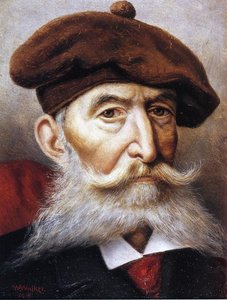
William Aiken Walker portréja

A 100 legnevesebbebb William Aiken Walker festmény, mindegyik egyedistens

Frissítve: november 2026 · rangsorolva népszerűségi pontszámunk alapján (minden mű keresései, látogatásai és megrendelései alapján) · 166 mű William Aiken Walker alkotása a katalógusunkban

Röviden

Negro Couple in Cotton Field, Woman with Yellow Bonnet (1889) az a William Aiken Walker festmény, amely a legtöbb tekintetet felvonja. Ezután a tekintet View of Galveston Harbor (1874) és Louisiana Cabin Scene with Stretched Hide on Weatherboard and Stock Chimney Covered with Clay (1878) elemre irányul. A William Aiken Walker 166 műve közül a katalógusunkban megtalálható 100 legnépesebb alkotás, melyeket az év, a múzeum és az örökévalóságának okai kísérnek.

1839 – 1921, Charleston Contemporary realism A legtöbb mű: Művészeti Múzeum, Boston

A galéria szemével: William Aiken Walker legjobb 10 festménye

1
Negro Couple in Cotton Field, Woman with Yellow Bonnet (1889) (1889) -ja William Aiken Walker

Negro Couple in Cotton Field, Woman with Yellow Bonnet

1889 · Oil On Canvas

A vast expanse of cotton stretches toward a heavy, clouded sky. In the center of this landscape, a man and a woman move through the stalks. The woman wears a yellow bonnet, a single point of color against the muted, earthy tones of the field. They are anchored to the soil, their bodies positioned amidst the white bolls and the rough, bristly texture of the plants. The light is diffused,…

2
View of Galveston Harbor (1874) (1889) -ja William Aiken Walker

View of Galveston Harbor

1874 · Oil On Canvas

The sea is a restless, dark expanse in the foreground, its surface broken by the rhythmic movement of choppy waves. Small boats and scattered figures navigate these waters, their forms etched against the shifting light. Beyond the immediate swell, a line of ships stretches across the midground, their masts rising like thin needles against the sky. These vessels, varying in scale and detail, suggest a harbor in constant motion, a…

3
Louisiana Cabin Scene with Stretched Hide on Weatherboard and Stock Chimney Covered with Clay (1878) (1889) -ja William Aiken Walker

Louisiana Cabin Scene with Stretched Hide on Weatherboard and Stock Chimney Covered with Clay

1878 · Oil On Canvas

In this 1878 oil painting, we find ourselves transported to a quiet, lived-in corner of Louisiana. The scene centers on a weathered wooden cabin, its structure defined by horizontal lines that suggest a sense of permanence amidst the shifting natural world. A large, sprawling tree arches over the composition, its branches heavy with hanging Spanish moss that frames the dwelling and adds a layer of atmospheric depth. The air feels…

4
Picking Cotton (1889) -ja William Aiken Walker

Picking Cotton

Oil

The scene unfolds in "Picking Cotton," a work by the American artist William Aiken Walker. He captures a moment of labor within the fields, a subject that defines much of his artistic legacy. Walker was born in Charleston, South Carolina, in 1839, a place that remains deeply connected to his identity. He lived his life through the lens of genre painting, focusing his gaze on the everyday realities of the…

5
Sharecroppers Gathered in the Yard (1895) (1889) -ja William Aiken Walker

Sharecroppers Gathered in the Yard

1895 · Oil

In "Sharecroppers Gathered in the Yard," the artist William Aiken Walker captures a quiet moment of communal life. Painted about 1895, this work brings us into a rural setting where the rhythms of daily existence unfold. The scene centers on a group of African American sharecroppers who have come together in a yard, finding a moment of social connection amidst their labors. They gather near a modest wooden cabin, their…

6
Self Portrait (1914) (1889) -ja William Aiken Walker

Self Portrait

1914 · Oil On Canvas

In this 1914 oil on canvas, we find ourselves in an intimate encounter with the artist himself. The composition is centered entirely on a single man, presented in a frontal view that invites a sense of immediate closeness. He wears a dark gray cap and a red necktie, attire that suggests a certain level of dignity and status. His face is framed by a meticulously rendered beard and mustache, textures…

7
Noon Day Pause in the Cotton Field (1889) -ja William Aiken Walker

Noon Day Pause in the Cotton Field

Oil

Noon Day Pause in the Cotton Field is a painting by William Aiken Walker. The artist was born in Charleston, South Carolina, in 1839 and remained connected to this region throughout his life, eventually passing away in Charleston on January 3, 1921. His work is characterized by a focus on genre painting, capturing specific moments of daily existence.

8
Plantation Scene (1889) -ja William Aiken Walker

Plantation Scene

Oil

In this work, titled Plantation Scene, we encounter a quiet moment of life from the American South. The artist, William Aiken Walker, captures a scene centered around a weathered wooden cabin with a red roof. Several people are gathered near the structure, some positioned in the foreground while others linger in the distance. The presence of chickens scattered throughout the yard and a dog in the background lends a sense…

William Aiken Walker híres festményei, 11 és 100 között

11Cotton Picking in Front of the Quarters (1889) -ja William Aiken WalkerCotton Picking in Front of the Quarters 12Man on Dock LIghting Pipe (1849) (1889) -ja William Aiken WalkerMan on Dock LIghting Pipe1849 13Dollarfish and Sheepshead (1860) (1889) -ja William Aiken WalkerDollarfish and Sheepshead1860 · Művészeti Múzeum, Boston 14Dog Head with Post and Chain (1859) (1889) -ja William Aiken WalkerDog Head with Post and Chain1859 15Confederate Encampment at Seven Pines (Fair Oaks) Virginia (1862) (1889) -ja William Aiken WalkerConfederate Encampment at Seven Pines (Fair Oaks) Virginia1862 16Wolves Attacking Cattle (1859) (1889) -ja William Aiken WalkerWolves Attacking Cattle1859 17Negro Youth with Basket on Head (Cuba) (1869) (1889) -ja William Aiken WalkerNegro Youth with Basket on Head (Cuba)1869 18Newsboy Selling the Baltimore Sun (1871) (1889) -ja William Aiken WalkerNewsboy Selling the Baltimore Sun1871 19Ducks, Bobwhites, and Woodcocks (1866) (1889) -ja William Aiken WalkerDucks, Bobwhites, and Woodcocks1866 20Vegetable Vendor at Charleston Market (1870) (1889) -ja William Aiken WalkerVegetable Vendor at Charleston Market1870 21Dollar Fish and Sheephead (1866) (1889) -ja William Aiken WalkerDollar Fish and Sheephead1866 22St. Finebar's Church, Broad Street, Charleston (1868) (1889) -ja William Aiken WalkerSt. Finebar's Church, Broad Street, Charleston1868 23Horses in a Pasture (1880) (1889) -ja William Aiken WalkerHorses in a Pasture1880 24Squaring Off (1880) (1889) -ja William Aiken WalkerSquaring Off1880 25Levee at New Orleans (1883) (1889) -ja William Aiken WalkerLevee at New Orleans1883 26Traveling by Ox Cart (1884) (1889) -ja William Aiken WalkerTraveling by Ox Cart1884 27Plantation Portrait (1885) (1889) -ja William Aiken WalkerPlantation Portrait1885 28Card Players on the Steamboar (1880) (1889) -ja William Aiken WalkerCard Players on the Steamboar1880 29Ruffles and Rags (1881) (1889) -ja William Aiken WalkerRuffles and Rags1881 30Cotton Plantation on the Mississippi (1881) (1889) -ja William Aiken WalkerCotton Plantation on the Mississippi1881 31The Levee at New Orleans (1883) (1889) -ja William Aiken WalkerThe Levee at New Orleans1883 32Plantation Economy (1881) (1889) -ja William Aiken WalkerPlantation Economy1881 33Negro Man, Two Boys and Dog in Cotton Field (1885) (1889) -ja William Aiken WalkerNegro Man, Two Boys and Dog in Cotton Field1885 34Dt. Diehl and Morgan Horse in Louisville Kentucky (1879) (1889) -ja William Aiken WalkerDt. Diehl and Morgan Horse in Louisville Kentucky1879 35Old Shoe with Mice (1879) (1889) -ja William Aiken WalkerOld Shoe with Mice1879 36I'll Stick to Cotton as Long as It Sticks to Me (1886) (1889) -ja William Aiken WalkerI'll Stick to Cotton as Long as It Sticks to Me1886 37Palm Trees on the Beach at Fort Walton (1892) (1889) -ja William Aiken WalkerPalm Trees on the Beach at Fort Walton1892 38On the Levee (New Orleans) (1886) (1889) -ja William Aiken WalkerOn the Levee (New Orleans)1886 39Wagon Scene (1888) (1889) -ja William Aiken WalkerWagon Scene1888 40On the Road to Natchez (1888) (1889) -ja William Aiken WalkerOn the Road to Natchez1888 41Smoked Ham at the Bonnie Crest Inn, North Carolina (1886) (1889) -ja William Aiken WalkerSmoked Ham at the Bonnie Crest Inn, North Carolina1886 42Rabbit, Duck and Snipe (1887) (1889) -ja William Aiken WalkerRabbit, Duck and Snipe1887 43Ponce LIght House, Ponce Park, Florida (1898) (1889) -ja William Aiken WalkerPonce LIght House, Ponce Park, Florida1898 44The Cove at Ponce Park (1895) (1889) -ja William Aiken WalkerThe Cove at Ponce Park1895 45Ponce Park LIght House, Florida (1895) (1889) -ja William Aiken WalkerPonce Park LIght House, Florida1895 46North Carolina Homestead with Mountains and Field (1897) (1889) -ja William Aiken WalkerNorth Carolina Homestead with Mountains and Field1897 47Tobacco Field with Five Figures (North Carolina) (1895) (1889) -ja William Aiken WalkerTobacco Field with Five Figures (North Carolina)1895 48Cottage on Beach with Palm Trees (Florida) (1899) (1889) -ja William Aiken WalkerCottage on Beach with Palm Trees (Florida)1899 49Lighthouse at Ponce Park (1904) (1889) -ja William Aiken WalkerLighthouse at Ponce Park1904 50T-plan Cabin with Porch (1903) (1889) -ja William Aiken WalkerT-plan Cabin with Porch1903 51Crab (1903) (1889) -ja William Aiken WalkerCrab1903 52Negro Man with Cotton Basket on Head (1889) -ja William Aiken WalkerNegro Man with Cotton Basket on Head 53Negro Man in Cotton Field with Basket of Cotton on Head (1889) -ja William Aiken WalkerNegro Man in Cotton Field with Basket of Cotton on Head 54Negro Man in Cotton Field (1889) -ja William Aiken WalkerNegro Man in Cotton Field 55Family Gathered by a Cabin (1889) -ja William Aiken WalkerFamily Gathered by a Cabin 56Bombardment Of Fort Sumter, Charleston Harbor, Charleston, South Carolina, 1863 (1889) -ja William Aiken WalkerBombardment Of Fort Sumter, Charleston Harbor, Charleston, South Carolina, 1863 57Negro Man In Cotton Field With Basket Of Cotton 1 (1889) -ja William Aiken WalkerNegro Man In Cotton Field With Basket Of Cotton 1 58Mushrooms (1910) (1889) -ja William Aiken WalkerMushrooms1910 59North Carolina Cabin with Scalloped Trim on Roof and Wild Cannas (1889) -ja William Aiken WalkerNorth Carolina Cabin with Scalloped Trim on Roof and Wild Cannas 60Washday (1908) (1889) -ja William Aiken WalkerWashday1908 61Scene near Arden, North Carolina (1908) (1889) -ja William Aiken WalkerScene near Arden, North Carolina1908 62Runnymede on the Ashley River (1907) (1889) -ja William Aiken WalkerRunnymede on the Ashley River1907 63Juvenile Angel Fish (1907) (1889) -ja William Aiken WalkerJuvenile Angel Fish1907 64Forest with Ferns and Mushrooms (1910) (1889) -ja William Aiken WalkerForest with Ferns and Mushrooms1910 65Wooded Mountain Scene in North Carolina (1908) (1889) -ja William Aiken WalkerWooded Mountain Scene in North Carolina1908 66Self Portrait (1913) (1889) -ja William Aiken WalkerSelf Portrait1913 67Woodland Scene with Red-Flowered Bush (1914) (1889) -ja William Aiken WalkerWoodland Scene with Red-Flowered Bush1914 68River, Tree, City on Horizon (1914) (1889) -ja William Aiken WalkerRiver, Tree, City on Horizon1914 69Forest Scene with Moss-Covered Trees and Bamboo (1914) (1889) -ja William Aiken WalkerForest Scene with Moss-Covered Trees and Bamboo1914 70Ruins, Arden Park Lodge (1919) (1889) -ja William Aiken WalkerRuins, Arden Park Lodge1919 71Wooded Mountain Scene in North Carolina (1918) (1889) -ja William Aiken WalkerWooded Mountain Scene in North Carolina1918 72Girl with Pigtails (1918) (1889) -ja William Aiken WalkerGirl with Pigtails1918 73Ruin of Luturne Cottage, Arden, North Carolina (1918) (1889) -ja William Aiken WalkerRuin of Luturne Cottage, Arden, North Carolina1918 74Cotton Gin, Adams County, Mississippi (1883) (1889) -ja William Aiken WalkerCotton Gin, Adams County, Mississippi1883 75Still LIfe with Cheese, Bottle of Wine and Mouse (1876) (1889) -ja William Aiken WalkerStill LIfe with Cheese, Bottle of Wine and Mouse1876 76Cabin (1889) -ja William Aiken WalkerCabin 77Breakers In Florida (1889) -ja William Aiken WalkerBreakers In Florida 78Noontime Break (1889) -ja William Aiken WalkerNoontime Break 79Laundry Day (1889) -ja William Aiken WalkerLaundry Day 80Plantation Scene 1 (1889) -ja William Aiken WalkerPlantation Scene 1 81Cotton Picker (1889) -ja William Aiken WalkerCotton Picker 82Florida Beach Scene with Sand Dunes, Sea Oats and Surf (1889) -ja William Aiken WalkerFlorida Beach Scene with Sand Dunes, Sea Oats and Surf 83Log Cabin with Stretched Hide on Wall (1889) -ja William Aiken WalkerLog Cabin with Stretched Hide on Wall 84Ponce Park Light House, Florida 1 (1889) -ja William Aiken WalkerPonce Park Light House, Florida 1 85Sand Dunes and Clouds, Florida (1889) -ja William Aiken WalkerSand Dunes and Clouds, Florida 86Ocean Waves Breaking on Beach (1889) -ja William Aiken WalkerOcean Waves Breaking on Beach 87Cabin Scene 3 (1889) -ja William Aiken WalkerCabin Scene 3 88An Old Time Fishing Village (1889) -ja William Aiken WalkerAn Old Time Fishing Village 89Cuban Family (1889) -ja William Aiken WalkerCuban Family 90Negro Man in Cotton Field with Basket of Cotton (1889) -ja William Aiken WalkerNegro Man in Cotton Field with Basket of Cotton 91Cabin Scene 4 (1889) -ja William Aiken WalkerCabin Scene 4 92Negro Women in Cotton Field (1889) -ja William Aiken WalkerNegro Women in Cotton Field 93Portland Headlight, Maine (1889) -ja William Aiken WalkerPortland Headlight, Maine 94Negro Cabin with Palm Tree (1889) -ja William Aiken WalkerNegro Cabin with Palm Tree 95Board And Batten Northern South Carolina Cabin (1889) -ja William Aiken WalkerBoard And Batten Northern South Carolina Cabin 96Cotton Pickers 1 (1889) -ja William Aiken WalkerCotton Pickers 1 97Drying the Wash (1889) -ja William Aiken WalkerDrying the Wash 98Old Negro Man with Basket of Cotton (1889) -ja William Aiken WalkerOld Negro Man with Basket of Cotton 99Florida Seascape with Sand Dune, Palm Tree, and Yuccas (1889) -ja William Aiken WalkerFlorida Seascape with Sand Dune, Palm Tree, and Yuccas 100Sand Dunes, Palmetto (Sabal) and Steamboat (1889) -ja William Aiken WalkerSand Dunes, Palmetto (Sabal) and Steamboat

William Aiken Walker híres festményei, korszakonként

A témák, amelyek William Aiken Walker figyelmét meghúzták

A négy leggyakorobban előforduló téma ebben az eredeti művekben, mindegyik a legkiválóbb példájával.

A műemlékek, amelyek William Aiken Walker eredeti műveit őrzik

A múzeum, amely ezen az oldalon szereplő festmények többségét őrzi.

Múzeum Város William Aiken Walker művei Ebből a listából származó festmények
Művészeti Múzeum, Boston, BostonMűvészeti Múzeum, Boston Boston 1 Dollarfish and Sheepshead

William Aiken Walker évtizedekig: egy egyedi eredeti mű minden évtizedben

Művek évtizedenként

Váassz ki egy évtizedet, hogy megnézhesd az azt meghatározó eredetiműveket.

William Aiken Walker festményei: kérdések a galériának

Mi a leghíresebb műve William Aiken Walkernek?Fedje fel a választ

Negro Couple in Cotton Field, Woman with Yellow Bonnet (1889). Ezt követi View of Galveston Harbor (1874) és Louisiana Cabin Scene with Stretched Hide on Weatherboard and Stock Chimney Covered with Clay (1878).

Milyen életkorában alkotta meg William Aiken Walker a(z) Negro Couple in Cotton Field, Woman with Yellow Bonnet műszt?Fedje fel a választ

50 éves: Negro Couple in Cotton Field, Woman with Yellow Bonnet 1889-ből származik, William Aiken Walker pedig 1839-ben született.

Melyik tíz festménye William Aiken Walker a leghíresebb?Fedje fel a választ

Negro Couple in Cotton Field, Woman with Yellow Bonnet, View of Galveston Harbor, Louisiana Cabin Scene with Stretched Hide on Weatherboard and Stock Chimney Covered with Clay, Picking Cotton, Sharecroppers Gathered in the Yard, Self Portrait, Noon Day Pause in the Cotton Field, Plantation Scene, Negro Man And Woman In Cotton Field With Cotton Baskets 1 és Negro Man And Woman In Cotton Field With Baskets Of Cotton 1. A fenti rangsor a művek évszamarát és a múzeumát jelzi.

Hány mű alkotása ismert William Aiken Walker nevében?Fedje fel a választ

Katalógusunkban 166 mű található William Aiken Walker alkotótól, 1849 és 1919 év közötti időszakból.

Hol tekinthetők meg a leghíresebb William Aiken Walker eredetijeit?Fedje fel a választ

Leginkább Művészeti Múzeum, Boston (Boston) található. A fenti múzeumi táblázatban mindegyik felsorolásra került.

Melyik időszakban alkotta William Aiken Walker a leghíresebb festményeit?Fedje fel a választ

1880s alatt: a jelen laphonon található 100 műből 19 készült ebben az időszakban, köztük Negro Couple in Cotton Field, Woman with Yellow Bonnet.

Melyik híres William Aiken Walker festmény a legkorábbi, és melyik a legutóbb készült?Fedje fel a választ

Ezen az oldalon a leghitelesebb Man on Dock LIghting Pipe (1849), a legutóbbi pedig Ruins, Arden Park Lodge (1919).

Milyen témakörket kedvelt William Aiken Walker?Fedje fel a választ

Cotton (11), Usa (11) és Scenes (8), a jelen oldalon található 100 műművészeti alkotás között.

Milyen anyagokkal festett leggyakrabban William Aiken Walker?Fedje fel a választ

Oil, a jelen oldalon található 100 műből 5 darab esetén.

Mely művészeti irányba tartozik William Aiken Walker műve?Fedje fel a választ

Contemporary realism és Genre painting, ezen az oldalon található eredetiek alapján.

William Aiken Walker: a művész portréja

William Aiken Walker: A Life in Paint

William Aiken Walker (March 11, 1839 – January 3, 1921) was an American artist whose legacy resides primarily in his poignant depictions of African Americans during the Reconstruction era. His genre paintings offer a rare and invaluable window into this transformative period of American history—a testament to both artistic skill and humanist compassion.

Early Life and Influences

Born in Charleston, South Carolina, Walker’s formative years were shaped by familial relocation following his father's untimely death in 1842. The family moved initially to Baltimore, Maryland, before returning to Charleston in 1848—experiences that undoubtedly broadened his worldview and instilled a sensitivity to diverse environments. While biographical details regarding his formal artistic training remain elusive, Walker’s self-taught approach speaks volumes about his dedication to mastering his craft.

Artistic Development and Career

Walker embarked on his artistic journey without extensive academic instruction, prioritizing independent exploration and observation. The American Civil War profoundly impacted his life; he enlisted in the Confederate Army, serving under General Wade Hampton—a decision that unexpectedly afforded him invaluable time for painting amidst the exigencies of military service. A serious wound sustained at the Battle of Seven Pines in 1862 further solidified this commitment to artistic pursuits. His subsequent assignment to picket duty proved serendipitous, allowing him to hone his skills and develop his distinctive style. He gained renown for capturing the everyday realities of rural Southern life, particularly focusing on the experiences of Black sharecroppers and laborers—a subject matter that demanded meticulous realism and empathetic understanding. Two of Walker’s most celebrated canvases – scenes from Mississippi’s agricultural landscape – were reproduced as chromolithographs by Currier and Ives, dramatically expanding their artistic reach and ensuring a wider audience for his vision.

Notable Works

Walker's oeuvre is characterized by remarkable precision and emotional depth. Among his enduring masterpieces are:
  • Bombardment of Fort Sumter, Charleston Harbor, Charleston, South Carolina, 1863: This monumental depiction powerfully conveys the gravity of the Civil War’s commencement—a scene rendered with dramatic lighting and compositional balance that captures the fervor of the moment.
  • St. Finebar's Church, Broad Street, Charleston: Walker skillfully portrays Charleston’s architectural grandeur, capturing not only its physical structure but also its spiritual atmosphere.
  • Cotton Gin, Adams County, Mississippi: A quintessential genre painting, “Cotton Gin” exemplifies Walker’s ability to convey the arduous labor and resilience of Black agricultural workers with unflinching honesty.

Themes and Style

Walker's artistic style is defined by its unwavering commitment to realism—a technique he employed to portray subjects with remarkable accuracy and sensitivity. He eschewed idealized representations, instead opting for depictions that reflected the complexities and hardships inherent in Southern life during Reconstruction. His canvases resonate with a profound understanding of human experience, conveying both dignity and vulnerability.

Historical Significance & Legacy

William Aiken Walker’s art transcends mere visual representation; it serves as a vital historical document—a testament to the lives lived amidst societal upheaval. He illuminated aspects of post-Reconstruction Southern society often overlooked by conventional narratives, offering invaluable insights into the struggles faced by African Americans and their unwavering determination for self-determination. His paintings continue to inspire contemplation on themes of social justice and artistic empathy, securing his place as a pivotal figure in American art history. His work resides primarily at the Gibbes Museum of Art in Charleston, South Carolina—a repository safeguarding Walker’s legacy for future generations.