Willem De Kooning portréja

A 100 legnevesebbebb Willem De Kooning festmény, mindegyik egyedistens

Frissítve: november 2026 · rangsorolva népszerűségi pontszámunk alapján (minden mű keresései, látogatásai és megrendelései alapján) · 117 mű Willem De Kooning alkotása a katalógusunkban

Röviden

Nő I. (1952) az a Willem De Kooning festmény, amely a legtöbb tekintetet felvonja. Ezután a tekintet Parc rosenberg, 1957, magángyűjtemény és Bányászat (1950) elemre irányul. A Willem De Kooning 117 műve közül a katalógusunkban megtalálható 100 legnépesebb alkotás, melyeket az év, a múzeum és az örökévalóságának okai kísérnek.

1904 – 1997, Rotterdam Absztrakt expreszionizmus A legtöbb mű: Art Institute of Chicago

A galéria szemével: Willem De Kooning legjobb 10 festménye

1
Nő I. (1952) (1889) -ja Willem De Kooning

Nő I.

1952 · Olajfestmény vászonon

Egy monumentális utóháborús szorongás kifejezése Willem de Kooning „Nő I.” című alkotása, melyet 1950 és 1952 között festett, a művész híres „Nők” sorozatának egyik csúcspontja. Ez a kép azonban több mint csupán egy portré; egy nyers, érzelmi feltárás a női formáról – s ezáltal az utóháborús társadalmi szorongásokról, a megrepedt identitásról és az ősi ösztönökről szól. A vászonon nem találunk nyugodt szépséget, hanem egy erőteljes, néha zavarba ejtő őszinteséget, mely…

2
Parc rosenberg, 1957, magángyűjtemény (1889) -ja Willem De Kooning

Parc rosenberg, 1957, magángyűjtemény

Olajfestmény vászonon

A 1957-ben megalkotott Parc Rosenberg című festmény a szín és a forma vizuális tanulmányát mutatja be a tudatos egyszerűsítés és a komplexitás csökkentésének révén. A mű központi témáját egy halványkék vászon alkotja, amelyet élénk, sárga festékcsíkok borítanak, dinamikus mozdulatokkal. A vászon szélei úgy tűnnek, minogy elszaggatottak vagy szakadtak, ami egyfajta kaotikus és absztrakt érzetet kölcsönöz a kompozíciónak. A háttérben egy emberi alak sejlik fel, bár annak pontos arcvonatai nem kivehetőek,…

3
Bányászat (1950) (1889) -ja Willem De Kooning

Bányászat

1950 · Olajfestmény vászonon · Art Institute of Chicago, Chicago

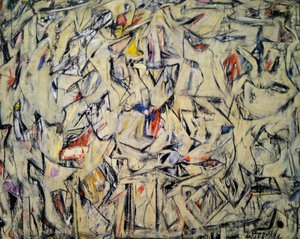
Willem de Kooning 1950-as mesterdarabja, *Elvágás*, nem csupán egy festmény; az egy ásatás – egy mély, szívszorító felfedezés forma és érzet terén. A chicagói művészeti múzeumban kiállított ez a monumentális alkotás kulcsfontosságú pillanatot jelentenek az absztrkt expresszionizmus fejlődésében, döntő választást tettek a hagyományos ábrázolástól elszakítva és merészkedtek a művész belső világába. Több mint egyszerű absztrakt kompozíció, *Elvágás* úgy tűnik, mintha tanúi lennénk egy ősi, primitív alkotás és pusztítás egyszerre történő…

4
Az Észlelő ajtó (1960) (1889) -ja Willem De Kooning

Az Észlelő ajtó

1960 · Akril festmény vászonon

Az alkotót megismerni és élvezni kívánóknak nagy teljesítményű reprodukciókat vászonlátóként és épületdékorációként kínálunk meg AllPaintingsStore.com és AllPaintingsStore.com.

5
Női tájkép (1945) (1889) -ja Willem De Kooning

Női tájkép

1945 · Olajfestmény vászonon

A Szellem Érzeke és Forma Együttműködése – Willem de Kooning „Született Nő” című alkotása Willem de Kooning, az absztrakt ekspresszionizmus szellemének és erővel átitatott képző művészete egy olyan időszakban született meg, amikor Európa még mindig próbálta feldolgozni a második világháború traumát. Rotterdamban 1904-ben született, gyermekkorában pedig szülői válása meghatározotta az életét – ez talán egy olyan nyugtalanságot okozott benne, amely végigkövette művészi útját. Tizenkét éves korában elutasította a hagyományos iskolai…

6
Női Dalolás II (1966) (1889) -ja Willem De Kooning

Női Dalolás II

1966 · Olajfestmény vászonon

In the center of the canvas, three women gather to sing, their voices seemingly caught in a shared, wordless note. This 1966 work by Willem de Kooning captures a moment of harmonious vocalizing, where the figures emerge from a thicket of pigment. The scene feels alive with the energy of a performance, as if the air itself vibrates with the sound of their song. One woman leans toward the left,…

7
Asheville (1948) (1889) -ja Willem De Kooning

Asheville

1948 · Akril festmény vászonon

műve, az „Asheville”, nem csupán egy arc ábrázolása; inkább a lelki zűrzavar megtestesülése. A portrét 1948-ban, az alkotó absztrakt ekspressionista korszakának csúcspontján festette, amely az önmagunkkal való intenzív konfrontáció pillanatát ragadja meg – a belső küzdelem és a meg nem oldott szorongások vizuális reprezentációját.

8
Marilyn Monroe (1954) (1889) -ja Willem De Kooning

Marilyn Monroe

1954 · Olajfestmény vászonon

Created in 1954, Willem de Kooning's *Marilyn Monroe* is not a conventional portrait of the iconic actress. Instead, it’s a visceral and emotionally charged interpretation that reflects the artist’s engagement with popular culture and his signature Abstract Expressionist style. This painting offers a fascinating glimpse into De Kooning’s approach to figuration and his ability to convey complex emotions through abstract means.

9
A látogatás Tate Gallery (1966) (1889) -ja Willem De Kooning

A látogatás Tate Gallery

1966 · Akril festmény vászonon

Willem de Kooning műve, A látogatás, amelyet a Tate Gallery szerzett meg 1969-ben, az absztrakt expreszionizmus egyik alapköve, amely megkerülhetetlenül átalakította a posztwar művészeti landskapetet. Ez a monumentális olajfestmény túlmutat a puszta ábrázoláson; a megéléserőteljes érzelmi töltet és a fizikalitás mélyreható felfedezését testesíti meg, egy olyan pillanatot lepve meg, amely egyszerre fagyult le az időben, mégis tele van dinamikával.

10
Women singing ii tate gallery (1966) (1889) -ja Willem De Kooning

Women singing ii tate gallery

1966 · Oil On Paper

Three figures emerge from a thicket of paint, their mouths open in a shared, wordless note. The canvas holds a moment caught from a television broadcast, where pop singers once flickered in the glow of 1966. One woman leans toward the left, her face caught in a sudden expression, while another turns her gaze away, lost in the rhythm. A third figure stands near the edge, part of a crowded,…

Willem De Kooning híres festményei, 11 és 100 között

11Zurich (1947) (1889) -ja Willem De KooningZurich1947 12Abstraction (1950) (1889) -ja Willem De KooningAbstraction1950 13The Acrobat (1942) (1889) -ja Willem De KooningThe Acrobat1942 · Munch Múzeum 14Clam Diggers (1963) (1889) -ja Willem De KooningClam Diggers1963 15Seated Woman (1940) (1889) -ja Willem De KooningSeated Woman1940 16The Visit (1967) (1889) -ja Willem De KooningThe Visit1967 17Woman and Bicycle (1952) (1889) -ja Willem De KooningWoman and Bicycle1952 18Gotham News (1955) (1889) -ja Willem De KooningGotham News1955 19Suburb in havana (1958) (1889) -ja Willem De KooningSuburb in havana1958 20Untitled (10) (1950) (1889) -ja Willem De KooningUntitled (10)1950 21Névtelen (21) (1889) -ja Willem De KooningNévtelen (21) 22Seated woman 2,1940, private (1889) -ja Willem De KooningSeated woman 2,1940, private 23Szombat Éjszaka (1956) (1889) -ja Willem De KooningSzombat Éjszaka1956 24Woman V, 1952-53 (oil ^ charcoal on canvas) (1953) (1889) -ja Willem De KooningWoman V, 1952-53 (oil ^ charcoal on canvas)1953 25Festmény (1948) (1889) -ja Willem De KooningFestmény1948 26Two Women in the Country (1954) (1889) -ja Willem De KooningTwo Women in the Country1954 27Litho 2 (Waves 2) (1960) (1889) -ja Willem De KooningLitho 2 (Waves 2)1960 28Composition (1889) -ja Willem De KooningComposition 29Sphinx (1964) (1889) -ja Willem De KooningSphinx1964 30Seated Man (1939) (1889) -ja Willem De KooningSeated Man1939 31Woman with a Green and Beige Background (1889) -ja Willem De KooningWoman with a Green and Beige Background 32Untitled (1950) (1889) -ja Willem De KooningUntitled1950 · Art Institute of Chicago 33Untitled (1950) (1889) -ja Willem De KooningUntitled1950 34Untitled (1949) (1889) -ja Willem De KooningUntitled1949 35Zot (1949) (1889) -ja Willem De KooningZot1949 36Woman (1950) (1889) -ja Willem De KooningWoman1950 37Untitled III (1981) (1889) -ja Willem De KooningUntitled III1981 38Woman (1949) (1889) -ja Willem De KooningWoman1949 39Two Standing Women (1963) (1889) -ja Willem De KooningTwo Standing Women1963 40Legend és Évtartalom (1940) (1889) -ja Willem De KooningLegend és Évtartalom1940 41Pink Lady (1965) (1889) -ja Willem De KooningPink Lady1965 42Two Standing Men (1938) (1889) -ja Willem De KooningTwo Standing Men1938 43Seated figure (male classical) (1939) (1889) -ja Willem De KooningSeated figure (male classical)1939 44Night (1948) (1889) -ja Willem De KooningNight1948 45Standing Man (1942) (1889) -ja Willem De KooningStanding Man1942 46Woman, Sag Harbor (1964) (1889) -ja Willem De KooningWoman, Sag Harbor1964 47Untitled (17) (1965) (1889) -ja Willem De KooningUntitled (17)1965 48Asheville (1948) (1889) -ja Willem De KooningAsheville1948 · The Phillips Collection 49Woman Verso Untitled (1948) (1889) -ja Willem De KooningWoman Verso Untitled1948 50Special Delivery (1946) (1889) -ja Willem De KooningSpecial Delivery1946 51Queen of Hearts (1946) (1889) -ja Willem De KooningQueen of Hearts1946 52White Nude (1967) (1889) -ja Willem De KooningWhite Nude1967 53Untitled (1964) (1889) -ja Willem De KooningUntitled1964 54Woman with a Hat (1966) (1889) -ja Willem De KooningWoman with a Hat1966 55Special Delivery (1946) (1889) -ja Willem De KooningSpecial Delivery1946 56Secretary (1948) (1889) -ja Willem De KooningSecretary1948 57Egy fa Nápoliban (1889) -ja Willem De KooningEgy fa Nápoliban 58Summer couch (detail) mid (1900) (1889) -ja Willem De KooningSummer couch (detail) mid1900 59With Love (1971) (1889) -ja Willem De KooningWith Love1971 60Painting,1950, private (1889) -ja Willem De KooningPainting,1950, private 61Untitled (11) (1958) (1889) -ja Willem De KooningUntitled (11)1958 62Two trees on Mary Street . . . Amen! (1975) (1889) -ja Willem De KooningTwo trees on Mary Street . . . Amen!1975 63Brooding Woman (1965) (1889) -ja Willem De KooningBrooding Woman1965 64Woman Red Hair, Large Mouth, Large Foot (1965) (1889) -ja Willem De KooningWoman Red Hair, Large Mouth, Large Foot1965 65Meg (1955) (1889) -ja Willem De KooningMeg1955 · Dallas Museum of Art 66Figure and Landscape No. 2 (1951) (1889) -ja Willem De KooningFigure and Landscape No. 21951 67Landscape at Stanton Street (1971) (1889) -ja Willem De KooningLandscape at Stanton Street1971 68Reclining Man (John F. Kennedy) (1963) (1889) -ja Willem De KooningReclining Man (John F. Kennedy)1963 69Tüz Adası (1946) (1889) -ja Willem De KooningTüz Adası1946 70Untitled (1962) (1889) -ja Willem De KooningUntitled1962 71Untitled (23) (1968) (1889) -ja Willem De KooningUntitled (23)1968 72Untitled (verso: Untitled) (1959) (1889) -ja Willem De KooningUntitled (verso: Untitled)1959 73Nő I (1964) (1889) -ja Willem De KooningNő I1964 74Excavation,1950, art institute of chicago (1889) -ja Willem De KooningExcavation,1950, art institute of chicago 75Woman i (detail),1950-52, moma ny (1889) -ja Willem De KooningWoman i (detail),1950-52, moma ny 76The Marshes (1971) (1889) -ja Willem De KooningThe Marshes1971 77Untitled (woman) (1971) (1889) -ja Willem De KooningUntitled (woman)1971 78Untitled (19) (1967) (1889) -ja Willem De KooningUntitled (19)1967 79Névtelen -2, Quatre Lithográfia sorozatból (1986) (1889) -ja Willem De KooningNévtelen -2, Quatre Lithográfia sorozatból1986 80Untitled (14) (1964) (1889) -ja Willem De KooningUntitled (14)1964 81Merritt Parkway (1959) (1889) -ja Willem De KooningMerritt Parkway1959 82Two Figures (1964) (1889) -ja Willem De KooningTwo Figures1964 83The Glazier (1940) (1889) -ja Willem De KooningThe Glazier1940 84Detour (1958) (1889) -ja Willem De KooningDetour1958 · Bavári Állami Festırménygyűjtemények 85Queen of Hearts (1943) (1889) -ja Willem De KooningQueen of Hearts1943 86Untitled XIII (1985) (1889) -ja Willem De KooningUntitled XIII1985 · Cleveland Museum of Art 87Two Woman IV (1952) (1889) -ja Willem De KooningTwo Woman IV1952 88Devil at the Keyboard (1976) (1889) -ja Willem De KooningDevil at the Keyboard1976 89The Wave (1889) -ja Willem De KooningThe Wave 90Ütközet zsebben: De Kooning-ék "Nincs cím" I (1981) (1981) (1889) -ja Willem De KooningÜtközet zsebben: De Kooning-ék "Nincs cím" I (1981)1981 91Untitled XII (1983) (1889) -ja Willem De KooningUntitled XII1983 92Whose Name Was Writ in Water (1975) (1889) -ja Willem De KooningWhose Name Was Writ in Water1975 93The Wave (1943) (1889) -ja Willem De KooningThe Wave1943 · Smithsonian American Art Museum 94Two Standing Men (1938) (1889) -ja Willem De KooningTwo Standing Men1938 · Metropolitan Művészeti Múzeum 95Lily Pond (1959) (1889) -ja Willem De KooningLily Pond1959 · Toledo Művészeti Múzeum 96Woman VIII (1961) (1889) -ja Willem De KooningWoman VIII1961 · Smithsonian American Art Museum 97Woman (1965) (1889) -ja Willem De KooningWoman1965 98Woman in the Pool (1968) (1889) -ja Willem De KooningWoman in the Pool1968 · Phoenix Art Museum 99Woman (1964) (1889) -ja Willem De KooningWoman1964 100Woman (1964) (1889) -ja Willem De KooningWoman1964

Willem De Kooning híres festményei, korszakonként

A témák, amelyek Willem De Kooning figyelmét meghúzták

A négy leggyakorobban előforduló téma ebben az eredeti művekben, mindegyik a legkiválóbb példájával.

A műemlékek, amelyek Willem De Kooning eredeti műveit őrzik

A 8 olyan múzeum, amely a legtöbb ezen az oldalon szereplő festményet őrzi.

Múzeum Város Willem De Kooning művei Ebből a listából származó festmények
Art Institute of Chicago, ChicagoArt Institute of Chicago Chicago 3 Bányászat, Untitled
Smithsonian American Art Museum, Washington, D.C.Smithsonian American Art Museum Washington, D.C. 2 The Wave, Woman VIII
Munch Múzeum, OsloMunch Múzeum Oslo 1 The Acrobat
The Phillips Collection, Washington, D.C.The Phillips Collection Washington, D.C. 1 Asheville
Dallas Museum of Art, DallasDallas Museum of Art Dallas 1 Meg
Bavári Állami Festırménygyűjtemények, MunchenBavári Állami Festırménygyűjtemények Munchen 1 Detour
Cleveland Museum of Art, ClevelandCleveland Museum of Art Cleveland 1 Untitled XIII
Metropolitan Művészeti Múzeum, New YorkMetropolitan Művészeti Múzeum New York 1 Two Standing Men

Willem De Kooning évtizedekig: egy egyedi eredeti mű minden évtizedben

Művek évtizedenként

Váassz ki egy évtizedet, hogy megnézhesd az azt meghatározó eredetiműveket.

Willem De Kooning festményei: kérdések a galériának

Mi a leghíresebb műve Willem De Kooningnek?Fedje fel a választ

Nő I. (1952). Ezt követi Parc rosenberg, 1957, magángyűjtemény és Bányászat (1950).

Milyen életkorában alkotta meg Willem De Kooning a(z) Nő I. műszt?Fedje fel a választ

48 éves: Nő I. 1952-ből származik, Willem De Kooning pedig 1904-ben született.

Melyik tíz festménye Willem De Kooning a leghíresebb?Fedje fel a választ

Nő I., Parc rosenberg, 1957, magángyűjtemény, Bányászat, Az Észlelő ajtó, Női tájkép, Női Dalolás II, Asheville, Marilyn Monroe, A látogatás Tate Gallery és Women singing ii tate gallery. A fenti rangsor a művek évszamarát és a múzeumát jelzi.

Hány mű alkotása ismert Willem De Kooning nevében?Fedje fel a választ

Katalógusunkban 117 mű található Willem De Kooning alkotótól, 1938 és 1986 év közötti időszakból.

Hol tekinthetők meg a leghíresebb Willem De Kooning eredetijeit?Fedje fel a választ

Leginkább Art Institute of Chicago (Chicago), Smithsonian American Art Museum (Washington, D.C.) és Munch Múzeum (Oslo) található. A fenti múzeumi táblázatban mindegyik felsorolásra került.

Melyik időszakban alkotta Willem De Kooning a leghíresebb festményeit?Fedje fel a választ

1960s alatt: a jelen laphonon található 100 műből 29 készült ebben az időszakban, köztük Az Észlelő ajtó.

Melyik híres Willem De Kooning festmény a legkorábbi, és melyik a legutóbb készült?Fedje fel a választ

Ezen az oldalon a leghitelesebb Two Standing Men (1938), a legutóbbi pedig Névtelen -2, Quatre Lithográfia sorozatból (1986).

Milyen témakörket kedvelt Willem De Kooning?Fedje fel a választ

Emotional intensity (17), Woman (14) és American art (13), a jelen oldalon található 100 műművészeti alkotás között.

Milyen anyagokkal festett leggyakrabban Willem De Kooning?Fedje fel a választ

Oil On Canvas, a jelen oldalon található 100 műből 37 darab esetén.

Mely művészeti irányba tartozik Willem De Kooning műve?Fedje fel a választ

Absztrakt expreszionizmus, ezen az oldalon található eredetiek alapján.

Milyen Willem De Kooning eredeti műveket láthatok a Art Institute of Chicago kiállításaiban?Fedje fel a választ

Bányászat és Untitled: a Art Institute of Chicago, Chicago 2 művet őrzi ezen az oldalon.

Willem De Kooning: a művész portréja

The Life of Willem de Kooning

Rotterdam, 1904. The air in the Netherlands carries the weight of a family in transition. Willem de Kooning enters the world on April 24, born to Leendert de Kooning and Cornelia Nobel. His early years are defined by a familial split, a divorce that leaves a sense of restless searching in its wake. This internal displacement follows him across the Atlantic. In 1926, he arrives in America not as a traveler, but as a stowaway on a British freighter, landing at Newport News, Virginia. He is an outsider looking for a foothold in a new landscape.

The grit of New York City becomes his reality. He navigates the urban sprawl through manual labor, working as a house painter and a carpenter to sustain his vision. This period of survival is not a detour; it is the foundation. He absorbs the pulse of the city, moving from the physical toil of construction to the intense, gestural demands of the canvas. His existence becomes a continuous negotiation between the structured world of his training and the chaotic energy of the New York School.

He remains a central figure in the Abstract Expressionist movement, a presence that persists through decades of stylistic evolution. He moves from the depiction of urban scenes toward a more visceral, fragmented language of form. This trajectory continues until his death on March 19, 1997, at the age of 92. He leaves behind a body of work that reflects a lifelong struggle to articulate the human psyche through paint.

Early Life and Artistic Training

Rotterdam, 1916. The classroom is abandoned. At twelve years old, Willem de Kooning leaves formal schooling behind to enter the world of commercial art. He begins an apprenticeship with a firm of commercial artists, learning the technical mechanics of the trade. The focus is on precision and the practical application of pigment. It is a period of disciplined labor, building a foundation of craftsmanship that remains present even as his later work moves toward abstraction.

The evenings belong to the Academie van Beeldende Kunsten en Technische Wetenschappen. From his teenage years until 1924, he attends these classes in Rotterdam, balancing the demands of work with the study of formal art. He is honing his ability to see, to map form, and to understand the structure of the visual world. By the time he leaves the academy, he is no longer just an apprentice. He is a portrait painter, capturing the likenesses of his subjects with a growing sense of technical command. This period of focused training provides the essential tools for the radical shifts that await him across the Atlantic.

Arrival and Life in New York

The Atlantic crossing is a gamble of shadows. In 1926, de Kooning arrives in the United States not as a passenger, but as a stowaway on the British freighter Shelley. The ship docks at Newport News, Virginia, on August 15, 1926. From there, the momentum shifts toward the grit of New York City. The city provides a landscape of labor and survival. He navigates the urban environment by working as a house painter, a carpenter, and a commercial artist. These manual trades keep him tethered to the physical reality of the city while he pursues his vision.

By 1934, the struggle for recognition takes a more organized form. He joins the Artists Union, a move that places him within the collective energy of the New York art scene. The work is demanding. He moves between the precision of commercial art and the heavy, physical labor of his various jobs. This period is defined by a relentless, daily grind in the city that will eventually become his home. He is an outsider working from within the machinery of New York life.

Key Works and Major Series

The early years of the 1930s find him working through the tension between representation and the emerging abstract impulse. Around 1938, he produces Two Standing Men, a work that captures a sense of the figure before the total dismantling of form takes hold. This period of experimentation leads toward a radical shift in the early 1950s. Between 1950 and 1953, he produces the Woman series, a sequence of paintings that confront the viewer with fragmented, visceral depictions of the female form. These works do not seek to idealize; instead, they use aggressive brushwork to explore the complexities of human emotion and sexuality.

Within this intense period, Woman I emerges, created between 1950 and 1952. The canvas is a site of struggle, where the figure is caught in a web of thick impasto and jarring color. This focus on the human figure eventually gives way to a different kind of spatial tension. By 1955, he completes Interchange. This work marks a departure from the figurative intensity of the previous years, moving toward an expansive, abstract urban landscape. The transition is visible in the way he handles space and color, shifting from the carnal focus of the Woman series to the more architectonic, gestural compositions of the mid-century.

Technique and Artistic Style

The canvas becomes an arena of physical struggle. De Kooning attacks the surface with aggressive brushwork, building up layers of thick impasto that create a heavy, tactile topography. He does not merely apply paint; he manipulates it, often employing a wet-on-wet technique aided by the addition of salad oil to the pigment. This method allows for a fluid, unpredictable interaction between colors, where edges blur and new textures emerge from the constant movement of the brush. His marks are rarely controlled or static. Instead, they are gestural, leaving behind calligraphic black images that slash through the composition with sudden, decisive energy.

He refuses the comfort of a single category. While many of his contemporaries move toward pure abstraction, de Kooning maintains a restless tension between the recognizable and the chaotic. He frequently merges abstraction and figuration, pulling elements of the human form into a fractured, non-linear space. A face might emerge from a tangle of strokes only to be dismantled by the next layer of paint. This refusal to settle on a definitive shape creates a sense of constant becoming. The work exists in a state of perpetual revision, where the act of painting is as much about the struggle to find a form as it is about the form itself.

Influences and Artistic Circles

The shift from representation toward abstraction happens in the company of others. In New York, de Kooning finds a mentor in Arshile Gorky. The relationship is profound; Gorky is the master who pushes him toward experimentation and the dismantling of traditional forms. This connection provides the bridge between de Kooning's early urban landscapes and the visceral abstraction that defines his later years. He moves through a landscape of ideas, absorbing the influence of Stuart Davis and John Graham, whose presence helps steer his vocabulary away from literal depiction.

The visual language he develops is a collision of disparate forces. He draws from the structural lessons of Cubism and the psychological depth of Surrealism. The influence of Picasso is felt in his approach to form, while the work of Franz Kline introduces a new dimension to his practice. From Kline, he adopts a more calligraphic approach, utilizing black and white enamel compositions and gestural marks that replace violent brushstrokes. This evolution marks a departure from his earlier, more heavy-handed methods.

He becomes a central figure within the New York School. This group of artists, including figures like Jackson Pollock and Lee Krasner, redefines the creative epicenter of the art world. They reject the sterile formalism of previous movements, opting instead for a space where the canvas becomes an arena for spontaneous, emotional truth. Within this circle, de Kooning’s work oscillates between the figurative and the abstract, never fully settling into one or the other.

Marriage and Personal Life

The year 1943 marks a shift in the domestic landscape of his life when he marries Elaine Fried. Their union is a complex entanglement of mutual artistic support and personal struggle. They share studio spaces, navigating the high-pressure environment of the New York art scene together. The marriage is characterized by an open relationship and a shared commitment to their respective careers, yet it is also shadowed by the heavy presence of alcoholism. This tension defines their years together, a period of intense creative output and private instability.

In 1956, the family structure expands with the birth of his daughter, Lisa de Kooning. However, the internal fractures in the marriage deepen. By 1957, the couple is separated. The distance between them persists for nearly two decades, a long hiatus in their shared history. The separation remains a constant, even as their professional lives continue to intersect within the same artistic circles. The rift eventually closes in 1976 when he and Elaine reunite.

Legacy and Global Impact

The shift in the center of the art world moves from the traditional salons of Paris to the experimental frontiers of America. De Kooning is at the heart of this transition. As a central figure in the Abstract Expressionist movement, he helps establish New York City as a global center for art. His presence in the New York School helps redefine the visual language of the mid-20th century, moving away from the sterile formalism of previous decades toward a more visceral, gestural approach to the canvas.

His influence reaches far beyond the immediate post-war era. He is considered one of the most important American artists of the 20th century, a status cemented by his ability to bridge the gap between abstraction and figuration. His work continues to provoke debate and inspire awe through its refusal to conform to established norms. The tension between chaos and order remains present in his canvases, challenging viewers to confront the raw, untamed essence of his subjects.