William Baziotes portréja

A 24 legnevezesebb William Baziotes festmény, egy galériaválaszték

Frissítve: november 2026 · rangsorolva népszerűségi pontszámunk alapján (minden mű keresései, látogatásai és megrendelései alapján) · 24 mű William Baziotes alkotása a katalógusunkban

Röviden

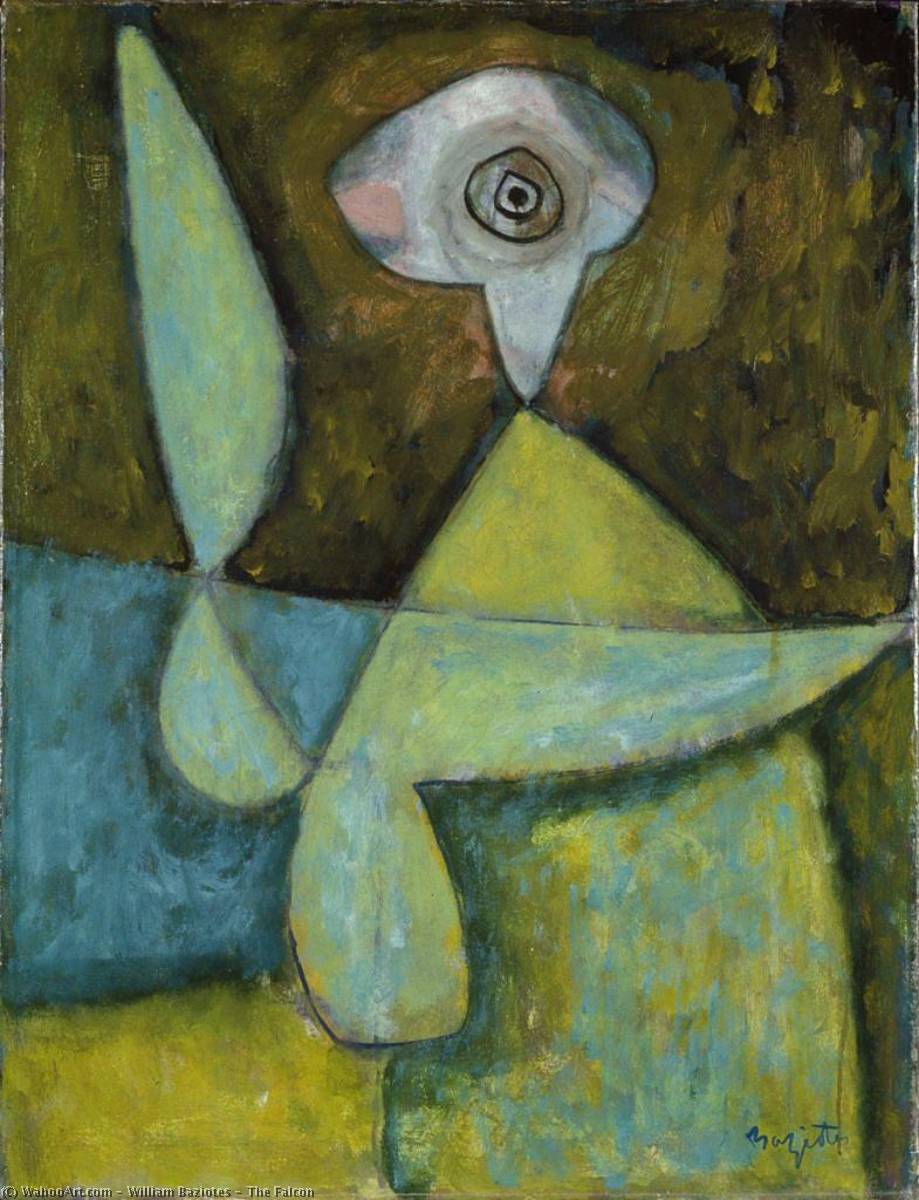
William Baziotes hagyatékából a leghíresebb alkotás Pierrot (1947). Röviddel ezután követik őket Desert Landscape (1951) és The Falcon (1947). Katalógusunkban 24 mű található William Baziotes alkotótól; a galéria megőrizte a világ által leginkább csodált 24 darabot, melyeket a dátummal, a múzeummal és a történetükkel együtt mutatunk be.

1912 – 1963, Pittsburgh Abstract expressionism A legtöbb mű: Izraeli Múzeum

William Baziotes legjobb 10 festménye: a galéria válogatása

1
Pierrot (1947) (1889) -ja William Baziotes

Pierrot

1947 · Oil On Canvas

The canvas titled Pierrot is a work by the American painter William Baziotes. Created in 1947, the piece moves away from the literal to embrace a highly abstracted subject matter. It exists in the quiet space between a recognizable figure and a dreamlike shape.

2
Desert Landscape (1951) (1889) -ja William Baziotes

Desert Landscape

1951 · Oil On Canvas

In Desert Landscape, William Baziotes moves away from the literal to find the essence of a terrain. Created about 1951, the work suggests a desert through a language of soft, organic shapes rather than precise geography. It is a vision of heat and stillness captured in oil. The subject matter remains abstractly suggestive, offering the feeling of a wasteland without the burden of detail.

4
Jungle Form (1952) (1889) -ja William Baziotes

Jungle Form

1952 · Oil On Canvas · MAM Rio, Rio de Janeiro

In the evocative depths of William Baziotes’ Jungle Form, viewers are invited into a dreamscape where the boundaries between the human silhouette and the primordial wild begin to dissolve. Created in 1952, this masterpiece serves as a profound testament to the artist's ability to bridge the psychological intensity of Surrealism with the raw, gestural energy of Abstract Expressionism. The painting presents a striking green figure, a woman seen from behind,…

A William Baziotes válogatás folytatódik: 11 – 24

A műemlékek, amelyek William Baziotes eredeti műveit őrzik

A 5 olyan múzeum, amely a legtöbb ezen az oldalon szereplő festményet őrzi.

Múzeum Város William Baziotes művei Ebből a listából származó festmények
Izraeli Múzeum, JeruzsálemIzraeli Múzeum Jeruzsálem 2 Untitled, Morning
MAM Rio, Rio de JaneiroMAM Rio Rio de Janeiro 1 Jungle Form
Buffalo AKG Art Museum, BuffaloBuffalo AKG Art Museum Buffalo 1 Puppets
Tucson Museum of Art, TucsonTucson Museum of Art Tucson 1 Tropical Bird
Art Institute of Chicago, ChicagoArt Institute of Chicago Chicago 1 Cyclops

William Baziotes év évtizedéja: az egyes éveket meghatározó eredeti művek

1940-től 1958-ig, William Baziotes 19 év alatt alkotott: a válogatás az évtizedek során megvalósult hosszú pályát követi, a legkiváltóbb eredeti művei through.

Művek évszáma szerint

Váasszon egy évet az eredetiek megtekintéséhez.

Gyűjtői kérdések William Baziotes festményeivel kapcsolatban

Melyik művel a(z) William Baziotes a leghíresebb?Fedje fel a választ

Pierrot (1947). Ezt követi Desert Landscape (1951) és The Falcon (1947).

Hány éves volt William Baziotes, amikor a Pierrot készült?Fedje fel a választ

35 éves: Pierrot 1947-ből származik, William Baziotes pedig 1912-ben született.

Melyek a tíz leghíresebb William Baziotes festmény?Fedje fel a választ

Pierrot, Desert Landscape, The Falcon, Jungle Form, Untitled, Ethel Baziotes (recto) Untitled (Clown and Female Nude) (verso), The Prisoner, Untitled, Puppets és Tropical Bird. A fenti rangsor a művek évszamarát és a múzeumát jelzi.

Hány festményet hagyott hátra William Baziotes?Fedje fel a választ

Katalógusunkban 24 mű található William Baziotes alkotótól, 1940 és 1958 év közötti időszakból.

Mely múzeumokban állnak William Baziotes remekművei?Fedje fel a választ

Leginkább Izraeli Múzeum (Jeruzsálem), MAM Rio (Rio de Janeiro) és Buffalo AKG Art Museum (Buffalo) található. A fenti múzeumi táblázatban mindegyik felsorolásra került.

Mely években festette William Baziotes leghíresebb műveit?Fedje fel a választ

1947 alatt: a jelen laphonon található 24 műből 5 készült ebben az időszakban, köztük Pierrot.

Mikszétek az első és az utolsó híres eredeti műve a(z) William Baziotes alkotótól?Fedje fel a választ

Ezen az oldalon a leghitelesebb Ethel Baziotes (recto) Untitled (Clown and Female Nude) (verso) (1940), a legutóbbi pedig Watercolor 4 (1958).

Melyik technikát alkalmazta leggyakrabban William Baziotes?Fedje fel a választ

Oil On Canvas, a jelen oldalon található 24 műből 3 darab esetén.

Mely művészeti irányba tartozik William Baziotes?Fedje fel a választ

Abstract expressionism, ezen az oldalon található eredetiek alapján.

Mely William Baziotes művei láthatóak a Izraeli Múzeum kiállتításán?Fedje fel a választ

Untitled és Morning: a Izraeli Múzeum, Jeruzsálem 2 művet őrzi ezen az oldalon.

William Baziotes: életmű és életút

The Dreamscape Architect: The Life and Vision of William Baziotes

Within the vibrant, often turbulent constellation of the New York School, few artists captured the ethereal boundary between the conscious mind and the primordial subconscious as poignantly as William Baziotes. Born in 1912 to Greek immigrants in Pittsburgh, Pennsylvania, Baziotes carried within him a profound connection to ancient heritage—a fascination with classical sculpture and mythic resonance that would later breathe life into his abstract forms. His formal journey began at the National Academy of Design, where he emerged in 1936 as a painter deeply attuned to the technical rigors of his craft, yet possessed by an irrepressible urge to explore the unseen realms of the psyche.

The trajectory of Baziotes’ career was irrevocably shaped by the socio-economic landscape of the Great Depression. Through his involvement with the Works Progress Administration (WPA), particularly the easel project between 1938 and 1940, he found the freedom to experiment with large-scale canvases that demanded a more visceral, gestural approach. It was during this era that he began to weave together the disparate threads of European Surrealism and the burgeoning American Abstract Expressionism. While his contemporaries often leaned toward pure abstraction or intellectualized concepts, Baziotes remained a poet of the image, utilizing automatism not merely as a technique, but as a gateway to a more evocative, biomorphic language.

Biomorphic Echoes and Surrealist Shadows

Baziotes’ visual vocabulary is perhaps most famously defined by its use of biomorphic forms—organic, rounded shapes that suggest biological life, cellular structures, or the fluid movement of deep-sea organisms. His work often feels like a window into a prehistoric or extraterrestrial landscape, where the distinction between flesh and flora becomes beautifully blurred. In masterpieces such as Jungle Form (1952), one encounters a mesmerizing metamorphosis; a verdant figure emerges from a tangled thicket, her very essence seemingly woven from emerald and mossy textures. This ability to marry the psychological intensity of Surrealism with the raw, energetic brushwork of Abstract Expressionism allowed him to create works that are simultaneously haunting and deeply rhythmic.

His inspirations were as diverse as they were profound. Beyond the visual influence of primitive art, Baziotes drew immense spiritual and linguistic nourishment from the poetry of Charles Baudelaire and the timeless elegance of ancient Greek art. This literary and historical depth infused his paintings with a sense of tragic beauty and ritualistic movement. Whether through the melancholic color palettes found in works like The Falcon or the stark, haunting compositions of The Flesh Eaters, Baziotes sought to capture a moment of transcendence—a reaching toward the heavens or an exploration of the shadows lurking within the human spirit.

Legacy and the New York School

The mid-1940s marked the zenith of Baziotes’ professional recognition. His 1944 debut solo exhibition at Peggy Guggenheim’s legendary Art of This Century gallery served as a definitive arrival, placing him at the epicenter of the modern art world. He was not merely a participant in this movement but a foundational architect of its community. Alongside luminaries such as Mark Rothko, Robert Motherwell, and David Hare, Baziotes co-founded the Subjects of the Artist School in 1948. This institution became a vital crucible for artistic dialogue, hosting lectures by icons like John Cage and Jean Arp, and fostering a collaborative environment that would define the postwar American aesthetic.

In his later years, Baziotes transitioned into a period of significant pedagogical influence, teaching at prestigious institutions including the Museum of Modern Art and New York University. Though his life was tragically cut short by lung cancer in 1963, just days before his fifty-first birthday, his contribution to the evolution of modern art remains indelible. He leaves behind a legacy characterized by:

  • The Synthesis of Styles: Successfully bridging the gap between the dream-logic of Surrealism and the gestural freedom of Abstract Expressionism.
  • Biomorphic Innovation: Developing a unique visual language of organic, fluid forms that evoke both biological life and mythic archetypes.
  • Cultural Integration: Infusing American abstraction with the weight of classical antiquity and European poetic traditions.
  • Educational Leadership: Strengthening the New York art community through the establishment of collaborative schools and academic instruction.

Today, the works of William Baziotes continue to captivate collectors and historians alike, offering a profound meditation on the interconnectedness of the human soul and the untamed natural world.