Walker Evans portréja

Walker Evans festményei: A 50 leghíresebb alkotás, egy galéria szemével

Frissítve: október 2026 · rangsorolva népszerűségi pontszámunk alapján (minden mű keresései, látogatásai és megrendelései alapján) · 50 mű Walker Evans alkotása a katalógusunkban

Röviden

A galéria szerint Walker Evans leghíresebb festménye a Roadside Stand, vicinity Birmingham, Alabama (1971), amelynek eredeti példája a George Eastman Múzeum múzeumában található, Rochester városában. Let Us Now Praise Famous Men (1936) és Havana Citizen / Citizen in Downtown Havana (1933) kiegészítik azt a triót, amelyet minden szem felismer. A katalógusunkban szereplő 50 művész Walker Evans alkotásából a galéria az alábbi 50 leghíresebbet mutatja be, amelyek mind egyedi originális művek, a készítés évszámával, a múzeum megnevezésével és a különlegességük leírásával.

1903 – 1975, St. Louis Contemporary realism A legtöbb mű: J. Paul Getty Múzeum

A galéria top 10 Walker Evans festménye

1
Roadside Stand, vicinity Birmingham, Alabama (1971) szerzője Walker Evans

Roadside Stand, vicinity Birmingham, Alabama

1971 · Black and White Photography · George Eastman Múzeum, Rochester

In the quiet, sun-drenched corners of rural Alabama, Walker Evans captured more than just a storefront; he froze a moment of profound human resilience. "Roadside Stand, vicinity Birmingham, Alabama," produced in 1971, serves as a hauntingly beautiful meditation on American identity. The photograph presents a deceptively simple tableau: a weathered structure, the home of ‘F.M. Pointer – The Old Reliable House Mover,’ where two men stand amidst their trade. There…

2
Let Us Now Praise Famous Men (1936) szerzője Walker Evans

Let Us Now Praise Famous Men

1936 · Photography · la Biennale di Venezia, Velence

Walker Evans' "Let Us Now Praise Famous Men," born from a collaboration between the photographer and writer James Agee in 1936-37, isn’t merely a collection of photographs; it’s a profound meditation on poverty, resilience, and the fractured landscape of the American South during the Great Depression. The work, initially conceived as an article for *Fortune* magazine, ultimately transcended its journalistic origins to become a seminal text in documentary photography and…

3
Havana Citizen / Citizen in Downtown Havana (1933) szerzője Walker Evans

Havana Citizen / Citizen in Downtown Havana

1933 · Gelatin Silver Print · J. Paul Getty Múzeum, Los Angeles

Walker Evans’ “Citizen in Downtown Havana,” created in 1933, isn’t merely a photograph; it’s a distilled moment, a frozen tableau of urban life that speaks volumes about a city grappling with change and the quiet dignity of its inhabitants. Captured during a brief assignment for Carlton Beals' book *The Crime of Cuba*, this image transcends simple documentation, becoming a poignant meditation on identity, masculinity, and the subtle rhythms of daily…

4
Let Us Now Praise Famous Men (1936) szerzője Walker Evans

Let Us Now Praise Famous Men

1936 · Acrylic On Canvas · la Biennale di Venezia, Velence

Walker Evans’s “Let Us Now Praise Famous Men,” published in 1941, isn't merely a collection of photographs; it’s a profound meditation on poverty, dignity, and the fractured American landscape during the Great Depression. Born from an assignment for *Fortune* magazine to document the lives of tenant farmers in Alabama, the project quickly transcended its initial journalistic purpose. James Agee, a young writer brimming with empathy, joined Evans, and together they…

5
Silverware (1936) szerzője Walker Evans

Silverware

1936 · Black and White Photography · Nelson-Atkins Múzeum, Kansas City

In the quiet, textured stillness of Walker Evans’ 1936 masterpiece, “Silverware,” we find much more than a mere photographic record of a weathered interior. It is a profound, distilled moment of American history, captured with an unwavering gaze that speaks volumes about the spirit of perseverance during the Great Depression. At first glance, the viewer is presented with a seemingly simple depiction of a wooden wall, yet beneath this surface…

6
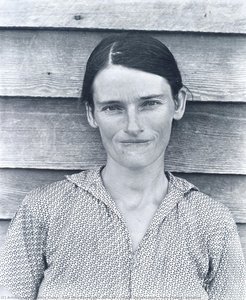
Allie Mae Burroughs, Wife of a Cotton Sharecropper, Hale County, Alabama (1936) szerzője Walker Evans

Allie Mae Burroughs, Wife of a Cotton Sharecropper, Hale County, Alabama

1936 · Acrylic On Canvas · J. Paul Getty Múzeum, Los Angeles

Walker Evans's photograph, "Allie Mae Burroughs, Wife of a Cotton Sharecropper, Hale County, Alabama," isn't merely a snapshot; it’s a poignant window into the heart of the American Depression. Captured in 1936 during his work for the Farm Security Administration, this image transcends its documentary origins to become a powerful meditation on dignity, hardship, and the quiet strength of an ordinary woman facing extraordinary circumstances. The photograph, now housed at…

7
Alabama Tenant Farmer (1936) szerzője Walker Evans

Alabama Tenant Farmer

1936 · Gelatin Silver Print · J. Paul Getty Múzeum, Los Angeles

In the quiet, monochrome stillness of Walker Evans’ “Alabama Tenant Farmer,” one finds much more than a mere documentation of a kitchen interior; one encounters a profound meditation on the human condition. Captured in 1936 amidst the dust and desperation of the Great Depression, this masterpiece serves as a poignant emblem of resilience. The photograph transports the viewer into a humble cotton farmer’s cabin in Hale County, Alabama, where the…

8
Let Us Now Praise Famous Men (1936) szerzője Walker Evans

Let Us Now Praise Famous Men

1936 · Acrylic On Canvas · la Biennale di Venezia, Velence

Walker Evans' "Let Us Now Praise Famous Men," born from a 1936 assignment for *Fortune* magazine, isn’t merely a photographic record; it’s a profound meditation on the dignity of human existence amidst crushing poverty. Published in 1941, this seminal work transcends its documentary origins to become a hauntingly beautiful exploration of rural America during the Great Depression. Evans, initially tasked with capturing the realities of sharecropping families in Alabama, quickly…

9
Uncle Sam (1935) szerzője Walker Evans

Uncle Sam

1935 · Black and White Photography · Ogden Museum of Southern Art, New Orleans

In the quiet, silvered tones of Walker Evans’s 1935 masterpiece, Uncle Sam, we are invited to step through a temporal threshold into the heart of a vanishing America. This evocative black and white photograph serves as more than a mere documentation of architecture; it is a profound meditation on existence during the Great Depression. The composition centers on a sprawling, two-story house, its weathered facade and numerous windows acting as…

10
Let Us Now Praise Famous Men (1936) szerzője Walker Evans

Let Us Now Praise Famous Men

1936 · Acrylic On Canvas · la Biennale di Venezia, Velence

Walker Evans’s “Let Us Now Praise Famous Men,” published in 1941, stands as an unparalleled achievement in documentary photography and a cornerstone of American literature. More than just capturing the bleak realities of the Great Depression—specifically the plight of tenant farmers in Hale County, Alabama—Evans’s magnum opus delves into the profound dignity inherent within human experience even amidst crushing hardship.

Walker Evans festményei, 11. helyezéstől 50. helyezésig

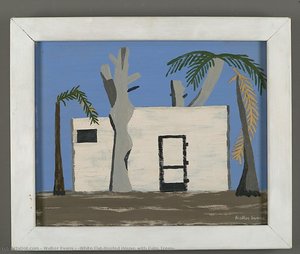
11License Photo Studio, New York (1934) szerzője Walker EvansLicense Photo Studio, New York1934 · J. Paul Getty Múzeum 12Water Fountain, Havana (1932) szerzője Walker EvansWater Fountain, Havana1932 · Boca Raton Museum of Art 13Miners (1935) szerzője Walker EvansMiners1935 · J. Paul Getty Múzeum 14Barber Shop, New Orleans (1971) szerzője Walker EvansBarber Shop, New Orleans1971 · Boca Raton Museum of Art 15Boarding House Porch, Birmingham, Alabama (1971) szerzője Walker EvansBoarding House Porch, Birmingham, Alabama1971 · Boca Raton Museum of Art 16Brooklyn bridge, new york szerzője Walker EvansBrooklyn bridge, new york 17Parked car, small town main street szerzője Walker EvansParked car, small town main street 18Sharecropper, hale county, alabama szerzője Walker EvansSharecropper, hale county, alabama 19Coal dock worker szerzője Walker EvansCoal dock worker 20American legionnaire szerzője Walker EvansAmerican legionnaire 21Interior detail, west virginia coal miner's house szerzője Walker EvansInterior detail, west virginia coal miner's house 22Girl in Fulton Street, New York szerzője Walker EvansGirl in Fulton Street, New York 23Roadside Sandwich Shop, Ponchatoula, Louisiana szerzője Walker EvansRoadside Sandwich Shop, Ponchatoula, Louisiana 24Battlefield Monument, Vicksburg, MS (1936) szerzője Walker EvansBattlefield Monument, Vicksburg, MS1936 · Ogden Museum of Southern Art 25[Landscape with Adobe Church] (1947) szerzője Walker Evans[Landscape with Adobe Church]1947 26[Red Church] (1950) szerzője Walker Evans[Red Church]1950 27[Three Director's Chairs] (1950) szerzője Walker Evans[Three Director's Chairs]1950 28[Ship's Prow] (1950) szerzője Walker Evans[Ship's Prow]1950 29[Floral Still-Life] (1950) szerzője Walker Evans[Floral Still-Life]1950 30[Shack with Broken Windows] (1950) szerzője Walker Evans[Shack with Broken Windows]1950 31[Architectural Interior] (1950) szerzője Walker Evans[Architectural Interior]1950 32[White Flat-Roofed House with Palm Trees] (1950) szerzője Walker Evans[White Flat-Roofed House with Palm Trees]1950 33[Construction Site] (1950) szerzője Walker Evans[Construction Site]1950 34The Shell House (1950) szerzője Walker EvansThe Shell House1950 35Anna Maria, Florida (1958) szerzője Walker EvansAnna Maria, Florida1958 36[Seashore Scene with Boardwalk] (1961) szerzője Walker Evans[Seashore Scene with Boardwalk]1961 37[Boat with Palm Trees on Shore] (1958) szerzője Walker Evans[Boat with Palm Trees on Shore]1958 38[House with Gridded Panel and Palm Trees] (1958) szerzője Walker Evans[House with Gridded Panel and Palm Trees]1958 39[Barn with Porch Addition, Old Lyme, Connecticut] (1963) szerzője Walker Evans[Barn with Porch Addition, Old Lyme, Connecticut]1963 40[Red Building in Field] (1963) szerzője Walker Evans[Red Building in Field]1963 41Main Street in a Pennsylvania Town (1971) szerzője Walker EvansMain Street in a Pennsylvania Town1971 42Joe's auto graveyard, pennsylvania szerzője Walker EvansJoe's auto graveyard, pennsylvania 43Kitchen wall, alabama farmstead szerzője Walker EvansKitchen wall, alabama farmstead 44Kitchen corner, tenant farmhouse, hale county, alabama szerzője Walker EvansKitchen corner, tenant farmhouse, hale county, alabama 45End of House on Logan Street, Charleston, South Carolina szerzője Walker EvansEnd of House on Logan Street, Charleston, South Carolina 46Allie Mae Burroughs, Wife of a Cotton Sharecropper, Hale County, Alabama szerzője Walker EvansAllie Mae Burroughs, Wife of a Cotton Sharecropper, Hale County, Alabama 47Main street block, selma, alabama szerzője Walker EvansMain street block, selma, alabamaGeorgia Museum of Art 48Penny picture display, savannah, georgia szerzője Walker EvansPenny picture display, savannah, georgia 49Negro church, south carolina szerzője Walker EvansNegro church, south carolina 50City lunch counter, new york szerzője Walker EvansCity lunch counter, new york

Walker Evans híres festményei, korszakonként

A témák, amelyek Walker Evans figyelmét meghúzták

A négy leggyakorobban előforduló téma ebben az eredeti művekben, mindegyik a legkiválóbb példájával.

A műemlékek, amelyek Walker Evans eredeti műveit őrzik

A 7 olyan múzeum, amely a legtöbb ezen az oldalon szereplő festményet őrzi.

Múzeumok Város Walker Evans művei Ebből a listából származó festmények
J. Paul Getty Múzeum, Los AngelesJ. Paul Getty Múzeum Los Angeles 5 Havana Citizen / Citizen in Downtown Havana, Allie Mae Burroughs, Wife of a Cotton Sharecropper, Hale County, Alabama, Alabama Tenant Farmer
la Biennale di Venezia, Velencela Biennale di Venezia Velence 4 Let Us Now Praise Famous Men, Let Us Now Praise Famous Men, Let Us Now Praise Famous Men
Boca Raton Museum of Art, Boca RatonBoca Raton Museum of Art Boca Raton 3 Water Fountain, Havana, Barber Shop, New Orleans, Boarding House Porch, Birmingham, Alabama
Ogden Museum of Southern Art, New OrleansOgden Museum of Southern Art New Orleans 2 Uncle Sam, Battlefield Monument, Vicksburg, MS
George Eastman Múzeum, RochesterGeorge Eastman Múzeum Rochester 1 Roadside Stand, vicinity Birmingham, Alabama
Nelson-Atkins Múzeum, Kansas CityNelson-Atkins Múzeum Kansas City 1 Silverware
Georgia Museum of Art, AthensGeorgia Museum of Art Athens 1 Main street block, selma, alabama

Walker Evans, egy aláírott festmény évtizedenként

Művek évtizedenként

Váassz ki egy évtizedet, hogy megnézhesd az azt meghatározó eredetiműveket.

Walker Evans festményei: a galéria válaszai

Melyik Walker Evans festmény a leghíresebb?Fedje fel a választ

Roadside Stand, vicinity Birmingham, Alabama (1971), George Eastman Múzeum, Rochester. Ezután Let Us Now Praise Famous Men (1936) és Havana Citizen / Citizen in Downtown Havana (1933) következik.

Hány éves volt Walker Evans, amikor elkészítette a(t): Roadside Stand, vicinity Birmingham, Alabama?Fedje fel a választ

68 éves: Roadside Stand, vicinity Birmingham, Alabama 1971-ből származik, Walker Evans pedig 1903-ben született.

Melyek Walker Evans top 10 festménye?Fedje fel a választ

Roadside Stand, vicinity Birmingham, Alabama, Let Us Now Praise Famous Men, Havana Citizen / Citizen in Downtown Havana, Let Us Now Praise Famous Men, Silverware, Allie Mae Burroughs, Wife of a Cotton Sharecropper, Hale County, Alabama, Alabama Tenant Farmer, Let Us Now Praise Famous Men, Uncle Sam és Let Us Now Praise Famous Men. A fenti rangsor a művek évszamarát és a múzeumát jelzi.

Hány műve született Walker Evans nevére?Fedje fel a választ

Katalógusunkban 50 mű található Walker Evans alkotótól, 1932 és 1971 év közötti időszakból.

Hol találhatóak Walker Evans leghíresebb eredeti művei?Fedje fel a választ

Leginkább J. Paul Getty Múzeum (Los Angeles), la Biennale di Venezia (Velence) és Boca Raton Museum of Art (Boca Raton) található. A fenti múzeumi táblázatban mindegyik felsorolásra került.

Mikor festette Walker Evans le leghíresebb műveit?Fedje fel a választ

1930s alatt: a jelen laphonon található 50 műből 13 készült ebben az időszakban, köztük Let Us Now Praise Famous Men.

Melyek Walker Evans legkorábbi és legutóbbi híres művei?Fedje fel a választ

Ezen az oldalon a leghitelesebb Water Fountain, Havana (1932), a legutóbbi pedig Roadside Stand, vicinity Birmingham, Alabama (1971).

Mely témakörökkel foglaltaszkodott a legtöbbször Walker Evans?Fedje fel a választ

Usa (7), Great depression (5) és American south (4), a jelen oldalon található 50 műművészeti alkotás között.

Melyik technikával foglalt leginkább Walker Evans?Fedje fel a választ

Acrylic On Canvas, a jelen oldalon található 50 műből 5 darab esetén.

Mely művészeti irányhoz tartozik Walker Evans?Fedje fel a választ

Contemporary realism és Documentary photography, ezen az oldalon található eredetiek alapján.

Mely Walker Evans eredeti műveit őrzi a J. Paul Getty Múzeum?Fedje fel a választ

Havana Citizen / Citizen in Downtown Havana, Allie Mae Burroughs, Wife of a Cotton Sharecropper, Hale County, Alabama és Alabama Tenant Farmer: a J. Paul Getty Múzeum, Los Angeles 5 művet őrzi ezen az oldalon.

Walker Evans: a művész

A Witness to America: The Life and Legacy of Walker Evans

Walker Evans, born in St. Louis in 1903, didn’t simply document the American experience during the Great Depression; he became inextricably linked to its very soul through his photographs. His name is synonymous with a particular kind of stark realism – an ability to capture not just *what* America was, but *how* it felt: its quiet dignity, its profound hardships, and often, its unexpected beauty. Evans’s journey wasn't a straightforward path; it began with literary aspirations, evolving into a uniquely observant photographic style shaped by his upbringing in cities like Toledo, Chicago, and New York – each location contributing to an early awareness of America’s diverse landscapes and people. His formal education at institutions like Phillips Academy Andover and a brief stint at Williams College were ultimately supplemented by a self-directed study of literature and art, particularly the works of European masters and American writers who valued precision and observation. A year spent in Paris in 1926 exposed him to the currents of modernism, but it was his return to New York that truly ignited his photographic passion around 1928.

Forging a Documentary Vision

Evans’s early influences were remarkably diverse. He deeply admired Eugène Atget's meticulous documentation of Parisian streets – images that possessed both timelessness and immediacy – and August Sander’s ambitious portraits, aiming for an objective cataloging of German society. Equally significant were the literary figures who profoundly shaped his artistic sensibilities: T.S. Eliot, D.H. Lawrence, James Joyce, and e.e. cummings. These writers shared a commitment to precision of language and a keen observation of the human condition – qualities that Evans sought to translate into his photographs. This confluence of influences resulted in an aesthetic characterized by clarity, directness, and a deliberate avoidance of sentimentality. This approach found its most powerful expression during his tenure with the Farm Security Administration (FSA) beginning in 1935. Appointed to document the effects of the Depression on rural communities in the Southern United States, Evans embarked on an extensive journey, capturing images that would become enduring symbols of hardship and resilience. His collaboration with writer James Agee on *Let Us Now Praise Famous Men* (1941) stands as a landmark achievement – a groundbreaking work combining stark photographs with lyrical prose to depict the lives of three tenant farming families in Alabama. Initially rejected by *Fortune* magazine for its length and unconventional style, the book ultimately cemented Evans’s reputation as a pioneering figure in documentary literature and photography. The FSA project demanded a specific approach: Evans was tasked with capturing the realities of rural life without imposing his own judgments or narratives. He achieved this through careful observation, unflashy compositions, and an unwavering commitment to portraying subjects with honesty and respect.

The Technical Craft and Artistic Choices

Evans’s photographic style wasn't simply a matter of subject matter; it was deeply rooted in technical choices. He favored the large-format 8x10 view camera, which allowed for exceptional detail and control over depth of field. This deliberate choice contributed significantly to the distinctive quality of his images – a sense of timelessness and quiet dignity that sets them apart from more casual snapshots. He was also an early adopter of short exposure times, a technique that required meticulous planning and precise timing. Evans’s approach wasn't about manipulating emotions; it was about revealing truth through careful composition and technical execution. He famously stated, “I believe is really good in the so-called documentary approach to photography is the addition of lyricism… produced unconsciously and even unintentionally and accidentally by the cameraman.” This suggests a belief that genuine emotion could emerge organically from the act of photographing itself. His work demonstrated an understanding of light and shadow, using them not for dramatic effect but to subtly shape the mood and atmosphere of each image.

Beyond FSA: Portraits and Shifting Perspectives

Following his work with the FSA, Evans’s artistic trajectory continued to evolve. The landmark exhibition “Walker Evans: American Photographs” at the Museum of Modern Art in 1938 solidified his reputation as a major force in photography, marking the first solo show dedicated to a photographer at the museum. However, he resisted being pigeonholed solely as a documentary photographer. He increasingly turned his attention towards portraits and street photography, capturing candid moments of urban life in New York City with an understated elegance. These later works reveal a subtle shift in focus – less concerned with social commentary and more interested in exploring the aesthetic qualities of everyday scenes. He experimented with color photography in the 1960s, producing vibrant images of interiors, architecture, and commonplace objects. This experimentation demonstrated a willingness to challenge conventional notions of photographic representation and explore new avenues for artistic expression. The playful and decorative quality of these later works often surprised those familiar only with his black-and-white FSA photographs, revealing a previously unseen facet of his creative personality.

A Lasting Impact on Photographic History

Walker Evans’s legacy extends far beyond the iconic images he created during the Great Depression. He is widely considered one of the most important figures in the history of documentary photography, having established a new standard for realism and objectivity in photographic representation. His work profoundly influenced generations of photographers, inspiring them to look at the world with fresh eyes and to find beauty and meaning in the ordinary. His impact on social realism is undeniable, as his FSA photographs became powerful symbols of hardship and resilience during a pivotal moment in American history. But perhaps his greatest contribution lies in demonstrating how photography could serve not only as a tool for social commentary but also as a medium for aesthetic exploration. He proved that even the most seemingly mundane subjects could be transformed into works of art through careful observation, precise composition, and a commitment to visual truth. Evans’s work continues to resonate today, reminding us of the power of photography to document our world, challenge our perceptions, and connect us to the shared human experience.

Minden 50 műmű Walker Evans alkotása →