Vittore Carpaccio portréja

A 100 legnevezesebb Vittore Carpaccio festmény, egy galériaválaszték

Frissítve: november 2026 · rangsorolva népszerűségi pontszámunk alapján (minden mű keresései, látogatásai és megrendelései alapján) · 201 mű Vittore Carpaccio alkotása a katalógusunkban

Röviden

Vittore Carpaccio hagyatékából a leghíresebb alkotás Krisztus a Passion Jeleivel és Angellekkel (1510), amely a New York városi Metropolitan Művészeti Múzeum gyűjteményében található. Röviddel ezután követik őket The Ten Thousand Martyrs on the Mount Ararat (1515) és Meeting of the Betrothed Couple (detail) (1495). Katalógusunkban 201 mű található Vittore Carpaccio alkotótól; a galéria megőrizte a világ által leginkább csodált 100 darabot, melyeket a dátummal, a múzeummal és a történetükkel együtt mutatunk be.

1465 – 1526, Venezia Velencei reneszánsz A legtöbb mű: Gallerie dell'Accademia di Venezia

Vittore Carpaccio legjobb 10 festménye: a galéria válogatása

1
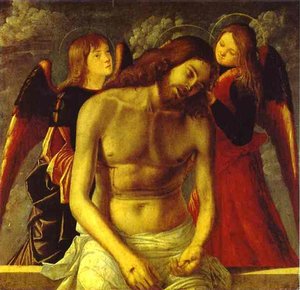
Krisztus a Passion Jeleivel és Angellekkel (1510) (1889) -ja Vittore Carpaccio

Krisztus a Passion Jeleivel és Angellekkel

1510 · Olajfestmény panelen · Metropolitan Művészeti Múzeum, New York

Vittore Carpaccio, a 15. századi velencei festő, a művészettörténet egyik legszebb és legmélyégesebb alkotásával, a „Kereszt a Passion Szimbólumokkal Borítva”vel, egy olyan képet teremtett, amely nem csupán vallási jelenetet ábrázol, hanem a fájdalom, a szenvedés és a megváltás mélységét is kifejezi. A 1510-ben készített festmény a reneszánsza korának csúcsdarabja, mely a velencei művészeti hagyományok és az egykoron keleti művészetek befolyása egyedi keverékét mutatja be.

2
The Ten Thousand Martyrs on the Mount Ararat (1515) (1889) -ja Vittore Carpaccio

The Ten Thousand Martyrs on the Mount Ararat

1515 · Oil On Panel · Gallerie dell'Accademia di Venezia, Velence

To stand before this monumental canvas is to be enveloped by a wave of profound spiritual energy. Vittore Carpaccio’s depiction, The Ten Thousand Martyrs on the Mount Ararat, is not merely a painting; it is an overwhelming testament to faith, endurance, and the ultimate promise of resurrection. The sheer scale of the work—a dramatic expanse measuring 307 by 205 centimeters—demands attention, drawing the viewer into its complex narrative heart. It…

3
Meeting of the Betrothed Couple (detail) (1495) (1889) -ja Vittore Carpaccio

Meeting of the Betrothed Couple (detail)

1495 · Oil · Gallerie dell'Accademia di Venezia, Velence

Vittore Carpaccio's “Meeting of the Betrothed Couple” is not merely a depiction of a historical event; it’s a meticulously crafted window into the vibrant, complex world of 15th-century Venice. This particular detail, focusing on the central figures amidst a throng of nobility and civic officials, offers an intimate invitation to explore the artist's unique approach to narrative painting – a style that eschewed the prevailing humanist trends of his time…

4
The Lion of St Mark (detail) (1516) (1889) -ja Vittore Carpaccio

The Lion of St Mark (detail)

1516 · Tempera · Doge-palota, Velence

In this detail from 1516, a winged lion occupies the foreground, its physical presence defined by a heavy, stone-like texture. The creature is positioned with its hind legs submerged in water while its forelegs rest upon dry land. Its wings are spread wide across the upper portion of the frame. In its paws, the lion holds an open book. The pages contain Latin text that reads "PAX TIBI MARCE EVANGELISTA…

5
The Lion of St Mark (detail) (1516) (1889) -ja Vittore Carpaccio

The Lion of St Mark (detail)

1516 · Tempera On Panel · Doge-palota, Velence

In the heart of the Palazzo Ducale, where the echoes of history still resonate through the marble halls of Venice, resides one of the most profound symbols of a vanished republic. Vittore Carpaccio’s "The Lion of St Mark," completed in 1516, is far more than a mere depiction of a mythical creature; it is a breathtaking window into the soul of the Venetian Renaissance. To gaze upon this work is…

6
Lamentation of Christ (1510) (1889) -ja Vittore Carpaccio

Lamentation of Christ

1510 · Oil

In the heavy stillness that follows the Crucifixion, Vittore Carpaccio’s Lamentation of Christ captures a moment of profound theological and human tragedy. Painted around 1510, the scene unfolds with a somber atmosphere, inviting a slow, meditative gaze. At the center of this spiritual drama, the figure of Jesus hangs from the cross, his body a silent witness to sacrifice. The composition is meticulously detailed, creating a stage where the divine…

7
The Dead Christ (1520) (1889) -ja Vittore Carpaccio

The Dead Christ

1520 · Oil On Canvas · Berlin Állami Múzeumai, Berlin

The body of Jesus lies upon a cold stone slab, a pale weight amidst the shadows of a rocky landscape. Around him, the air is heavy with the silence of the departed. Figures gather, their faces etched with the quiet geometry of grief. Some stand close to the lifeless limbs, while others linger in the periphery, caught in a moment of profound stillness. A single tree rises nearby, its branches…

8
St George and the Dragon (detail) (1502) (1889) -ja Vittore Carpaccio

St George and the Dragon (detail)

1502 · Tempera On Panel · Scuola di San Giorgio degli Schiavoni, Venice

In the heart of Venice, within the hallowed halls of the Scuola di San Giorgio degli Schiavoni, lies a fragment of a much larger epic. The detail from Vittore Carpaccio’s St George and the Dragon serves as a breathtaking window into the height of the Italian Renaissance. Painted in 1502, this tempera on wood panel is not merely a depiction of a myth, but a visceral experience of movement and…

9
St George and the Dragon (1516) (1889) -ja Vittore Carpaccio

St George and the Dragon

1516 · Tempera On Panel · San Giorgio Maggiore, Velence

In the heart of the Venetian Renaissance, where the shimmering reflections of the canals met the burgeoning spirit of humanism, Vittore Carpaccio captured a moment of eternal struggle. St George and the Dragon is not merely a depiction of a legendary battle; it is a breathtaking narrative tapestry that weaves together the chivalric ideals of the sixteenth century with a profound spiritual allegory. As the viewer’s eye meets the canvas,…

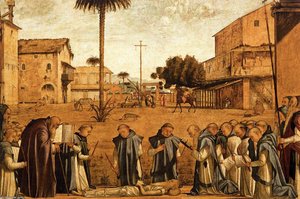
10
Meeting of the Betrothed Couple (detail) (1495) (1889) -ja Vittore Carpaccio

Meeting of the Betrothed Couple (detail)

1495 · Acrylic On Canvas · Gallerie dell'Accademia di Venezia, Velence

Vittore Carpaccio’s “Meeting of the Betrothed Couple,” a meticulously rendered detail from his monumental cycle depicting scenes from Dante Alighieri's *Divine Comedy*, offers a captivating glimpse into the vibrant, complex world of 15th-century Venice. Far more than a simple illustration, this panel—a fragment of a larger narrative—is a masterclass in observation and storytelling, revealing Carpaccio’s unique approach to Renaissance painting. It’s a scene brimming with social nuance, legal formality, and…

A Vittore Carpaccio válogatás folytatódik: 11 – 100

11Martyrdom of the Pilgrims and the Funeral of St Ursula (detail) (1493) (1889) -ja Vittore CarpaccioMartyrdom of the Pilgrims and the Funeral of St Ursula (detail)1493 · Gallerie dell'Accademia di Venezia 12The Healing of the Madman (detail) (1496) (1889) -ja Vittore CarpaccioThe Healing of the Madman (detail)1496 · Gallerie dell'Accademia di Venezia 13Portrait of a Knight (1510) (1889) -ja Vittore CarpaccioPortrait of a Knight1510 · Thyssen-Bornemisza Múzeum 14The Miracle of the Relic of the True Cross on the Rialto Bridge (1494) (1889) -ja Vittore CarpaccioThe Miracle of the Relic of the True Cross on the Rialto Bridge1494 · Gallerie dell'Accademia di Venezia 15The Healing of the Madman (detail) (1496) (1889) -ja Vittore CarpaccioThe Healing of the Madman (detail)1496 · Gallerie dell'Accademia di Venezia 16The Arrival of the Pilgrims in Cologne (1490) (1889) -ja Vittore CarpaccioThe Arrival of the Pilgrims in Cologne1490 · Gallerie dell'Accademia di Venezia 17St Stephen is Consecrated Deacon (detail) (1889) -ja Vittore CarpaccioSt Stephen is Consecrated Deacon (detail)Berlin Állami Múzeumai 18Szent Péter Martyrius (1505) (1889) -ja Vittore CarpaccioSzent Péter Martyrius1505 · Philbrook Museum of Art 19The Ambassadors Return to the English Court (detail) (1495) (1889) -ja Vittore CarpaccioThe Ambassadors Return to the English Court (detail)1495 · Gallerie dell'Accademia di Venezia 20The Dream of St Ursula (1495) (1889) -ja Vittore CarpaccioThe Dream of St Ursula1495 · Gallerie dell'Accademia di Venezia 21The Meditation on the Passion (1510) (1889) -ja Vittore CarpaccioThe Meditation on the Passion1510 · Metropolitan Művészeti Múzeum 22Portrait of a lady (1495) (1889) -ja Vittore CarpaccioPortrait of a lady1495 · Művészeti Múzeum, Boston 23Vision of St. Augustine (1507) (1889) -ja Vittore CarpaccioVision of St. Augustine1507 24Departure of the Pilgrims (detail) (1495) (1889) -ja Vittore CarpaccioDeparture of the Pilgrims (detail)1495 · Gallerie dell'Accademia di Venezia 25Martyrdom of the Pilgrims and the Funeral of St Ursula (detail) (1493) (1889) -ja Vittore CarpaccioMartyrdom of the Pilgrims and the Funeral of St Ursula (detail)1493 · Gallerie dell'Accademia di Venezia 26St Catherine of Alexandria and St Veneranda (1500) (1889) -ja Vittore CarpaccioSt Catherine of Alexandria and St Veneranda1500 · Castelvecchio Múzeum 27Madonna and Child with two Saints (1490) (1889) -ja Vittore CarpaccioMadonna and Child with two Saints1490 · Gemäldegalerie 28The Lion of St Mark (1889) -ja Vittore CarpaccioThe Lion of St Mark 29Portrait of a Man (1510) (1889) -ja Vittore CarpaccioPortrait of a Man1510 · Művészeti Múzeum, Boston 30Madonna and Child Enthroned with Saints and Donor (1507) (1889) -ja Vittore CarpaccioMadonna and Child Enthroned with Saints and Donor1507 · Walters Art Museum 31A Gondolier (1517) (1889) -ja Vittore CarpaccioA Gondolier1517 · Isabella Stewart Gardner Museum 32St George and the Dragon (1516) (1889) -ja Vittore CarpaccioSt George and the Dragon1516 33The Baptism of the Selenites (detail) (1507) (1889) -ja Vittore CarpaccioThe Baptism of the Selenites (detail)1507 · Scuola di San Giorgio degli Schiavoni 34Salvator Mundi (1520) (1889) -ja Vittore CarpaccioSalvator Mundi1520 35Two Court Ladies (1889) -ja Vittore CarpaccioTwo Court Ladies 36The Marriage of the Virgin (1504) (1889) -ja Vittore CarpaccioThe Marriage of the Virgin1504 · Pinacoteca di Brera 37A Bishop Saint Blessing (1514) (1889) -ja Vittore CarpaccioA Bishop Saint Blessing1514 · Philbrook Museum of Art 38Mary with the Child and Saints Catherine and Jerome (1508) (1889) -ja Vittore CarpaccioMary with the Child and Saints Catherine and Jerome1508 · Staatliche Kunsthalle Karlsruhe 39Crucifixion and Apotheosis of the Ten Thousand Martyrs (1515) (1889) -ja Vittore CarpaccioCrucifixion and Apotheosis of the Ten Thousand Martyrs1515 · Gallerie dell'Accademia di Venezia 40Disputation of St Stephen (detail) (1514) (1889) -ja Vittore CarpaccioDisputation of St Stephen (detail)1514 · Pinacoteca di Brera 41Apotheosis of St Ursula (1491) (1889) -ja Vittore CarpaccioApotheosis of St Ursula1491 · Gallerie dell'Accademia di Venezia 42The Lion of St Mark (detail) (1516) (1889) -ja Vittore CarpaccioThe Lion of St Mark (detail)1516 · Doge-palota 43The Ambassadors Depart (detail) (1495) (1889) -ja Vittore CarpaccioThe Ambassadors Depart (detail)1495 · Gallerie dell'Accademia di Venezia 44The Healing of the Madman (1496) (1889) -ja Vittore CarpaccioThe Healing of the Madman1496 · Gallerie dell'Accademia di Venezia 45Death of the Virgin by Carpaccio (1508) (1889) -ja Vittore CarpaccioDeath of the Virgin by Carpaccio1508 · Pinacoteca Nazionale 46The Ambassadors Return to the English Court (detail) (1495) (1889) -ja Vittore CarpaccioThe Ambassadors Return to the English Court (detail)1495 · Gallerie dell'Accademia di Venezia 47Disputation of St Stephen (detail) (1514) (1889) -ja Vittore CarpaccioDisputation of St Stephen (detail)1514 · Pinacoteca di Brera 48Arrival of the English Ambassadors (detail) (13) (1495) (1889) -ja Vittore CarpaccioArrival of the English Ambassadors (detail) (13)1495 · Gallerie dell'Accademia di Venezia 49Arrival of the English Ambassadors (detail) (1495) (1889) -ja Vittore CarpaccioArrival of the English Ambassadors (detail)1495 · Gallerie dell'Accademia di Venezia 50Presentation of Jesus in the Temple (detail) (1510) (1889) -ja Vittore CarpaccioPresentation of Jesus in the Temple (detail)1510 · Gallerie dell'Accademia di Venezia 51Arrival of the English Ambassadors (detail) (9) (1495) (1889) -ja Vittore CarpaccioArrival of the English Ambassadors (detail) (9)1495 · Gallerie dell'Accademia di Venezia 52Funeral of St Jerome (1502) (1889) -ja Vittore CarpaccioFuneral of St Jerome1502 · Scuola di San Giorgio degli Schiavoni 53Portrait of a lady (1485) (1889) -ja Vittore CarpaccioPortrait of a lady1485 54The Departure of the English Ambassadors (1498) (1889) -ja Vittore CarpaccioThe Departure of the English Ambassadors1498 55Glorification of St. Ursula and her Companions (1491) (1889) -ja Vittore CarpaccioGlorification of St. Ursula and her Companions1491 56the ambassadors depart - 280x253 - (1494) (1889) -ja Vittore Carpacciothe ambassadors depart - 280x253 -1494 57Hunting on the Lagoon (1490) (1889) -ja Vittore CarpaccioHunting on the Lagoon1490 58Meeting of the Betrothed Couple (detail) (1495) (1889) -ja Vittore CarpaccioMeeting of the Betrothed Couple (detail)1495 · Gallerie dell'Accademia di Venezia 59Agony in the Garden (1502) (1889) -ja Vittore CarpaccioAgony in the Garden1502 · Scuola di San Giorgio degli Schiavoni 60The Crucifixion and the Glorification the Ten Thousand Martyrs on Mount Ararat (1515) (1889) -ja Vittore CarpaccioThe Crucifixion and the Glorification the Ten Thousand Martyrs on Mount Ararat1515 61Portrait of a Venetian Nobleman (1510) (1889) -ja Vittore CarpaccioPortrait of a Venetian Nobleman1510 62The Baptism of the Selenites (1502) (1889) -ja Vittore CarpaccioThe Baptism of the Selenites1502 63The Triumph of St. George (1507) (1889) -ja Vittore CarpaccioThe Triumph of St. George1507 64Young Knight in a Landscape (1510) (1889) -ja Vittore CarpaccioYoung Knight in a Landscape1510 65Holy Conversation (detail) (1505) (1889) -ja Vittore CarpaccioHoly Conversation (detail)1505 · Musée du Petit Palais 66Baptism of the Selenites (detail) (1502) (1889) -ja Vittore CarpaccioBaptism of the Selenites (detail)1502 · Scuola di San Giorgio degli Schiavoni 67St. George Killing the Dragon (1507) (1889) -ja Vittore CarpaccioSt. George Killing the Dragon1507 68St. George Baptising the Gentile (1507) (1889) -ja Vittore CarpaccioSt. George Baptising the Gentile1507 69The Glory of St. Vidal (1514) (1889) -ja Vittore CarpaccioThe Glory of St. Vidal1514 70The Annunciation (1504) (1889) -ja Vittore CarpaccioThe Annunciation1504 · Ca' d'Oro 71The Dead Christ Supported by Angels. (1502) (1889) -ja Vittore CarpaccioThe Dead Christ Supported by Angels.1502 72Presentation in the Temple (1510) (1889) -ja Vittore CarpaccioPresentation in the Temple1510 73St. Stephen is Consecrated Deacon (1514) (1889) -ja Vittore CarpaccioSt. Stephen is Consecrated Deacon1514 74Salvator Mundi (1520) (1889) -ja Vittore CarpaccioSalvator Mundi1520 75The Annunciation (1504) (1889) -ja Vittore CarpaccioThe Annunciation1504 76Saint John the Baptist (1505) (1889) -ja Vittore CarpaccioSaint John the Baptist1505 · Philbrook Museum of Art 77Dream of St.Ursula (1495) (1889) -ja Vittore CarpaccioDream of St.Ursula1495 78St Jerome and the Lion (1502) (1889) -ja Vittore CarpaccioSt Jerome and the Lion1502 · Scuola di San Giorgio degli Schiavoni 79Vision of St Augustin (1502) (1889) -ja Vittore CarpaccioVision of St Augustin1502 · Scuola di San Giorgio degli Schiavoni 80The Stoning of St Stephen (1520) (1889) -ja Vittore CarpaccioThe Stoning of St Stephen1520 · Staatsgalerie 81Debate of St. Stephen (1514) (1889) -ja Vittore CarpaccioDebate of St. Stephen1514 82Portrait of a Woman (1889) -ja Vittore CarpaccioPortrait of a WomanRijksmuseum 83St George and the Dragon (detail) (1502) (1889) -ja Vittore CarpaccioSt George and the Dragon (detail)1502 · Scuola di San Giorgio degli Schiavoni 84Apotheosis of St Ursula (detail) (1491) (1889) -ja Vittore CarpaccioApotheosis of St Ursula (detail)1491 · Gallerie dell'Accademia di Venezia 85St. Stephen Preaching (1514) (1889) -ja Vittore CarpaccioSt. Stephen Preaching1514 86The Birth of the Virgin (1508) (1889) -ja Vittore CarpaccioThe Birth of the Virgin1508 87The Virgin Reading to the Infant Christ/The Virgin Adoring the Infant Christ with Saint John\n\nThe Virgin Reading to the Infant Christ (recto) (1490) (1889) -ja Vittore CarpaccioThe Virgin Reading to the Infant Christ/The Virgin Adoring the Infant Christ with Saint John\n\nThe Virgin Reading to the Infant Christ (recto)1490 · Courtauld Gallery 88Birth of the Virgin (1504) (1889) -ja Vittore CarpaccioBirth of the Virgin1504 · Accademia Carrara 89The Ten Thousand Martyrs on the Mount Ararat (detail) (1515) (1889) -ja Vittore CarpaccioThe Ten Thousand Martyrs on the Mount Ararat (detail)1515 · Gallerie dell'Accademia di Venezia 90Two Venetian Ladies (1510) (1889) -ja Vittore CarpaccioTwo Venetian Ladies1510 · Museo Correr 91Allegorical Figure of a Woman in a Landscape Holding a Spear and a Cornucopia (1889) -ja Vittore CarpaccioAllegorical Figure of a Woman in a Landscape Holding a Spear and a Cornucopia 92Madonna and Child (1889) -ja Vittore CarpaccioMadonna and ChildCollection Bemberg 93Resurrection of Christ (1889) -ja Vittore CarpaccioResurrection of ChristGemäldegalerie 94Coronation of Mary (1889) -ja Vittore CarpaccioCoronation of MaryGemäldegalerie 95Arrival of the English Ambassadors (detail - ) (1889) -ja Vittore CarpaccioArrival of the English Ambassadors (detail - ) 96The Madonna Reading (1889) -ja Vittore CarpaccioThe Madonna Reading 97Sacra Conversazione (1889) -ja Vittore CarpaccioSacra Conversazione 98Annunciation (1889) -ja Vittore CarpaccioAnnunciation 99the ambassadors depart (1889) -ja Vittore Carpacciothe ambassadors depart 100The Ambassadors Return to the English Court (detail) (1889) -ja Vittore CarpaccioThe Ambassadors Return to the English Court (detail)

Vittore Carpaccio híres festményei, korszakonként

A témák, amelyek Vittore Carpaccio figyelmét meghúzták

A négy leggyakorobban előforduló téma ebben az eredeti művekben, mindegyik a legkiválóbb példájával.

A műemlékek, amelyek Vittore Carpaccio eredeti műveit őrzik

A 8 olyan múzeum, amely a legtöbb ezen az oldalon szereplő festményet őrzi.

Múzeum Város Vittore Carpaccio művei Ebből a listából származó festmények
Gallerie dell'Accademia di Venezia, VelenceGallerie dell'Accademia di Venezia Velence 36 The Ten Thousand Martyrs on the Mount Ararat, Meeting of the Betrothed Couple (detail), Meeting of the Betrothed Couple (detail)
Scuola di San Giorgio degli Schiavoni, VeniceScuola di San Giorgio degli Schiavoni Venice 17 St George and the Dragon (detail), The Baptism of the Selenites (detail), Funeral of St Jerome
Pinacoteca di Brera, MilánóPinacoteca di Brera Milánó 6 The Marriage of the Virgin, Disputation of St Stephen (detail), Disputation of St Stephen (detail)
Doge-palota, VelenceDoge-palota Velence 4 The Lion of St Mark (detail), The Lion of St Mark (detail), The Lion of St Mark (detail)
Gemäldegalerie, BerlinGemäldegalerie Berlin 4 Madonna and Child with two Saints, Resurrection of Christ, Coronation of Mary
Philbrook Museum of Art, TulsaPhilbrook Museum of Art Tulsa 3 Szent Péter Martyrius, A Bishop Saint Blessing, Saint John the Baptist
Metropolitan Művészeti Múzeum, New YorkMetropolitan Művészeti Múzeum New York 3 Krisztus a Passion Jeleivel és Angellekkel, The Meditation on the Passion
Berlin Állami Múzeumai, BerlinBerlin Állami Múzeumai Berlin 3 The Dead Christ, St Stephen is Consecrated Deacon (detail)

Vittore Carpaccio évtizede folgtva: az eredeti művek, amelyek meghatározzák az egyes korzakot

Művek évtizedenként

Váassz ki egy évtizedet, hogy megnézhesd az azt meghatározó eredetiműveket.

Gyűjtői kérdések Vittore Carpaccio festményeivel kapcsolatban

Melyik művel a(z) Vittore Carpaccio a leghíresebb?Fedje fel a választ

Krisztus a Passion Jeleivel és Angellekkel (1510), Metropolitan Művészeti Múzeum, New York. Ezután The Ten Thousand Martyrs on the Mount Ararat (1515) és Meeting of the Betrothed Couple (detail) (1495) következik.

Hány éves volt Vittore Carpaccio, amikor a Krisztus a Passion Jeleivel és Angellekkel készült?Fedje fel a választ

45 éves: Krisztus a Passion Jeleivel és Angellekkel 1510-ből származik, Vittore Carpaccio pedig 1465-ben született.

Melyek a tíz leghíresebb Vittore Carpaccio festmény?Fedje fel a választ

Krisztus a Passion Jeleivel és Angellekkel, The Ten Thousand Martyrs on the Mount Ararat, Meeting of the Betrothed Couple (detail), The Lion of St Mark (detail), The Lion of St Mark (detail), Lamentation of Christ, The Dead Christ, St George and the Dragon (detail), St George and the Dragon és Meeting of the Betrothed Couple (detail). A fenti rangsor a művek évszamarát és a múzeumát jelzi.

Hány festményet hagyott hátra Vittore Carpaccio?Fedje fel a választ

Katalógusunkban 201 mű található Vittore Carpaccio alkotótól, 1485 és 1520 év közötti időszakból.

Mely múzeumokban állnak Vittore Carpaccio remekművei?Fedje fel a választ

Leginkább Gallerie dell'Accademia di Venezia (Velence), Scuola di San Giorgio degli Schiavoni (Venice) és Pinacoteca di Brera (Milánó) található. A fenti múzeumi táblázatban mindegyik felsorolásra került.

Mely években festette Vittore Carpaccio leghíresebb műveit?Fedje fel a választ

1490s alatt: a jelen laphonon található 100 műből 28 készült ebben az időszakban, köztük Meeting of the Betrothed Couple (detail).

Mikszétek az első és az utolsó híres eredeti műve a(z) Vittore Carpaccio alkotótól?Fedje fel a választ

Ezen az oldalon a leghitelesebb Portrait of a lady (1485), a legutóbbi pedig The Dead Christ (1520).

Milyen témaköröket választott leggyakrabban Vittore Carpaccio?Fedje fel a választ

Renaissance (22), Narrative painting (13) és Venetian school (11), a jelen oldalon található 100 műművészeti alkotás között.

Melyik technikát alkalmazta leggyakrabban Vittore Carpaccio?Fedje fel a választ

Oil On Canvas, a jelen oldalon található 100 műből 19 darab esetén.

Mely művészeti irányba tartozik Vittore Carpaccio?Fedje fel a választ

Velencei reneszánsz, ezen az oldalon található eredetiek alapján.

Mely Vittore Carpaccio művei láthatóak a Gallerie dell'Accademia di Venezia kiállتításán?Fedje fel a választ

The Ten Thousand Martyrs on the Mount Ararat, Meeting of the Betrothed Couple (detail) és Meeting of the Betrothed Couple (detail): a Gallerie dell'Accademia di Venezia, Velence 24 művet őrzi ezen az oldalon.

Vittore Carpaccio: életmű és életút

Korai életútja és művészeti oktatása

Vittore Carpaccio körül 1465-ben született Venedigben, egy olyan városban, amelyet a tengeri kereskedelem és az egyedülálló, vibráló fény határozott meg. A venetziai iskola fiatal művészeként a Gentile Bellini mentorálását sought-ja, aki segítette a fejlődését. Ez a tanítástság meghatározó időszak volt, amely alakította technikai megközelítését, és elengedhetetlen alapozatát teremtette jövőbeli sikeres pályájának mint festő.

A Bellini által átadott képességek lehetővé tették Carpaccio számára, hogy stabil kézleléshez és a venetziai élet apró, különleges részleteinek megfigyeléséhez ontwikkeljon éles tekintetet. Megtanulta navigálni a korának elengedhetetlen kompozíciós és színtanulati összetettségeiben. Ez a korai oktatás segítette őt abban, hogy megkeresése, és helyet biztosítson magának a Köztársaság versenyszintű művészeti világában, felkészítve őt egy olyan pályára, amelyet szent történetek és otthoni városa mindennapi valóságának dokumentálására szentelt.

Művészeti stílus és hatások

Carpaccio festészeti megközelítése figyelemretten konzervatív maradt, még akkor is, amikor a körülötte lévő világ folyamatosan változott. Miközben kortársai közül sokan elmerültek a széleskörű humanista irányzatokban, amelyek alapjaiban határozták meg az olasz reneszánsz művészetét, ő gyakran más irányba tekintett. Művészete egyfajta fantáziát áraszt, amely gyakran inkább a középkori romantika szelleméhez nyúl vissza, mintsem a következő művészgeneráció kedvelte pastoral ideálokhoz. Ez a preferencia egyedi atmoszférát kölcsönzött jeleneteinek, olyan világot teremtve, amely érezhetően elkülönült a velencei szárazföld változó ízlésétől.

Vizuális nyelven megvalósuló stílusát különleges hatások öntete formálta. Erősen támaszkodott Antonello da Messina stílusára, valamint a korai flamami művészet precíz hagyományaira. Ez a kombináció lehetővé tette számára a perspektíva magabiztos használatát és az építészeti részletek olyan pontos megvalósítását, amely megkülönböztette őt korabelen más művésztől. Képes volt a tárgyait rendkívül specifikus, strukturált környezetbe helyezni, a fényeket és az árnyakat pedig úgy alkalmazta, hogy mélységet teremtve egyszerre érezhető a talaj erőtől és egyfajta másvilági tiszta tisztaság mögött.

Ez a részletesség különösen látható nagyszabású narratív műveiben, amelyekben képes volt összekoppintani a komplex történeteket a környezet szövetébe. Képesége a ruhák textúrájának és az épületek pontos geometriájának ábrázolására olyan realizmust keltetett életre, amely támogatotta az íjratlanabb, fantáziátlanabb törtésteremtését. Ezekre a pontos elemekre összpontosítva olyan világot épített, amely érezhetően érezhetővé tette a történéseket, még akkor is, ha a téma a legendás vagy a szent történetek köré forogott.

Neves művek és narratív ciklusok

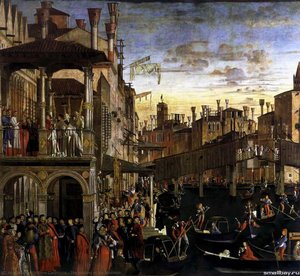
Vittore Carpaccio művészetének legmélyebb megnyilvánulása a nagyszabású történetmesélésben rejlett. Legszakmább alkotása a Szent Úrsula-legenda című, kilenc festményből álló ciklus volt, amelyet 1490-ben indított el. Ezek a művek lehetővé tették számára, hogy összetett világokat építsen fel, miközben a nézőt a szent életének apró, részletes részleteibe vezette. Különleges tehetségével képes volt megörökíteni otthoni városa, Velence, egésze más arcát is. A Ponte di Rialtonál történő Szent Kereszt relikviájának csodája című alkotásában Velencét hatalmának csúcsán ábrázolta, olyan városi környezetet használva, amely vallásos narratíváit egy felismerhető, valóságos valóságba ágyazta.

Képesége a különböző témakörök feldolgozására a változatos megbízásai során vált egyértelművé. Alkotása među középpontjában áll a Leonardo Loredan doge portréja, amely a veneszti reneszánsz meghatározó alakjaként való tekintélyét tükrözi. Emellett megalkotta a Szent György és a sárkány című tempera-festményt is, amely jelenleg a velencei Scuola di San Giorgio degli Schiavoni múzeum collectionsében található. Ez a mű a kompozíció dinamikájával és a figurák közötti feszült interakcióval nyúlik ki a dráma érzésébe.

A művész életműve az alábbi fontos alkotásokkal emlékeztet minket:

  • A Szent Úrsula-legenda (1490-től kezdődően)
  • A Szent Kereszt relikviájának csodája a Ponte di Rialtonál
  • Szent György és a sárkány
  • Leonardo Loredan doge portréja

Karrierje és jelentős megk orderedrások

Vittore Carpaccio legtermékenyebb időszaka 1490 és 1519 között zajlott, egy olyan korszakban, amikor művész mint rendszeres jelen volt Velence vallási életében. Számos egyházi megrendelést kapott, amelyek lehetőséget biztosítottak számára a komplex, narratív történetek mélyebb rétegeinek felfedezésére. Művészete gyakran végigjárta a város utcáit, hatalmas városi jeleneteiben megörökítve a Köztársaság fénykori hangulatát. Ilyen példa a Ponte di Rialtonál történő Szent Kereszt relikviájának csodája, egy olyan alkotás, amely Velencét a polgári büszkeség csúcspontján ábrázolja.

Karrierje haladása során a megbízók természete is megváltozott. Míg korábbi éveket a monumentális vallási ciklusok és a nyilvános karakterű alkotások meghatározták, 1510 után a művész alkotásai már inkább a magánszféra felé terelődtek. Elsősorban egyéni velencei megbízóknak kezdett dolgozni, olyan darabokat készítve, amelyek a városan fejlődő kereskedőosztály személyes ízlését tükröztek. Ez a váltás a fiatossági évek nagyszerű, nyilvános történetmeséléséből az intimebb, gyűjtői kapcsolatok felé való mozgást jelentette.

Vallási alkotásai a tizenhatododik század első évtizede alatt is folyamatosak maradtak. Ennek az időszaknak a kiemelkedő megrendelései között megtalálható:

  • Szent Tomász Aquinusz trónon (1507)
  • Krisztus beismétlése a templomba (1510)

Örökség és történelmi jelentőség

Vittore Carpaccio megkérdózhatatlan helyet foglal el a venetziai reneszánsz korai remekművészei között, egy olyan korszakban, amely az olasz művészet mély átalakulásait hozta el. Miközben kortársai az új humanista irányvonalak felé tűntek, Carpaccio gyakran egy hagyományosabb látásmódhoz ragaszkodott. 1510 körül már azok is, akik mellette éltek és dolgoztak, túl konzervativusnak kezdték látni a stílusát. Nem követte az évszakok változó áramlatait; inkább a múlt részletgazdag, narratív hagyományait választotta, amelyben a történetmesélés és a vizuális pontosaság találkozott.

Ez a szilárd hűséghez való ragaszkodás azt eredményezte, hogy neve néha elszállott olyan óriások árnyékában, mint Giovanni Bellini vagy Giorgione. Míg mások egy teljesen új vizuális nyelv kialakítása felé indultak el, Carpaccio továbbra is pontos építészeti részletekkel és az egzotikum iránti lenyűgöző vonzalommal építette fel saját világát. Művészete ma is egy ablak a velencei történelem egy specifikus pillanatára, megörökítve a város polgári büszkeségét és a Kelet felé irányuló kapcsolatait egy olyan nézőpontból, amely kortháztársai számára egyre inkább a múltba répt, klasszikus stílusnak tűnt. 1526-ban hunyt el, hagyva hátra egy olyan művészeti örökséget, amely egyedi, sőt, néha makacs hűséget tükröz a mesterségéhez.

Neves művei között kiemelkedik:

  • Szent Ursula-legenda
  • A valósi kereszt relikviájának csodája a Rialto hídon
  • Szent György és a sárkány