Vanessa Bell portréja

A 100 legnevesebbebb Vanessa Bell festmény, mindegyik egyedistens

Frissítve: november 2026 · rangsorolva népszerűségi pontszámunk alapján (minden mű keresései, látogatásai és megrendelései alapján) · 153 mű Vanessa Bell alkotása a katalógusunkban

Röviden

Conversation (1916) az a Vanessa Bell festmény, amely a legtöbb tekintetet felvonja. Ezután a tekintet Nude With Poppies és Apples (1916) elemre irányul. A Vanessa Bell 153 műve közül a katalógusunkban megtalálható 100 legnépesebb alkotás, melyeket az év, a múzeum és az örökévalóságának okai kísérnek.

1879 – 1961, London Bloomsbury group A legtöbb mű: Monk's House

A galéria szemével: Vanessa Bell legjobb 10 festménye

1
Conversation (1916) (1889) -ja Vanessa Bell

Conversation

1916 · Oil

In Conversation by Vanessa Bell, three women occupy a shared space, their bodies turned toward one another in a moment of intense discussion. Painted between 1913 and 1916, this work belongs to the Camden Town Group. The figures are solid, their presence heavy within the frame. They are not solitary subjects but are bound by the gravity of their exchange. The air between them feels thick with the weight of…

Vanessa Bell híres festményei, 11 és 100 között

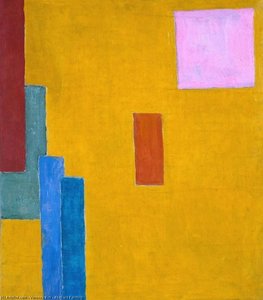
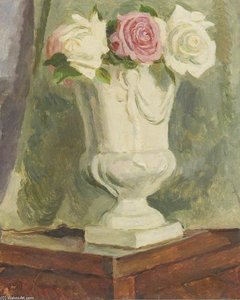
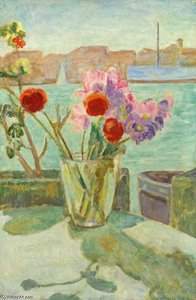
11Dahlias And Canterbury Bells (1889) -ja Vanessa BellDahlias And Canterbury Bells 12Interior Scene, With Clive Bell And Duncan Grant Drinking Wine (1889) -ja Vanessa BellInterior Scene, With Clive Bell And Duncan Grant Drinking Wine 13Still Life With Flowers (1889) -ja Vanessa BellStill Life With Flowers 14Abstract Painting (1889) -ja Vanessa BellAbstract Painting 15Still Life of a Vase and Vegetables (1889) -ja Vanessa BellStill Life of a Vase and VegetablesMonk's House 16The Memoir Club (1889) -ja Vanessa BellThe Memoir Club 17Virginia Woolf (1889) -ja Vanessa BellVirginia Woolf 18Byzantine Lady (1889) -ja Vanessa BellByzantine Lady 19Colonna Madonna (1889) -ja Vanessa BellColonna Madonna 20Children Arranging Flowers (1889) -ja Vanessa BellChildren Arranging Flowers 21Julian Bell - (1889) -ja Vanessa BellJulian Bell - 22Lady Strachey (1889) -ja Vanessa BellLady Strachey 23Interior With Duncan Grant (1889) -ja Vanessa BellInterior With Duncan Grant 24Henrietta (1889) -ja Vanessa BellHenrietta 25The Red Dress (1889) -ja Vanessa BellThe Red Dress 26The Duomo, Pisa (1912) (1889) -ja Vanessa BellThe Duomo, Pisa1912 · Monk's House 27View of a Italian Town through an Archway (1912) (1889) -ja Vanessa BellView of a Italian Town through an Archway1912 · Monk's House 28Virginia Woolf (1882-1941) (1912) (1889) -ja Vanessa BellVirginia Woolf (1882-1941)1912 · Monk's House 29Haystack and Rickyard (1920) (1889) -ja Vanessa BellHaystack and Rickyard1920 · Monk's House 30Jug of Flowers (1933) (1889) -ja Vanessa BellJug of Flowers1933 · Monk's House 31Still-life (1938) (1889) -ja Vanessa BellStill-life1938 · Kanadai Nemzeti Galéria 32Leonard Woolf's Dog 'Sally' (1939) (1889) -ja Vanessa BellLeonard Woolf's Dog 'Sally'1939 · Monk's House 33Flowers (1951) (1889) -ja Vanessa BellFlowers1951 34Tea Things (1889) -ja Vanessa BellTea Things 35Two Figures (1889) -ja Vanessa BellTwo Figures 36A Venetian Window (1889) -ja Vanessa BellA Venetian Window 37Angelica Garnett And Her Four Daughters (1889) -ja Vanessa BellAngelica Garnett And Her Four Daughters 38The Duomo In Lucca, Italy (1889) -ja Vanessa BellThe Duomo In Lucca, Italy 39Flowers In A Glass Vase (1889) -ja Vanessa BellFlowers In A Glass Vase 40Three Branches In A Jar (1889) -ja Vanessa BellThree Branches In A Jar 41Arum Lilies (1889) -ja Vanessa BellArum Lilies 42The Bridge At Auxerre, France (1889) -ja Vanessa BellThe Bridge At Auxerre, France 43Still Life Of Plums (1889) -ja Vanessa BellStill Life Of Plums 44Newhaven Lighthouse, East Sussex (1889) -ja Vanessa BellNewhaven Lighthouse, East Sussex 45Vase And Flowers (1889) -ja Vanessa BellVase And Flowers 46Cornish Cottage (1889) -ja Vanessa BellCornish Cottage 47Landscape (1889) -ja Vanessa BellLandscape 48Poissy Le Pont (1889) -ja Vanessa BellPoissy Le Pont 49Chattie Salaman (1889) -ja Vanessa BellChattie Salaman 50Julian Bell - (1889) -ja Vanessa BellJulian Bell - 51Still Life - (1889) -ja Vanessa BellStill Life - 52The Forum, Rome (1889) -ja Vanessa BellThe Forum, Rome 53The Cook (1889) -ja Vanessa BellThe Cook 54Red-hot Pokers (1889) -ja Vanessa BellRed-hot Pokers 55The Weaver (1889) -ja Vanessa BellThe Weaver 56The Spanish Lady (1889) -ja Vanessa BellThe Spanish Lady 57Saint Catherine (1889) -ja Vanessa BellSaint Catherine 58West Pier, Brighton, East Sussex (1889) -ja Vanessa BellWest Pier, Brighton, East Sussex 59Snow At Tilton (1889) -ja Vanessa BellSnow At Tilton 60A Bridge, Paris (1889) -ja Vanessa BellA Bridge, Paris 61Head Of Quentin Bell (1889) -ja Vanessa BellHead Of Quentin Bell 62Still Life With A Plaster Head (1889) -ja Vanessa BellStill Life With A Plaster Head 63Roses In A Vase (1889) -ja Vanessa BellRoses In A Vase 64Queue At Lewes, East Sussex (1889) -ja Vanessa BellQueue At Lewes, East Sussex 65Henrietta Garnett (1889) -ja Vanessa BellHenrietta Garnett 66Quentin Bell (1889) -ja Vanessa BellQuentin Bell 67Flowers On A Balcony (1889) -ja Vanessa BellFlowers On A Balcony 68Arum And Tulips (1889) -ja Vanessa BellArum And Tulips 69Lady With A Book (1889) -ja Vanessa BellLady With A Book 70Landscape - (1889) -ja Vanessa BellLandscape - 71The Boat Painter's Yard (1889) -ja Vanessa BellThe Boat Painter's Yard 72Baie De La Reine (1889) -ja Vanessa BellBaie De La Reine 73Still Life, Polyanthus In Vase (1889) -ja Vanessa BellStill Life, Polyanthus In Vase 74Garden At Hampstead (1889) -ja Vanessa BellGarden At Hampstead 75Interior (1889) -ja Vanessa BellInterior 76A Girl Reading (1889) -ja Vanessa BellA Girl Reading 77Pheasants (1889) -ja Vanessa BellPheasants 78David Garnett (1889) -ja Vanessa BellDavid Garnett 79Angelica Bell (1889) -ja Vanessa BellAngelica Bell 80The Vineyard (1889) -ja Vanessa BellThe Vineyard 81Still Life Of Pears And Everlasting Flowers (1889) -ja Vanessa BellStill Life Of Pears And Everlasting Flowers 82The Harbour, St Tropez, France (1889) -ja Vanessa BellThe Harbour, St Tropez, France 83Self Portrait (1889) -ja Vanessa BellSelf Portrait 84Portrait Of A Girl (1889) -ja Vanessa BellPortrait Of A Girl 85Newhaven Harbour (1889) -ja Vanessa BellNewhaven Harbour 86The Toilet Of Venus (1889) -ja Vanessa BellThe Toilet Of Venus 87Flowers In A Blue Vase (1889) -ja Vanessa BellFlowers In A Blue Vase 88Flowers In A Ginger Jar (1889) -ja Vanessa BellFlowers In A Ginger Jar 89Study For Berwick Church - The Shepherd (1889) -ja Vanessa BellStudy For Berwick Church - The Shepherd 90Still Life By The Studio Window (1889) -ja Vanessa BellStill Life By The Studio Window 91Olivier Bell (1889) -ja Vanessa BellOlivier Bell 92Mrs St John Hutchinson (1889) -ja Vanessa BellMrs St John Hutchinson 93Leonard Woolf's Dog 'sally' (1889) -ja Vanessa BellLeonard Woolf's Dog 'sally' 94Jocelyn's Farm, Ripe, East Sussex (1889) -ja Vanessa BellJocelyn's Farm, Ripe, East Sussex 95Still Life - (1889) -ja Vanessa BellStill Life - 96Chrysanthemums (1889) -ja Vanessa BellChrysanthemums 97Zinnias (1889) -ja Vanessa BellZinnias 98Dorothy Bussy At La Souco (1889) -ja Vanessa BellDorothy Bussy At La Souco 99Dora Morris (1889) -ja Vanessa BellDora Morris 100Bacchanale (1889) -ja Vanessa BellBacchanale

Vanessa Bell híres festményei, korszakonként

A témák, amelyek Vanessa Bell figyelmét meghúzták

A négy leggyakorobban előforduló téma ebben az eredeti művekben, mindegyik a legkiválóbb példájával.

A műemlékek, amelyek Vanessa Bell eredeti műveit őrzik

A 2 olyan múzeum, amely a legtöbb ezen az oldalon szereplő festményet őrzi.

Múzeum Város Vanessa Bell művei Ebből a listából származó festmények
Monk's HouseMonk's House 11 Apples, Bottles on a Table, Newhaven Harbour
Kanadai Nemzeti Galéria, OttawaKanadai Nemzeti Galéria Ottawa 1 Still-life

Vanessa Bell évtizedekig: egy egyedi eredeti mű minden évtizedben

Művek évtizedenként

Váassz ki egy évtizedet, hogy megnézhesd az azt meghatározó eredetiműveket.

Vanessa Bell festményei: kérdések a galériának

Mi a leghíresebb műve Vanessa Bellnek?Fedje fel a választ

Conversation (1916). Ezt követi Nude With Poppies és Apples (1916).

Milyen életkorában alkotta meg Vanessa Bell a(z) Conversation műszt?Fedje fel a választ

37 éves: Conversation 1916-ből származik, Vanessa Bell pedig 1879-ben született.

Melyik tíz festménye Vanessa Bell a leghíresebb?Fedje fel a választ

Conversation, Nude With Poppies, Apples, Bottles on a Table, Father And Child, View Into A Garden, Newhaven Harbour, Leonard Woolf's Dog 'Sally', Interior With A Housemaid és Studland Beach. A fenti rangsor a művek évszamarát és a múzeumát jelzi.

Hány mű alkotása ismert Vanessa Bell nevében?Fedje fel a választ

Katalógusunkban 153 mű található Vanessa Bell alkotótól, 1912 és 1951 év közötti időszakból.

Hol tekinthetők meg a leghíresebb Vanessa Bell eredetijeit?Fedje fel a választ

Leginkább Monk's House és Kanadai Nemzeti Galéria (Ottawa) található. A fenti múzeumi táblázatban mindegyik felsorolásra került.

Melyik időszakban alkotta Vanessa Bell a leghíresebb festményeit?Fedje fel a választ

1910s alatt: a jelen laphonon található 100 műből 6 készült ebben az időszakban, köztük Conversation.

Melyik híres Vanessa Bell festmény a legkorábbi, és melyik a legutóbb készült?Fedje fel a választ

Ezen az oldalon a leghitelesebb The Duomo, Pisa (1912), a legutóbbi pedig Flowers (1951).

Milyen témakörket kedvelt Vanessa Bell?Fedje fel a választ

Flowers (8), Still life (8) és Portrait (5), a jelen oldalon található 100 műművészeti alkotás között.

Mely művészeti irányba tartozik Vanessa Bell műve?Fedje fel a választ

Bloomsbury group és Impressionism, ezen az oldalon található eredetiek alapján.

Milyen Vanessa Bell eredeti műveket láthatok a Monk's House kiállításaiban?Fedje fel a választ

Apples, Bottles on a Table és Newhaven Harbour: a Monk's House 11 művet őrzi ezen az oldalon.

Vanessa Bell: a művész portréja

A Life Immersed in Bloomsbury: The Artistic Journey of Vanessa Bell

Vanessa Bell, born Vanessa Stephen in 1879 London, wasn’t merely a participant in the early 20th-century British art scene; she actively shaped it. Her life was interwoven with the very fabric of the modernist revolution, and her artistic endeavors profoundly influenced its trajectory. Daughter to Sir Leslie Stephen, a renowned Victorian man of letters, and Julia Prinsep Duckworth, an artist herself connected through her mother’s lineage to the pre-Raphaelite circle, Vanessa inherited not just an intellectual heritage but also a deep-seated appreciation for visual expression – a legacy that would define her lifelong dedication. The Stephen household at 22 Hyde Park Gate became more than simply a residence; it transformed into a vibrant salon, a crucible where ideas and artistic visions converged, laying the groundwork for the unconventional life she would lead. From an early age, Vanessa was immersed in art through her mother’s connections, particularly those linked to Julia Margaret Cameron, fostering within her a profound understanding of visual language that blossomed into a relentless pursuit of creative expression. Despite formal education focused on traditional subjects like languages and history, it was her artistic inclinations that truly took root, leading her to study at Sir Arthur Cope’s art school and later the Royal Academy. However, this formative period wasn't without shadows; allegations of abuse by her half-brothers would surface later in life, adding a layer of complexity to understanding the forces that shaped her character and artistic vision – a reminder that even within the most stimulating environments, personal struggles could cast long shadows.

The Bloomsbury Circle and Artistic Liberation

Following the tragic deaths of both parents, Vanessa, along with her sister Virginia Woolf and brothers Thoby and Adrian, embarked on a transformative journey to Gordon Square in Bloomsbury. This move proved pivotal, establishing this area as the epicenter for what would become known as the Bloomsbury Group – a collective of writers, artists, intellectuals, and social critics who dared to challenge Victorian societal norms with an unprecedented fervor. The group’s influence resonated throughout British society, advocating for intellectual freedom, artistic innovation, and a rejection of rigid conventions. Vanessa's home became *the* central gathering place, a sanctuary where spirited debates unfolded, artistic experiments were explored, and the boundaries between art and life blurred. Her marriage to Clive Bell in 1907, while outwardly conforming to societal expectations, was characterized by an open arrangement built on mutual understanding and the freedom to pursue individual passions – a testament to her independent spirit. This unconventionality extended beyond her personal relationships, permeating her artistic practice as she sought to break free from traditional constraints. The Bloomsbury Group’s core tenets—a focus on direct experience, emotional honesty, and aesthetic innovation—provided fertile ground for Vanessa Bell's unique style to flourish. She wasn’t simply a passive observer; she was an active participant in shaping the group’s intellectual and artistic trajectory.

Evolving Styles: From Post-Impressionism to Abstraction

Vanessa Bell’s artistic development was a dynamic, ever-evolving process, mirroring the broader shifts occurring within early 20th-century art. Initially influenced by the Post-Impressionist exhibitions curated by Roger Fry – particularly those showcasing the works of Cézanne, Matisse, and Van Gogh – her early paintings reflected vibrant color palettes and bold forms. However, she quickly transcended mere imitation, embarking on a journey to forge her own distinctive style. Around 1914, a significant transformation occurred as Bell began to experiment with abstraction, moving away from representational painting towards a more subjective exploration of form and color. This shift wasn’t merely stylistic; it represented a fundamental philosophical change in her approach to art. She rejected the Victorian obsession with detailed narrative depiction, embracing instead a modern aesthetic that prioritized emotional resonance over literal representation. Her style became characterized by flattened perspectives, simplified shapes, and an emphasis on decorative patterns and harmonious color relationships – a deliberate departure from traditional artistic conventions. The subjects of her paintings often drew from her immediate surroundings—domestic interiors, portraits of friends and family, and the landscapes of Sussex where she eventually settled—imbued with a sense of intimacy and psychological depth. This evolution reflected not only her personal experiences but also the broader currents of modern art, as she sought to capture the essence of a fleeting moment or emotion rather than simply recreating an external reality.

A Multifaceted Legacy: Painting, Design, and Collaboration

Vanessa Bell’s artistic output extended far beyond painting, encompassing interior design and book illustration – demonstrating her versatility and commitment to integrating art into everyday life. Notable paintings include *Studland Beach* (1912), a captivating depiction of the Dorset coastline that skillfully captures the light and atmosphere of the scene; *The Tub* (1918), a strikingly modern portrayal of domesticity that challenged conventional notions of femininity; and *Interior with Two Women* (1932), showcasing her mastery of color, composition, and psychological insight. She was also a gifted portraitist, creating insightful portrayals of Virginia Woolf – three portraits were created in 1912 alone—as well as Aldous Huxley and David Garnett. Perhaps one of her most celebrated collaborations was with Duncan Grant on the murals for Berwick Church in Sussex (1940-42), a remarkable example of modernist art integrated into a religious space, reflecting their shared artistic vision and personal connection. Equally significant was their joint creation of the Women Dinner Service commissioned by Kenneth Clark, featuring portraits of notable women painted directly onto porcelain plates – a work believed lost for decades until its rediscovery in 2017. Bell’s talent extended to book illustration as well; her cover design for Virginia Woolf's *To the Lighthouse* beautifully captured the novel’s evocative atmosphere and personal resonance, drawing inspiration from their shared childhood memories of St Ives, Cornwall. Her first solo exhibition at the Omega Workshops in 1916 solidified her position as a leading figure in British modernism.

A Lasting Influence: Bell's Place in Art History

Vanessa Bell’s legacy extends far beyond her individual artworks. She stands as a crucial link between the Victorian past and the modernist future, a pioneering woman artist who challenged conventions and paved the way for subsequent generations. Her contributions to the Bloomsbury Group were instrumental in shaping the intellectual and artistic landscape of early 20th-century Britain. She is remembered not only for her innovative painting style—a masterful blend of modernist aesthetics and personal expression—but also for her significant contributions to interior design and decorative arts, demonstrating a holistic approach to creativity. Bell’s work embodies the spirit of experimentation and liberation that defined the era, rejecting traditional hierarchies and embracing new forms of artistic expression. As a woman navigating a male-dominated art world, she faced considerable challenges, yet persevered with unwavering dedication and vision. Her influence continues to inspire artists today, reminding us of the power of art to challenge norms, express individuality, and enrich our understanding of the human experience. She died in 1961 at Charleston, Firle, and was laid to rest in the nearby parish churchyard alongside Duncan Grant, a poignant testament to their enduring artistic partnership and personal connection.