Moritz von Schwind portréja

A 85 legnevesebbebb Moritz von Schwind festmény, mindegyik egyedistens

Frissítve: november 2026 · rangsorolva népszerűségi pontszámunk alapján (minden mű keresései, látogatásai és megrendelései alapján) · 85 mű Moritz von Schwind alkotása a katalógusunkban

Röviden

The Singer’s Contest on the Wartburg (1846) az a Moritz von Schwind festmény, amely a legtöbb tekintetet felvonja; az eredeti mű a Städel Múzeum gyűjteményében található, Frankfurt. Ezután a tekintet Gnomes at the Toe of Bavaria (1850) és The Virgin (1863) elemre irányul. A Moritz von Schwind 85 műve közül a katalógusunkban megtalálható 85 legnépesebb alkotás, melyeket az év, a múzeum és az örökévalóságának okai kísérnek.

1804 – 1871, Bécs Romanticism A legtöbb mű: Bavári Állami Festırménygyűjtemények

A galéria szemével: Moritz von Schwind legjobb 10 festménye

1
The Singer’s Contest on the Wartburg (1846) (1889) -ja Moritz von Schwind

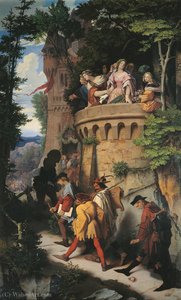
The Singer’s Contest on the Wartburg

1846 · Oil · Städel Múzeum, Frankfurt

The Singer’s Contest on the Wartburg is a significant oil painting by Moritz von Schwind. Completed in 1846, the work captures a moment of musical tension. It depicts a gathering centered on the theme of Musik. The scene unfolds within the stone walls of the Wartburg in Eisenach, Germany.

2
Gnomes at the Toe of Bavaria (1850) (1889) -ja Moritz von Schwind

Gnomes at the Toe of Bavaria

1850 · Oil · Lenbachhaus, München

Deep within a vaulted stone chamber, a cluster of gnomes huddles in the dim light. They are crowded together, their bodies overlapping in a tight, restless knot of movement. The air feels heavy with the scent of damp earth and old parchment. A single piece of white paper catches the light, acting as a bright focal point amidst the surrounding gloom. This small, pale object draws the eye toward the…

3
The Virgin (1863) (1889) -ja Moritz von Schwind

The Virgin

A single figure sits atop a high, rocky pedestal, rising above the world. She is draped in heavy, voluminous robes of peach, terracotta, and gold, the fabric cascading down the stone like slow-moving lava. Her gaze is fixed on a distant, unseen horizon, her expression one of profound tranquility and majesty. A crown rests upon her head, catching the light that spills from the upper left. Below her, a dark…

4
The Dream of Erwin von Steinbach (1845) (1889) -ja Moritz von Schwind

The Dream of Erwin von Steinbach

1845 · Painting · Bavári Állami Festırménygyűjtemények, Munchen

In this work, we find ourselves suspended within the soaring, vertical reaches of a Gothic cathedral. The composition draws the eye upward, following the rhythmic lines of the vaulted ceilings and the slender columns that define this sacred space. Two winged figures, appearing as celestial beings or perhaps manifestations of a dream, float in the middle ground. One is draped in flowing, rose-colored robes, while the other is clad in…

5
Legend of the Bishop and the Devil (1854) (1889) -ja Moritz von Schwind

Legend of the Bishop and the Devil

In this work, titled Legend of the Bishop and the Devil, Moritz von Schwind explores a narrative of supernatural confrontation. Painted in 1854, the scene captures a moment of tension between the earthly and the demonic. A muscular, demonic figure occupies the lower left, engaged in labor, while a bishop stands poised at the threshold of a stone ruin. This encounter is set against a rugged, mountainous landscape that provides…

10
Water Nymphs Watering a Stag (1846) (1889) -ja Moritz von Schwind

Water Nymphs Watering a Stag

1846 · Oil On Canvas · Bavári Állami Festırménygyűjtemények, Munchen

Water Nymphs Watering a Stag is an oil on canvas work by the Austrian-born German painter Moritz von Schwind. Known in its original German context as Wassernymphen tränken einen Hirsch, the piece belongs to the Romantic movement. The artist's hand is evident in the lyrical treatment of the mythological subject matter, a hallmark of his approach to folklore and legend.

Moritz von Schwind híres festményei, 11 és 85 között

11A Symphony (1852) (1889) -ja Moritz von SchwindA Symphony1852 · Neue Pinakothek 12Abduction of Aschenbrödel by the Fairy (1854) (1889) -ja Moritz von SchwindAbduction of Aschenbrödel by the Fairy1854 · Bavári Állami Festırménygyűjtemények 13The Dream of Erwin von Steinbach (1822) (1889) -ja Moritz von SchwindThe Dream of Erwin von Steinbach1822 · Staatliche Graphische Sammlung 14Abigail before David (1830) (1889) -ja Moritz von SchwindAbigail before David1830 · Bavári Állami Festırménygyűjtemények 15The Erlking (1830) (1889) -ja Moritz von SchwindThe Erlking1830 16The Bread Slicer (1823) (1889) -ja Moritz von SchwindThe Bread Slicer1823 17The Moon Fairy (Appearance in the Forest) (1829) (1889) -ja Moritz von SchwindThe Moon Fairy (Appearance in the Forest)1829 18Luna and Endymion (1829) (1889) -ja Moritz von SchwindLuna and Endymion1829 19Scene of a fairy - tale (1829) (1889) -ja Moritz von SchwindScene of a fairy - tale1829 20Sketch for a monument (1829) (1889) -ja Moritz von SchwindSketch for a monument1829 21"Rübezahl" (1829) (1889) -ja Moritz von Schwind"Rübezahl"1829 22Female fairy-tale figure at rock (1829) (1889) -ja Moritz von SchwindFemale fairy-tale figure at rock1829 23Therese Hönig, née von Puffer (1836) (1889) -ja Moritz von SchwindTherese Hönig, née von Puffer1836 · Bavári Állami Festırménygyűjtemények 24Fairy Dance in the Alder Grove (1844) (1889) -ja Moritz von SchwindFairy Dance in the Alder Grove1844 · Städel Múzeum 25The Prisoner's Dream (1836) (1889) -ja Moritz von SchwindThe Prisoner's Dream1836 · Bavári Állami Festırménygyűjtemények 26Landscape with Wanderer (1835) (1889) -ja Moritz von SchwindLandscape with Wanderer1835 · Graphische Sammlung Albertina 27A Player with a Hermit (1846) (1889) -ja Moritz von SchwindA Player with a Hermit1846 · Neue Pinakothek 28Saint Cecilia at the Organ (1845) (1889) -ja Moritz von SchwindSaint Cecilia at the Organ1845 29Scene from the Huguenots (Stage Decoration ?) (1845) (1889) -ja Moritz von SchwindScene from the Huguenots (Stage Decoration ?)1845 30Scene from Spontini's Vestalis, Stage Decoration (1845) (1889) -ja Moritz von SchwindScene from Spontini's Vestalis, Stage Decoration1845 31Jessonda. Two Girls with Jugs (1845) (1889) -ja Moritz von SchwindJessonda. Two Girls with Jugs1845 32Minstrel with a Hermit (1846) (1889) -ja Moritz von SchwindMinstrel with a Hermit1846 · Staatliche Kunsthalle Karlsruhe 33portrait of a young man (1845) (1889) -ja Moritz von Schwindportrait of a young man1845 342 nude riders gallopping to night (1845) (1889) -ja Moritz von Schwind2 nude riders gallopping to night1845 35Hermit in a Rock Grotto (1863) (1889) -ja Moritz von SchwindHermit in a Rock Grotto1863 · Bavári Állami Festırménygyűjtemények 36Brother-in-law Kronos (1855) (1889) -ja Moritz von SchwindBrother-in-law Kronos1855 · Bavári Állami Festırménygyűjtemények 37Symphony (1852) (1889) -ja Moritz von SchwindSymphony1852 · Bavári Állami Festırménygyűjtemények 38The Fairy Tale of Aschenbrödel (1854) (1889) -ja Moritz von SchwindThe Fairy Tale of Aschenbrödel1854 · Bavári Állami Festırménygyűjtemények 39The Forest Chapel (1855) (1889) -ja Moritz von SchwindThe Forest Chapel1855 · Bavári Állami Festırménygyűjtemények 40The Boatwoman (Baroness Marie Spaun at Lake Gmunden) (1851) (1889) -ja Moritz von SchwindThe Boatwoman (Baroness Marie Spaun at Lake Gmunden)1851 41Rübezahl (1851) (1889) -ja Moritz von SchwindRübezahl1851 42The Fairy Tale Cinderella, Picture Wall with 19 Pictures (1853) (1889) -ja Moritz von SchwindThe Fairy Tale Cinderella, Picture Wall with 19 Pictures1853 43Portrait of Stallmeister Wilhelm Sachs (1855) (1889) -ja Moritz von SchwindPortrait of Stallmeister Wilhelm Sachs1855 · Staatliche Kunsthalle Karlsruhe 44Wieland the forger and the Princess (1850) (1889) -ja Moritz von SchwindWieland the forger and the Princess1850 · Museum Georg Schäfer 45Cinderella, to go on the prom (1852) (1889) -ja Moritz von SchwindCinderella, to go on the prom1852 · Alte Nationalgalerie 46Apparition in the Forest (1858) (1889) -ja Moritz von SchwindApparition in the Forest1858 · Bavári Állami Festırménygyűjtemények 47The Four Times of Day: The Evening (1860) (1889) -ja Moritz von SchwindThe Four Times of Day: The Evening1860 · Bavári Állami Festırménygyűjtemények 48The Four Times of Day: Noon (1860) (1889) -ja Moritz von SchwindThe Four Times of Day: Noon1860 · Bavári Állami Festırménygyűjtemények 49The Four Times of Day: The Morning (1860) (1889) -ja Moritz von SchwindThe Four Times of Day: The Morning1860 · Bavári Állami Festırménygyűjtemények 50The Danube with its Tributaries (1860) (1889) -ja Moritz von SchwindThe Danube with its Tributaries1860 · Bavári Állami Festırménygyűjtemények 51Anna Schwind, the Daughter of the Artist (1860) (1889) -ja Moritz von SchwindAnna Schwind, the Daughter of the Artist1860 52Emperor Maximilian I in the Martinswand (1860) (1889) -ja Moritz von SchwindEmperor Maximilian I in the Martinswand1860 53Knight on a Nighttime Boat Trip (1865) (1889) -ja Moritz von SchwindKnight on a Nighttime Boat Trip1865 · Bavári Állami Festırménygyűjtemények 54Family of Tritons (1866) (1889) -ja Moritz von SchwindFamily of Tritons1866 · Bavári Állami Festırménygyűjtemények 55Father Rhine, the Fideles Playing the Fiddle (1865) (1889) -ja Moritz von SchwindFather Rhine, the Fideles Playing the Fiddle1865 · Bavári Állami Festırménygyűjtemények 56Helios with the Chariot of Horses (1869) (1889) -ja Moritz von SchwindHelios with the Chariot of Horses1869 · Bavári Állami Festırménygyűjtemények 57In the Forest (Des Knaben Wunderhorn) (1848) (1889) -ja Moritz von SchwindIn the Forest (Des Knaben Wunderhorn)1848 · Bavári Állami Festırménygyűjtemények 58The Beautiful Melusine (The Daughters of the Rhine) (1869) (1889) -ja Moritz von SchwindThe Beautiful Melusine (The Daughters of the Rhine)1869 59The Erlking (1860) (1889) -ja Moritz von SchwindThe Erlking1860 · Bavári Állami Festırménygyűjtemények 60Wieland the Smith (1850) (1889) -ja Moritz von SchwindWieland the Smith1850 · Bavári Állami Festırménygyűjtemények 61The Knight's Dream (1859) (1889) -ja Moritz von SchwindThe Knight's Dream1859 · Staatliche Kunsthalle Karlsruhe 62A Hermit Leads Horses to the Watering Hole (1850) (1889) -ja Moritz von SchwindA Hermit Leads Horses to the Watering Hole1850 · Bavári Állami Festırménygyűjtemények 63Nightly Duel at a Garden Gate (1850) (1889) -ja Moritz von SchwindNightly Duel at a Garden Gate1850 · Bavári Állami Festırménygyűjtemények 64Farewell at Dawn (1859) (1889) -ja Moritz von SchwindFarewell at Dawn1859 · Nationalgalerie 65Karl August von Heigel (1889) -ja Moritz von SchwindKarl August von HeigelLenbachhaus 66The Minstrel Contest at the Wartburg (1837) (1889) -ja Moritz von SchwindThe Minstrel Contest at the Wartburg1837 · Staatliche Kunsthalle Karlsruhe 67Design for the Fairy Tale of "Aschenbrödel" (1853) (1889) -ja Moritz von SchwindDesign for the Fairy Tale of "Aschenbrödel"1853 · Staatliche Kunsthalle Karlsruhe 68On the Wanderlust (1860) (1889) -ja Moritz von SchwindOn the Wanderlust1860 · Schackgalerie 69Apparition in the Woods (1858) (1889) -ja Moritz von SchwindApparition in the Woods1858 · Schackgalerie 70Early Morning (1858) (1889) -ja Moritz von SchwindEarly Morning1858 · Sammlung Schack 71The Cat Symphony (1868) (1889) -ja Moritz von SchwindThe Cat Symphony1868 · Staatliche Kunsthalle Karlsruhe 72The Ride Through the Forest (1889) -ja Moritz von SchwindThe Ride Through the ForestBavári Állami Festırménygyűjtemények 73Game of Society (1889) -ja Moritz von SchwindGame of Society 74Allegory of the Four Estates and Homage to Grand Duke Leopold von Baden (1889) -ja Moritz von SchwindAllegory of the Four Estates and Homage to Grand Duke Leopold von BadenStaatliche Kunsthalle Karlsruhe 75Apparition in the Forest (from Sleeping Beauty) (1889) -ja Moritz von SchwindApparition in the Forest (from Sleeping Beauty)Städel Múzeum 76Rübezahl (1889) -ja Moritz von SchwindRübezahlBavári Állami Festırménygyűjtemények 77the Visit (1889) -ja Moritz von Schwindthe VisitBavári Állami Festırménygyűjtemények 78Portrait of Frau Mosthaff (1889) -ja Moritz von SchwindPortrait of Frau Mosthaff 79Honeymoon (1889) -ja Moritz von SchwindHoneymoonBavári Állami Festırménygyűjtemények 80The Rose, or the Artist's Journey (1889) -ja Moritz von SchwindThe Rose, or the Artist's JourneyAlte Nationalgalerie 81The painter joseph binder's adventure (1889) -ja Moritz von SchwindThe painter joseph binder's adventureAlte Nationalgalerie 82Sabina of Steinbach (1889) -ja Moritz von SchwindSabina of SteinbachAlte Nationalgalerie 83Farewell from the Valley (1846) (1889) -ja Moritz von SchwindFarewell from the Valley1846 · Bavári Állami Festırménygyűjtemények 84The Return of Count von Gleichen (1864) (1889) -ja Moritz von SchwindThe Return of Count von Gleichen1864 · Bavári Állami Festırménygyűjtemények 85Returning Knight (1846) (1889) -ja Moritz von SchwindReturning Knight1846 · Bavári Állami Festırménygyűjtemények

Moritz von Schwind híres festményei, korszakonként

A témák, amelyek Moritz von Schwind figyelmét meghúzták

A négy leggyakorobban előforduló téma ebben az eredeti művekben, mindegyik a legkiválóbb példájával.

A műemlékek, amelyek Moritz von Schwind eredeti műveit őrzik

A 8 olyan múzeum, amely a legtöbb ezen az oldalon szereplő festményet őrzi.

Múzeum Város Moritz von Schwind művei Ebből a listából származó festmények
Bavári Állami Festırménygyűjtemények, MunchenBavári Állami Festırménygyűjtemények Munchen 38 The Virgin, The Dream of Erwin von Steinbach, Legend of the Bishop and the Devil
Staatliche Kunsthalle Karlsruhe, KarlsruheStaatliche Kunsthalle Karlsruhe Karlsruhe 7 Minstrel with a Hermit, Portrait of Stallmeister Wilhelm Sachs, The Knight's Dream
Alte Nationalgalerie, BerlinAlte Nationalgalerie Berlin 4 Cinderella, to go on the prom, The Rose, or the Artist's Journey, The painter joseph binder's adventure
Städel Múzeum, FrankfurtStädel Múzeum Frankfurt 3 The Singer’s Contest on the Wartburg, Fairy Dance in the Alder Grove, Apparition in the Forest (from Sleeping Beauty)
Lenbachhaus, MünchenLenbachhaus München 2 Gnomes at the Toe of Bavaria, Karl August von Heigel
Neue Pinakothek, MunichNeue Pinakothek Munich 2 A Symphony, A Player with a Hermit
Schackgalerie, MunchenSchackgalerie Munchen 2 On the Wanderlust, Apparition in the Woods
Staatliche Graphische Sammlung, MünchenStaatliche Graphische Sammlung München 1 The Dream of Erwin von Steinbach

Moritz von Schwind évtizedekig: egy egyedi eredeti mű minden évtizedben

Művek évtizedenként

Váassz ki egy évtizedet, hogy megnézhesd az azt meghatározó eredetiműveket.

Moritz von Schwind festményei: kérdések a galériának

Mi a leghíresebb műve Moritz von Schwindnek?Fedje fel a választ

The Singer’s Contest on the Wartburg (1846), Städel Múzeum, Frankfurt. Ezután Gnomes at the Toe of Bavaria (1850) és The Virgin (1863) következik.

Milyen életkorában alkotta meg Moritz von Schwind a(z) The Singer’s Contest on the Wartburg műszt?Fedje fel a választ

42 éves: The Singer’s Contest on the Wartburg 1846-ből származik, Moritz von Schwind pedig 1804-ben született.

Melyik tíz festménye Moritz von Schwind a leghíresebb?Fedje fel a választ

The Singer’s Contest on the Wartburg, Gnomes at the Toe of Bavaria, The Virgin, The Dream of Erwin von Steinbach, Legend of the Bishop and the Devil, Hero and Leander, Elf Dance in the Alder Grove, The Captive Princess, King Krokus and the wood Nymph és Water Nymphs Watering a Stag. A fenti rangsor a művek évszamarát és a múzeumát jelzi.

Hány mű alkotása ismert Moritz von Schwind nevében?Fedje fel a választ

Katalógusunkban 85 mű található Moritz von Schwind alkotótól, 1822 és 1869 év közötti időszakból.

Hol tekinthetők meg a leghíresebb Moritz von Schwind eredetijeit?Fedje fel a választ

Leginkább Bavári Állami Festırménygyűjtemények (Munchen), Staatliche Kunsthalle Karlsruhe (Karlsruhe) és Alte Nationalgalerie (Berlin) található. A fenti múzeumi táblázatban mindegyik felsorolásra került.

Melyik időszakban alkotta Moritz von Schwind a leghíresebb festményeit?Fedje fel a választ

1850s alatt: a jelen laphonon található 85 műből 24 készült ebben az időszakban, köztük Gnomes at the Toe of Bavaria.

Melyik híres Moritz von Schwind festmény a legkorábbi, és melyik a legutóbb készült?Fedje fel a választ

Ezen az oldalon a leghitelesebb The Dream of Erwin von Steinbach (1822), a legutóbbi pedig Helios with the Chariot of Horses (1869).

Milyen témakörket kedvelt Moritz von Schwind?Fedje fel a választ

Woman (28), Man (25) és Trees (20), a jelen oldalon található 85 műművészeti alkotás között.

Milyen anyagokkal festett leggyakrabban Moritz von Schwind?Fedje fel a választ

Oil, a jelen oldalon található 85 műből 25 darab esetén.

Mely művészeti irányba tartozik Moritz von Schwind műve?Fedje fel a választ

Romanticism, ezen az oldalon található eredetiek alapján.

Milyen Moritz von Schwind eredeti műveket láthatok a Bavári Állami Festırménygyűjtemények kiállításaiban?Fedje fel a választ

The Virgin, The Dream of Erwin von Steinbach és Legend of the Bishop and the Devil: a Bavári Állami Festırménygyűjtemények, Munchen 38 művet őrzi ezen az oldalon.

Moritz von Schwind: a művész portréja

Moritz von Schwind: A romantikus képzelet költője

Moritz von Schwind, aki 1804-ben született Bécs vibráló művészeti köreinek szívében, és 1871-ben tragikus módon, Bajorország Pöckingében hunyt el, a német romantika lenyűgöző alakja maradt. Nem csupán festő volt; ő volt az olajfestékkel megalkotott költő, az álmok és a népmesék szövője, a mély szimbolikával árasztott, felemelő tájak mestere. Zsenialitása nemcsak technikai precizitásában rejlett, hanem abban a képességében is, amely képes volt korának érzelmi áramlatait – a lovagiasság maradandó báját, a germán legendák suttogását és a romantika feltörekvő szellemét – vizuálisan lenyűgöző alkotásokká formálni, amelyek ma is éreztetik velünk. Schwind élete egy olyan díszszőnyeg volt, amelyet zeneióriásokkal, például Schuberttel kialakult barátságok, királyi megrendelések és a poétikus fantázia lényegének állandó keresése alkotott össze.

Korai évek és művészeti alapok

Schwind korai éveket privilegiumok és szerencsés művészeti hatások jellemeztek. Arisztokrata családból származva alapos, bár kezdetesen egyszerű neveltetést kapott, ami a művésztehetsége mellett az irodalom és a zene iránti szeretetét is felépítette. Fejlődésének kulcsfontosságú pillanata akkor következett be, amikor barátságot kötött Franz Schuberttel, akinek dalai egész karrierje során jelentős inspirációs forrást jelentettek. Több Schubert-kompozíciót is megilustrált, olyan érzékenységgel örökítve meg a kompozitor melankolikus szépségét, amely lenyűgöző volt. Schubert halála után 1828-ban Münchenbe költözése döntő fordulatot jelentett. Itt talált mentorokat, például Cornelius alatt, az Akadémia akkori igazgatója alatt, és kapcsolatokat épített ki olyan kortárs művészekkel, mint Schnorr, olyan termékeny környezetet teremtve, amelyre művészeti növekedése szüksége volt. Ez a korszak fektette le egyedi stílusának alapjait – stílust, amelyet lírai elegancia, aprólékos részletesség és egyfajta álomszerű jelleg jellemzett.

Királyi megrendelések és művészeti virágzás

Schwind pályája az 1830-as és 40-es években valóban szárnyra kelt a számos tekintélyes megrendelés révén. 1834-ben megbízták Lajos király új müncheni palotaának díszítésével, ahol monumentális falmalásokat készített Tieck költészetének jeleneteiből – egy olyan projekt, amely bemutatta történetileg pontos kompozíciók és részletek mesteri uralmát. Hírnevét tovább erősítette, amikor ugyanarra a palotára tervezett egy „Kinderfries”-t (gyermekfríz), amely a fiatalos vidámság játékos ábrázolása volt, bizonyítva képességét a mulatság törékeny pillanatainak megörökítésére. Szaxonyában és Badenben is fogadott megrendeléseket, megszilárdítva helyét korának egyik vezető művészeként. Különösen jelentős feladat volt számára az 1839-es karlsruhei akadémiai munka, ahol egy hatalmas freskót alkotott Goethe eszméi alapján – egy olyan ambiciózus projekt, amely tükrözte a kor intellektuális vágyát.

A romantikus látásmód csúcspontja: Tájak és legendák

Schwind leghíresebb művei Frankfurtban (1844–1847) és később Münchenben születtek. Ez az időszak volt néhány legnemesebb táblaképének alkotási ideje, köztük a „Singers’ Contest in the Wartburg” (1846), amely egy mestermű, és tökéletesen összefoglalja a romantikus eszméket: zenészek gyülekozása, akik elmerülnek a szenvedélyes énekben egy drámai, középkori környezetben. A Goethe-ünnepekhez készített tervezetei tovább bizonyították a történelmi hitelesség és a poétikus képzelet ötvözésének képességét. Azonban az ő művészeti örökségét leginkább a germán legendák és a népmesék értelmezése határozta meg. A „Nibelung-ének” ciklus, különösen a Hohenschwangau várába készített lenyűgöző freszkói, amelyek Siegfried és Brunhilde epikus történetét ábrázolják, tanúbizonyságot tesznek arra, hogyan képes fordítani összetett narratívákat vizuálisan magával ragadó jelenetekké. Leipzig számára készített Eros és Psyché története is hasonlóan kiemelkedő, demonstrálva képességét a szépség és a melankó egyidejességének kiváltására.

Késő évek és örökség

Schwind késő éveket az egészsége romlása, de a művészeti termékenysége jellemezte. 1847-ben visszatért Bécsbe, ahol a Melusina legendáján alapuló fest cycleset alkotott, bemutatva maradandó tehetségét. Utolsó művei, beleértve a bécsi Állami Operához készített díszleteket is, mély csodálatot tükröztek a zenére és annak inspiráló erejére. Moritz von Schwind 1871-ben halt meg Niederpöckingben, gazdag művészeti örökséget hagyva hátra, amely ma is lenyűgözi a közönséget. Festményeit nemcsak technikai brillanciájuk miatt tisztelik, hanem azért is, mert képesek átszállítani a nézőt a mitoszt, legenda és mély érzelmi rezonancia világába – megszilárdítva helyét a német romantikus művészet történetének kulcsfontosságú alakjaként.

Jelentős művek

  • Rübezahl (1834): Egy drámai tájkép a bájos bavar lifta mitikus őrzőjével, a természet, az erő és a mystérium témáit megtestesítve.
  • The Dream of Erwin von Steinbach (1822): Egy bonyolult rajz, amely egy szimbolizmussal és pszichológiai mélységgel teli gótikus jelenetet örökít meg.
  • Landscape with Wanderer (1835): Egy hátborzító fekete-fehér rajz egy magányos alakról, aki egy fantasztikus tájat kontemplál, a magány és az önreflexió témáit tükrözve.
  • Singers’ Contest in the Wartburg (1846): Egy vibráló és dinamikus festmény egy középkori környezetben zajló zenei szenvedélyről – Schwind leghíresebb műve.
  • Seven Ravens (1857): A Grimm-féle népmesék alapján készült illusztrációk sorozata, amely bemutatja a fantázia és a narratív történetmesélés ötvözésének képességét.

További felfedezések