Melvin Edwards portréja

Melvin Edwards festményei: A 6 leghíresebb alkotás, egy galéria szemével

Frissítve: november 2026 · rangsorolva népszerűségi pontszámunk alapján (minden mű keresései, látogatásai és megrendelései alapján) · 6 mű Melvin Edwards alkotása a katalógusunkban

Röviden

A galéria szerint Melvin Edwards leghíresebb festménye a Ida W.B. (1990), amelynek eredeti példája a la Biennale di Venezia múzeumában található, Velence városában. Installation View (2012) és Installation View (2012) kiegészítik azt a triót, amelyet minden szem felismer. A katalógusunkban szereplő 6 művész Melvin Edwards alkotásából a galéria az alábbi 6 leghíresebbet mutatja be, amelyek mind egyedi originális művek, a készítés évszámával, a múzeum megnevezésével és a különlegességük leírásával.

1937 – 2026, Houston Abstract expressionism A legtöbb mű: la Biennale di Venezia

A galéria top 10 Melvin Edwards festménye

1
Ida W.B. (1990) (1889) -ja Melvin Edwards

Ida W.B.

1990 · la Biennale di Venezia, Velence

Melvin Edwards’ “Ida W.B.” isn't merely a sculpture; it’s an excavation, a visceral response to the enduring legacy of American history and specifically, the painful realities of racial injustice. Born in Houston in 1937, Edwards’ work has consistently grappled with themes of memory, resilience, and the fragmented nature of identity – all rendered through his signature technique of welded steel. This particular piece, created around 1990, embodies a potent blend…

2
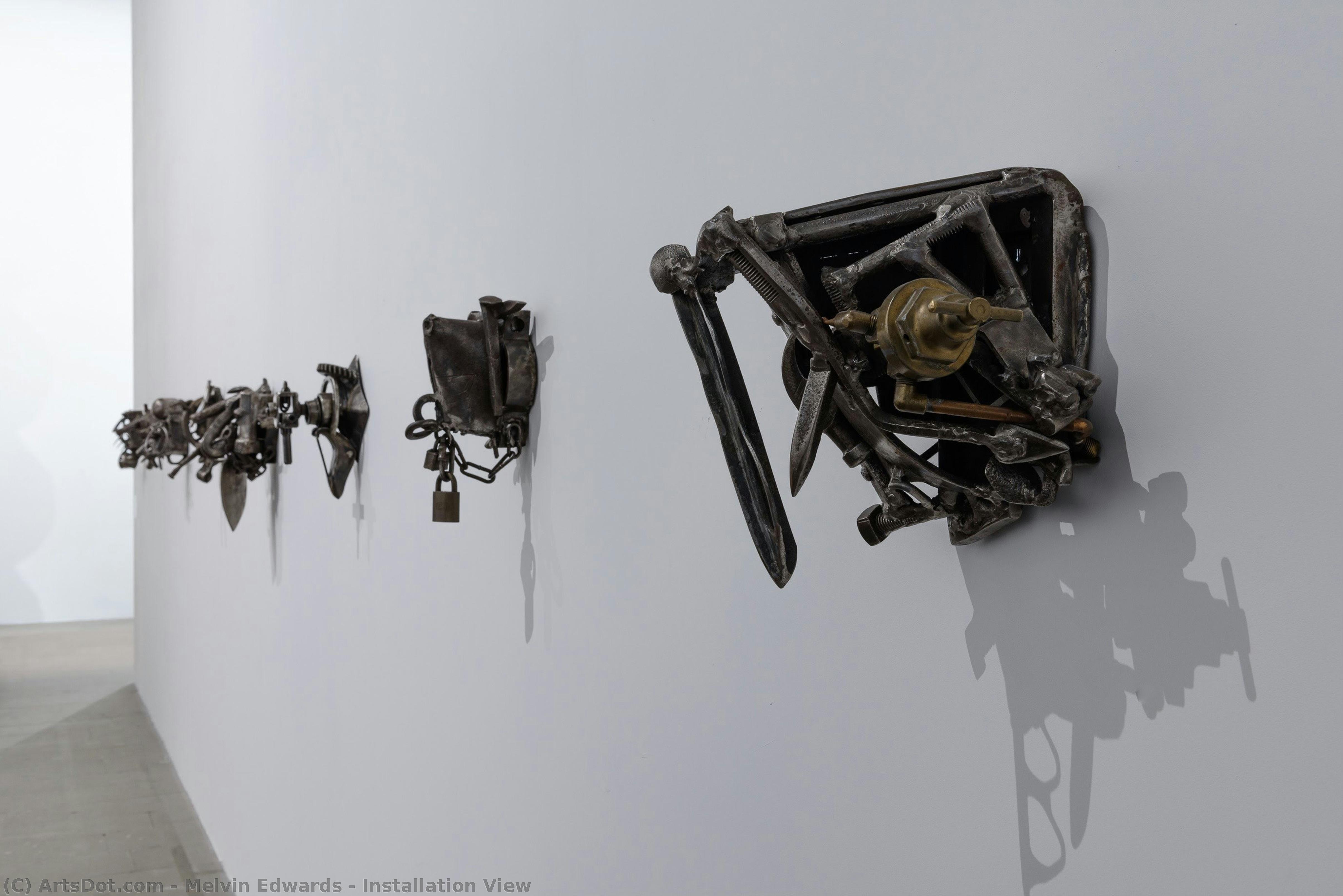
Installation View (2012) (1889) -ja Melvin Edwards

Installation View

2012 · Metalwork · la Biennale di Venezia, Velence

The photograph captures an installation view of a black and white metal sculpture by Melvin Edwards. Mounted against a stark white wall, the artwork creates a high-contrast visual effect. The composition features several interconnected metal pieces, including what appears to be a clock mechanism, tools such as scissors, and other abstract forms that have been welded together. The arrangement is characterized by a horizontal layout that suggests a progression of…

3
Installation View (2012) (1889) -ja Melvin Edwards

Installation View

2012 · Mixed Media · la Biennale di Venezia, Velence

Melvin Edwards' "Installation View," created in 2012, isn’t merely a sculpture; it’s a visceral embodiment of American history—specifically, the enduring legacy of racial injustice and the persistent pursuit of freedom. This arresting steel relief, currently available as a meticulously hand-painted reproduction through WahooArt.com, demands attention not just with its imposing scale but with the raw emotion embedded within its fragmented forms. Edwards, born in Houston in 1937 and deeply rooted…

5
Working Thought (from the (1985) (1889) -ja Melvin Edwards

Working Thought (from the

1985 · Acrylic On Canvas · Studio Museum in Harlem, New York

Working Thought (from the Lynch Fragment Series) – A Meditation on Resilience Melvin Edwards’ “Working Thought,” created in 1985, isn't merely a sculpture; it’s a palpable embodiment of memory and struggle—a cornerstone of Edwards’ signature "Lynch Fragments" series. This arresting piece speaks volumes about the artist’s profound engagement with African American history and his unwavering commitment to conveying complex narratives through materiality and form. Captured in a meticulously framed photograph,…

6
Amanda (1981) (1889) -ja Melvin Edwards

Amanda

1981 · Metalwork · la Biennale di Venezia, Velence

Melvin Edwards: Sculpting Memory and Resilience Melvin Edwards (born May 4, 1937) stands as a pivotal figure in contemporary American sculpture, recognized for his distinctive approach to abstraction and his unwavering engagement with themes of African-American history and the legacy of slavery. He is celebrated not merely for his mastery of form but also for his profound ability to imbue his work with emotional resonance—a testament to his understanding that…

A témák, amelyek Melvin Edwards figyelmét meghúzták

A négy leggyakorobban előforduló téma ebben az eredeti művekben, mindegyik a legkiválóbb példájával.

A műemlékek, amelyek Melvin Edwards eredeti műveit őrzik

A 3 olyan múzeum, amely a legtöbb ezen az oldalon szereplő festményet őrzi.

Múzeum Város Melvin Edwards művei Ebből a listából származó festmények
la Biennale di Venezia, Velencela Biennale di Venezia Velence 4 Ida W.B., Installation View, Installation View
The Newark Museum of Art, NewarkThe Newark Museum of Art Newark 1 Resolved
Studio Museum in Harlem, New YorkStudio Museum in Harlem New York 1 Working Thought (from the

Melvin Edwards, egy aláírott festmény évtizedenként

Művek évtizedenként

Váassz ki egy évtizedet, hogy megnézhesd az azt meghatározó eredetiműveket.

Melvin Edwards festményei: a galéria válaszai

Melyik Melvin Edwards festmény a leghíresebb?Fedje fel a választ

Ida W.B. (1990), la Biennale di Venezia, Velence. Ezután Installation View (2012) és Installation View (2012) következik.

Hány éves volt Melvin Edwards, amikor elkészítette a(t): Ida W.B.?Fedje fel a választ

53 éves: Ida W.B. 1990-ből származik, Melvin Edwards pedig 1937-ben született.

Hány műve született Melvin Edwards nevére?Fedje fel a választ

Katalógusunkban 6 mű található Melvin Edwards alkotótól, 1981 és 2012 év közötti időszakból.

Hol találhatóak Melvin Edwards leghíresebb eredeti művei?Fedje fel a választ

Leginkább la Biennale di Venezia (Velence), The Newark Museum of Art (Newark) és Studio Museum in Harlem (New York) található. A fenti múzeumi táblázatban mindegyik felsorolásra került.

Mikor festette Melvin Edwards le leghíresebb műveit?Fedje fel a választ

1980s alatt: a jelen laphonon található 6 műből 3 készült ebben az időszakban, köztük Resolved.

Melyek Melvin Edwards legkorábbi és legutóbbi híres művei?Fedje fel a választ

Ezen az oldalon a leghitelesebb Amanda (1981), a legutóbbi pedig Installation View (2012).

Mely témakörökkel foglaltaszkodott a legtöbbször Melvin Edwards?Fedje fel a választ

Steel sculpture (4), Resilience (3) és Lynch fragments (2), a jelen oldalon található 6 műművészeti alkotás között.

Melyik technikával foglalt leginkább Melvin Edwards?Fedje fel a választ

Metalwork, a jelen oldalon található 6 műből 2 darab esetén.

Mely művészeti irányhoz tartozik Melvin Edwards?Fedje fel a választ

Abstract expressionism, ezen az oldalon található eredetiek alapján.

Mely Melvin Edwards eredeti műveit őrzi a la Biennale di Venezia?Fedje fel a választ

Ida W.B., Installation View és Installation View: a la Biennale di Venezia, Velence 4 művet őrzi ezen az oldalon.

Melvin Edwards: a művész

The Sculptural Language of Resilience: The Life and Legacy of Melvin Edwards

Melvin Edwards stands as a monumental figure in the landscape of contemporary American sculpture, an artist whose work serves as both a profound historical archive and a visceral exploration of abstract form. Born on May 4, 1937, in Houston, Texas, Edwards’ early life was shaped by the starkly divided realities of the segregated South. This formative period, marked by the complexities of racial tension and the pursuit of social justice, would later become the emotional bedrock of his artistic practice. As he moved through the integrated landscapes of Ohio and eventually to California in 1955, Edwards began a transformative journey that would lead him from the foundational disciplines of painting at UCLA to the rugged, industrial mastery of welding and steel assemblage.

The arrival of Edwards in New York City in 1967 marked a definitive turning point in his career. Immersed in the electric atmosphere of postwar abstraction, he began to synthesize the geometric rigor of European modernism with the urgent, socio-political narratives of the African-American experience. It was during this era that he developed his most celebrated contribution to the sculptural canon: the Lynch Fragments. These intricate, small-scale steel reliefs are far more than mere abstract compositions; they are poetic yet harrowing assemblages of metal objects—spikes, chains, and scissors—that evoke the fractured memory of racial trauma. Through these works, Edwards achieved a delicate balance between the reductive aesthetics of artists like Piet Mondrian and a conceptual depth reminiscent of Marcel Duchamp, using the very weight and texture of steel to articulate the tension between oppression and endurance.

Materiality and Memory: The Art of Assemblage

To encounter a Melvin Edwards sculpture is to engage in a dialogue with history through the medium of industrial grit. His technique is characterized by an extraordinary command over metal, where the act of welding becomes a way to fuse disparate fragments of memory into a cohesive, albeit fractured, whole. In works such as Working Thought, one can witness how the artist utilizes the language of the Lynch Fragments to reflect on the resilience of the human spirit. The jagged edges and deliberate asymmetries of his steel reliefs do not merely represent chaos; they mirror the structural complexities of a history that is often broken and reconstructed.

This mastery extends into larger, more complex installations where the artist incorporates found objects to deepen the narrative resonance of his pieces. In Ida W.B., Edwards masterfully blends steel with bicycle parts, creating a poignant sculptural poem that explores themes of social justice and historical continuity. His ability to transform cold, industrial materials into vessels for profound human emotion is what distinguishes his oeuvre. The following elements define the core of his technical and thematic approach:

  • The Use of Assemblage: Integrating found metal objects like chains and tools to ground abstract forms in physical reality.
  • Geometric Tension: Utilizing sharp angles and asymmetrical compositions to evoke a sense of psychological and social friction.
  • Historical Resonance: Drawing directly from the legacies of slavery and the Civil Rights Movement to inform the structural integrity of his work.
  • Materiality as Metaphor: Using the permanence and weight of steel to symbolize the unyielding nature of memory and resistance.

A Lasting Impact on Contemporary Sculpture

The historical significance of Melvin Edwards lies in his ability to bridge the gap between formalist abstraction and political activism. He refused to allow the language of modern sculpture to remain detached from the lived realities of the Black experience, instead forcing the medium to confront the scars of the past. His work does not merely document history; it reanimates it, allowing the viewer to feel the weight of the metal and the sharpness of the edges as symbols of a struggle that continues to shape the American identity.

As his career has progressed, Edwards has remained a vital voice in the global art dialogue, proving that sculpture can be simultaneously decorative, intellectual, and deeply political. His legacy is found in every weld and every fragment, reminding us that even from the most broken pieces, a powerful and enduring narrative can be forged. Through his unwavering commitment to truth and form, Melvin Edwards has ensured that the stories of resilience and memory are etched permanently into the fabric of contemporary art.