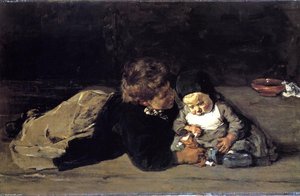
Max Liebermann portréja

A 100 legnevezesebb Max Liebermann festmény, egy galériaválaszték

Frissítve: október 2026 · rangsorolva népszerűségi pontszámunk alapján (minden mű keresései, látogatásai és megrendelései alapján) · 280 mű Max Liebermann alkotása a katalógusunkban

Röviden

Max Liebermann hagyatékából a leghíresebb alkotás Szabadóra az Amsterdami árványlatotóban (1876). Röviddel ezután követik őket Self Portrait with Kitchen Still LIfe (1873) és Corner of a Dutch Village with Washing Hung up to Dry (1890). Katalógusunkban 280 mű található Max Liebermann alkotótól; a galéria megőrizte a világ által leginkább csodált 100 darabot, melyeket a dátummal, a múzeummal és a történetükkel együtt mutatunk be.

1847 – 1935, Berlin Impressionist painting A legtöbb mű: Alte Nationalgalerie

Max Liebermann legjobb 10 festménye: a galéria válogatása

1
Szabadóra az Amsterdami árványlatotóban (1876) szerzője Max Liebermann

Szabadóra az Amsterdami árványlatotóban

1876 · Olajfestmény vászonon

Max Liebermann „Szabadóra az Amsterdami árvakorházban” című alkotása lenyűgöző mű, amely gyönyörűen örökíti meg a 19. századi Amsterdam közösségi életének egy pillanatát. A festmény egy kültéri udvarra invitál a nézőt, ahol kobietyek és gyermekek gyülekeznek össze, olyan jelenetet teremtve, amely gazdag társadalmi interakciókkal és kulturális örökséggel teli.

2
Self Portrait with Kitchen Still LIfe (1873) szerzője Max Liebermann

Self Portrait with Kitchen Still LIfe

1873 · Oil On Canvas · Stadtisches Museum, Gelsenkirchen

To stand before Max Liebermann’s Self Portrait with Kitchen Still Life is not merely to observe a painting; it is to step directly into the vibrant, sun-drenched moments of late nineteenth-century Berlin. Created in 1873, this oil on canvas captures more than just a likeness; it encapsulates the artist's profound belief that true beauty resides within the quotidian—the humble objects and simple acts of daily life. Liebermann, a master whose…

3
Corner of a Dutch Village with Washing Hung up to Dry (1890) szerzője Max Liebermann

Corner of a Dutch Village with Washing Hung up to Dry

1890 · Oil On Panel · Harvard Art Museums, Cambridge

The air feels heavy with the scent of damp fabric and the salt of a nearby coast. In this corner of a Dutch village, time seems to pause, caught in the soft, overcast light of 1890. A white building dominates the immediate view, its red door and blue shutters providing the only sharp interruptions to the muted, earthy tones of the village. Above the doorway, laundry hangs from a line,…

4
Portrait of Richard Strauss (1918) szerzője Max Liebermann

Portrait of Richard Strauss

1918 · Oil · Alte Nationalgalerie, Berlin

This 1918 impressionist painting by Max Liebermann presents a black and white portrait of Richard Strauss. The subject is depicted sitting in a chair with his hands clasped together, wearing a suit and tie. He is shown with a mustache and appears to be looking directly at the viewer. To provide depth to the scene, the background features a curtain behind the seated man.

5
Restaurant De oude Vink (1905) szerzője Max Liebermann

Restaurant De oude Vink

1905 · Oil

There is a certain quietude found in the middle of a crowd, a feeling captured here in 1905. In Restaurant De oude Vink, we find ourselves seated among patrons enjoying a meal under the dappled shade of trees. The scene is one of casual, unhurried leisure. Green chairs are scattered around tables, some occupied by figures lost in conversation, others left empty as if the guests have only just stepped…

6
Self-portrait (1916) szerzője Max Liebermann

Self-portrait

1916 · Oil On Canvas · Kunsthalle Bremen, Brema

An older man sits in a moment of quiet creation, his presence filling the space with a heavy, contemplative dignity. He faces the viewer directly, his gaze steady and unblinking, even as his hands remain occupied with the tools of his trade. In his right hand, he holds a palette, while his left hand brings a brush toward an easel, capturing a fragment of life in real-time. The light enters…

7
The Preserve Makers (1879) szerzője Max Liebermann

The Preserve Makers

1879 · Oil On Canvas · Museum der bildenden Künste, Leipzig

The Preserve Makers is a somber and intimate realist painting that captures a group of women gathered within a dimly lit, rustic interior. The composition is dense and crowded, utilizing a shallow depth of field that brings the figures into the immediate foreground to create a sense of enclosure and shared labor. These women are engaged in the communal task of preparing vegetables, their presence evoking a sense of quiet…

A Max Liebermann válogatás folytatódik: 11 – 100

11The farrier (1874) szerzője Max LiebermannThe farrier1874 · Staatliche Kunsthalle Karlsruhe 12Young Boys Bathing at Zandvoort (1896) szerzője Max LiebermannYoung Boys Bathing at Zandvoort1896 13Albert Einstein (1879–1955) (1922) szerzője Max LiebermannAlbert Einstein (1879–1955)1922 · A Royal Society 14Portrait Study of Emil Rathenau (1908) szerzője Max LiebermannPortrait Study of Emil Rathenau1908 · Alte Nationalgalerie 15Portrait Dr. Wilhelm Bode (1909) szerzője Max LiebermannPortrait Dr. Wilhelm Bode1909 · Alte Nationalgalerie 16The Siblings (1876) szerzője Max LiebermannThe Siblings1876 · Staatliche Kunstsammlungen 17Swimmers (1875) szerzője Max LiebermannSwimmers1875 · Dallas Múzeumának a művészetek háza 18The Basketweavers (Die Korbflechter) (1872) szerzője Max LiebermannThe Basketweavers (Die Korbflechter)1872 · Staatliche Kunsthalle Karlsruhe 19Infant school in Amsterdam (1880) szerzője Max LiebermannInfant school in Amsterdam1880 · Alte Nationalgalerie 20Road in Dutch Village (1885) szerzője Max LiebermannRoad in Dutch Village1885 21Girl from Laren Peeling Potatoes with Sleeping Child in a Basket (1887) szerzője Max LiebermannGirl from Laren Peeling Potatoes with Sleeping Child in a Basket1887 · Museum Kunst der Westküste 22The Net Menders (1888) szerzője Max LiebermannThe Net Menders1888 · Hamburger Kunsthalle 23Dr. Max Linde (1897) szerzője Max LiebermannDr. Max Linde1897 · National Gallery Prague 24Going to School in Laren - Composition Study (1898) szerzője Max LiebermannGoing to School in Laren - Composition Study1898 25Rider by the Sea Facing Left (1900) szerzője Max LiebermannRider by the Sea Facing Left1900 26Samson and Delilah (1902) szerzője Max LiebermannSamson and Delilah1902 · Städel Múzeum 27Painting of the artist's mother (1900) szerzője Max LiebermannPainting of the artist's mother1900 · Slovak National Gallery 28Two Riders on the Beach to the left (1901) szerzője Max LiebermannTwo Riders on the Beach to the left1901 29Copy of the Bohémienne after Frans Hals (Young woman) (1870) szerzője Max LiebermannCopy of the Bohémienne after Frans Hals (Young woman)1870 · Staatliche Kunsthalle Karlsruhe 30The Terrace at the Hotel Louis C. Jacob in Nienstedten on the Elbe (1902) szerzője Max LiebermannThe Terrace at the Hotel Louis C. Jacob in Nienstedten on the Elbe1902 · Hamburger Kunsthalle 31Two riders on the beach (1903) szerzője Max LiebermannTwo riders on the beach1903 · Wallraf-Richartz Múzeum 32Man with parrots (1900) szerzője Max LiebermannMan with parrots1900 33Dutch Farmhouse with Woman (1882) szerzője Max LiebermannDutch Farmhouse with Woman1882 · Frye Art Museum 34Rider on the Beach (1904) szerzője Max LiebermannRider on the Beach1904 35On the Alster in Hamburg (1910) szerzője Max LiebermannOn the Alster in Hamburg1910 · Staatliche Kunstsammlungen Dresden 36The Lifeguard's cart (1908) szerzője Max LiebermannThe Lifeguard's cart1908 37Self-portrait (1908) szerzője Max LiebermannSelf-portrait1908 · Wallraf-Richartz Múzeum 38Self-Portrait with Panama Hat (1911) szerzője Max LiebermannSelf-Portrait with Panama Hat1911 39Self-Portrait with Straw Hat (1914) szerzője Max LiebermannSelf-Portrait with Straw Hat1914 · Dordrechts Museum 40Self-portrait, standing in three-quarter figure, both hands in trouser pockets (Selbstbildnis, stehend in Dreiviertelfigur, beide Hände in den Hosentaschen) (1915) szerzője Max LiebermannSelf-portrait, standing in three-quarter figure, both hands in trouser pockets (Selbstbildnis, stehend in Dreiviertelfigur, beide Hände in den Hosentaschen)1915 · Alte Nationalgalerie 41Self-Portrait with Palette to the Left (1912) szerzője Max LiebermannSelf-Portrait with Palette to the Left1912 · Berlinische Galerie 42Käthe Liebermann – The Artist's Daughter (1916) szerzője Max LiebermannKäthe Liebermann – The Artist's Daughter1916 43The artist's daughter riding (1913) szerzője Max LiebermannThe artist's daughter riding1913 · Wallraf-Richartz Múzeum 44Study: Bust of a Man / Bust of a Woman – Two-sided Painting (1875) szerzője Max LiebermannStudy: Bust of a Man / Bust of a Woman – Two-sided Painting1875 · Krakói Művészeti Nemzeti Múzeum 45Ulrich von Wilamowitz Moellendorff (1915) szerzője Max LiebermannUlrich von Wilamowitz Moellendorff1915 46Sketches of Jozef Israëls (1912) szerzője Max LiebermannSketches of Jozef Israëls1912 · Ben Uri Gallery and Museum 47Portrait of the Berlin Garden Director Albert Brodersen (1920) szerzője Max LiebermannPortrait of the Berlin Garden Director Albert Brodersen1920 48Self portrait in painting smock (Selbstbildnis im Malkittel) (1922) szerzője Max LiebermannSelf portrait in painting smock (Selbstbildnis im Malkittel)1922 · Bavári Állami Festırménygyűjtemények 49Portrait of Jeanette Cornelia A. Onnes van Nijenrode-Cockuijt (1883-1936) (1918) szerzője Max LiebermannPortrait of Jeanette Cornelia A. Onnes van Nijenrode-Cockuijt (1883-1936)1918 · Centraal Museum 50Portrait August Batschari (1918) szerzője Max LiebermannPortrait August Batschari1918 · Westfälisches Landesmuseum 51Self-Portrait (1922) szerzője Max LiebermannSelf-Portrait1922 52The Liebermann Family (1926) szerzője Max LiebermannThe Liebermann Family1926 · Stiftung Stadtmuseum 53Self-Portrait with sports cap at the easel (1925) szerzője Max LiebermannSelf-Portrait with sports cap at the easel1925 · Alte Nationalgalerie 54The Fisherman (1926) szerzője Max LiebermannThe Fisherman1926 55A Dutch lacemaker (1881) szerzője Max LiebermannA Dutch lacemaker1881 · Hamburger Kunsthalle 56Gerhart Hauptmann (1912) szerzője Max LiebermannGerhart Hauptmann1912 · Hamburger Kunsthalle 57The Surgeon Dr. Ferdinand Sauerbruch (1932) szerzője Max LiebermannThe Surgeon Dr. Ferdinand Sauerbruch1932 · Hamburger Kunsthalle 58Digging for Potatoes in the Dunes at Zandvoort (1895) szerzője Max LiebermannDigging for Potatoes in the Dunes at Zandvoort1895 · Germanisches Nationalmuseum 59Bust Selfportrait in Paiting Overall (1922) szerzője Max LiebermannBust Selfportrait in Paiting Overall1922 · Stiftung Brandenburger Tor 60Study for Flax Barn in Laren (1886) szerzője Max LiebermannStudy for Flax Barn in Laren1886 · Grohmann Museum 61On the Beach at Noordwijk (1908) szerzője Max LiebermannOn the Beach at Noordwijk1908 62Children Bathing in the Sea (1899) szerzője Max LiebermannChildren Bathing in the Sea1899 · Bavári Állami Festırménygyűjtemények 63Landschaft mit schafherde szerzője Max LiebermannLandschaft mit schafherde 64Albert einstein szerzője Max LiebermannAlbert einstein 65Arbeiterin im rübenfeld szerzője Max LiebermannArbeiterin im rübenfeld 66Flower Terrace in the Wannsee Garden, Facing East (1924) szerzője Max LiebermannFlower Terrace in the Wannsee Garden, Facing East1924 67Recess in the Amsterdam Orphanage - View of the Inner Courtyard, Study (1876) szerzője Max LiebermannRecess in the Amsterdam Orphanage - View of the Inner Courtyard, Study1876 · Alte Nationalgalerie 68Terrace in the Garden near the Wannsee toward Southwest (1919) szerzője Max LiebermannTerrace in the Garden near the Wannsee toward Southwest1919 69Flowers at the Gardener's House toward the Northwest (sketch) (1921) szerzője Max LiebermannFlowers at the Gardener's House toward the Northwest (sketch)1921 70The Flower Terrace in the Wannsee Garden, Facing Northwest (1923) szerzője Max LiebermannThe Flower Terrace in the Wannsee Garden, Facing Northwest1923 · Stadtisches Museum 71Old Men's Home in Amsterdam, Study (1880) szerzője Max LiebermannOld Men's Home in Amsterdam, Study1880 72Study Head of a Man (also known as Sephardic Jew with a Prayer Shawl, Facing Left) (1878) szerzője Max LiebermannStudy Head of a Man (also known as Sephardic Jew with a Prayer Shawl, Facing Left)1878 · Kunsthaus Zürich 73View of the Wannsee with sailing boats (1924) szerzője Max LiebermannView of the Wannsee with sailing boats1924 · Alte Nationalgalerie 74View over the Tall Linden Hedge into the Cutting Garden toward the West (1929) szerzője Max LiebermannView over the Tall Linden Hedge into the Cutting Garden toward the West1929 75The Terrace in the Wannsee Garden toward the Northwest (1926) szerzője Max LiebermannThe Terrace in the Wannsee Garden toward the Northwest1926 76Parrot Avenue (1902) szerzője Max LiebermannParrot Avenue1902 · Kunsthalle Bremen 77Table with Pieces of Meat (1877) szerzője Max LiebermannTable with Pieces of Meat1877 · Neue Pinakothek 78Birch grow szerzője Max LiebermannBirch grow 79A rider on the beach szerzője Max LiebermannA rider on the beach 80Amsterdam Orphans in the Garden (1885) szerzője Max LiebermannAmsterdam Orphans in the Garden1885 81The Surgeon, Ferdinand Sauerbruch (1932) szerzője Max LiebermannThe Surgeon, Ferdinand Sauerbruch1932 82Outdoor Garden on the Havel, Nikolskoe (1916) szerzője Max LiebermannOutdoor Garden on the Havel, Nikolskoe1916 83The Cutting Garden in Wannsee toward the West, with a Woman Gardener on the Path (1924) szerzője Max LiebermannThe Cutting Garden in Wannsee toward the West, with a Woman Gardener on the Path1924 84Flowers at the Gardener's House (1927) szerzője Max LiebermannFlowers at the Gardener's House1927 85Terrace in the Garden near the Wannsee toward Northwest (1916) szerzője Max LiebermannTerrace in the Garden near the Wannsee toward Northwest1916 · Museum of Fine Arts, Houston 86The Circular Bed in the Hedge Garden with a Woman Watering Flowers (1925) szerzője Max LiebermannThe Circular Bed in the Hedge Garden with a Woman Watering Flowers1925 87Portrait of Felix Liebermann (1865) szerzője Max LiebermannPortrait of Felix Liebermann1865 88Jewish Street in Amsterdam (1908) szerzője Max LiebermannJewish Street in Amsterdam1908 · Städel Múzeum 89Still life of meat (Fleischstillleben) (1878) szerzője Max LiebermannStill life of meat (Fleischstillleben)1878 · Bavári Állami Festırménygyűjtemények 90Hand of an officer of the Haarlem Guard (1876) szerzője Max LiebermannHand of an officer of the Haarlem Guard1876 91Grain Harvest (1874) szerzője Max LiebermannGrain Harvest1874 · Westfälisches Landesmuseum 92Amsterdam Orphanage (1876) szerzője Max LiebermannAmsterdam Orphanage1876 · Arp Museum Bahnhof Rolandseck 93Terrace in the Garden near the Wannsee towards Northwest (1916) szerzője Max LiebermannTerrace in the Garden near the Wannsee towards Northwest1916 · Museum of Fine Arts, Houston 94Nets and Sails Spread over a Meadow: Study for the Net Menders (1884) szerzője Max LiebermannNets and Sails Spread over a Meadow: Study for the Net Menders1884 · Izraeli Múzeum 95Shoemaker (1881) szerzője Max LiebermannShoemaker1881 · Alte Nationalgalerie 96Girl Sewing with Cat - Dutch Interior (1884) szerzője Max LiebermannGirl Sewing with Cat - Dutch Interior1884 97Village Pond in Etzenhauser - Village Idyll (1879) szerzője Max LiebermannVillage Pond in Etzenhauser - Village Idyll1879 98Village Street in MIlitsh - Landscape with Pond (1883) szerzője Max LiebermannVillage Street in MIlitsh - Landscape with Pond1883 99Children's playground in Tiergarten park in Berlin (1885) szerzője Max LiebermannChildren's playground in Tiergarten park in Berlin1885 100Privy Councilor Benjamin Liebermann (1887) szerzője Max LiebermannPrivy Councilor Benjamin Liebermann1887

Max Liebermann híres festményei, korszakonként

A témák, amelyek Max Liebermann figyelmét meghúzták

A négy leggyakorobban előforduló téma ebben az eredeti művekben, mindegyik a legkiválóbb példájával.

A műemlékek, amelyek Max Liebermann eredeti műveit őrzik

A 8 olyan múzeum, amely a legtöbb ezen az oldalon szereplő festményet őrzi.

Múzeumok Város Max Liebermann művei Ebből a listából származó festmények
Alte Nationalgalerie, BerlinAlte Nationalgalerie Berlin 17 Portrait of Richard Strauss, Portrait Study of Emil Rathenau, Portrait Dr. Wilhelm Bode
Hamburger Kunsthalle, HamburgHamburger Kunsthalle Hamburg 8 The Net Menders, The Terrace at the Hotel Louis C. Jacob in Nienstedten on the Elbe, A Dutch lacemaker
Bavári Állami Festırménygyűjtemények, MunchenBavári Állami Festırménygyűjtemények Munchen 7 Self portrait in painting smock (Selbstbildnis im Malkittel), Children Bathing in the Sea, Still life of meat (Fleischstillleben)
Wallraf-Richartz Múzeum, KölnWallraf-Richartz Múzeum Köln 6 Two riders on the beach, Self-portrait, The artist's daughter riding
Staatliche Kunsthalle Karlsruhe, KarlsruheStaatliche Kunsthalle Karlsruhe Karlsruhe 5 The farrier, The Basketweavers (Die Korbflechter), Copy of the Bohémienne after Frans Hals (Young woman)
Stadtisches Museum, GelsenkirchenStadtisches Museum Gelsenkirchen 3 Self Portrait with Kitchen Still LIfe, The Flower Terrace in the Wannsee Garden, Facing Northwest
Kunsthalle Bremen, BremaKunsthalle Bremen Brema 3 Self-portrait, Parrot Avenue
Staatliche Kunstsammlungen Dresden, DrezdaStaatliche Kunstsammlungen Dresden Drezda 3 Alfred von Berger, On the Alster in Hamburg

Max Liebermann évtizede folgtva: az eredeti művek, amelyek meghatározzák az egyes korzakot

Művek évtizedenként

Váassz ki egy évtizedet, hogy megnézhesd az azt meghatározó eredetiműveket.

Gyűjtői kérdések Max Liebermann festményeivel kapcsolatban

Melyik művel a(z) Max Liebermann a leghíresebb?Fedje fel a választ

Szabadóra az Amsterdami árványlatotóban (1876). Ezt követi Self Portrait with Kitchen Still LIfe (1873) és Corner of a Dutch Village with Washing Hung up to Dry (1890).

Hány éves volt Max Liebermann, amikor a Szabadóra az Amsterdami árványlatotóban készült?Fedje fel a választ

29 éves: Szabadóra az Amsterdami árványlatotóban 1876-ből származik, Max Liebermann pedig 1847-ben született.

Melyek a tíz leghíresebb Max Liebermann festmény?Fedje fel a választ

Szabadóra az Amsterdami árványlatotóban, Self Portrait with Kitchen Still LIfe, Corner of a Dutch Village with Washing Hung up to Dry, Portrait of Richard Strauss, Restaurant De oude Vink, Self-portrait, The Preserve Makers, Schreitender Bauer, KIRCHGANG IN Laren és Alfred von Berger. A fenti rangsor a művek évszamarát és a múzeumát jelzi.

Hány festményet hagyott hátra Max Liebermann?Fedje fel a választ

Katalógusunkban 280 mű található Max Liebermann alkotótól, 1865 és 1932 év közötti időszakból.

Mely múzeumokban állnak Max Liebermann remekművei?Fedje fel a választ

Leginkább Alte Nationalgalerie (Berlin), Hamburger Kunsthalle (Hamburg) és Bavári Állami Festırménygyűjtemények (Munchen) található. A fenti múzeumi táblázatban mindegyik felsorolásra került.

Mely években festette Max Liebermann leghíresebb műveit?Fedje fel a választ

1910s alatt: a jelen laphonon található 100 műből 18 készült ebben az időszakban, köztük Portrait of Richard Strauss.

Mikszétek az első és az utolsó híres eredeti műve a(z) Max Liebermann alkotótól?Fedje fel a választ

Ezen az oldalon a leghitelesebb Portrait of Felix Liebermann (1865), a legutóbbi pedig The Surgeon Dr. Ferdinand Sauerbruch (1932).

Milyen témaköröket választott leggyakrabban Max Liebermann?Fedje fel a választ

Man (10), Portrait (6) és Garden scene (6), a jelen oldalon található 100 műművészeti alkotás között.

Melyik technikát alkalmazta leggyakrabban Max Liebermann?Fedje fel a választ

Oil On Canvas, a jelen oldalon található 100 műből 29 darab esetén.

Mely művészeti irányba tartozik Max Liebermann?Fedje fel a választ

Impressionist painting, ezen az oldalon található eredetiek alapján.

Mely Max Liebermann művei láthatóak a Alte Nationalgalerie kiállتításán?Fedje fel a választ

Portrait of Richard Strauss, Portrait Study of Emil Rathenau és Portrait Dr. Wilhelm Bode: a Alte Nationalgalerie, Berlin 9 művet őrzi ezen az oldalon.

Megrendelhetek egy Max Liebermann festmény másolatát?Fedje fel a választ

Igen, reprodukcióként: az eredeti mű a múzeumban marad, de ezen az oldalon látható bármelyik festmény megmaleríthető Önnek, egyedi igény alapján, a festmény saját oldalán keresztül.

Max Liebermann: életmű és életút

A Life Immersed in Light: The World of Max Liebermann

Max Liebermann (1847. július 20. – 1935. február 8.) német festő és grafikus, a német impresszionizmus egyik legjelentősebb képviselője. Életpályája egy gazdag zsidó családban kezdődött Berlinben, ahol a Brandenburgi kapu mellett magasodó toronyházaiban nevelkedett. Elsőként jogi és filozófiai tanulmányokat folytatott a Berlini Egyetemen, majd később festészetet és rajzot tanult Weimarban 1869-ben, Párizsban 1872-ben és Hollandiában 1876-1877 között. A porosz–francia háború alatt (1870-1871 között) önkéntes egészségügyi katonaként szolgált a Metzhez közeli Szent János rend kórházában. 1871-ben Düsseldorfban találkozott Munkácsy Mihállyal, akinek festészete nagy hatást gyakorolt Liebermannra. Georg testvére anyagi támogatásával Amszterdamba és Scheveningenbe utazott. A táj, az emberek és a fény elkápráztatták Liebermannt. Olykor Münchenben tartózkodott, majd visszatért Berlinbe, 1884-ben, s itt maradt élete végéig. 1884-ben feleségül vette Martha Marckwaldot (1857-1943); a 1885-ös nyáron született lányuk, Käthe (1885-1952). Örökségét arra használta fel, hogy egy lenyűgöző kollekciót állítson össze a francia impresszionisták munkáiból, hiszen csodálta e teljesítményeket. Idővel maga is elkezdte festeni a tehetősebb körökből való emberek hétköznapjait, majd – bár csak az 1910-es évektől – motívumokat merített a későbbi Wannsee-tóhoz közeli kertjéből is. Berlinben azonban rengeteg portrét is festett, már-már a Manet-éhoz hasonló felfogásban. Készített vallásos tárgyú képeket is, gondolva itt például „A tizenkét éves Jézus a templomban a tudósokkal” című képre (1879) – e festmény egy vitát jelenít meg, amely a zsidó-küllemmel ábrázolt Jézus és a zsidó tudósok között zajlik. Ez a jelenet a müncheni Nemzetközi Művészeti Bemutatón nagy vihart kavart – egy kritikus leírása szerint ezen az ábrázoláson Jézus a lehető legcsúnyább, legszemtelenebb zsidó fiú, akit csak elképzelni lehet.

Embracing Impressionism in a German Context

Liebermann művészi fejlődései mélyen befolyásolták a francia realizmhoz való kapcsolódását és különösen a virágzó impresszionista mozgalmat. Édouard Manet szelleme – bájtossága, az akadémiai hagyományok elutasítása, a kortárs élet fókuszálása – mélyen megérintette Liebermannot. Azonban nem egyszerűen másolta mindent, amit Párizsban látott; ehelyett alkalmazta ezeket a principiókat egy német érzékenységhez, létrehozva egyedi impresszionizmust. Palettája lett világosabb, festőtechnikája laza és spontánabb, míg témái változtak a bécsi szabadidős szcenékre és a Wannsee-tó melletti kertjének csendes szépségére. Ez utóbbi különösen vált meghatározó motívummá pályáján, egy menedéket nyújtva a gyorsan változó világban valóban távolabb, végtelen ihletet adva a fény és az atmoszféra felfedezéséhez. Nem csak festette, amit látta; hanem a tapasztalat lényegét ábrázolta vászonon. Liebermann korai művei gyakran ábrázolták hétköznapi jeleneteket, különösen a munkások életét, melyek természetes stílusukkal kihívták az időben uralkodó romantikus esztétikát. Ezek a festmények nem voltak szándékos társadalmi kommentárok, hanem őszinte emberi létezés ábrázolásai, méltósággal és tisztelettel telve.

A Művészi Szabadságért Küzdő

Liebermann nem volt hajlandó csupán festeni; aktívan támogatta az művészi innovációt és önállóságot. Azonban felismerte a hagyományos művészeti établissement szorító szabályait, ezért vezető szerepet töltött be a berlini Secession alapításában 1898-ban, melynek elnöke több mint tíz évig volt. A Secession kihívta a konvenciókat, platformot biztosítva olyan művészek számára, akik az akadémiai hagyományok határain kívül dolgoztak. Ez a művészi szabadság iránti elkötelezettség nem korlátozódott egyéni munkájára; Liebermann szívvel-lélekkel hitte, hogy a művészek szabadon kifejezhetik látásmódjukat zavarás nélkül. A Prusi Akadémia taggá választása 1909-ben és az elnöksége 1920-ban tanúságot tettek növekvő befolyásáról a német művészeti világban, de ezek a pozíciók is szembeállították őt a gyűlölet és nacionalizmus emelkedő hullámával.

A Változó Világ Nyomai: Örökség és Kitartás

A nácis rezsim felállása árnyékot vetett Liebermann későbbi éveire. A diszkrimináció elleni őszinte álláspontja miatt lemondott a Prusi Akadémia tagjaként 1933-ban, ami merész cselekedet volt, amely jelképezte elállását a kompromisszumoktól. Bár növekvő üldözésnek tett felelőtlenül, továbbra is festett, találva menedéket és célt művészetében. 1935-ben halt meg Berlinben, gazdag örökséget elhagyva – képeket, nyomatokat és mélyen gyökerező művészi szabadság iránti elkötelezettséget. Felesége, Martha tragikusan véget ért az 1943-ban, hogy elkerülje a deportálást, ami szörnyű bizonyítéka volt a holokauszt horrorságának. A háború után sokáig Liebermann művei elmaradtak Németországban, mint egy feledésbe merült emlék. Csak a 1970-es évek végén kezdődött meg az érdeklődés újra felélesztése.

Főbb Sikerei és Tartós Hatása

  • „A tizenkét éves Jézus a templomban a tudósokkal”: Ez a korai mű darabja nagy vitát váltott ki, mivel nemkonvencionális módon ábrázolta a zsidó származású Jézussal, kihívva a hagyományos vallási ikonográfiát.
  • A berlini Secession vezetője: A csoport elnökeinek kulcsfontosságú szerepe a modern művészet útjait megnyitotta Németországban.
  • A Prusi Akadémia elnöksége: Jelentős elismerés Liebermann művészi értékének, bár ez a náci emelkedéssel kompromittálódott.
  • Művésznői portrék: Képes volt megfogalmazni a társaik lényegét több mint 200 megbízású portréban, ami megerősítette hírnevét vezető portréfestőként.
  • A német impresszionizmusra gyakorolt hatás: Liebermann sikeresen átrendezte az impresszionista principiókat egyedi német kontextusba, inspirálva a következő generációk művészeit.

Minden 280 műmű Max Liebermann alkotása →