Portrait of Masaccio

The 97 Most Famous Masaccio Paintings, Each One of a Kind

Updated október 2026 · ranked by our popularity score (searches, visits and orders for each work) · 97 works by Masaccio in our catalogue

In short

A Szenthá triad (1428) is the Masaccio painting that draws the most eyes. After it, the eye goes to A templomadó (1425) and Az emberi lélek kizárása az Edenski kertből (1426). Among the 97 works of Masaccio in our catalog, these 97 are the most famous, each a unique original presented with its year, its museum and the reason it endures.

1401 – 1428, San Giovanni Valdarno Korai reneszánsz Most works: Santa Maria del Carmine

Top 10 paintings by Masaccio, through the gallery's eye

1
A Szenthá triad (1428) by Masaccio

A Szenthá triad

1428 · Freskó

A Szenthá triad Masaccio freskófestménye az olosz reneszáns kezdetét jelölte, amely egy olyan mű, amely alapjaiban változtatta meg az művészet irányát. Az 1425-ben készült alkotást a korai reneszáns korszak egyik legfontosabb művészeti kincsének tekintik. Ez a lenyűgöző alkotás a florentiai Santa Maria Novella templomban kapott helyet, ahol évszázadok óta várja a művészet kedvelőit. Művészeti innovációk Masaccio Szenthá triad című műve egy forradalmi alkotás volt, amely számos művészeti innovációt vezetett be…

2
A templomadó (1425) by Masaccio

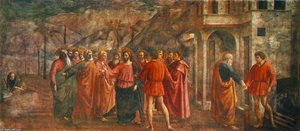
A templomadó

1425 · Freskó

A jelen a firenzei Santa Maria del Carmine bazilika Brancacci-kápolnájában játszódik. Itt Masaccio freskója, melynek címe A templomadó, egy bibliai narratívát kelt életre a kápolna falain. Felice Brancacci megbízásából készült alkotás fontos része egy nagyobb ciklusnak, amely Szent Péter életének megáldoztatására szenteltetszik. A kápolnában lévő levegő úgy tűnik, magával viszi e szent történet súlyát, miközben a felidézett alakok egy mély jelentőségű pillanatát mozgatják meg.

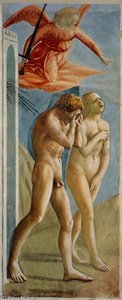
3
Az emberi lélek kizárása az Edenski kertből (1426) by Masaccio

Az emberi lélek kizárása az Edenski kertből

1426 · Freskó

Az olaszországi firenzei Santa Maria del Carmine templom Brancacci-kápolnájának nehéz csendje egy mély tragédia súlyát hordozza. Itt a falak Az emberi lélek kizárása az Edenski kertből történetével lélegzenek, amely egy 1425 körül készült freskó, melyet Masaccio alkotott. A levegő szinte meg sűrűsödik a alakok körül, amint szembenéznek a paradicsomból való hirtelen, visszafordíthatatlan távozásukkal. Ez a jelenet egy nagyobb narratíva kezdetét jelenti, az első freskóként szolgál egy Szent Péter életének szentelt…

4
A Tribute Money részlete by Masaccio

A Tribute Money részlete

Freskó

Ez a lenyűgöző részlet Masaccio úttörő freskójából, az „Adófizetés” (The Tribute Money) alkotásból származik, amely a florentiai Brancacci-kápolna egyik legfontosabb műve. Az 1426 körül készült alkotás fordulópontot jelent a nyugati művészet történetében, hiszen elmozdult a gótikus korszak stilisztikus konvencióitól egy új, naturalizmus és humanisztikus kifejezésmód irányába.

5
Predella panel from the Pisa Altar (1426) by Masaccio

Predella panel from the Pisa Altar

1426 · Oil On Panel · Berlin Állami Múzeumai, Berlin

To stand before this Predella panel from the Pisa Altar is to encounter a moment frozen in time, yet vibrating with raw, undeniable human drama. Dating to 1426, this work captures Masaccio at the zenith of his revolutionary power. It is not merely a depiction of the Crucifixion; it is a profound meditation on sacrifice, community, and the weight of divine narrative rendered with startling immediacy. The composition draws the…

6
The Madonna of Humility (1424) by Masaccio

The Madonna of Humility

1424 · Tempera On Panel

In the quiet, profound stillness of Masaccio’s The Madonna of Humility, we encounter one of the most moving snapshots of the Early Italian Renaissance. Created around 1424, this masterpiece transcends mere religious iconography to offer a window into a moment of raw, maternal intimacy. The scene is set not upon a celestial throne, but on the earth itself, where the Virgin Mary sits upon a blue patterned cushion. This choice…

7
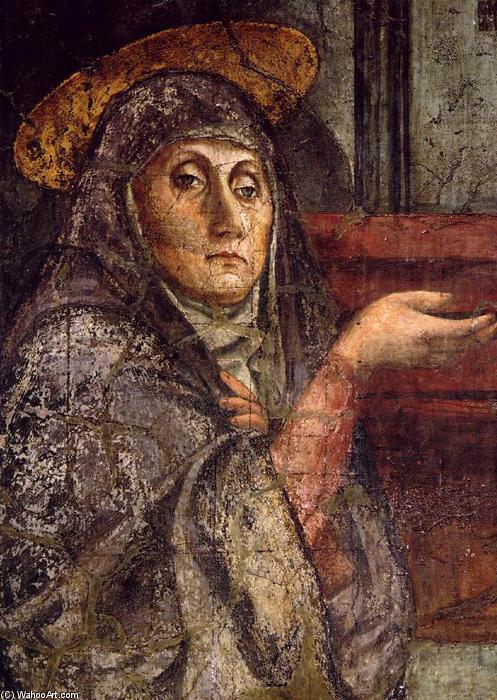
Trinity (detail) (1425) by Masaccio

Trinity (detail)

1425 · Fresco · Santa Maria Novella, Firenze

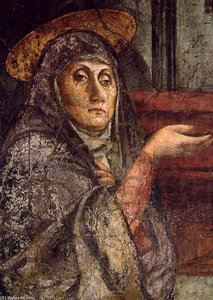
The image presents a detail from a fresco painting created in 1425 by Masaccio. Within this specific view, a figure is depicted that appears to be Mary Magdalene, identified by the traditional iconography of her long hair and a head covering. She possesses a contemplative expression, directing her gaze slightly downwards toward an object held in her right hand, which may be interpreted as a symbol of faith or devotion.

8
Two panels from the Pisa Altarpiece (1426) by Masaccio

Two panels from the Pisa Altarpiece

1426 · Tempera On Panel · Berlin Állami Múzeumai, Berlin

In the quiet, hallowed halls of art history, few works capture the dawn of a new era as poignantly as Masaccio’s Two Panels from the Pisa Altarpiece. Completed in 1426, these panels are far more than mere fragments of a lost polyptych; they are windows into a transformative moment when the rigid conventions of the Gothic period began to dissolve, giving way to the profound humanism of the Early Italian…

9
Trinity (1425) by Masaccio

Trinity

1425 · Fresco · Santa Maria Novella, Firenze

To step before Masaccio’s Holy Trinity is to witness the exact moment when the flattened, symbolic world of the Middle Ages dissolved into the profound, breathing reality of the Renaissance. Painted between 1425 and 1427 within the hallowed walls of Santa Maria Novella in Florence, this fresco does not merely depict a religious scene; it carves a hole in the very wall of the chapel, inviting the viewer to step…

10
Trinity (detail) (1425) by Masaccio

Trinity (detail)

1425 · Acrylic On Canvas · Santa Maria Novella, Firenze

Masaccio’s “Trinity (detail),” housed within the magnificent Santa Maria Novella in Florence, isn't merely a fresco; it’s a pivotal moment in art history – a visual manifesto declaring the arrival of the High Renaissance. Painted between 1425 and 1427, this intimate section captures the essence of Masaccio’s revolutionary approach to depicting reality, a departure from the stylized elegance of the preceding Gothic era and a profound influence on generations of…

Masaccio's famous paintings, numbers 11 to 97

11Cappella Brancacci (előzetes restaurálás) (1426) by MasaccioCappella Brancacci (előzetes restaurálás)1426 · Santa Maria del Carmine 12Trinity (scheme of the perspective) (1425) by MasaccioTrinity (scheme of the perspective)1425 · Santa Maria Novella 13Raising of the Son of Theophilus and St Peter Enthroned (detail) (1426) by MasaccioRaising of the Son of Theophilus and St Peter Enthroned (detail)1426 14St Peter Healing the Sick with his Shadow (detail) (1426) by MasaccioSt Peter Healing the Sick with his Shadow (detail)1426 15Frescoes in the Cappella Brancacci (right view) (1426) by MasaccioFrescoes in the Cappella Brancacci (right view)1426 · Santa Maria del Carmine 16Madonna Casini (1426) by MasaccioMadonna Casini1426 17Adam and Eve banished from Paradise (1427) by MasaccioAdam and Eve banished from Paradise1427 18The Distribution of Alms and the Death of Ananias (detail) (1426) by MasaccioThe Distribution of Alms and the Death of Ananias (detail)1426 19A Brancacci-csarnok freskója (1426) by MasaccioA Brancacci-csarnok freskója1426 · Santa Maria del Carmine 20Baptism of the Neophytes (1427) by MasaccioBaptism of the Neophytes1427 21Christ in the Garden of Gethsemane (detail) (1424) by MasaccioChrist in the Garden of Gethsemane (detail)1424 · Lindenau-Museum 22Crucifixion (1426) by MasaccioCrucifixion1426 · Museo di Capodimonte 23Tribute Money (detail) (1426) by MasaccioTribute Money (detail)1426 24The Agony in the Garden (1426) by MasaccioThe Agony in the Garden1426 25St Peter Healing the Sick with his Shadow (detail) (1426) by MasaccioSt Peter Healing the Sick with his Shadow (detail)1426 26St. Juvenal Triptych (1422) by MasaccioSt. Juvenal Triptych1422 27Maria and Child (1426) by MasaccioMaria and Child1426 28Tribute Money (detail) (1426) by MasaccioTribute Money (detail)1426 29The Expulsion from the Garden of Eden (detail) (1426) by MasaccioThe Expulsion from the Garden of Eden (detail)1426 30Birth tray (1428) by MasaccioBirth tray1428 31The Baptism of the Neophytes (1426) by MasaccioThe Baptism of the Neophytes1426 32Raising of the Son of Theophilus and St Peter Enthroned (1426) by MasaccioRaising of the Son of Theophilus and St Peter Enthroned1426 33The Distribution of Alms and the Death of Ananias (detail) (1426) by MasaccioThe Distribution of Alms and the Death of Ananias (detail)1426 34Adoration of the Knigs (1428) by MasaccioAdoration of the Knigs1428 35Tribute Money (detail) (1426) by MasaccioTribute Money (detail)1426 36Tribute Money (1426) by MasaccioTribute Money1426 37The Expulsion from the Garden of Eden (1426) by MasaccioThe Expulsion from the Garden of Eden1426 38Tribute Money (detail) (1426) by MasaccioTribute Money (detail)1426 39Raising of the Son of Theophilus and St Peter Enthroned (detail) (9) (1426) by MasaccioRaising of the Son of Theophilus and St Peter Enthroned (detail) (9)1426 40San Giovenale Triptych. Right panel. (1422) by MasaccioSan Giovenale Triptych. Right panel.1422 41Crucifixion (1426) by MasaccioCrucifixion1426 42Raising of the Son of Theophilus and St Peter Enthroned (detail) (1426) by MasaccioRaising of the Son of Theophilus and St Peter Enthroned (detail)1426 43Raising of the Son of Theophilus and St Peter Enthroned (detail) (1426) by MasaccioRaising of the Son of Theophilus and St Peter Enthroned (detail)1426 44The Raising of the Son of Theophilus and St Peter Enthroned (detail) (1426) by MasaccioThe Raising of the Son of Theophilus and St Peter Enthroned (detail)1426 45Raising of the Son of Theophilus and St Peter Enthroned (detail) (1426) by MasaccioRaising of the Son of Theophilus and St Peter Enthroned (detail)1426 46Christ in the Garden of Gethsemane (detail) (1424) by MasaccioChrist in the Garden of Gethsemane (detail)1424 · Lindenau-Museum 47San Giovenale Triptych. Central panel (1423) by MasaccioSan Giovenale Triptych. Central panel1423 48Distribution of Alms and Death of Ananias (1425) by MasaccioDistribution of Alms and Death of Ananias1425 49Profile Portrait of a Young Man by MasaccioProfile Portrait of a Young Man 50Profile Portrait of a Young Man (1425) by MasaccioProfile Portrait of a Young Man1425 · National Gallery of Art 51Rendering of the Tribute Money by MasaccioRendering of the Tribute Money 52Distribution of the Goods of the Community and the Death of Ananias (detail) by MasaccioDistribution of the Goods of the Community and the Death of Ananias (detail) 53St. Giovenale Triptych by MasaccioSt. Giovenale Triptych 54The Expulsion from Paradise by MasaccioThe Expulsion from Paradise 55The Adoration of the Magi by MasaccioThe Adoration of the Magi 56St. Peter Baptizing the Neophytes by MasaccioSt. Peter Baptizing the Neophytes 57Birth Salver by MasaccioBirth Salver 58Medallion by MasaccioMedallion 59Madonna and Child by MasaccioMadonna and Child 60Madonna Enthroned by MasaccioMadonna Enthroned 61St Jerome and St John the Baptist by MasaccioSt Jerome and St John the Baptist 62Christ in the Garden of Gethsemane (1424) by MasaccioChrist in the Garden of Gethsemane1424 · Lindenau-Museum 63San Giovenale Triptych. Left panel (1422) by MasaccioSan Giovenale Triptych. Left panel1422 64Portrait of a Young Woman (1425) by MasaccioPortrait of a Young Woman1425 65Distribution of the Goods of the Community and the Death of Ananias by MasaccioDistribution of the Goods of the Community and the Death of Ananias 66The Holy Trinity with the Virgin, St. John and Two Donors by MasaccioThe Holy Trinity with the Virgin, St. John and Two Donors 67The Cricifixion of St. Peter. The Beheading of St. John the Baptist by MasaccioThe Cricifixion of St. Peter. The Beheading of St. John the Baptist 68La Consagración by MasaccioLa Consagración 69Crucifixion by MasaccioCrucifixion 70St Jerome and St John the Baptist 1 by MasaccioSt Jerome and St John the Baptist 1 71The Madonna and Child with Saint Anne by MasaccioThe Madonna and Child with Saint Anne 72Two panels from the Pisa Altarpiece by MasaccioTwo panels from the Pisa Altarpiece 73Portrait of a young man by MasaccioPortrait of a young manIsabella Stewart Gardner Museum 74View of the Cappella Brancacci (after restoration) by MasaccioView of the Cappella Brancacci (after restoration) 75Putto and a Small Dog (back side of the Berlin Tondo) by MasaccioPutto and a Small Dog (back side of the Berlin Tondo) 76The Madonna and Child with st.Anna. (1424) by MasaccioThe Madonna and Child with st.Anna.1424 77Plate of Nativity (Berlin Tondo) (1427) by MasaccioPlate of Nativity (Berlin Tondo)1427 · Berlin Állami Múzeumai 78Madonna with Child and Angels (1426) by MasaccioMadonna with Child and Angels1426 · National Gallery 79The Distribution of Alms and the Death of Ananias (1426) by MasaccioThe Distribution of Alms and the Death of Ananias1426 · Santa Maria del Carmine 80St Peter Healing the Sick with his Shadow (1426) by MasaccioSt Peter Healing the Sick with his Shadow1426 · Santa Maria del Carmine 81San Giovenale Triptych (1422) by MasaccioSan Giovenale Triptych1422 82Raising of the Son of Teophilus and St.Peter Enthroned (1427) by MasaccioRaising of the Son of Teophilus and St.Peter Enthroned1427 · Santa Maria del Carmine 83St Paul (1426) by MasaccioSt Paul1426 · Museo Nazionale di San Matteo 84Carnesecchi Triptych (1423) by MasaccioCarnesecchi Triptych1423 85Adoration of the Magi (1426) by MasaccioAdoration of the Magi1426 · Berlin Állami Múzeumai 86Martyrdom of San Giovanni Battista (1426) by MasaccioMartyrdom of San Giovanni Battista1426 · Gemäldegalerie 87Predella panel from the Pisa Altar (1426) by MasaccioPredella panel from the Pisa Altar1426 · Berlin Állami Múzeumai 88A Bearded Carmelite Saint (1426) by MasaccioA Bearded Carmelite Saint1426 · Gemäldegalerie 89Madonna Casini (1426) by MasaccioMadonna Casini1426 90Madonna of Humility (1420) by MasaccioMadonna of Humility1420 · National Gallery of Art 91Repentance of Saint Peter (1425) by MasaccioRepentance of Saint Peter1425 · Santa Maria del Carmine 92San Agustín by MasaccioSan AgustínGemäldegalerie 93St. Andrew (1426) by MasaccioSt. Andrew1426 · J. Paul Getty Múzeum 94Carmelita by MasaccioCarmelitaGemäldegalerie 95St. Jerome by MasaccioSt. JeromeGemäldegalerie 96St.Girolamo end Giovanni Battista (1428) by MasaccioSt.Girolamo end Giovanni Battista1428 · National Gallery 97Crucifixion of St Peter (1426) by MasaccioCrucifixion of St Peter1426 · Berlin Állami Múzeumai

Masaccio's famous paintings, period by period

The subjects that held Masaccio's eye

The four subjects that come back most often in these originals, each with its finest example.

The museums that keep Masaccio's originals

The 8 museums that hold the most of the paintings on this page.

Museum City Works by Masaccio Paintings from this list
Santa Maria del Carmine, FirenzeSanta Maria del Carmine Firenze 7 Cappella Brancacci (előzetes restaurálás), Frescoes in the Cappella Brancacci (right view), A Brancacci-csarnok freskója
Berlin Állami Múzeumai, BerlinBerlin Állami Múzeumai Berlin 6 Predella panel from the Pisa Altar, Two panels from the Pisa Altarpiece, Plate of Nativity (Berlin Tondo)
Gemäldegalerie, BerlinGemäldegalerie Berlin 5 Martyrdom of San Giovanni Battista, A Bearded Carmelite Saint, San Agustín
Santa Maria Novella, FirenzeSanta Maria Novella Firenze 4 Trinity (detail), Trinity, Trinity (detail)
Lindenau-Museum, AltengauLindenau-Museum Altengau 3 Christ in the Garden of Gethsemane (detail), Christ in the Garden of Gethsemane (detail), Christ in the Garden of Gethsemane
National Gallery of Art, WashingtonNational Gallery of Art Washington 2 Profile Portrait of a Young Man, Madonna of Humility
National Gallery, LondonNational Gallery London 2 Madonna with Child and Angels, St.Girolamo end Giovanni Battista
Museo di Capodimonte, NápolyMuseo di Capodimonte Nápoly 1 Crucifixion

Masaccio across the years: the unique originals of each

Masaccio's dated originals shown here fit into about ten years, 1420 to 1428: the eye follows them year by year.

Works per year

Pick a year to see its originals.

Masaccio's paintings: questions for the gallery

What is the single most famous work of Masaccio?Reveal the answer

A Szenthá triad (1428). A templomadó (1425) and Az emberi lélek kizárása az Edenski kertből (1426) come next.

At what age did Masaccio create A Szenthá triad?Reveal the answer

27 years old: A Szenthá triad dates from 1428, and Masaccio was born in 1401.

Which ten paintings by Masaccio are the most famous?Reveal the answer

A Szenthá triad, A templomadó, Az emberi lélek kizárása az Edenski kertből, A Tribute Money részlete, Predella panel from the Pisa Altar, The Madonna of Humility, Trinity (detail), Two panels from the Pisa Altarpiece, Trinity and Trinity (detail). The ranking above gives each one's year and museum.

How many works by Masaccio are known?Reveal the answer

Our catalog holds 97 works by Masaccio, dated from 1420 to 1428.

Where can the most famous Masaccio originals be seen?Reveal the answer

Mostly in Santa Maria del Carmine (Firenze), Berlin Állami Múzeumai (Berlin) and Gemäldegalerie (Berlin). The museum table above lists them all.

During which period did Masaccio create the best-known paintings?Reveal the answer

In 1426: 41 of the 97 works on this page were made then, Az emberi lélek kizárása az Edenski kertből among them.

Which famous Masaccio painting is the earliest, and which the latest?Reveal the answer

On this page, the earliest is Madonna of Humility (1420) and the latest A Szenthá triad (1428).

What subjects did Masaccio favour?Reveal the answer

Saints (30), Religious (25) and Renaissance (15), across the 97 works on this page.

What materials did Masaccio paint with most?Reveal the answer

Tempera On Panel, for 6 of the 97 works on this page.

Which movement does the work of Masaccio belong to?Reveal the answer

Korai reneszánsz, judging by the originals on this page.

What Masaccio originals can I see at the Santa Maria del Carmine?Reveal the answer

Cappella Brancacci (előzetes restaurálás), Frescoes in the Cappella Brancacci (right view) and A Brancacci-csarnok freskója: the Santa Maria del Carmine, Firenze holds 7 of the works on this page.

Where can I order a hand-painted Masaccio reproduction?Reveal the answer

Yes, as a reproduction: the original stays in its museum, but any painting on this page can be painted by hand for you, made to order one at a time, from the painting's own page.

Masaccio: a portrait of the artist

Masaccio (1401-1428): The Dawn of Renaissance Realism

Tommaso di Ser Giovanni di Simone Cassai, better known as Masaccio (meaning "clumsy Tom"), was a pivotal figure in the Early Italian Renaissance. Born on December 21, 1401, in San Giovanni Valdarno, Italy, and dying tragically young in 1428, his brief career revolutionized painting with groundbreaking realism, perspective, and chiaroscuro (the use of strong contrasts between light and dark). Despite his short life, Masaccio’s impact on subsequent generations of artists was profound, establishing a new standard for naturalism and influencing the course of Western art.

Early Life and Training

Masaccio's origins were humble; he descended from Ser Giovanni di Mone Cassai, a notary, and Jacopa di Martinozzo di Dino. His family name, Cassai, reflected his paternal grandfather’s trade as a cabinet maker – a craft that instilled in him an appreciation for meticulous detail and craftsmanship. Orphaned at age five when his father succumbed to illness, Masaccio was cared for by his brother Giovanni (Lo Scheggia), who also pursued artistic endeavors. The specifics of Masaccio's formative years remain shrouded in obscurity—a rarity amongst Renaissance artists—underscoring the mystery surrounding his rapid ascent to mastery and his innovative techniques. Scholars believe he began his artistic education around 12, though definitive evidence of a particular teacher has yet to emerge. This lack of documented training contributes to the enduring fascination with Masaccio’s artistic journey. He joined the painters’ guild (Arte de’ Medici e Speziali) in Florence on January 7, 1422, marking his emergence as an independent artist and signaling his commitment to upholding established artistic traditions while simultaneously pushing boundaries.

Artistic Development and Major Works

Masaccio's artistic vision was profoundly shaped by Giotto di Bondone, a predecessor who championed naturalism in painting—a stylistic approach that prioritized accurate representation of human anatomy and emotion. However, Masaccio swiftly surpassed Giotto’s achievements in mastering perspective and anatomical precision. He drew inspiration from Filippo Brunelleschi’s groundbreaking rediscovery of linear perspective – a technique that revolutionized artistic space by creating the illusion of depth on a flat surface—and diligently studied Brunelleschi's architectural models to refine his understanding of spatial relationships. Masaccio pioneered several transformative techniques:
  • Linear Perspective: He meticulously employed vanishing points and mathematical calculations to generate convincing illusions of depth, fundamentally altering how artists depicted reality.
  • Chiaroscuro: Masaccio skillfully utilized dramatic contrasts between light and shadow—a technique known as chiaroscuro—to sculpt forms with remarkable realism, conveying mood and emotion through nuanced shading.
His most celebrated works reside within the Brancacci Chapel of Santa Maria del Carmine in Florence – a testament to his artistic genius and enduring influence. The frescoes commissioned by Giovanni Tornabuoni depict biblical narratives with unparalleled emotional intensity and anatomical accuracy. Among these masterpieces are “The Trinity,” “Expulsion from Paradise,” and “St. Peter Baptizing the Neophytes”—each piece embodying Masaccio’s revolutionary approach to painting. These frescoes stand as beacons of Early Renaissance artistry, captivating viewers centuries later with their breathtaking realism and masterful use of perspective and chiaroscuro. Furthermore, Masaccio collaborated closely with Masolino on the Madonna and Child with St. Anne fresco—a partnership that showcased Masaccio's emerging talent alongside Masolino’s more traditional style.

Historical Significance and Legacy

Masaccio’s influence extended far beyond his immediate contemporaries; he served as a catalyst for artistic innovation throughout Europe, inspiring artists who would shape the trajectory of the High Renaissance. Giorgio Vasari, a prominent art historian of the 16th century, recognized Masaccio's unparalleled skill in imitating nature—a characteristic that distinguished him from other painters of his time—and lauded him as “the best painter of his generation.” His unwavering dedication to anatomical accuracy and emotional expression established new standards for artistic representation, fundamentally altering how artists conveyed human experience. Despite his untimely demise at the age of 26 – a tragic loss mourned by fellow artists like Filippo Brunelleschi – Masaccio’s legacy persists as one of the most significant achievements in art history. He remains an emblem of artistic brilliance and innovation, forever enshrined as a cornerstone of Western artistic tradition.

All 97 works by Masaccio →