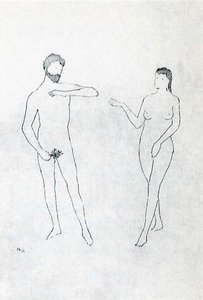
Marcel Duchamp portréja

A 100 legnevezesebb Marcel Duchamp festmény, egy galériaválaszték

Frissítve: október 2026 · rangsorolva népszerűségi pontszámunk alapján (minden mű keresései, látogatásai és megrendelései alapján) · 162 mű Marcel Duchamp alkotása a katalógusunkban

Röviden

Marcel Duchamp hagyatékából a leghíresebb alkotás Nő Görögülés Szinte Három Éppen (1912), amely a Philadelphia városi Philadelphia Művészeti Múzeum gyűjteményében található. Röviddel ezután követik őket Szomorú fiatalember egy vonatban (1911) és Given: 1. The Waterfall, 2. The Illuminating Gas (1966). Katalógusunkban 162 mű található Marcel Duchamp alkotótól; a galéria megőrizte a világ által leginkább csodált 100 darabot, melyeket a dátummal, a múzeummal és a történetükkel együtt mutatunk be.

1887 – 1968, Blainville-Crevon A legtöbb mű: Izraeli Múzeum

Marcel Duchamp legjobb 10 festménye: a galéria válogatása

1
Nő Görögülés Szinte Három Éppen (1912) szerzője Marcel Duchamp

Nő Görögülés Szinte Három Éppen

1912 · Olajfestmény vászonon · Philadelphia Művészeti Múzeum, Philadelphia

Marcel Duchamp „Nude Descending a Staircase, No. 2” (Leámpadozó akt, No. 2) című alkotása (1912) egy olyan ikonikus mű, amely alapjaiban kérdőjelezheti meg a forma és a perspektíva hagyományos fogalmát. Ez a földbreaking festmény a kubista mozgalom điểnusa, amely törekvése a tárgyak egyszerre, több nézőpontból történő ábrázolására irányult. A mű fragmentált, geometrikus kompozíciója képes megragadni a mozgás lényegét, ezzel is meghatározó szerepet adva a modern művészettörténetnek.

2
Szomorú fiatalember egy vonatban (1911) szerzője Marcel Duchamp

Szomorú fiatalember egy vonatban

1911 · Akril festmény vászonon

A tárgyalódás és az érzelmi mélység Ez a lenyűgöző alkotás egy belső hadirult, melankóliában elmerült fiatalembert ábrázol, amely mély sebezhetőség és magányérzetet kelt. A fragmentált, absztrakt ábrázolás arra hívja a nézőt, hogy fedezze fel az belső konfliktusok, az identitás és a létezési gondolkodás témáit, mindezt egy olyan erőteljes alkotással, amely a legmélyebb érzelmi szinten is rezonál. Stilisztikai megközelítés és technika Az 1911-ben készült mű az expresszionizmus és a kubizmus mesteri…

3
Given: 1. The Waterfall, 2. The Illuminating Gas (1966) szerzője Marcel Duchamp

Given: 1. The Waterfall, 2. The Illuminating Gas

1966 · Assemblage

Introduction to the Artist and the Movement Marcel Duchamp, a pioneering artist in the early 20th century, was instrumental in shaping the Cubist art movement. The Cubist Art Movement, which emerged around 1907, aimed to break away from traditional techniques of perspective and representation by emphasizing geometric forms and fragmented images. This revolutionary approach had a profound impact on modern art, influencing not only painting but also sculpture, literature, and…

4
Fúvóka (Duchamp) (1917) szerzője Marcel Duchamp

Fúvóka (Duchamp)

1917 · Kerámia · Tate Modern, London

Marcel Duchamp műve nem csupán egy objektum, hanem egy földrengésként ható esemény a művészettörténelemben. 1917-ben létrehozva ez a látszólag egyszerű kerámia mosogató – vagyis egy *readymade*, ami egyetlen darab – örökre megváltoztatta a művészi alkotás fogalmát és azt, hogy mit tekintünk művetté. A “Fountain”-nal való találkozás egy kihívást jelent: egy szándékos provokáció, amely lebontja évszázadok hagyományait és arra kényszerít bennünket, hogy megkérdőjelezzük a művészi érték építőköveit. A munka ma elsősorban…

5
Rrose Sélavy szerzője Marcel Duchamp

Rrose Sélavy

Fekete-fehér fotográfia

Marcel Duchamp bemutatkozása Marcel Duchamp (1887. július 28. – 1968. október 2.) egy olyan francia-amerikai festő, szobrász, sakkozó és író volt, whose művészete a kubizmushoz, a dadaizmushoz és a konceptuális művészethez köthető. Őt általában az egyik három olyan művésznek tartják, aki meghatározta a 20. század első évtizedeinek művészeti forradalmainak irányát, és jelentős fejlődést hozott a festészetben és a szobrászatban. A festmény: "Rrose Sélavy" Marcel Duchamp "Rrose Sélavy" című alkotása egy…

6
Portrait of Chess Players (1911) szerzője Marcel Duchamp

Portrait of Chess Players

1911 · Akril festmény vászonon

A Pivotal Moment in Modern Art: Duchamp’s ‘Portrait of Chess Players’ Marcel Duchamp's 1911 *Portrait of Chess Players* is more than just a depiction of a game; it’s a landmark work signaling a crucial transition in the artist’s style and foreshadowing his revolutionary impact on 20th-century art. This painting, showcasing Duchamp’s early engagement with Cubism, offers a fascinating glimpse into the intellectual currents shaping modern artistic thought. Deconstructing Reality: Style…

7
L.H.O.O.Q., Mona Lisa hangyával (1919) szerzője Marcel Duchamp

L.H.O.O.Q., Mona Lisa hangyával

1919 · Akril festmény vászonon

A Forradalmi Szellem Utója: Marcel Duchamp L.H.O.O.Q. Monalisa Borstával Marcel Duchamp, egy igazán különleges művész volt – nem csupán festő, szobrász vagy író, hanem a 20. század egyik legjelentősebb filozófusai közé emelkedett is. Korai évei, bár hagyományos családi környezetben teltek voltak művészi álmokkal, már a kezdetektől sejteni lehetett az ikonoklopás iránti vágyát és a művészet alapvető kérdéseivel való foglalkozást. Nem akart egyszerűen a világot ábrázolni; inkább arra törekedett, hogy megkérdezze,…

8
Fountain szerzője Marcel Duchamp

Fountain

Acrylic On Canvas

Marcel Duchamp's 1917 work, *Fountain*, is arguably one of the most significant and controversial artworks of the 20th century. More than just a porcelain urinal signed “R. Mutt,” it represents a radical challenge to traditional definitions of art itself. This piece isn’t about aesthetic beauty in the conventional sense; instead, Duchamp forces us to confront questions surrounding artistic creation, authorship, and the very nature of what qualifies as art.

9
The Bride Stripped Bare by her Bachelors (1923) szerzője Marcel Duchamp

The Bride Stripped Bare by her Bachelors

1923 · Acrylic On Canvas

Marcel Duchamp's "The Bride Stripped Bare by Her Bachelors, Even (The Large Glass)" stands as an unparalleled achievement in the history of art—not for its visual beauty alone, but for its audacious challenge to artistic conventions and its profound exploration of existential themes. Created between 1915 and 1923 during the turbulent years of Dadaism, this monumental assemblage transcends traditional representation, prioritizing intellectual provocation over aesthetic pleasure.

10
Benjamin Peretnek szánt veste (Gilet pour Benjamin Peret) (1958) szerzője Marcel Duchamp

Benjamin Peretnek szánt veste (Gilet pour Benjamin Peret)

1958 · Textilművészet · Izraeli Múzeum, Jeruzsálem

A fény lágyan borul egy textil tárgyra, amely egy semleges, halvány szürke háttér előtt függőben pihen. Ez egy mellkötő, egy olyan ruhadarab, amely strukturált, ritmikus jelenléggel őrzi meg formáját. Mélyvörös és fekete, markáns függőleges csíkok vonulnak végig a szöveten, állandó vizuális pulzálástக் teremtve, amely a gallértól a szegélyig vezeti a tekintetet. Egyfajta súlyt hordoznak ezek a sötét vonalak, ám őket valami sokkal lágyabb, aprócsikindászerű megpillantások szakítják meg. A nyakróton és…

A Marcel Duchamp válogatás folytatódik: 11 – 100

11Network of Stoppages (1914) szerzője Marcel DuchampNetwork of Stoppages1914 · MoMA - Museum of Modern Art 12Tu m' szerzője Marcel DuchampTu m' 13Coffee mill szerzője Marcel DuchampCoffee mill 14Paradicsom szerzője Marcel DuchampParadicsom 15With Hidden Noise szerzője Marcel DuchampWith Hidden Noise 16Reseaux des stoppages (Network of Stoppages), (1914) szerzője Marcel DuchampReseaux des stoppages (Network of Stoppages),1914 17Trébuchet (Trap) (1964) szerzője Marcel DuchampTrébuchet (Trap)1964 · Monnaie de Paris 18Rotoreliefs (Optikai Levelek) szerzője Marcel DuchampRotoreliefs (Optikai Levelek) 19Spiralokat hordozó tányérok (1923) szerzője Marcel DuchampSpiralokat hordozó tányérok1923 20Rotary demisphere (1925) szerzője Marcel DuchampRotary demisphere1925 21El rey y la reina atravesados por desnudos rápidamente szerzője Marcel DuchampEl rey y la reina atravesados por desnudos rápidamente 22Genre Allegory [George Washington] (1943) szerzője Marcel DuchampGenre Allegory [George Washington]1943 23Two Nudes (1910) szerzője Marcel DuchampTwo Nudes1910 24Why not Sneeze, Rose Sélavy (1921) szerzője Marcel DuchampWhy not Sneeze, Rose Sélavy1921 · Tate Modern 25Study for ''Given: 1. The Waterfall, 2. Illuminating Gas'' (1949) szerzője Marcel DuchampStudy for ''Given: 1. The Waterfall, 2. Illuminating Gas''1949 26Rotary demisphere (1924) szerzője Marcel DuchampRotary demisphere1924 27Hat Rack (1917) szerzője Marcel DuchampHat Rack1917 · Izraeli Múzeum 28Japanese Apple Tree (1911) szerzője Marcel DuchampJapanese Apple Tree1911 29Young Girl and Man in Spring szerzője Marcel DuchampYoung Girl and Man in Spring 30L.H.O.O.Q. (1919) szerzője Marcel DuchampL.H.O.O.Q.1919 31Red Nude (1910) szerzője Marcel DuchampRed Nude1910 · Kanadai Nemzeti Galéria 32King and Queen surrounded by swift nudes (1912) szerzője Marcel DuchampKing and Queen surrounded by swift nudes1912 33Boîte-en-valise (De ou par Marcel Duchamp ou Rrose Sélavy) (1961) szerzője Marcel DuchampBoîte-en-valise (De ou par Marcel Duchamp ou Rrose Sélavy)1961 34Rotorelief n°11 - Total Eclipse / Rotorelief n°12 - Fehér spirál (1935) szerzője Marcel DuchampRotorelief n°11 - Total Eclipse / Rotorelief n°12 - Fehér spirál1935 · Centre Pompidou 35Couple of Laundress's Aprons (Tabliers de blanchisseuse) (1959) szerzője Marcel DuchampCouple of Laundress's Aprons (Tabliers de blanchisseuse)1959 · Izraeli Múzeum 36El rey y la reina rodeados por desnudos rápidos szerzője Marcel DuchampEl rey y la reina rodeados por desnudos rápidos 37Átmenet a tündörből menyasszonylle lettvé (1912) szerzője Marcel DuchampÁtmenet a tündörből menyasszonylle lettvé1912 38Portrait (Dulcinea) (1911) szerzője Marcel DuchampPortrait (Dulcinea)1911 39The Chess Players (1911) szerzője Marcel DuchampThe Chess Players1911 40Bottle Rack (1914) szerzője Marcel DuchampBottle Rack1914 · Philadelphia Művészeti Múzeum 41Rotary Glass Plates (Precision Optics) (1920) szerzője Marcel DuchampRotary Glass Plates (Precision Optics)1920 42Selected Details after Courbet (1968) szerzője Marcel DuchampSelected Details after Courbet1968 43A menyasszony (1912) szerzője Marcel DuchampA menyasszony1912 · Philadelphia Művészeti Múzeum 44Bride, Philadelphia Museum of Art (1912) szerzője Marcel DuchampBride, Philadelphia Museum of Art1912 45With My Tongue in My Cheek (1959) szerzője Marcel DuchampWith My Tongue in My Cheek1959 46Bare Stripped Bride (1968) szerzője Marcel DuchampBare Stripped Bride1968 47Selected Details after Ingres II (1968) szerzője Marcel DuchampSelected Details after Ingres II1968 48Chocolate Grinder (1914) szerzője Marcel DuchampChocolate Grinder1914 49Templom Blainville-ben (1902) szerzője Marcel DuchampTemplom Blainville-ben1902 50Selected Details after Cranach (1968) szerzője Marcel DuchampSelected Details after Cranach1968 51La mariée mise à nu par ses célibataires, même (Grande vetro) szerzője Marcel DuchampLa mariée mise à nu par ses célibataires, même (Grande vetro) 52Alegória de Género (George Washington) szerzője Marcel DuchampAlegória de Género (George Washington) 53Water and gas on all the floor szerzője Marcel DuchampWater and gas on all the floor 54Rotorelief 2 (Optical Disks) (1935) szerzője Marcel DuchampRotorelief 2 (Optical Disks)1935 55Chauvel (1910) szerzője Marcel DuchampChauvel1910 56Dándose 1. La caida de agua, 2. El gas de alumbrado szerzője Marcel DuchampDándose 1. La caida de agua, 2. El gas de alumbrado 57The Large Glass szerzője Marcel DuchampThe Large Glass 58Bottlerack (1914) szerzője Marcel DuchampBottlerack1914 59In Advance of the Broken Arm (1915) szerzője Marcel DuchampIn Advance of the Broken Arm1915 · Izraeli Múzeum 60Rotoreliefs (Optical Discs) 2 szerzője Marcel DuchampRotoreliefs (Optical Discs) 2 61Rotating glass plate (optical precision) szerzője Marcel DuchampRotating glass plate (optical precision) 62Sculpture-morte szerzője Marcel DuchampSculpture-morte 63Glider Containing a Water Mill in Neighboring Metals (1915) szerzője Marcel DuchampGlider Containing a Water Mill in Neighboring Metals1915 · Philadelphia Művészeti Múzeum 64Selected Details after Rodin (1968) szerzője Marcel DuchampSelected Details after Rodin1968 65Father szerzője Marcel DuchampFather 66Apolinere Enamelled (1916) szerzője Marcel DuchampApolinere Enamelled1916 · Izraeli Múzeum 6750 cc of Paris Air (1919) szerzője Marcel Duchamp50 cc of Paris Air1919 68Comb szerzője Marcel DuchampComb 69Parva Domus, Magna Quies (1902) szerzője Marcel DuchampParva Domus, Magna Quies1902 70Chocolate grinder No 2, Oil paint, thread and (1914) szerzője Marcel DuchampChocolate grinder No 2, Oil paint, thread and1914 71Rotorelief 1 (Optical Disks) (1935) szerzője Marcel DuchampRotorelief 1 (Optical Disks)1935 72After love (1968) szerzője Marcel DuchampAfter love1968 73Chocolate Grinder (1914) szerzője Marcel DuchampChocolate Grinder1914 74King and Queen (1968) szerzője Marcel DuchampKing and Queen1968 75Female Fig Leaf szerzője Marcel DuchampFemale Fig Leaf 76Monte Carlo Bond szerzője Marcel DuchampMonte Carlo BondSwiss Institute / Contemporary Art New York 77Nine malice moulds (1915) szerzője Marcel DuchampNine malice moulds1915 78Chessboard (Echiquier) szerzője Marcel DuchampChessboard (Echiquier)Izraeli Múzeum 79Cigarette szerzője Marcel DuchampCigarette 80Portrait of Yvonne Duchamp (1901) szerzője Marcel DuchampPortrait of Yvonne Duchamp1901 81House among Apple Trees (1907) szerzője Marcel DuchampHouse among Apple Trees1907 · Izraeli Múzeum 82Pulled at Four Pins szerzője Marcel DuchampPulled at Four Pins 83Paris Air szerzője Marcel DuchampParis Air 84Les joueurs d'échecs szerzője Marcel DuchampLes joueurs d'échecs 85Handmade Stereoticon Lapát szerzője Marcel DuchampHandmade Stereoticon Lapát 86Three Standard Stoppages szerzője Marcel DuchampThree Standard Stoppages 87Se ruega tocar szerzője Marcel DuchampSe ruega tocar 88Con mi lengua en mi mejilla szerzője Marcel DuchampCon mi lengua en mi mejilla 89bicyclewheel001 szerzője Marcel Duchampbicyclewheel001 90Bottle Dryer szerzője Marcel DuchampBottle Dryer 91Apolinère Enameled szerzője Marcel DuchampApolinère Enameled 92Suspension (Bec Auer) szerzője Marcel DuchampSuspension (Bec Auer) 93Transition of Virgin into a Bride_Le Passage de la Vierge à la Mariée szerzője Marcel DuchampTransition of Virgin into a Bride_Le Passage de la Vierge à la Mariée 94Trap szerzője Marcel DuchampTrap 95Portrait of Gustave Candel's Mother (1912) szerzője Marcel DuchampPortrait of Gustave Candel's Mother1912 96Landscape at Blainville (1902) szerzője Marcel DuchampLandscape at Blainville1902 97Obligation Montecarlo - Monte Carlo Bond szerzője Marcel DuchampObligation Montecarlo - Monte Carlo Bond 98Poster for the Exhibition 50th Anniversary of the Famous International Armory show 1913 szerzője Marcel DuchampPoster for the Exhibition 50th Anniversary of the Famous International Armory show 1913 99Etant donnés, gas lighting and the waterfall szerzője Marcel DuchampEtant donnés, gas lighting and the waterfall 100Sink Stopper szerzője Marcel DuchampSink Stopper

Marcel Duchamp híres festményei, korszakonként

A témák, amelyek Marcel Duchamp figyelmét meghúzták

A négy leggyakorobban előforduló téma ebben az eredeti művekben, mindegyik a legkiválóbb példájával.

A műemlékek, amelyek Marcel Duchamp eredeti műveit őrzik

A 8 olyan múzeum, amely a legtöbb ezen az oldalon szereplő festményet őrzi.

Múzeumok Város Marcel Duchamp művei Ebből a listából származó festmények
Izraeli Múzeum, JeruzsálemIzraeli Múzeum Jeruzsálem 7 Benjamin Peretnek szánt veste (Gilet pour Benjamin Peret), Hat Rack, Couple of Laundress's Aprons (Tabliers de blanchisseuse)
Philadelphia Művészeti Múzeum, PhiladelphiaPhiladelphia Művészeti Múzeum Philadelphia 8 Nő Görögülés Szinte Három Éppen, Bottle Rack, A menyasszony
Tate Modern, LondonTate Modern London 2 Fúvóka (Duchamp), Why not Sneeze, Rose Sélavy
MoMA - Museum of Modern Art, New YorkMoMA - Museum of Modern Art New York 2 Network of Stoppages
Monnaie de Paris, ParisMonnaie de Paris Paris 2 Trébuchet (Trap)
Kanadai Nemzeti Galéria, OttawaKanadai Nemzeti Galéria Ottawa 1 Red Nude
Centre Pompidou, PárizsCentre Pompidou Párizs 1 Rotorelief n°11 - Total Eclipse / Rotorelief n°12 - Fehér spirál
Swiss Institute / Contemporary Art New York, New York CitySwiss Institute / Contemporary Art New York New York City 1 Monte Carlo Bond

Marcel Duchamp évtizede folgtva: az eredeti művek, amelyek meghatározzák az egyes korzakot

Művek évtizedenként

Váassz ki egy évtizedet, hogy megnézhesd az azt meghatározó eredetiműveket.

Gyűjtői kérdések Marcel Duchamp festményeivel kapcsolatban

Melyik művel a(z) Marcel Duchamp a leghíresebb?Fedje fel a választ

Nő Görögülés Szinte Három Éppen (1912), Philadelphia Művészeti Múzeum, Philadelphia. Ezután Szomorú fiatalember egy vonatban (1911) és Given: 1. The Waterfall, 2. The Illuminating Gas (1966) következik.

Hány éves volt Marcel Duchamp, amikor a Nő Görögülés Szinte Három Éppen készült?Fedje fel a választ

25 éves: Nő Görögülés Szinte Három Éppen 1912-ből származik, Marcel Duchamp pedig 1887-ben született.

Melyek a tíz leghíresebb Marcel Duchamp festmény?Fedje fel a választ

Nő Görögülés Szinte Három Éppen, Szomorú fiatalember egy vonatban, Given: 1. The Waterfall, 2. The Illuminating Gas, Fúvóka (Duchamp), Rrose Sélavy, Portrait of Chess Players, L.H.O.O.Q., Mona Lisa hangyával, Fountain, The Bride Stripped Bare by her Bachelors és Benjamin Peretnek szánt veste (Gilet pour Benjamin Peret). A fenti rangsor a művek évszamarát és a múzeumát jelzi.

Hány festményet hagyott hátra Marcel Duchamp?Fedje fel a választ

Katalógusunkban 162 mű található Marcel Duchamp alkotótól, 1901 és 1968 év közötti időszakból.

Mely múzeumokban állnak Marcel Duchamp remekművei?Fedje fel a választ

Leginkább Izraeli Múzeum (Jeruzsálem), Philadelphia Művészeti Múzeum (Philadelphia) és Tate Modern (London) található. A fenti múzeumi táblázatban mindegyik felsorolásra került.

Mely években festette Marcel Duchamp leghíresebb műveit?Fedje fel a választ

1910s alatt: a jelen laphonon található 100 műből 30 készült ebben az időszakban, köztük Nő Görögülés Szinte Három Éppen.

Mikszétek az első és az utolsó híres eredeti műve a(z) Marcel Duchamp alkotótól?Fedje fel a választ

Ezen az oldalon a leghitelesebb Portrait of Yvonne Duchamp (1901), a legutóbbi pedig Selected Details after Courbet (1968).

Milyen témaköröket választott leggyakrabban Marcel Duchamp?Fedje fel a választ

Conceptual art (32), Readymade (15) és Sculpture (8), a jelen oldalon található 100 műművészeti alkotás között.

Melyik technikát alkalmazta leggyakrabban Marcel Duchamp?Fedje fel a választ

Acrylic On Canvas, a jelen oldalon található 100 műből 31 darab esetén.

Mely Marcel Duchamp művei láthatóak a Izraeli Múzeum kiállتításán?Fedje fel a választ

Benjamin Peretnek szánt veste (Gilet pour Benjamin Peret), Hat Rack és Couple of Laundress's Aprons (Tabliers de blanchisseuse): a Izraeli Múzeum, Jeruzsálem 7 művet őrzi ezen az oldalon.

Marcel Duchamp: életmű és életút

The Life and Art of Marcel Duchamp

Born on July 28, 1887, in Blainville, Normandy, France, Marcel Duchamp entered a world where the impulse to create was deeply embedded in his very blood. He was the fourth of seven children born to Eugene and Lucie Duchamp. This was a household of makers and thinkers; his siblings shared this creative restlessness, as his brothers Jacques Villon and Raymond Duchamp-Villon, along with his sister Suzanne Duchamp-Crotti, all pursued lives as artists. While he would eventually become a French American figure of immense complexity, his origins remained rooted in the quietude of Normandy.

His life was never a singular pursuit of the brush or the chisel. He was a man of many masks and many interests, moving through the world as an artist, an inventor, and a dedicated chess player. He even adopted a female alter ego, Rrose Sélavy, to further complicate the boundaries of identity. This restless spirit drove him to move between the cultural centers of Paris and New York, always seeking to dismantle the certainties of his era. He did not merely want to paint the world; he wanted to rethink the very mechanics of how we perceive it.

His contributions to the modern era were as varied as they were unexpected. He looked toward the machine and the everyday object to find a new language for the intellect. His work often appeared in these forms:

Early Life, Family and Training

In the quietude of Blainville-Crevon, Normandy, France, a young boy named Henri-Robert-Marcel Duchamp began a life that would eventually unsettle the very foundations of creativity. He was born into a family where art was a familiar language; his brothers, Jacques Villon and Raymond Duchamp-Villon, would both find their own paths as painters and sculptors. This domestic atmosphere of expression nurtured his early inclinations, leading him toward the formal study of art. He sought out the Académie Julian in Paris, where he spent his time between 1904 and 1905, though his heart often wandered toward the billiards table rather than the studio. He also spent a year at the Ecole des Beaux Artes, a period of study that did not result in a long-term commitment to academic tradition.

The colors and forms of his youth were shaped by the shifting tides of the era, as he found himself drawn to the intense palettes of Fauvism and the structural inquiries of Post-Impressionism. However, his path was not a straight line of academic progression. In 1905, the requirements of the state called him to begin his compulsory military service with the 39th Infantry Regiment. During this time, he found himself in Rouen, working for a printer. It was here, amidst the scent of ink and the rhythm of the press, that he mastered the technicalities of typography and various printing processes. These practical skills, learned far from the high salons of Paris, would later inform his understanding of how objects and images are reproduced and perceived.

Artistic Evolution in Paris

As the young artist moved through the streets of Paris, his presence in the art world began to take shape through the major exhibitions of the time. By 1909, he was already showing his work at the Salon des Indépendants and the Salon d’Automne, seeking a place among the creators of his era. He found himself drawn to the ideas of Paul Cézanne, whose approach to form and structure left a mark on his developing vision. This period was not merely about learning to paint, but about finding a way to express the complexities of a changing world.

The year 1911 brought a significant shift as he became associated with a Cubist group. This engagement with fragmented forms and multiple perspectives pushed him away from traditional representation. It was during this time that he produced Coffee Mill, a work that signaled his growing interest in the mechanical and the conceptual. He found himself preoccupied with the idea of the fourth dimension, seeking ways to depict motion and time within the static confines of a canvas. This intellectual hunger drove him to look beyond the surface of things, questioning how much of art was truly meant for the eye alone.

The Radical Years in New York

Upon arriving in the United States, Marcel Duchamp found himself in a landscape that was ripe for the disruption he carried in his mind. He had been in the country for less than two years when he would perform his most famous act of subversion. In the bustling intellectual circles of New York, he was welcomed with curiosity, finding a place among thinkers and creators who were eager to push against the boundaries of tradition. To sustain himself during these formative years, he taught French, a practical necessity that allowed him the freedom to pursue his more cerebral interests.

It was within this environment that he became a central figure in the New York proto-Dada movement. He moved through the city alongside Francis Picabia, Man Ray, and Beatrice Wood, contributing to a spirit of rebellion that sought to dismantle the established order. His presence helped to shape the very foundations of the New York Dada movement, turning the city into a laboratory for ideas that challenged the very definition of what an artist might do. He was not merely a participant in this upheaval; he was a catalyst for it.

His connection to the American landscape deepened over the decades. Though he had arrived as a visitor seeking new ways to express the intellect, he eventually became a naturalized American citizen in 1955. This period of his life was defined by a refusal to settle into the comfortable role of a professional painter, choosing instead to engage with the city as a space for profound, often unsettling, conceptual inquiry.

Technique, Style and the Readymade

He grew weary of what he called "retinal art," those works intended only to please the eye with their surface beauty. To escape this trap, he turned his mind toward the concept behind the object, shifting the focus from visual pleasure to the intellect. This transition led him to create the readymades around 1914. These were not chosen for their beauty or their ugliness, but through a sense of visual indifference. By selecting ordinary, manufactured items and presenting them as art, he stripped away the necessity of traditional craftsmanship. He sought to bypass the artist's hand entirely, favoring the power of a deliberate choice over the skill of the brush.

His practice was a restless, shifting thing that refused to settle into a single mode. While he engaged with the fractured perspectives of Cubism, he also moved through the chaos of Dada and the cerebral depths of Conceptual art. He worked with a vast array of mediums, from the tactile nature of sculpture and collage to the fleeting qualities of short films and even the presence of his own body. He often played with the boundaries of identity, using a female alter ego known as Rrose Sélavy to explore the fluidity of gender. Through wordplay and the element of chance, he turned the act of creation into a game of logic and subversion.

Key Works and Major Innovations

The shift from painting to the conceptual began to take shape through his fascination with motion and the fragmentation of form. In 1912, he produced Nude Descending a Staircase, No. 2, a work that captured the mechanistic motion of a figure through a series of overlapping, superimposed facets. This approach sought to depict movement rather than a static pose. By 1913, his interests moved toward the assembly of found objects, seen in the Bicycle Wheel, where a wheel and fork were mounted upon a wooden stool. This act of selection marked a departure from traditional craftsmanship, favoring the idea over the manual execution of the object.

As he moved into the radical atmosphere of New York, his provocations grew more direct. He took an ordinary porcelain urinal, signed it "R. Mutt," and presented it as Fountain in 1917. This readymade sculpture challenged the very definition of what an artist does, suggesting that the act of choosing an object could constitute art. He continued this subversion with the Bottle Rack in 1914, and later, in 1919, he took a postcard of the Mona Lisa and defaced it with a mustache and goatee, calling the work L.H.O.O.Q.. These pieces were intended to disrupt the viewer's expectations and force a reconsideration of aesthetic judgment.

His most complex and enigmatic construction, The Large Glass, occupied his thoughts for many years, as he worked on it between 1915 and 1923. This piece, also known as The Bride Stripped Bare by her Bachelors, Even, utilized lead foil and wire to explore intricate, symbolic imagery. Through these varied experiments, he moved the focus of art away from the eye and toward the mind.

Later Years and Death

After his restless years in America, Duchamp returned to Paris in 1923. He remained in the city until 1942, a period during which he largely stepped away from the traditional art world. The intellectual rigor that once fueled his radical provocations found a new outlet in the quiet, strategic complexities of chess. He spent much of this time focused on the game, a pursuit that demanded the same mental intensity he had once applied to his conceptual inquiries.

In 1954, he found companionship in Alexina Sattler, whom he married in a ceremony in New York City. Their life together was a devoted one, spanning the years as he navigated his place in a changing cultural landscape. He eventually became a naturalized citizen of the United States in 1955, though his roots remained deeply tied to the French soil. He passed away on October 2, 1968, in Neuilly-sur-Seine, France.

Legacy and Enduring Influence

The ripples from his provocations reached far beyond the small circles of the avant-garde, eventually reshaping the very foundations of how we perceive creativity. He is often regarded as the progenitor of conceptual art, a shift that moved the focus away from the physical object and toward the intellect. By prioritizing the idea over the visual result, he fundamentally altered the trajectory of the plastic arts during the opening decades of the 20th century. This change was not a sudden break but a slow, profound transformation that allowed for the emergence of Surrealism, Minimalism, and Pop Art. He helped define a new era where the artist's intent became the primary engine of meaning.

His influence was felt most strongly in the way he dismantled the necessity of traditional skill. He proposed a concept known as the art coefficient, an idea that examined the relationship between what an artist intends and what is actually expressed. This notion laid the groundwork for a later generation of artists who would continue to explore the boundaries of appropriation and the role of the spectator. He did not merely create objects; he created new ways of thinking about the act of creation itself. His presence in the history of art remains a constant, challenging the boundaries of what can be considered a work of art.

Where to See the Works Today

To follow the traces of his restless intellect, one might travel to the Philadelphia Museum of Art. This institution holds the largest collection of his work, preserving the breadth of a career that refused to stay still. It is here that the weight of his influence is most tangible, as the museum keeps a vast assembly of his ideas and objects gathered from across his life.

In London, the Tate Modern preserves the porcelain urinal known as Fountain. This object, which once caused such a stir when it was submitted to an exhibition, remains a central part of the city's collection. Meanwhile, the Centre Pompidou in Paris keeps his more experimental, kinetic explorations, including Rotorelief n°11 and Rotorelief n°12. These works reflect his fascination with motion and the way an object might trick the eye.

Other pieces have found homes in specialized institutions that reflect his varied interests. The Monnaie de Paris holds Trébuchet (Trap), a work that speaks to his continued engagement with form and concept long after his early years. To see these works is to encounter the physical remnants of a man who sought to move art from the eye to the mind.

Minden 162 műmű Marcel Duchamp alkotása →