Jan Gossaert portréja

Jan Gossaert festményei: A 100 leghíresebb alkotás, egy galéria szemével

Frissítve: november 2026 · rangsorolva népszerűségi pontszámunk alapján (minden mű keresései, látogatásai és megrendelései alapján) · 241 mű Jan Gossaert alkotása a katalógusunkban

Röviden

A galéria szerint Jan Gossaert leghíresebb festménye a Adam and Eve (1525), amelynek eredeti példája a Rhode Island School of Design Museum of Art múzeumában található, Providence városában. Portrait of a man (1528) és Man of Sorrow (1525) kiegészítik azt a triót, amelyet minden szem felismer. A katalógusunkban szereplő 241 művész Jan Gossaert alkotásából a galéria az alábbi 100 leghíresebbet mutatja be, amelyek mind egyedi originális művek, a készítés évszámával, a múzeum megnevezésével és a különlegességük leírásával.

1478 – 1532, Maubeuge Északi reneszánsz A legtöbb mű: Statens Museum for Kunst

A galéria top 10 Jan Gossaert festménye

1
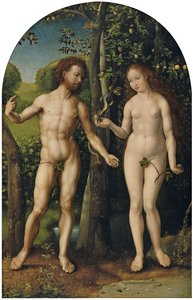
Adam and Eve (1525) (1889) -ja Jan Gossaert

Adam and Eve

In the profound stillness of Jan Gossaert’s 1525 masterpiece, Adam and Eve, we are invited into a moment of primordial intimacy that transcends the boundaries of time. This breathtaking oil painting serves as a cornerstone of Northern Renaissance artistry, capturing the very dawn of humanity with a level of anatomical precision and dramatic flair that was revolutionary for its era. The composition centers on the tender, almost vulnerable embrace of…

2
Portrait of a man (1528) (1889) -ja Jan Gossaert

Portrait of a man

1528 · Oil On Panel · Belgiai Képzőművészeti Múzeumok, Brüsszel

The gaze of the subject in Portrait of a man by Jan Gossaert meets the viewer with a steady, unwavering presence. Created about 1530, this work captures a man seated within a space that feels both cramped and cozy, a private nook where the tools of a specific life reside. The artist, Jan Gossaert, who is also known by the moniker Mabuse, renders the figure with a profound sense of…

3
Man of Sorrow (1525) (1889) -ja Jan Gossaert

Man of Sorrow

1525 · Oil On Panel · Krakói Művészeti Nemzeti Múzeum, Krakov

The body of Christ hangs heavy, a pale anchor in a sea of deep reds and shadows. Every muscle is rendered with a sharp, anatomical clarity that feels almost tactile, as if the skin might still hold warmth despite the stillness of death. Light strikes the torso from a single direction, carving out the hollows of the ribs and the tension in the limbs. Around this central suffering, figures gather…

4
Portrait of a Man (1525) (1889) -ja Jan Gossaert

Portrait of a Man

1525 · Oil On Panel · Antwerpeni Királyi Szépművészeti Múzeum, Antwerpen

Step closer and observe the stillness of this young man. He is presented in a bust-length view, framed within a gentle oval that focuses our attention entirely on his psychological state. There is a certain gravity in his gaze, a stoic and thoughtful expression that suggests a life of intellectual depth and high social standing. He does not perform for us; he simply exists in a moment of quiet contemplation.…

5
Two Wings from a Triptych (exterior) (1521) (1889) -ja Jan Gossaert

Two Wings from a Triptych (exterior)

1521 · Oil On Panel

The heavy wooden panels of the triptych stand partially open, revealing a world caught in a moment of sacred stillness. These two exterior wings, crafted in 1521, act as a threshold between the mundane and the divine. On one side, a woman holds a book, her gaze steady and quiet; on the other, an angel appears, bringing a celestial presence to the earthly realm. They exist within a framework of…

6
Virgin and child enthroned (1527) (1889) -ja Jan Gossaert

Virgin and child enthroned

1527 · Oil On Canvas · Kunsthistorisches Museum, Bécs

To gaze upon Jan Gossaert’s Virgin and Child Enthroned is to step directly into the luminous, deeply spiritual atmosphere of the Northern Renaissance. This masterpiece, painted in 1527, transcends mere portraiture; it is a profound theological statement rendered with breathtaking technical skill. At its heart sits the Virgin Mary, regal and serene, enthroned as she cradles the infant Jesus. The immediate visual impact is drawn to the vibrant sweep of…

7
Portrait of a man (1527) (1889) -ja Jan Gossaert

Portrait of a man

1527 · Oil On Panel · Kunsthistorisches Museum, Bécs

A middle-aged man is captured in a bust-length composition, his gaze directed toward the left of the frame. He wears a dark, beret-style hat and a black doublet over a white undershirt, with a single gold ring featuring a gemstone visible on his hand. The lighting is directional, descending from the upper left to cast soft shadows across the right side of his face and neck. This chiaroscuro effect provides…

8
The Holy Family (1507) (1889) -ja Jan Gossaert

The Holy Family

1507 · Oil On Panel · J. Paul Getty Múzeum, Los Angeles

The Holy Family is a painting by Jan Gossaert, executed in 1507. This oil on panel work captures a quiet, domestic moment within a grander architectural framework. The Virgin Mary occupies the center of the scene, her hands cradling the Christ Child. Their presence forms the heart of the composition, anchored by the weight of their figures against the stone and sky.

9
Hercules and Deianeira (1517) (1889) -ja Jan Gossaert

Hercules and Deianeira

1517 · Oil On Panel · The Barber Institute of Fine Arts, Birmingham

Two figures sit locked in a quiet, muscular embrace. Hercules and Deianeira occupy a marble-paneled niche, their limbs entwined in a way that feels both heavy and strangely delicate. The man’s skin carries the sculptural weight of antiquity, his form defined by the tension of bone and muscle. Beside him, Deianeira rests, her pose a study in soft curves and sudden stillness. They do not look at the viewer; they…

10
Triptych of the Holy Family (1501) (1889) -ja Jan Gossaert

Triptych of the Holy Family

1501 · Oil On Panel · Nemzeti Ókori Művészeti Múzeum, Lissabon

The Triptych of the Holy Family is a religious oil on panel painting dating to 1501. This work is presented in a classic triptych format, housed within an ornate, carved wooden frame featuring scalloped tops. The central panel is the largest and most complex, depicting the Holy Family—the Virgin Mary, Saint Joseph, and the Christ Child—arranged in a pyramidal composition and surrounded by an angelic host within a lush landscape.…

Jan Gossaert festményei, 11. helyezéstől 100. helyezésig

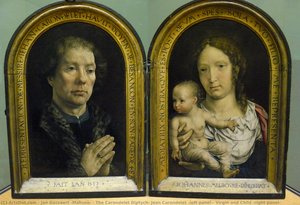
11The Virgin preparing the bath of the Child (1500) (1889) -ja Jan GossaertThe Virgin preparing the bath of the Child1500 · Bob Jones University Museum and Gallery 12Madonna with the Child (1500) (1889) -ja Jan GossaertMadonna with the Child1500 · Hämeenlinna Art Museum 13Virgin and child in the veil (1500) (1889) -ja Jan GossaertVirgin and child in the veil1500 · Belgiai Képzőművészeti Múzeumok 14Madonna with child (1495) (1889) -ja Jan GossaertMadonna with child1495 15Portrait of Isabella of Austria (1514) (1889) -ja Jan GossaertPortrait of Isabella of Austria1514 16Floris van Egmond, Count of Buren (1510) (1889) -ja Jan GossaertFloris van Egmond, Count of Buren1510 · Brighton Museum & Art Gallery 17Saint Jerome (1512) (1889) -ja Jan GossaertSaint Jerome1512 · Statens Museum for Kunst 18Christ on the Mount of Olives (1507) (1889) -ja Jan GossaertChrist on the Mount of Olives1507 · Gemäldegalerie 19Portrait of a Man (1515) (1889) -ja Jan GossaertPortrait of a Man1515 · Pushkin állami művészeti múzeum 20The Beheading of St John the Baptist (1510) (1889) -ja Jan GossaertThe Beheading of St John the Baptist1510 · École Nationale Supérieure des Beaux-Arts 21Saint Jerome Penitent [right panel] (1512) (1889) -ja Jan GossaertSaint Jerome Penitent [right panel]1512 · National Gallery of Art 22Saint Jerome Penitent [left panel] (1512) (1889) -ja Jan GossaertSaint Jerome Penitent [left panel]1512 · National Gallery of Art 23The Malvagna Altarpiece (centre panel, detail) (1513) (1889) -ja Jan GossaertThe Malvagna Altarpiece (centre panel, detail)1513 24Agony in the Garden (1510) (1889) -ja Jan GossaertAgony in the Garden1510 25Holy Family with Coats of Arms of Charles... (1528) (1889) -ja Jan GossaertHoly Family with Coats of Arms of Charles...1528 · Saint Louis Art Museum 26Virgin and Child in a Landscape (1531) (1889) -ja Jan GossaertVirgin and Child in a Landscape1531 · Cleveland Museum of Art 27Self-portrait (1525) (1889) -ja Jan GossaertSelf-portrait1525 · Currier Gallery of Art 28Madonna and Child (1529) (1889) -ja Jan GossaertMadonna and Child1529 · Rijksmuseum Twenthe 29Christ on Mount Olive (1525) (1889) -ja Jan GossaertChrist on Mount Olive1525 · Bavári Állami Festırménygyűjtemények 30The Holy Family (1520) (1889) -ja Jan GossaertThe Holy Family1520 · Museum of Fine Arts, Houston 31Portrait of Henry III, Count of Nassau (1530) (1889) -ja Jan GossaertPortrait of Henry III, Count of Nassau1530 · Museu Nacional d'Art de Catalunya 32Christ sitting on the Cold Stone (1531) (1889) -ja Jan GossaertChrist sitting on the Cold Stone1531 · Antwerpeni Királyi Szépművészeti Múzeum 33Virgin and Child with a Patron (1530) (1889) -ja Jan GossaertVirgin and Child with a Patron1530 · Statens Museum for Kunst 34Portrait of Anna de Bergh, Marquise de Veere (1530) (1889) -ja Jan GossaertPortrait of Anna de Bergh, Marquise de Veere1530 · McNay Art Museum 35Saint Luke painting the Virgin (1520) (1889) -ja Jan GossaertSaint Luke painting the Virgin1520 · National Gallery Prague 36Portrait of a Man (1524) (1889) -ja Jan GossaertPortrait of a Man1524 37Madonna with Child Jesus (1531) (1889) -ja Jan GossaertMadonna with Child Jesus1531 · Varsói Nemzeti Múzeum 38Christus rust na de geseling (1527) (1889) -ja Jan GossaertChristus rust na de geseling1527 · Staatliche Kunsthalle Karlsruhe 39Madonna and Child (1532) (1889) -ja Jan GossaertMadonna and Child1532 40Madonna and Child playing with the veil (1530) (1889) -ja Jan GossaertMadonna and Child playing with the veil1530 41Cain Killing Abel (1525) (1889) -ja Jan GossaertCain Killing Abel1525 42Portrait of a Man (1524) (1889) -ja Jan GossaertPortrait of a Man1524 43Scenes from the Life of St Giles (1520) (1889) -ja Jan GossaertScenes from the Life of St Giles1520 · Statens Museum for Kunst 44The Martyrdom of St Cyriacus and His Companions (1520) (1889) -ja Jan GossaertThe Martyrdom of St Cyriacus and His Companions1520 · Statens Museum for Kunst 45Virgin Mary, Christ Blessing, and St John the Baptist (Deesis) (1525) (1889) -ja Jan GossaertVirgin Mary, Christ Blessing, and St John the Baptist (Deesis)1525 46Abbot Johann Ingenray (1535) (1889) -ja Jan GossaertAbbot Johann Ingenray1535 · Detroit Institute of Arts 47The Adoration of the Kings (1510) (1889) -ja Jan GossaertThe Adoration of the Kings1510 · National Gallery 48Wings of the Norfolk Triptych (1525) (1889) -ja Jan GossaertWings of the Norfolk Triptych1525 · Musées Royaux des Beaux-Arts 49Virgin and Child (1525) (1889) -ja Jan GossaertVirgin and Child1525 · Art Institute of Chicago 50Adam and Eve (1510) (1889) -ja Jan GossaertAdam and Eve1510 · Thyssen-Bornemisza Múzeum 51Danaë (detail) (1527) (1889) -ja Jan GossaertDanaë (detail)1527 · Alte Pinakothek 52The Carondelet Diptych: Jean Carondelet (left panel), Virgin and Child (right panel) (1517) (1889) -ja Jan GossaertThe Carondelet Diptych: Jean Carondelet (left panel), Virgin and Child (right panel)1517 · Louvre Múzeum 53Danaë (1527) (1889) -ja Jan GossaertDanaë1527 · Alte Pinakothek 54Two Kings and a Woman Leaving a Palace (1510) (1889) -ja Jan GossaertTwo Kings and a Woman Leaving a Palace1510 55Madonna and Child (1527) (1889) -ja Jan GossaertMadonna and Child1527 · Museo del Prado 56The Adoration of the Kings (detail) (1500) (1889) -ja Jan GossaertThe Adoration of the Kings (detail)1500 57Holy Family with St. Catherine and St. Barbara (1515) (1889) -ja Jan GossaertHoly Family with St. Catherine and St. Barbara1515 58St Jerome Penitent (1510) (1889) -ja Jan GossaertSt Jerome Penitent1510 59Hercules and Deianira (1517) (1889) -ja Jan GossaertHercules and Deianira1517 · Barber Institute of Fine Arts 60Hercules of the Forum Boarium (1509) (1889) -ja Jan GossaertHercules of the Forum Boarium1509 61Neptune and Amphitrite (1516) (1889) -ja Jan GossaertNeptune and Amphitrite1516 62Virgin and Child with Musical Angels (1510) (1889) -ja Jan GossaertVirgin and Child with Musical Angels1510 63A Reliquary (1510) (1889) -ja Jan GossaertA Reliquary1510 · Pierpont Morgan Könyvtár és Múzeum 64The Agony in the Garden (1510) (1889) -ja Jan GossaertThe Agony in the Garden1510 65Standing Warrior in Fantastic Armour (1509) (1889) -ja Jan GossaertStanding Warrior in Fantastic Armour1509 66The Carondelet Diptych left wing, Jean Carondelet (1517) (1889) -ja Jan GossaertThe Carondelet Diptych left wing, Jean Carondelet1517 67St John the Evangelist on Patmos (1515) (1889) -ja Jan GossaertSt John the Evangelist on Patmos1515 68The Holy Family Seated at the Foot of a Tree (1510) (1889) -ja Jan GossaertThe Holy Family Seated at the Foot of a Tree1510 69Apollo Citharoedus of the Casa Sassi (1509) (1889) -ja Jan GossaertApollo Citharoedus of the Casa Sassi1509 70Neptune and Amphitrite (detail) (1516) (1889) -ja Jan GossaertNeptune and Amphitrite (detail)1516 71The Malvagna Altarpiece (right wing, detail) (1513) (1889) -ja Jan GossaertThe Malvagna Altarpiece (right wing, detail)1513 72Jean Carondelet (1503) (1889) -ja Jan GossaertJean Carondelet1503 · Toledo Művészeti Múzeum 73The Adoration of the Magi (1515) (1889) -ja Jan GossaertThe Adoration of the Magi1515 74Agony in the Garden (detail) (1510) (1889) -ja Jan GossaertAgony in the Garden (detail)1510 75Bust of a Warrior in Fantastic Armour (1509) (1889) -ja Jan GossaertBust of a Warrior in Fantastic Armour1509 76Study after the Spinario (detail) (1509) (1889) -ja Jan GossaertStudy after the Spinario (detail)1509 · Universiteitsbibliotheek 77The Doria Pamphilj Diptych (right wing) (1510) (1889) -ja Jan GossaertThe Doria Pamphilj Diptych (right wing)1510 · Galleria Doria Pamphilj 78Carondelet Diptych (left wing) (1517) (1889) -ja Jan GossaertCarondelet Diptych (left wing)1517 79Study after the Spinario (recto) (1509) (1889) -ja Jan GossaertStudy after the Spinario (recto)1509 · Universiteitsbibliotheek 80The Malvagna Altarpiece (exterior wings) (1513) (1889) -ja Jan GossaertThe Malvagna Altarpiece (exterior wings)1513 81The Mystic Marriage of St Catherine (1503) (1889) -ja Jan GossaertThe Mystic Marriage of St Catherine1503 · Statens Museum for Kunst 82Carondelet Diptych (right wing) (1517) (1889) -ja Jan GossaertCarondelet Diptych (right wing)1517 83Emperor Augustus and the Tiburtine Sibyl (1503) (1889) -ja Jan GossaertEmperor Augustus and the Tiburtine Sibyl1503 84Carondelet Diptych (1517) (1889) -ja Jan GossaertCarondelet Diptych1517 85The Malvagna Altarpiece (side wings) (1513) (1889) -ja Jan GossaertThe Malvagna Altarpiece (side wings)1513 86View of the Colosseum Seen from the West (1509) (1889) -ja Jan GossaertView of the Colosseum Seen from the West1509 87Carondelet Diptych (verso) (1517) (1889) -ja Jan GossaertCarondelet Diptych (verso)1517 88The Malvagna Altarpiece (centre panel) (1513) (1889) -ja Jan GossaertThe Malvagna Altarpiece (centre panel)1513 89Portrait of a Man, possibly Jan Snoeck (1530) (1889) -ja Jan GossaertPortrait of a Man, possibly Jan Snoeck1530 · National Gallery of Art 90The Mocking of Christ or the Man of Sorrows (1525) (1889) -ja Jan GossaertThe Mocking of Christ or the Man of Sorrows1525 91King Christian II of Denmark (1525) (1889) -ja Jan GossaertKing Christian II of Denmark1525 92Virgin and Child Seated at the Foot of a Tree (1522) (1889) -ja Jan GossaertVirgin and Child Seated at the Foot of a Tree1522 93The children of King Christian II of Denmark, Norway and Sweden (1526) (1889) -ja Jan GossaertThe children of King Christian II of Denmark, Norway and Sweden1526 94Portrait of a Merchant, National (1530) (1889) -ja Jan GossaertPortrait of a Merchant, National1530 95Adam and Eve in Paradise (1525) (1889) -ja Jan GossaertAdam and Eve in Paradise1525 96The Adoration of the Shepherds (1520) (1889) -ja Jan GossaertThe Adoration of the Shepherds1520 97Portrait of a Man (1520) (1889) -ja Jan GossaertPortrait of a Man1520 · Metropolitan Művészeti Múzeum 98The Presentation in the Temple (1520) (1889) -ja Jan GossaertThe Presentation in the Temple1520 99Christ Carrying the Cross (1520) (1889) -ja Jan GossaertChrist Carrying the Cross1520 · Metropolitan Művészeti Múzeum 100The Norfolk Triptych (left wing) (1525) (1889) -ja Jan GossaertThe Norfolk Triptych (left wing)1525 · Musées Royaux des Beaux-Arts

Jan Gossaert híres festményei, korszakonként

A témák, amelyek Jan Gossaert figyelmét meghúzták

A négy leggyakorobban előforduló téma ebben az eredeti művekben, mindegyik a legkiválóbb példájával.

A műemlékek, amelyek Jan Gossaert eredeti műveit őrzik

A 8 olyan múzeum, amely a legtöbb ezen az oldalon szereplő festményet őrzi.

Múzeum Város Jan Gossaert művei Ebből a listából származó festmények
Statens Museum for Kunst, KoppenhágaStatens Museum for Kunst Koppenhága 5 Saint Jerome, Virgin and Child with a Patron, Scenes from the Life of St Giles
National Gallery of Art, WashingtonNational Gallery of Art Washington 4 Saint Jerome Penitent [right panel], Saint Jerome Penitent [left panel], Portrait of a Man, possibly Jan Snoeck
Musées Royaux des Beaux-Arts, BrüsszelMusées Royaux des Beaux-Arts Brüsszel 7 Wings of the Norfolk Triptych, The Norfolk Triptych (left wing)
Antwerpeni Királyi Szépművészeti Múzeum, AntwerpenAntwerpeni Királyi Szépművészeti Múzeum Antwerpen 4 Portrait of a Man, Christ sitting on the Cold Stone
Belgiai Képzőművészeti Múzeumok, BrüsszelBelgiai Képzőművészeti Múzeumok Brüsszel 3 Portrait of a man, Virgin and child in the veil
Kunsthistorisches Museum, BécsKunsthistorisches Museum Bécs 3 Virgin and child enthroned, Portrait of a man
Alte Pinakothek, MünchenAlte Pinakothek München 2 Danaë (detail), Danaë
Universiteitsbibliotheek, LeidenUniversiteitsbibliotheek Leiden 2 Study after the Spinario (detail), Study after the Spinario (recto)

Jan Gossaert, egy aláírott festmény évtizedenként

Művek évtizedenként

Váassz ki egy évtizedet, hogy megnézhesd az azt meghatározó eredetiműveket.

Jan Gossaert festményei: a galéria válaszai

Melyik Jan Gossaert festmény a leghíresebb?Fedje fel a választ

Adam and Eve (1525), Rhode Island School of Design Museum of Art, Providence. Ezután Portrait of a man (1528) és Man of Sorrow (1525) következik.

Hány éves volt Jan Gossaert, amikor elkészítette a(t): Adam and Eve?Fedje fel a választ

47 éves: Adam and Eve 1525-ből származik, Jan Gossaert pedig 1478-ben született.

Melyek Jan Gossaert top 10 festménye?Fedje fel a választ

Adam and Eve, Portrait of a man, Man of Sorrow, Portrait of a Man, Two Wings from a Triptych (exterior), Virgin and child enthroned, Portrait of a man, The Holy Family, Hercules and Deianeira és Triptych of the Holy Family. A fenti rangsor a művek évszamarát és a múzeumát jelzi.

Hány műve született Jan Gossaert nevére?Fedje fel a választ

Katalógusunkban 241 mű található Jan Gossaert alkotótól, 1495 és 1532 év közötti időszakból.

Hol találhatóak Jan Gossaert leghíresebb eredeti művei?Fedje fel a választ

Leginkább Statens Museum for Kunst (Koppenhága), National Gallery of Art (Washington) és Musées Royaux des Beaux-Arts (Brüsszel) található. A fenti múzeumi táblázatban mindegyik felsorolásra került.

Mikor festette Jan Gossaert le leghíresebb műveit?Fedje fel a választ

1510s alatt: a jelen laphonon található 100 műből 36 készült ebben az időszakban, köztük Hercules and Deianeira.

Melyek Jan Gossaert legkorábbi és legutóbbi híres művei?Fedje fel a választ

Ezen az oldalon a leghitelesebb Madonna with child (1495), a legutóbbi pedig Madonna and Child (1532).

Mely témakörökkel foglaltaszkodott a legtöbbször Jan Gossaert?Fedje fel a választ

Woman (25), Man (24) és Child (15), a jelen oldalon található 100 műművészeti alkotás között.

Melyik technikával foglalt leginkább Jan Gossaert?Fedje fel a választ

Oil On Panel, a jelen oldalon található 100 műből 38 darab esetén.

Mely művészeti irányhoz tartozik Jan Gossaert?Fedje fel a választ

Északi reneszánsz, ezen az oldalon található eredetiek alapján.

Mely Jan Gossaert eredeti műveit őrzi a Statens Museum for Kunst?Fedje fel a választ

Saint Jerome, Virgin and Child with a Patron és Scenes from the Life of St Giles: a Statens Museum for Kunst, Koppenhága 5 művet őrzi ezen az oldalon.

Jan Gossaert: a művész

A reneszánsz úttörő: Jan Gossaert élete és öröksége

A xvi. század elejének változó tájat képzeljük el, ahol kevés olyan művész képesett olyan mesteri módon áthidalni a szakadékot az Észak aprólékos hagyományai és a Dél fejlődő humanizmusa között, mint Jan Gossaért. A történelem a megidéző jelzővel, Mabuseként jegyzi, ez a víziós festő Maubeuge-ból indult, hogy a romanista mozgalom egyik alapkövévé váljon. Életműve a niederlandikus művészet mély metamorfózisát képviseli, amelyben a flamandi mesterek éles, haptikus realizmusa találkozott az olasz reneszánsz monumentális, szobori eleganciájával. Gossaert tanulmányozása olyan pillanat tanúbizonysága, amikor a középkori lélek éppen csak elkezdi befogadni az antik világ klasszikus fényét.

Bár korai képzésének pontos részletei még a múlt ködében rejtőznek, Gossaert művészeti DNS-e mélyen gyökerezett az Alpok alatti területek hagyományaiban. Széles körben elfogadott feladat, hogy formálódó éveit olyan mesterek technikai szigorának elsajátításával töltötte, mint Rogier van der Egyes vagy Hugo van der Goes. Ezen elődektől egy összeholdhatatlan részletrajkolást örökölt – egy olyan módot a textúrák, az anyagok és a fény ábrázolására, amely szinte megfogható volt a néző számára. Gossaert azonban messze túlmutatott a múlt egyszerű utánzásán; elragadtató kíváncsisággal tekintett az újdonságokra is, Dél felé fordulva, hogy integrálja az olasz reneszánsz anatómiai precizitását és építészeti pompáját saját hazai stílusába.

Az Észak és a Dél szintézise

Mabuse igazi zsenialitása két, látszólag különálló világ összehangolásában rejlik. Romanista festőként való fejlődése megtörölte azokat a tiszta gótikus érzékeket, amelyek hosszú ideig uralták Észak-Európát. Ahol a korábbi művészek a szimbolikus mélységre és a spirituális ikonográfiára összpontosítottak, Gossaert fizikai súlyt és klasszikus arányokat vezetett be. Az emberi formát új, tudományos lendülettel tanulmányozta, lehetővé téve, hogy alakjai szobori jelenléttel foglaljanak helyet a képben, ami korának számára forradalmi volt.

Ez a stilisztikai evolúció leginkább a fény és a légkör kezelésében nyilvánul meg. Az ő kezében a fény nem csupán megvilágítja a jelenetet, hanem szoborként formálja azt. Használta az atmoszférikus perspektívát, hogy hatalmas, magával ragadó tájakat teremtse, amelyek végtelenül visszahúzódnak a távolba, drámai színpadot nyújtva alanyainak. Kompozícióit gyakran jellemzi az árnyékok és a fényesség komplex kölcsönhatása, egy olyan technika, amely vallásos és mitológiai jeleneteinek szinte teátrális intenzitást kölcsönöz. Ez a mesteri tudás tette lehetővé számára, hogy egyensúlyozzon a vallási megrendelések igényében meghívott mély spirituális kontempláció és korának humanista tudósai által követelt intellektuális pompázat között.

Remekművek és történelmi jelentőség

Gossaert prolific pályáját tekintélyes mecénások hálózata támogatta, a gazdag kereskedőktől a magas rangú egyházi vezetőkig és a nemességig. Művészete rendkívül sokszínű volt: monumentális oltárképektől, amelyek a katedrálisok belső terét határozták meg, egészen intim portrékig terjedhetett, melyek modelljeik pszichológiai lényegét fogták össze. Legtartósabb hozzájárulásai közé tartozik:

  • Vallási ikonográfia: Olyan alkotások, mint a Deesis, demonstrálják képességét, hogy a fényt és a színt a mély spirituális alázat ébresztésére használja, Kriszust olyan fenségrel ábrázolva, amely egyszerre emberi és isteni.
  • Mitológiai narratívák: Olyan darabokban, mint a Hercules és Deianeira, Gossaert mutatta be klasszikus témái feletti uralmát, az ősi mitosz izmusát használva fel, hogy kiterjessze az Észak anatómiai festészetének határait.
  • Portréfestészet: Portréi létfontosságú történelmi dokumentumként állnak, melyeket a viseletek aprólékos ábrázolása és a méltóságteljes, állandó tekintet jellemzik, tükrözve az egyén növekvő státuszát a reneszánsz társadalomban.

Jan Gossaert történelmi jelentőségét nem lehet alulbecsülni. Ő szolgált vitális hídként, átvinve az olasz klasszikus eszméket az Alpokon keresztül, és ezeket mélyen elültetve a Nederlandok termékeny földjében. A flamandi hagyomány precíz mesterselményét ötvözve a római reneszánsz strukturális innovációival, utat nyitott a északী művészek későbbi generációi számára. Öröksége be van vésve a művészettörténet szövetébe, reprezentálva a kulturális szintézis és a művészeti újjászületés diadalmas korát.