Jacques-Louis David portréja

A 100 legnevesebbebb Jacques-Louis David festmény, mindegyik egyedistens

Frissítve: november 2026 · rangsorolva népszerűségi pontszámunk alapján (minden mű keresései, látogatásai és megrendelései alapján) · 277 mű Jacques-Louis David alkotása a katalógusunkban

Röviden

Marat halála (1793) az a Jacques-Louis David festmény, amely a legtöbb tekintetet felvonja; az eredeti mű a Musées Royaux des Beaux-Arts gyűjteményében található, Brüsszel. Ezután a tekintet Sokratész halála, Metropolitan NY (1787) és I. Napóleon császál beavatása és Józefin császárné koronázása (1805) elemre irányul. A Jacques-Louis David 277 műve közül a katalógusunkban megtalálható 100 legnépesebb alkotás, melyeket az év, a múzeum és az örökévalóságának okai kísérnek.

1748 – 1825, Párizs Neoklasszicizmus A legtöbb mű: Louvre Múzeum

A galéria szemével: Jacques-Louis David legjobb 10 festménye

1
Marat halála (1793) (1889) -ja Jacques-Louis David

Marat halála

1793 · Olajfestmény vászonon · Musées Royaux des Beaux-Arts, Brüsszel

A Gyász Monumentuma: A Jacques Louis David-féle „Marat halála” vizsgálata David „Marat halála” című műve, amely 1793-ban készült el, a Francia Revolúció egyik legikonikusabb ábrázolásaként áll a művészettörténet rovatában. Ez a alkotás messze több, mint egy egyszerű halálalkotás – bár tagadhatatlanul nyers és megborzátoló – egy gondosan felépített jelenet, amelynek célja a közvélemény megmozgatása és Jean-Paul Marat örökségének megszilárdítása a szabadságértÁldozott mártírként. A festmény Marat utolsó pillanatait örökíti meg, miközben…

2
Sokratész halála, Metropolitan NY (1787) (1889) -ja Jacques-Louis David

Sokratész halála, Metropolitan NY

1787 · Olajfestmény vászonon · Metropolitan Művészeti Múzeum, New York

Jacques Louis David „Sokratész halála” című festménye, amely a Metropolitan Múzeum kiemelt helyén kapott helyet, a neoklasszicizmus egyik alapköve – egy olyan alkotás, amely túlmutat a puszta vizuális ábrázoláson, hogy mély filozófiai és morális gondolatokat testesítsen meg. Az 1787-ben készült mű, közvetlenül a francia forradalom kitörése előtt, nem csupán egy történelmi eseményt ábrázol; képes feláldozni a felvilágosodás eszméinek szellemét egy erőteljesen érzelmes kompozícióba.

3
I. Napóleon császál beavatása és Józefin császárné koronázása (1805) (1889) -ja Jacques-Louis David

I. Napóleon császál beavatása és Józefin császárné koronázása

1805 · Olajfestmény vászonon · Louvre Múzeum, Párizs

Az császári dicsőség monumentális látványa Jacques-Louis David I. Napóleon császál beavatása és Józefin császárné koronázása című alkotásának tiszta mérete önmagában is elég a szenveket lenấnolni, ám az igazán figyelmet érdemlő element, a festmény mögött húzódó mély narratívum. A monumentális, 629 x 979 cm-es méretű kolosszális vászon sokkal több, mint egy egyszerű történelmi feljegyzés; ez a legitimáció és a isteni jog alaposan megtervezett látomása. Ahogy a néző közeledik ehhez a remekműhöz,…

4
Napóleon a Szent Bernát-hegyi átkelésnél (1801) (1889) -ja Jacques-Louis David

Napóleon a Szent Bernát-hegyi átkelésnél

1801 · Olajfestmény vászonon · Österreichische Galerie Belvedere, Bécs

Jacques-Louis David’s *Napoleon at the St. Bernard Pass*, completed in 1801, is far more than a simple depiction of a military crossing; it's a meticulously crafted mythologization of power, ambition, and the very essence of Napoleonic leadership. This monumental oil painting, housed today in Vienna’s Belvedere Gallery, immediately commands attention with its dynamic composition and dramatic lighting – a testament to David’s mastery of Neoclassical technique and his profound understanding…

5
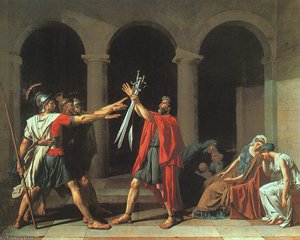
A Horatiák esküje (1784) (1889) -ja Jacques-Louis David

A Horatiák esküje

1784 · Olajfestmény vászonon · Louvre Múzeum, Párizs

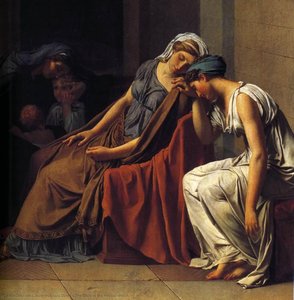
A művészettörténet hatalmas szövetében kevés vászon uralja a teret olyan megalkuvástulán tekintélyel, mint Jacques-Louis David A Horatiák esküje című remekműve. Az 1784-ben elkészült masterpiece a neoklasszikus mozgalom meghatározó alapköve, amely határozott odatörődést jelent a rokokó korszak játékos, hullámzó könnyedségétől. A festmény szívében a mély gerjesztettség és morális súly pillanatát rögzítve jelenik meg, a római és Alba Longa közötti legendás konfliktusból merítve. A három Horatius testvér határozott megitekvéssel áll, miközben életüket…

6
A Sabine Nők Kivégzése (1799) (1889) -ja Jacques-Louis David

A Sabine Nők Kivégzése

1799 · Olajfestmény vászonon

A béke és a konfliktus monumentális látványa Jacques-Louis David 1799-es remekműve, A Sabine Nők Kivégzése, a római legenda egyik döntő pillanatát, a sabin nők beavatkozását ábrázolja, amely rendkívül erőteljes és érzelmi hatású alkotás. Ez a hatalmas méretű vászon túlmutat a puszta történelmi illusztráción, hiszen a konfliktusról, a megbékélésről és a megátendő együttérzés erejéről szóló mély gondolkodássá válik. A neoklasszicizmus művészetének lenyűgöző példája, amely biztosan magával ragadja a művészetkedvelőket, a gyűjtőket…

7
Napóleon a tanulmányfélkében (1812) (1889) -ja Jacques-Louis David

Napóleon a tanulmányfélkében

1812 · Olajfestmény vászonon · National Gallery of Art, Washington

Jacques-Louis David „Napóleon a tanulmányfélkében” (Napoleon in His Study at the Tuileries) túlmutat a puszta ábrázoláson; a európai történelem egyik döntő pillanatának szellemét testesíti meg: Napóleon Bonaparte uralkodásának megerősödését a Francia Forradalom zivatagos felrozsaratása után. Az 1812-ben elkészült monumentális vászon nem egy területi győzelmekért harcoló harcosként ábrázolja Napóleont, hanem mint egy gondolkodó uralkodót, aki magányos szentélyében küzdik meg a vezetés súlyos felelősségeivel.

8
A Licitorok visszatérése Brutushoz az ő fiainak holtjátékával (1789) (1889) -ja Jacques-Louis David

A Licitorok visszatérése Brutushoz az ő fiainak holtjátékával

1789 · Olajfestmény vászonon · Louvre Múzeum, Párizs

A tárgy és a narratív jelentőség Ez a hatalmas mestermű a római történelem megható pillanatát örökíti meg, amikor Lucius Junius Brutus, a római köztársaság legendás alapítója, gyászba temeti fiait. Amikor Brutus saját családját el kellítania a monarchia helyreállására irányuló össze conspiracy miatt, tragikus szükségletel loptatkozva, a rendíthetetlen polgári erényt és a morális eltöbb덧özhetetlenséget testesíti meg. A jelenet az áldozatkészség, a kötelességtudat és a hazafiság drámai táblázata, amely arra invitálja a…

9
Madame Récamier (1800) (1889) -ja Jacques-Louis David

Madame Récamier

1800 · Olajfestmény vászonon · Louvre Múzeum, Párizs

Jacques-Louis David megörökítette Juliette Récamier vonásait ebben az vászonon készült olajfestményben. A 1800-ban elkészült alkotás a párizsi társasági élet meghatározó alakját ábrázolja egy megpihenés pillanatában. A hölgy egy ágyon ül, alakja pedig éppen csak feltűnik a szoba sötét árnyai közül. A portré a neoklasszikus mozgalom egyik alapköve maradt fent a művészettörténetben.

10
Leonidasz Thermopylében (1814) (1889) -ja Jacques-Louis David

Leonidasz Thermopylében

1814 · Olajfestmény vászonon · Louvre Múzeum, Párizs

A közelgő konfliktus súlya megnehezíti a levegőt Jacques-Louis David Leonidasz Thermopylében című alkotásában. Ez a kolossális, 1814-ben készült vászonon olajjal készült mű egy a háború viharát megelőző mély nyugalom pillanatát örökíti meg. Történelem szélén állunk, és tanúi vagyunk a spártai királynak, Leonidasznak, amint felkészül a perzsa áradat szembenállására. A jelenet megfagyasztja azt a pillanatot, amikor a király megszólítja katonáit; jelenléte stabil ancoraként szolgál a csataterün felgyűlő feszültségben.

Jacques-Louis David híres festményei, 11 és 100 között

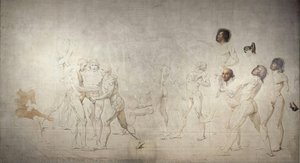
11A Jeu de Paume fogadalom (1792) (1889) -ja Jacques-Louis DavidA Jeu de Paume fogadalom1792 · Château de Versailles 12Március Árnyéka Vénusz és a három gráciával (1824) (1889) -ja Jacques-Louis DavidMárcius Árnyéka Vénusz és a három gráciával1824 · Musées Royaux des Beaux-Arts 13Belisarius kap adakozást (1889) -ja Jacques-Louis DavidBelisarius kap adakozástPalais des Beaux-Arts de Lille 14Achilleusz haragja (1819) (1889) -ja Jacques-Louis DavidAchilleusz haragja1819 · Kimbell Art Museum 15Seneca halála (1773) (1889) -ja Jacques-Louis DavidSeneca halála1773 · Petit Palais 16Andromache Hektorért gyászol (1783) (1889) -ja Jacques-Louis DavidAndromache Hektorért gyászol1783 · Louvre Múzeum 17A Marat halála (1889) -ja Jacques-Louis DavidA Marat halála 18A Horatiák hűsége (részlet) (1784) (1889) -ja Jacques-Louis DavidA Horatiák hűsége (részlet)1784 · Louvre Múzeum 19A császár és a császárné koronázása (1822) (1889) -ja Jacques-Louis DavidA császár és a császárné koronázása1822 · Château de Versailles 20Férfiaktlan test, Patroklosz néven (1889) -ja Jacques-Louis DavidFérfiaktlan test, Patroklosz néven 21Párizs és Helena szerelmei (1788) (1889) -ja Jacques-Louis DavidPárizs és Helena szerelmei1788 · Louvre Múzeum 22A hérosz mérgezett harca (1819) (1889) -ja Jacques-Louis DavidA hérosz mérgezett harca1819 23Az Horatiusok ette (1786) (1889) -ja Jacques-Louis DavidAz Horatiusok ette1786 · Toledo Művészeti Múzeum 24Szent Rok kérlezi a Szűz Máriát, hogy gyógyítsa a pestis áldozatait (1889) -ja Jacques-Louis DavidSzent Rok kérlezi a Szűz Máriát, hogy gyógyítsa a pestis áldozatait 25The Oath in the Tennis Court (1791) (1889) -ja Jacques-Louis DavidThe Oath in the Tennis Court1791 · Château de Versailles 26Antoine Laurent Lavoisier (1743–1794) és Marie Anne Lavoisier (Marie Anne Pierrette Paulze, 1758–1836) (1788) (1889) -ja Jacques-Louis DavidAntoine Laurent Lavoisier (1743–1794) és Marie Anne Lavoisier (Marie Anne Pierrette Paulze, 1758–1836)1788 · Metropolitan Művészeti Múzeum 27Cupido és Psyché (1817) (1889) -ja Jacques-Louis DavidCupido és Psyché1817 · Cleveland Museum of Art 28Leonidas a thermopylai csatában (részlet) (1814) (1889) -ja Jacques-Louis DavidLeonidas a thermopylai csatában (részlet)1814 · Louvre Múzeum 29The Death of Socrates (1786) (1889) -ja Jacques-Louis DavidThe Death of Socrates1786 · Metropolitan Művészeti Múzeum 30Napoleon Józsefine koronájával (1805) (1889) -ja Jacques-Louis DavidNapoleon Józsefine koronájával1805 · Louvre Múzeum 31A szabin nőket megállító közbelépés (részlet) (1799) (1889) -ja Jacques-Louis DavidA szabin nőket megállító közbelépés (részlet)1799 · Louvre Múzeum 32Napoleon Bonaparte in his Study at the Tuileries (1812) (1889) -ja Jacques-Louis DavidNapoleon Bonaparte in his Study at the Tuileries1812 33Mars Disarmed by Venus and the Three Graces (detail) (1824) (1889) -ja Jacques-Louis DavidMars Disarmed by Venus and the Three Graces (detail)1824 · Musées Royaux des Beaux-Arts 34Napoleon in His Study (1812) (1889) -ja Jacques-Louis DavidNapoleon in His Study1812 35Nude study of Pope Pius VII (1805) (1889) -ja Jacques-Louis DavidNude study of Pope Pius VII1805 · Louvre Múzeum 36Portrait of Gaspar Mayer (1795) (1889) -ja Jacques-Louis DavidPortrait of Gaspar Mayer1795 · Louvre Múzeum 37Hector (1778) (1889) -ja Jacques-Louis DavidHector1778 · Musée Fabre 38Portrait of Antoine-Laurent and Marie-Anne Lavoisier (detail) (1788) (1889) -ja Jacques-Louis DavidPortrait of Antoine-Laurent and Marie-Anne Lavoisier (detail)1788 · Metropolitan Művészeti Múzeum 39Antiókhosz és Stratónisz (1774) (1889) -ja Jacques-Louis DavidAntiókhosz és Stratónisz1774 · École Nationale Supérieure des Beaux-Arts 40Szappó és Phaon (1889) -ja Jacques-Louis DavidSzappó és Phaon 41The Intervention of the Sabine Women (detail) (1799) (1889) -ja Jacques-Louis DavidThe Intervention of the Sabine Women (detail)1799 · Louvre Múzeum 42Consecration of the Emperor Napoleon I (detail) (1805) (1889) -ja Jacques-Louis DavidConsecration of the Emperor Napoleon I (detail)1805 · Louvre Múzeum 43Napoleon I. császár felkeresztelése (részlet) (1805) (1889) -ja Jacques-Louis DavidNapoleon I. császár felkeresztelése (részlet)1805 · Louvre Múzeum 44Andromache Hektor gyászában (1889) -ja Jacques-Louis DavidAndromache Hektor gyászábanGrand Palais 45The Death of Seneca (1773) (1889) -ja Jacques-Louis DavidThe Death of Seneca1773 · Musée du Petit Palais 46The Oath of the Horatii (detail) (1784) (1889) -ja Jacques-Louis DavidThe Oath of the Horatii (detail)1784 · Louvre Múzeum 47Bonaparte Crossing the Grand Saint-Bernard Pass (1802) (1889) -ja Jacques-Louis DavidBonaparte Crossing the Grand Saint-Bernard Pass1802 48The Empress Josephine Kneeling with Mme de la Rochefoucauld and Mme de la Valette (1806) (1889) -ja Jacques-Louis DavidThe Empress Josephine Kneeling with Mme de la Rochefoucauld and Mme de la Valette1806 · Louvre Múzeum 49Ingres portréja (1800) (1889) -ja Jacques-Louis DavidIngres portréja1800 · Pushkin állami művészeti múzeum 50Madame Recamier, Louvre (1800) (1889) -ja Jacques-Louis DavidMadame Recamier, Louvre1800 51A sarlakt (sas) kiosztása után megteszi a hűségfogadalmat a hadsereg az császárnak (1810) (1889) -ja Jacques-Louis DavidA sarlakt (sas) kiosztása után megteszi a hűségfogadalmat a hadsereg az császárnak1810 · Château de Versailles 52Juliette Recamier (1800) (1889) -ja Jacques-Louis DavidJuliette Recamier1800 · Louvre Múzeum 53Az Orvilliers-markíz portréja (1790) (1889) -ja Jacques-Louis DavidAz Orvilliers-markíz portréja1790 · Louvre Múzeum 54Self-Portrait (1790) (1889) -ja Jacques-Louis DavidSelf-Portrait1790 · Pushkin állami művészeti múzeum 55Death of Marat, Musees Royaux des Beaux-Ar (1793) (1889) -ja Jacques-Louis DavidDeath of Marat, Musees Royaux des Beaux-Ar1793 56Portrait of Antoine-Laurent and Marie-Anne Lavoisier (1788) (1889) -ja Jacques-Louis DavidPortrait of Antoine-Laurent and Marie-Anne Lavoisier1788 · Metropolitan Művészeti Múzeum 57the death of marat (1889) -ja Jacques-Louis Davidthe death of marat 58madame recamier (1889) -ja Jacques-Louis Davidmadame recamier 59Bonaparte (1798) (1889) -ja Jacques-Louis DavidBonaparte1798 60Christ on the Cross (1782) (1889) -ja Jacques-Louis DavidChrist on the Cross1782 · Szent Vincenc templom 61Jacobus Blauw (1795) (1889) -ja Jacques-Louis DavidJacobus Blauw1795 · National Gallery 62Eszme a Sas-szabályok kiosztására (1808) (1889) -ja Jacques-Louis DavidEszme a Sas-szabályok kiosztására1808 · Louvre Múzeum 63The Intervention of the Sabine Women (1799) (1889) -ja Jacques-Louis DavidThe Intervention of the Sabine Women1799 64Madame Emilie Seriziat és fia portréja (1889) -ja Jacques-Louis DavidMadame Emilie Seriziat és fia portréja 65Portrait of Madame Charles-Louis Trudaine (1792) (1889) -ja Jacques-Louis DavidPortrait of Madame Charles-Louis Trudaine1792 66The Death of Marat (detail) (1793) (1889) -ja Jacques-Louis DavidThe Death of Marat (detail)1793 · Musées Royaux des Beaux-Arts 67The Arrival at the Hôtel de Ville (1805) (1889) -ja Jacques-Louis DavidThe Arrival at the Hôtel de Ville1805 · Louvre Múzeum 68Portrait of Jeanbon Saint André (1795) (1889) -ja Jacques-Louis DavidPortrait of Jeanbon Saint André1795 · Art Institute of Chicago 69The Oath of the Tennis Court (1791) (1889) -ja Jacques-Louis DavidThe Oath of the Tennis Court1791 · Château de Versailles 70Jacques Louis David In his workshop (1889) -ja Jacques-Louis DavidJacques Louis David In his workshop 71The Combat of Mars and Minerva (1771) (1889) -ja Jacques-Louis DavidThe Combat of Mars and Minerva1771 · Louvre Múzeum 72The Tennis Court Oath, 20th June 1789 (1791) (1889) -ja Jacques-Louis DavidThe Tennis Court Oath, 20th June 17891791 73Portrait of Alphonse Leroy (1783) (1889) -ja Jacques-Louis DavidPortrait of Alphonse Leroy1783 74Pope Pius VII with the Cardinal Caprara (1805) (1889) -ja Jacques-Louis DavidPope Pius VII with the Cardinal Caprara1805 · Philadelphia Művészeti Múzeum 75The Death of Bara (1794) (1889) -ja Jacques-Louis DavidThe Death of Bara1794 · Musée Calvet 76Louis XVI Showing the Constitution to his Son, the Dauphin (1792) (1889) -ja Jacques-Louis DavidLouis XVI Showing the Constitution to his Son, the Dauphin1792 · Louvre Múzeum 77untitled (3326) (1889) -ja Jacques-Louis Daviduntitled (3326) 78Deputies swearing oaths (1791) (1889) -ja Jacques-Louis DavidDeputies swearing oaths1791 · Château de Versailles 79sappho and phaon (1889) -ja Jacques-Louis Davidsappho and phaon 80untitled (1714) (1889) -ja Jacques-Louis Daviduntitled (1714) 81Sokrates búcsúja Xanthippé nővéből (1889) -ja Jacques-Louis DavidSokrates búcsúja Xanthippé nővébőlFondazione Cariplo 82The Grief of Andromache (1782) (1889) -ja Jacques-Louis DavidThe Grief of Andromache1782 · Musée du Petit Palais 83View of the Luxembourg Gardens in Paris (1794) (1889) -ja Jacques-Louis DavidView of the Luxembourg Gardens in Paris1794 84Portrait of Monsieur Lavoisier and His Wife (1889) -ja Jacques-Louis DavidPortrait of Monsieur Lavoisier and His Wife 85Marie Antoinette on the Way to the Guillotine (1889) -ja Jacques-Louis DavidMarie Antoinette on the Way to the Guillotine 86Portrait of Marguerite-Charlotte David (1813) (1889) -ja Jacques-Louis DavidPortrait of Marguerite-Charlotte David1813 · National Gallery of Art 87Az Horatii Szövetsége (1889) -ja Jacques-Louis DavidAz Horatii Szövetsége 88View of the Tiber and Castel St Angelo (1776) (1889) -ja Jacques-Louis DavidView of the Tiber and Castel St Angelo1776 · Louvre Múzeum 89Minerva (1776) (1889) -ja Jacques-Louis DavidMinerva1776 · Louvre Múzeum 90The Funeral of Patroclus (1778) (1889) -ja Jacques-Louis DavidThe Funeral of Patroclus1778 · National Gallery of Ireland 91Head of the Dead Marat (1889) -ja Jacques-Louis DavidHead of the Dead Marat 92Consecration of the Emperor Napoleon I (detail) (10) (1805) (1889) -ja Jacques-Louis DavidConsecration of the Emperor Napoleon I (detail) (10)1805 · Louvre Múzeum 93Consecration of the Emperor Napoleon I (detail) (1805) (1889) -ja Jacques-Louis DavidConsecration of the Emperor Napoleon I (detail)1805 · Louvre Múzeum 94Portrait of a Young Woman in White (1798) (1889) -ja Jacques-Louis DavidPortrait of a Young Woman in White1798 95The Death Of Marat (Study) (1889) -ja Jacques-Louis DavidThe Death Of Marat (Study) 96Alexander Ordering The Books Of Homer To Be Preserved (1889) -ja Jacques-Louis DavidAlexander Ordering The Books Of Homer To Be Preserved 97The Oath of the Horatii - Jacques-Louis David (2026) (1889) -ja Jacques-Louis DavidThe Oath of the Horatii - Jacques-Louis David2026 98Portrait of the Sisters Zénaïde and Charlotte Bonaparte (1821) (1889) -ja Jacques-Louis DavidPortrait of the Sisters Zénaïde and Charlotte Bonaparte1821 99Caricature of the English Government (1793) (1889) -ja Jacques-Louis DavidCaricature of the English Government1793 100A Young Woman of Frascati (1775) (1889) -ja Jacques-Louis DavidA Young Woman of Frascati1775 · Metropolitan Művészeti Múzeum

Jacques-Louis David híres festményei, korszakonként

A témák, amelyek Jacques-Louis David figyelmét meghúzták

A négy leggyakorobban előforduló téma ebben az eredeti művekben, mindegyik a legkiválóbb példájával.

A műemlékek, amelyek Jacques-Louis David eredeti műveit őrzik

A 8 olyan múzeum, amely a legtöbb ezen az oldalon szereplő festményet őrzi.

Múzeum Város Jacques-Louis David művei Ebből a listából származó festmények
Louvre Múzeum, PárizsLouvre Múzeum Párizs 35 I. Napóleon császál beavatása és Józefin császárné koronázása, A Horatiák esküje, A Licitorok visszatérése Brutushoz az ő fiainak holtjátékával
Metropolitan Művészeti Múzeum, New YorkMetropolitan Művészeti Múzeum New York 8 Sokratész halála, Metropolitan NY, Antoine Laurent Lavoisier (1743–1794) és Marie Anne Lavoisier (Marie Anne Pierrette Paulze, 1758–1836), The Death of Socrates
Château de Versailles, VersaillesChâteau de Versailles Versailles 7 A Jeu de Paume fogadalom, A császár és a császárné koronázása, The Oath in the Tennis Court
Musées Royaux des Beaux-Arts, BrüsszelMusées Royaux des Beaux-Arts Brüsszel 4 Marat halála, Március Árnyéka Vénusz és a három gráciával, Mars Disarmed by Venus and the Three Graces (detail)
National Gallery of Art, WashingtonNational Gallery of Art Washington 3 Napóleon a tanulmányfélkében, Portrait of Marguerite-Charlotte David
Musée du Petit Palais, ParisMusée du Petit Palais Paris 2 The Death of Seneca, The Grief of Andromache
Pushkin állami művészeti múzeum, MoszkvaPushkin állami művészeti múzeum Moszkva 2 Ingres portréja, Self-Portrait
Musée Fabre, MontpellierMusée Fabre Montpellier 5 Hector

Jacques-Louis David évtizedekig: egy egyedi eredeti mű minden évtizedben

Művek évtizedenként

Váassz ki egy évtizedet, hogy megnézhesd az azt meghatározó eredetiműveket.

Jacques-Louis David festményei: kérdések a galériának

Mi a leghíresebb műve Jacques-Louis Davidnek?Fedje fel a választ

Marat halála (1793), Musées Royaux des Beaux-Arts, Brüsszel. Ezután Sokratész halála, Metropolitan NY (1787) és I. Napóleon császál beavatása és Józefin császárné koronázása (1805) következik.

Milyen életkorában alkotta meg Jacques-Louis David a(z) Marat halála műszt?Fedje fel a választ

45 éves: Marat halála 1793-ből származik, Jacques-Louis David pedig 1748-ben született.

Melyik tíz festménye Jacques-Louis David a leghíresebb?Fedje fel a választ

Marat halála, Sokratész halála, Metropolitan NY, I. Napóleon császál beavatása és Józefin császárné koronázása, Napóleon a Szent Bernát-hegyi átkelésnél, A Horatiák esküje, A Sabine Nők Kivégzése, Napóleon a tanulmányfélkében, A Licitorok visszatérése Brutushoz az ő fiainak holtjátékával, Madame Récamier és Leonidasz Thermopylében. A fenti rangsor a művek évszamarát és a múzeumát jelzi.

Hány mű alkotása ismert Jacques-Louis David nevében?Fedje fel a választ

Katalógusunkban 277 mű található Jacques-Louis David alkotótól, 1771 és 1824 év közötti időszakból.

Hol tekinthetők meg a leghíresebb Jacques-Louis David eredetijeit?Fedje fel a választ

Leginkább Louvre Múzeum (Párizs), Metropolitan Művészeti Múzeum (New York) és Château de Versailles (Versailles) található. A fenti múzeumi táblázatban mindegyik felsorolásra került.

Melyik időszakban alkotta Jacques-Louis David a leghíresebb festményeit?Fedje fel a választ

1790s alatt: a jelen laphonon található 100 műből 24 készült ebben az időszakban, köztük Marat halála.

Melyik híres Jacques-Louis David festmény a legkorábbi, és melyik a legutóbb készült?Fedje fel a választ

Ezen az oldalon a leghitelesebb The Combat of Mars and Minerva (1771), a legutóbbi pedig Március Árnyéka Vénusz és a három gráciával (1824).

Milyen témakörket kedvelt Jacques-Louis David?Fedje fel a választ

Classical art (23), Klasszikus művészet (13) és Portraiture (11), a jelen oldalon található 100 műművészeti alkotás között.

Milyen anyagokkal festett leggyakrabban Jacques-Louis David?Fedje fel a választ

Oil On Canvas, a jelen oldalon található 100 műből 37 darab esetén.

Mely művészeti irányba tartozik Jacques-Louis David műve?Fedje fel a választ

Neoklasszicizmus, ezen az oldalon található eredetiek alapján.

Milyen Jacques-Louis David eredeti műveket láthatok a Louvre Múzeum kiállításaiban?Fedje fel a választ

I. Napóleon császál beavatása és Józefin császárné koronázása, A Horatiák esküje és A Licitorok visszatérése Brutushoz az ő fiainak holtjátékával: a Louvre Múzeum, Párizs 28 művet őrzi ezen az oldalon.

Jacques-Louis David: a művész portréja

The Life and Art of Jacques-Louis David

Born in Paris, France, on August 30, 1748, Jacques-Louis David emerged during a period of profound political and aesthetic transformation. He became the principal exponent of the late 18th-century Neoclassical style, a movement that sought to replace the decorative whimsy of the Rococo with a sense of order and moral clarity. His career was defined by an ability to navigate the most turbulent shifts in French history, moving from the structured hierarchies of the Ancien Régime to the radicalism of the Revolution and the imperial grandeur of the Napoleonic era.

As the preeminent painter of his era, David did more than capture the likenesses of his subjects; he provided a visual language for the changing ideals of his nation. His work often focused on historical and classical themes, utilizing rigorous contours and a disciplined approach to composition. This commitment to clarity helped establish Neoclassicism as the dominant artistic force in France. His canvases were frequently large in scale, designed to command attention and convey the gravity of the scenes they depicted.

His output was vast and varied, ranging from intense historical dramas to formal portraiture. Some of his notable subjects include:

Early Life, Family and Training

Born into the merchant-and-artisan middle class of Paris, Jacques-Louis David’s early years were marked by a sudden, sharp disruption. When he was nine, his father was killed in a duel, leaving the young boy to be raised by well-off architect uncles. During his formal schooling, he proved to be an indifferent student, his mind frequently wandering from his lessons toward the act of drawing. This early preference for the pencil and charcoal suggested a temperament better suited to the studio than the classroom.

His path toward professional mastery began under the guidance of François Boucher, a painter of the Rococo style. While Boucher provided his initial apprenticeship, David eventually sought a different direction, moving toward the instruction of Joseph-Marie Vien. As a professor at the Royal Academy of Painting and Sculpture, Vien offered a more classical approach that would eventually define David's aesthetic. This period of study was not a swift ascent; it was a process of trial and error. He faced the frustration of three failed attempts to secure the prestigious Prix de Rome, a setback that tested his resolve. He finally achieved the prize in 1774, a victory that would fundamentally alter the course of his career.

The Rise of Neoclassicism and Italian Study

The trajectory of David’s development shifted decisively in 1775 when he traveled to Italy alongside his teacher, Joseph Vien. This period of study provided the necessary distance from the decorative tendencies of the French court, allowing him to confront the weight of antiquity directly. In the shadow of Rome, he turned his attention toward the 17th-century masters, absorbing the structured compositions of Poussin and the dramatic lighting of Caravaggio. He also studied the works of the Carracci, finding in their approach a balance of form and naturalism that would inform his own developing hand.

During these years, David was introduced to Raphael Mengs, a figure who advocated for a rigorous, disciplined study of classical sources. This intellectual encounter helped steer the young painter away from the lingering whimsy of the Rococo. His focus moved toward a more austere and morally driven neoclassicism, a style that favored clarity and order over ornamentation. The experience in Italy did not merely refine his technique; it provided the philosophical foundation for a career dedicated to the pursuit of civic virtue and historical gravity.

Artistic Role During the French Revolution

The political upheaval of 1789 found David deeply embedded in the shifting currents of French society. He was an active supporter of the revolution, moving beyond the quietude of the studio to engage directly with the radical forces reshaping the nation. As a member of the Jacobin group, his commitment to the cause was both ideological and personal. He maintained a close friendship with Maximilien Robespierre, a connection that placed him at the very center of the era's most intense political machinations.

His influence extended into the administrative heart of the new republic, where he served as the artistic director. In this capacity, he helped shape the visual language of a movement that sought to replace old hierarchies with new, civic-minded ideals. His work during these years often functioned as a mirror to the fervor of the streets, capturing the gravity of martyrdom and the weight of republican duty. He did not merely paint the revolution; he helped direct its public image.

Patronage and Service to Napoleon

The political tides that had once fueled David’s revolutionary fervor eventually settled into the structured grandeur of the Empire. As Napoleon Bonaparte rose to power, the artist transitioned from a partisan of the Republic to the official court painter of the new regime. This shift was formalized in 1804, when he was appointed First Painter to the Emperor. His role was to provide a visual language for Napoleon’s authority, translating military triumphs and imperial dignity into a grand, public scale.

This period of service brought about a subtle evolution in his aesthetic. The austere, sometimes severe clarity of his earlier Neoclassical works softened, giving way to an Empire style. His palette grew more complex, incorporating warm Venetian colors that lent a sense of richness to his compositions. He moved away from the starkness of his revolutionary years, instead embracing a more opulent visual vocabulary that suited the ceremonial needs of the imperial court.

  • Napoleon Crossing the Alps (1801-1805)
  • The Coronation of Napoleon (1807)

Technique and Neoclassical Style

David’s brushwork rejected the swirling, decorative excesses of the Rococo in favor of a disciplined, structural clarity. His compositions relied upon rigorous contours and sculpted forms that gave his figures a sense of permanence, as if they were carved from marble rather than rendered in oil. This precision was matched by a preference for polished surfaces, where the hand of the artist often vanished behind a seamless, finished appearance. He sought to capture the essence of antiquity through a visual language of order and restraint.

Light and shadow functioned as primary tools of drama in his studio. He employed a stark, dramatic use of tenebrism, a technique that utilized heavy contrasts to pull subjects out of the darkness. This approach, combined with a Caravaggesque realism, allowed him to ground his historical and mythological scenes in a palpable, physical reality. Rather than relying on a riot of color, he often utilized a restrained palette dominated by earthy tones, which focused the viewer's attention on the moral weight of the scene rather than mere ornamentation.

Key Works and Masterpieces

The trajectory of David's career is marked by a capacity to translate the political and moral currents of France into rigid, sculptural forms. In 1784, he completed The Oath of the Horatii, a work that signaled a departure from the decorative whimsy of the previous era. By replacing soft curves with sharp, linear precision, he provided a visual language for civic duty. This sense of moral gravity continued in 1787 with The Death of Socrates, where he rendered the philosopher's final moments with a calm, disciplined clarity that emphasized intellectual conviction over chaotic emotion.

As the Revolution turned violent, David’s brush became a tool for documenting the immediate and the tragic. His 1793 depiction of The Death of Marat transformed a political assassination into a scene of profound, quiet stillness. The pale, slumped body of the journalist, resting against a makeshift desk, stripped away the noise of the Terror to focus on a singular, haunting reality. This ability to capture the weight of a moment defined his role as the era's visual chronicler.

The shift from revolutionary fervor to imperial grandeur saw David turning his attention to the man who would reshape Europe. Between 1801 and 1805, he painted Napoleon Crossing the Alps, presenting the leader as a figure of mythic strength. This was followed by the immense 1807 canvas, The Coronation of Napoleon, which documented the opulence of the imperial ceremony. Even in his more intimate portraiture, such as the 1800 depiction of Madame Récamier, his commitment to structured composition and formal dignity remained constant.

Circle, Pupils and Artistic Influence

The studio of Jacques-Louis David functioned as a vital center for the transmission of Neoclassical principles, attracting a diverse group of students who would go on to shape the nineteenth century. Among his most prominent pupils was Jean-Auguste-Dominique Ingres, who would eventually emerge as a formidable force in his own right. The lineage of David’s instruction also included Antoine-Jean Gros and François Gérard, both of whom navigated the shifting tastes of the era while carrying the weight of his rigorous training. Even Jérôme-Martin Langlois found his way into this disciplined environment, absorbing the technical precision required by the prevailing aesthetic.

This pedagogical reach extended far beyond the immediate classroom. The formal structures and expressive distortions David employed in his compositions left a mark that resonated through subsequent generations. His influence reached into the radical shifts of the modern era, finding unexpected echoes in the work of Henri Matisse and Pablo Picasso. While his direct pupils often sought to refine or even rebel against his strict adherence to classical order, the fundamental emphasis on draftsmanship and structural clarity remained a constant thread in the evolution of French art.

Exile and Death in Brussels

The political tides that once carried him to the heights of imperial favor eventually turned against him. Following the fall of Napoleon, the shifting landscape of France left little room for the former court painter. In 1816, David was sent into exile in Brussels, a move that signaled the end of his direct influence over the French state. He did not retreat into silence, however. In this Belgian city, he maintained his professional rigor, continuing to paint and instruct students until his final days.

His presence in Brussels remained a constant through the final decade of his life. He lived through the transition of European power, a witness to the very history he had once helped to document on canvas. On December 29, 1825, his life reached its conclusion. He died in Brussels, far from the Parisian salons and the imperial courts that had defined his most active years.

A monument marks the site of his rest. In the Brussels Cemetery, an obelisk stands as a memorial to the man who had once been the visual architect of an era. This stone marker serves as a quiet conclusion to a career that spanned the most turbulent transformations of the French state.

Where to See the Works Today

The physical presence of David’s oeuvre is scattered across the major repositories of European and international art. The Louvre Museum in Paris remains the primary guardian of his output, housing a significant portion of his most influential canvases. In New York, the Metropolitan Museum of Art maintains several of his pieces, allowing for a study of his precision far from the streets of France. His reach extends into the East as well, with the Pushkin State Museum in Moscow holding a portrait of Ingres, a work that reflects the complex connections between David and his most famous pupil.

In the south of France, the Musée Fabre in Montpellier offers a different perspective on his development. Within its walls, one can find Hector, a work from 1778 that captures a more formative, dramatic naturalism. This piece provides a window into the artist's earlier stylistic tendencies before his full embrace of the austere clarity that would define his later years. To see his work in these various settings is to trace the geographic spread of a style that once dictated the visual language of an entire era.