Iszaak Iljics Levitan portréja

Iszaak Iljics Levitan festményei: A 100 leghíresebb alkotás, egy galéria szemével

Frissítve: november 2026 · rangsorolva népszerűségi pontszámunk alapján (minden mű keresései, látogatásai és megrendelései alapján) · 566 mű Iszaak Iljics Levitan alkotása a katalógusunkban

Röviden

A galéria szerint Iszaak Iljics Levitan leghíresebb festménye a Aranyos ősz (1895), amelynek eredeti példája a Tretyakov-galéria múzeumában található, Moszkva városában. A örök béke felett és Haystacking (1900) kiegészítik azt a triót, amelyet minden szem felismer. A katalógusunkban szereplő 566 művész Iszaak Iljics Levitan alkotásából a galéria az alábbi 100 leghíresebbet mutatja be, amelyek mind egyedi originális művek, a készítés évszámával, a múzeum megnevezésével és a különlegességük leírásával.

1860 – 1900, Kybartai Realism A legtöbb mű: Tretyakov-galéria

A galéria top 10 Iszaak Iljics Levitan festménye

1
Aranyos ősz (1895) (1889) -ja Iszaak Iljics Levitan

Aranyos ősz

1895 · Olajfestmény vászonon · Tretyakov-galéria, Moszkva

A nyár melegének és a tél álmának csendes átmenetében létezik egy példátlan ragyogás pillanata, egy olyan időszak, amikor a föld úgy tűnik, belülről izar. Isaak Ilyich Levitan, a orosz tájképészet mesteri költője, ezt az efemer varázslatot örökíti meg lenyűgöző remekművében, az Aranyos ősz című alkotásban. Ez a festmény nem csupán egy folyópart ábrázolása; egy mély nyugalom és kontemplatív szépség világába való meghívás. Ahogy a tekintet végigveszi a tágas látóteret, azonnal…

2
A örök béke felett (1889) -ja Iszaak Iljics Levitan

A örök béke felett

Olajfestmény vászonon · Tretyakov-galéria, Moszkva

A "A örök béke felett" vászonon olajfestmény Isaac Levitan kezemialmja. Ez a alkotás a orosz tájképészet egyik legfontosabb példája, amely a természet világának ábrázolásán keresztül képes megörökíteni egy rendkívül specifikus, hangulatos atmoszférát. A művész, Isaac Levitan Litvánia, Kybartaiában született.

3
Haystacking (1900) (1889) -ja Iszaak Iljics Levitan

Haystacking

1900 · Oil On Panel · Tretyakov-galéria, Moszkva

In the vast tapestry of Russian landscape painting, few works capture the ephemeral intersection of human toil and natural majesty as poignantly as Isaak Ilyich Levitan’s “Haystacking.” Painted in 1900, this oil on panel masterpiece serves as a profound meditation on the rhythms of rural existence. The scene unfolds across a sun-drenched field, where golden haystacks punctuate the landscape like silent monuments to the harvest. Yet, beneath this surface of…

4
Golden autumn (1895) (1889) -ja Iszaak Iljics Levitan

Golden autumn

1895 · Oil On Canvas · Tretyakov-galéria, Moszkva

In the hallowed halls of the Tretyakov Gallery in Moscow, there exists a canvas that does more than merely depict a season; it captures the very soul of the Russian landscape. Isaak Ilyich Levitan’s Golden Autumn, painted in 1895, is a monumental achievement that transcends simple representation to become a profound meditation on beauty and transition. As the eye wanders across the 82 x 126 cm expanse, one is immediately…

5
The lake, Russian soil (1899) (1889) -ja Iszaak Iljics Levitan

The lake, Russian soil

1899 · Oil On Canvas

To gaze upon Isaak Ilyich Levitan's "The Lake, Russian Soil" is not merely to observe a painting; it is to be gently ushered into a state of profound tranquility. This masterpiece, born in 1899, captures the very soul of the Russian countryside—a place where nature and human life coexist in a hushed, almost dreamlike harmony. The scene unfolds around a placid lake, its surface mirroring the vast, atmospheric expanse above.…

6
Summer Evening (1899) (1889) -ja Iszaak Iljics Levitan

Summer Evening

1899 · Oil On Canvas · Tretyakov-galéria, Moszkva

To gaze upon Isaak Ilyich Levitan's "Summer Evening" is to step across the threshold of time and into a moment suspended in amber light. This painting, executed in 1899, is not merely a depiction of a country road; it is an elegy to pastoral tranquility, a visual poem whispered by the setting sun over the rolling landscape of rural Russia. Levitan, the master poet of the Russian soul rendered in…

7
Moonlit Night (1899) (1889) -ja Iszaak Iljics Levitan

Moonlit Night

1899 · Oil On Canvas · Tretyakov-galéria, Moszkva

A Symphony of Sorrow: Exploring Isaak Levitan’s “Moonlit Night” Isaak Ilyich Levitan (1860-1900), a titan amongst Russian landscape painters, didn't merely depict scenery; he wrestled with the very essence of melancholy and imbued his canvases with an unparalleled sensitivity to the human condition. His oeuvre is defined by a profound communion with nature—not one of triumphant grandeur but rather of quiet contemplation tinged with poignant longing—a characteristic that solidified his…

8
Cloud (1878) (1889) -ja Iszaak Iljics Levitan

Cloud

1878 · Oil On Canvas

The sky dominates the canvas, a vast expanse where light and air collide. Large, white clouds drift through the scene, some appearing heavy and puffy while others stretch into thin, wispy filaments. There is a profound sense of openness here, a feeling of looking upward into an infinite, breathing space. Two small figures occupy the landscape, one on the left and one toward the right, their tiny forms providing a…

9
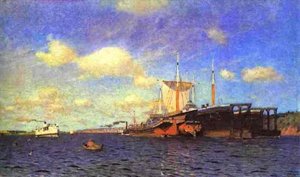
Evening on the Volga (1887) (1889) -ja Iszaak Iljics Levitan

Evening on the Volga

1887 · Oil On Canvas · Tretyakov-galéria, Moszkva

The Evening on the Volga is a breathtaking oil on canvas painting created by Isaak Ilyich Levitan in 1887. This beautiful piece is housed at the renowned Tretyakov Gallery in Moscow, Russia. The painting measures 50 x 81 cm and is a testament to the artist's skill in capturing the essence of the natural world. The Painting's Composition The scene depicts a serene evening on the Volga River, with boats…

10
Alps. Snow. (1897) (1889) -ja Iszaak Iljics Levitan

Alps. Snow.

1897 · Oil On Canvas · Jekaterinburg Művészeti Múzeum, Jekaterinburg

There is a particular kind of stillness that only comes with heavy snow. In this 1897 oil on canvas, we find ourselves looking upon a landscape where the mountains do not merely exist, but seem to hold their breath. The composition is anchored by a large glacier in the foreground, its surface a complex interplay of light and shadow that suggests a profound, frozen depth. Beyond this icy expanse, the…

Iszaak Iljics Levitan festményei, 11. helyezéstől 100. helyezésig

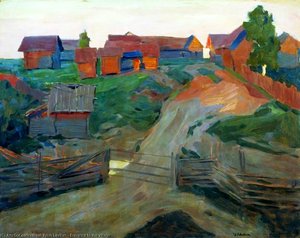
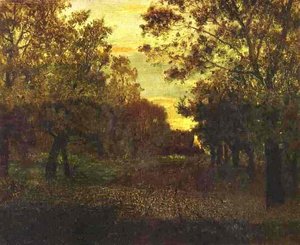
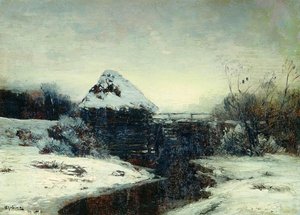
11At twilight. River Istra. (1885) (1889) -ja Iszaak Iljics LevitanAt twilight. River Istra.1885 12At the birch grove (1885) (1889) -ja Iszaak Iljics LevitanAt the birch grove1885 13Parkway. Ostankino. (1885) (1889) -ja Iszaak Iljics LevitanParkway. Ostankino.1885 14Autumn (1891) (1889) -ja Iszaak Iljics LevitanAutumn1891 15Coast of the lagoon (1896) (1889) -ja Iszaak Iljics LevitanCoast of the lagoon1896 16A day in June (1895) (1889) -ja Iszaak Iljics LevitanA day in June1895 17Footpath in a Forest. Ferns. (1895) (1889) -ja Iszaak Iljics LevitanFootpath in a Forest. Ferns.1895 18Golden autumn (1896) (1889) -ja Iszaak Iljics LevitanGolden autumn1896 19At the summer house in twilight (1895) (1889) -ja Iszaak Iljics LevitanAt the summer house in twilight1895 20Fires (1885) (1889) -ja Iszaak Iljics LevitanFires1885 21By the whirlpool (1891) (1889) -ja Iszaak Iljics LevitanBy the whirlpool1891 22Footbridge. Savvinskaya village. (1884) (1889) -ja Iszaak Iljics LevitanFootbridge. Savvinskaya village.1884 23Fresh Wind. Volga (1895) (1889) -ja Iszaak Iljics LevitanFresh Wind. Volga1895 · Tretyakov-galéria 24The First Green. May. (1888) (1889) -ja Iszaak Iljics LevitanThe First Green. May.1888 25Tombstone in the Jewish Graveyard (1881) (1889) -ja Iszaak Iljics LevitanTombstone in the Jewish Graveyard1881 · Izraeli Múzeum 26In the forest (1885) (1889) -ja Iszaak Iljics LevitanIn the forest1885 27The trunk of an old tree (1883) (1889) -ja Iszaak Iljics LevitanThe trunk of an old tree1883 28Moonlit night at park (1885) (1889) -ja Iszaak Iljics LevitanMoonlit night at park1885 29Remains of the Past. Twilight. Finland (1897) (1889) -ja Iszaak Iljics LevitanRemains of the Past. Twilight. Finland1897 · Tretyakov-galéria 30Krivoozersky Monastery. Monks following fish. (1890) (1889) -ja Iszaak Iljics LevitanKrivoozersky Monastery. Monks following fish.1890 31Blessing of the waters (1893) (1889) -ja Iszaak Iljics LevitanBlessing of the waters1893 32Summer evening. River. (1894) (1889) -ja Iszaak Iljics LevitanSummer evening. River.1894 33Haystacks. Twilight (1899) (1889) -ja Iszaak Iljics LevitanHaystacks. Twilight1899 · Tretyakov-galéria 34Footpath in a Forest, Ferns (1895) (1889) -ja Iszaak Iljics LevitanFootpath in a Forest, Ferns1895 35The Istra River. Study (1885) (1889) -ja Iszaak Iljics LevitanThe Istra River. Study1885 · Tretyakov-galéria 36Spring in the Forest (1882) (1889) -ja Iszaak Iljics LevitanSpring in the Forest1882 37House with Broom-Trees. Study (1885) (1889) -ja Iszaak Iljics LevitanHouse with Broom-Trees. Study1885 38Valley of a River. Study (1890) (1889) -ja Iszaak Iljics LevitanValley of a River. Study1890 · Tretyakov-galéria 39Springtime. The Last Snow. (1895) (1889) -ja Iszaak Iljics LevitanSpringtime. The Last Snow.1895 40Birch Grove (1885) (1889) -ja Iszaak Iljics LevitanBirch Grove1885 41Portrait of Sofia Petrovna Kuvshinnikov (1894) (1889) -ja Iszaak Iljics LevitanPortrait of Sofia Petrovna Kuvshinnikov1894 42Entrance to the village (1898) (1889) -ja Iszaak Iljics LevitanEntrance to the village1898 43Spring Flood (1897) (1889) -ja Iszaak Iljics LevitanSpring Flood1897 · Tretyakov-galéria 44In the Mountains in the Crimea (1886) (1889) -ja Iszaak Iljics LevitanIn the Mountains in the Crimea1886 · Tretyakov-galéria 45Field after Harvest. (1897) (1889) -ja Iszaak Iljics LevitanField after Harvest.1897 · Armenia Nemzeti Galériája 46Footbridge. Savvina Sloboda. Study (1884) (1889) -ja Iszaak Iljics LevitanFootbridge. Savvina Sloboda. Study1884 · Tretyakov-galéria 47In the Vicinity of Bordiguera, in the North of Italy (1890) (1889) -ja Iszaak Iljics LevitanIn the Vicinity of Bordiguera, in the North of Italy1890 · Tretyakov-galéria 48Evening in the Field (1883) (1889) -ja Iszaak Iljics LevitanEvening in the Field1883 · Tretyakov-galéria 49Quiet cloister (1890) (1889) -ja Iszaak Iljics LevitanQuiet cloister1890 50Springtime in Italy (1890) (1889) -ja Iszaak Iljics LevitanSpringtime in Italy1890 · Tretyakov-galéria 51Oak (1880) (1889) -ja Iszaak Iljics LevitanOak1880 · Tretyakov-galéria 52The First Green. May. Study (1883) (1889) -ja Iszaak Iljics LevitanThe First Green. May. Study1883 · Tretyakov-galéria 53Early spring. The last snow. (1889) -ja Iszaak Iljics LevitanEarly spring. The last snow. 54Evening Bells (1889) -ja Iszaak Iljics LevitanEvening Bells 55Road in a Wood (1881) (1889) -ja Iszaak Iljics LevitanRoad in a Wood1881 · Tretyakov-galéria 56Springtime in the Crimea (1900) (1889) -ja Iszaak Iljics LevitanSpringtime in the Crimea1900 · Tretyakov-galéria 57Huts after sunset (1899) (1889) -ja Iszaak Iljics LevitanHuts after sunset1899 58Stormy day (1897) (1889) -ja Iszaak Iljics LevitanStormy day1897 · Tretyakov-galéria 59In the North (1896) (1889) -ja Iszaak Iljics LevitanIn the North1896 · Tretyakov-galéria 60March (1895) (1889) -ja Iszaak Iljics LevitanMarch1895 · Tretyakov-galéria 61Twilight (1900) (1889) -ja Iszaak Iljics LevitanTwilight1900 · Tretyakov-galéria 62Evening (1877) (1889) -ja Iszaak Iljics LevitanEvening1877 63Village. Windmill. (1875) (1889) -ja Iszaak Iljics LevitanVillage. Windmill.1875 64Village in Winter (1877) (1889) -ja Iszaak Iljics LevitanVillage in Winter1877 65At Moscow-river (1877) (1889) -ja Iszaak Iljics LevitanAt Moscow-river1877 66Landscape on Volga. Boats by the Riverbank. (1878) (1889) -ja Iszaak Iljics LevitanLandscape on Volga. Boats by the Riverbank.1878 67Birch grove (1878) (1889) -ja Iszaak Iljics LevitanBirch grove1878 68The Last Snow. Savvina Sloboda. Study (1884) (1889) -ja Iszaak Iljics LevitanThe Last Snow. Savvina Sloboda. Study1884 · Tretyakov-galéria 69Russian Village (1880) (1889) -ja Iszaak Iljics LevitanRussian Village1880 · Izraeli Múzeum 70The Last Snow (1884) (1889) -ja Iszaak Iljics LevitanThe Last Snow1884 · Izraeli Múzeum 71A creek (1885) (1889) -ja Iszaak Iljics LevitanA creek1885 72Autumn (1885) (1889) -ja Iszaak Iljics LevitanAutumn1885 73Village Savvinskaya near Zvenigorod (1884) (1889) -ja Iszaak Iljics LevitanVillage Savvinskaya near Zvenigorod1884 74Winter landscape. Cemetery. (1885) (1889) -ja Iszaak Iljics LevitanWinter landscape. Cemetery.1885 75Field (1885) (1889) -ja Iszaak Iljics LevitanField1885 76Platform. The approaching train. (1879) (1889) -ja Iszaak Iljics LevitanPlatform. The approaching train.1879 77At Volga (1885) (1889) -ja Iszaak Iljics LevitanAt Volga1885 78High waters (1885) (1889) -ja Iszaak Iljics LevitanHigh waters1885 79Forest edge (1885) (1889) -ja Iszaak Iljics LevitanForest edge1885 80A hovel (1885) (1889) -ja Iszaak Iljics LevitanA hovel1885 81Gray day. River. (1885) (1889) -ja Iszaak Iljics LevitanGray day. River.1885 82Path in the forest (1884) (1889) -ja Iszaak Iljics LevitanPath in the forest1884 83Village (1884) (1889) -ja Iszaak Iljics LevitanVillage1884 84Autumn (1885) (1889) -ja Iszaak Iljics LevitanAutumn1885 85High waters (1885) (1889) -ja Iszaak Iljics LevitanHigh waters1885 86Village at the edge of forest (1885) (1889) -ja Iszaak Iljics LevitanVillage at the edge of forest1885 87Landscape with forest river (1885) (1889) -ja Iszaak Iljics LevitanLandscape with forest river1885 88Spring. Cranes flying. (1885) (1889) -ja Iszaak Iljics LevitanSpring. Cranes flying.1885 89Evening. Path. (1882) (1889) -ja Iszaak Iljics LevitanEvening. Path.1882 90Monastery gate and wall (1885) (1889) -ja Iszaak Iljics LevitanMonastery gate and wall1885 91Landscape with moon (1885) (1889) -ja Iszaak Iljics LevitanLandscape with moon1885 92High Waters (1885) (1889) -ja Iszaak Iljics LevitanHigh Waters1885 93Little forest (1885) (1889) -ja Iszaak Iljics LevitanLittle forest1885 94Village Savvinskaya near Zvenigorod (1884) (1889) -ja Iszaak Iljics LevitanVillage Savvinskaya near Zvenigorod1884 95Winter landscape with mill (1884) (1889) -ja Iszaak Iljics LevitanWinter landscape with mill1884 96Small village under the snow (1885) (1889) -ja Iszaak Iljics LevitanSmall village under the snow1885 97Bridge. Village Savvinskaya. (1885) (1889) -ja Iszaak Iljics LevitanBridge. Village Savvinskaya.1885 98Edge of forest (1882) (1889) -ja Iszaak Iljics LevitanEdge of forest1882 99Forest in the winter (1885) (1889) -ja Iszaak Iljics LevitanForest in the winter1885 100Evening in the field (1883) (1889) -ja Iszaak Iljics LevitanEvening in the field1883

Iszaak Iljics Levitan híres festményei, korszakonként

A témák, amelyek Iszaak Iljics Levitan figyelmét meghúzták

A négy leggyakorobban előforduló téma ebben az eredeti művekben, mindegyik a legkiválóbb példájával.

A műemlékek, amelyek Iszaak Iljics Levitan eredeti műveit őrzik

A 4 olyan múzeum, amely a legtöbb ezen az oldalon szereplő festményet őrzi.

Múzeum Város Iszaak Iljics Levitan művei Ebből a listából származó festmények
Tretyakov-galéria, MoszkvaTretyakov-galéria Moszkva 49 Aranyos ősz, A örök béke felett, Haystacking
Izraeli Múzeum, JeruzsálemIzraeli Múzeum Jeruzsálem 3 Tombstone in the Jewish Graveyard, Russian Village, The Last Snow
Jekaterinburg Művészeti Múzeum, JekaterinburgJekaterinburg Művészeti Múzeum Jekaterinburg 2 Alps. Snow.
Armenia Nemzeti Galériája, JeravenArmenia Nemzeti Galériája Jeraven 1 Field after Harvest.

Iszaak Iljics Levitan, egy aláírott festmény évtizedenként

Művek évtizedenként

Váassz ki egy évtizedet, hogy megnézhesd az azt meghatározó eredetiműveket.

Iszaak Iljics Levitan festményei: a galéria válaszai

Melyik Iszaak Iljics Levitan festmény a leghíresebb?Fedje fel a választ

Aranyos ősz (1895), Tretyakov-galéria, Moszkva. Ezután A örök béke felett és Haystacking (1900) következik.

Hány éves volt Iszaak Iljics Levitan, amikor elkészítette a(t): Aranyos ősz?Fedje fel a választ

35 éves: Aranyos ősz 1895-ből származik, Iszaak Iljics Levitan pedig 1860-ben született.

Melyek Iszaak Iljics Levitan top 10 festménye?Fedje fel a választ

Aranyos ősz, A örök béke felett, Haystacking, Golden autumn, The lake, Russian soil, Summer Evening, Moonlit Night, Cloud, Evening on the Volga és Alps. Snow.. A fenti rangsor a művek évszamarát és a múzeumát jelzi.

Hány műve született Iszaak Iljics Levitan nevére?Fedje fel a választ

Katalógusunkban 566 mű található Iszaak Iljics Levitan alkotótól, 1875 és 1900 év közötti időszakból.

Hol találhatóak Iszaak Iljics Levitan leghíresebb eredeti művei?Fedje fel a választ

Leginkább Tretyakov-galéria (Moszkva), Izraeli Múzeum (Jeruzsálem) és Jekaterinburg Művészeti Múzeum (Jekaterinburg) található. A fenti múzeumi táblázatban mindegyik felsorolásra került.

Mikor festette Iszaak Iljics Levitan le leghíresebb műveit?Fedje fel a választ

1880s alatt: a jelen laphonon található 100 műből 53 készült ebben az időszakban, köztük Evening on the Volga.

Melyek Iszaak Iljics Levitan legkorábbi és legutóbbi híres művei?Fedje fel a választ

Ezen az oldalon a leghitelesebb Village. Windmill. (1875), a legutóbbi pedig Haystacking (1900).

Mely témakörökkel foglaltaszkodott a legtöbbször Iszaak Iljics Levitan?Fedje fel a választ

Landscape (31), Trees (26) és Russian landscape (16), a jelen oldalon található 100 műművészeti alkotás között.

Melyik technikával foglalt leginkább Iszaak Iljics Levitan?Fedje fel a választ

Oil On Canvas, a jelen oldalon található 100 műből 38 darab esetén.

Mely művészeti irányhoz tartozik Iszaak Iljics Levitan?Fedje fel a választ

Realism, ezen az oldalon található eredetiek alapján.

Mely Iszaak Iljics Levitan eredeti műveit őrzi a Tretyakov-galéria?Fedje fel a választ

Aranyos ősz, A örök béke felett és Haystacking: a Tretyakov-galéria, Moszkva 27 művet őrzi ezen az oldalon.

Iszaak Iljics Levitan: a művész

Early Life, Family and Training

Isaak Ilyich Levitan was born on August 30, 1860, in a shtetl called Kibarty, located in the Augustów Governorate of Congress Poland, which was then part of the Russian Empire. He grew up in a family that was poor in means but held a deep respect for education. His father, Elyashiv Levitan, had been the son of a rabbi and had completed his studies at a Yeshiva. This background provided a foundation of literacy and thought even as the family faced the daily struggles of their economic reality.

In 1873, the young artist entered the Moscow School of Painting, Sculpture and Architecture. His early years there were spent in a copying class, where he learned the fundamentals of form and imitation. After a year of this disciplined study, he transferred into a naturalistic class to begin developing his own way of seeing the world. During this formative period, he came under the guidance of several significant teachers, including Alexei Savrasov, Vasily Perov, and Vasily Polenov. These mentors helped shape the technical skills that would define his later work.

Technique and Artistic Style

Levitan moved beyond simple landscape depiction to develop what became known as the "mood landscape." He did not merely aim to record the physical features of the Russian countryside; instead, he used the natural world to express the internal state of the human soul. His approach relied heavily on the careful application of light and color to stir specific emotions in the viewer. This resulted in scenes that often feel heavy with quiet contemplation or a sense of poignant longing, capturing a fleeting moment of solitude within the vastness of nature.

His technical process was rooted in meticulous Realism, yet he infused his oil on canvas works with a distinct, expressive energy. He often worked with loose, textured brushstrokes that were layered upon one another to build a sense of atmosphere. To achieve a profound sense of depth and to capture the subtle, ethereal quality of light, he employed glazing techniques. By layering thin washes of color over his underpaintings, he could create the soft, glowing transitions seen in his depictions of twilight or the shimmering surface of a river.

Circle, Rivals and Pupils

Levitan’s life was woven into a tight-knit fabric of creative minds. He found kinship in the company of Konstantin Korovin, Mikhail Nesterov, and the architect Fyodor Shekhtel. These friendships were more than mere social connections; they were part of a shared language of form and feeling. His bond with Nikolai Chekhov, the brother of the famous playwright, was particularly close, offering him a steady presence amidst the complexities of his professional life. Through these men, Levitan was part of a wider movement of thinkers and creators who sought to redefine the Russian aesthetic.

His professional affiliations reflected a deep commitment to the evolving art scene. In 1891, he became a member of the Peredvizhniki partnership, a group that had been active since 1870. This association placed him among a significant collective of artists dedicated to bringing art to the people. He was also a member of the World of Art group, further cementing his place within the intellectual currents of the time. These affiliations were not merely titles but represented his active participation in the shifting landscape of Russian culture.

By 1898, his influence moved from the studio to the classroom. He was appointed head of the landscape studio at the Moscow School of Painting, Sculpture and Architecture. In this role, he helped shape the direction of the next generation, passing on the technical and emotional insights he had gathered throughout his career. He taught with the same quiet intensity that characterized his own approach to the natural world.

Key Works and Masterpieces

Levitan’s ability to translate the quietude of the Russian countryside into a sense of feeling is perhaps most visible in his 1890 work, Silent cloister. This painting captures a secluded monastery tucked away in a tranquil forest, using a river and a wooden bridge to draw the eye toward a church spire. It is a study in solitude. Similarly, his 1895 painting Golden autumn reflects the changing seasons through a careful balance of light and color. In 1897, he produced Spring Flood, a work that remains a significant part of the Tretyakov Gallery's collection and a clear example of his connection to the natural landscape.

As his style evolved, his approach to subject matter became more complex. The Vladimirka, or The Vladimir Highway, offers a more somber view of the land, depicting the route used by those sent to the penal colonies in Siberia. This work carries a weight that goes beyond simple scenery. Even his later pieces showed a shift in how he handled form; Stormy Day moves away from strictly realist depictions, leaning instead toward a more abstract and emotive expression. By the time he completed Moonlit Night in 1899, he was using light and shadow to create a profound sense of presence on the canvas.

Legacy and Influence

Levitan changed the direction of Russian landscape painting by moving away from simple scenery toward something much more personal. He became a central figure in the development of the "mood landscape," a style that used the natural world to express the internal state of the human soul. His canvases often feel psychological or philosophical, as if the trees and rivers are reflecting a quiet, unspoken thought. Instead of focusing on the grand or the dramatic, he found depth in the subtle shifts of light and the stillness of a forest clearing.

His presence in the art world was deeply felt through his teaching and his connection to the Peredvizhniki. By leading the landscape studio at the Moscow School of Painting, Sculpture and Architecture, he helped shape how future generations would perceive the Russian countryside. His work remains a cornerstone of Russian artistic heritage, capturing a specific sense of national identity through the depiction of the plains and woodlands. Even in his later years, his approach to color and light continued to influence how artists translated the atmosphere of a place onto canvas.