Gustave Moreau portréja

A 100 legnevezesebb Gustave Moreau festmény, egy galériaválaszték

Frissítve: november 2026 · rangsorolva népszerűségi pontszámunk alapján (minden mű keresései, látogatásai és megrendelései alapján) · 535 mű Gustave Moreau alkotása a katalógusunkban

Röviden

Gustave Moreau hagyatékából a leghíresebb alkotás A Megjelenés (1876). Röviddel ezután követik őket Phaeton (1878) és A partihalászok, kb. 1885. Katalógusunkban 535 mű található Gustave Moreau alkotótól; a galéria megőrizte a világ által leginkább csodált 100 darabot, melyeket a dátummal, a múzeummal és a történetükkel együtt mutatunk be.

1826 – 1898, Párizs Szimbolista festészet A legtöbb mű: Musée Gustave Moreau

Gustave Moreau legjobb 10 festménye: a galéria válogatása

1
A Megjelenés (1876) (1889) -ja Gustave Moreau

A Megjelenés

1876 · Olajfestmény vászonon

A Gyászoló Színpad: Gustave Moreau "Az Apparition" – Egy Symbolista Álom Gustave Moreau neve örökzöld, egy olyan álomtérre utal, ahol a szent és a szenvedély keverednek, egy lenyűgöző szimbolista művészeti alkotás. “Az Apparition” (1876), melyet az Orszégyászati Múzeumban őrzünk, nem csupán egy festmény, hanem egy időutazás a 19. századi Franciaországban, Moreau mélyreható és személyes világába. A kép, egy bibliai jelenet feldolgozása – Salome tánca Heród Antipas előtt, John the Baptist…

2
Phaeton (1878) (1889) -ja Gustave Moreau

Phaeton

1878 · Olajfestmény vászonon · Louvre Múzeum, Párizs

Gustave Moreau’s 1878 painting, *Phaethon*, is not merely an illustration of a Greek myth; it's a profound meditation on hubris, the intoxicating allure of power, and the inevitable consequences of reckless ambition. Housed within the hallowed halls of the Musée du Louvre in Paris, this oil-on-canvas masterpiece transcends simple depiction, plunging the viewer into a psychologically charged drama that continues to resonate with unsettling clarity. Moreau, a pivotal figure in…

3
A partihalászok, kb. 1885 (1889) -ja Gustave Moreau

A partihalászok, kb. 1885

Olajfestmény vászonon · Grand Palais, Párizs

A lélek víz alatti odüsszeja Gustave Moreau A partihalászok című műve, mely körülbelül 1885-ben készült, sokkal több, mint egy egyszerű tengeri fantาสia; ez egy mély kapu a szimbolizmus mozgalom szívébe. Ahogy a nézők a gazdag, bőséges víz alatti birodalomba ereszkednek, három partihalász asszonykal találkozhatnak, akiknek jelenléte túlmutat az egyszerű mýthén. Homéros Odüsszeia című eposzának lenyűgöző fortélyeire alapozva, Moreau az Odüsszeusz és a Szirénekzek közötti veszélyes találkozást nem fizikai küzdelemként, hanem…

4
Salomé a János Apóstok Fejével (1876) (1889) -ja Gustave Moreau

Salomé a János Apóstok Fejével

1876 · Akril festmény vászonon · Metropolitan Művészeti Múzeum, New York

A Gustave Moreau festődésének egyik legkülönlegesebb alkotása, a "Salome a János targgyal" nem egy egyszerű vallási jelenet, hanem egy mélyreható pszicho-szimbolikus utazás. 1876-ban elkészített olajfestménye, mely csupán 22 x 12 cm nagyméretű, a képernyő közepén helyezkedik el, egy különleges, elmélyült atmoszférát teremti meg. Moreau nem mutatja be az esetet maga előtt, sem Salome gyönyörűségét vagy a vérengzés pusztítását; ehelyett kínosan lelassított pillanatot jelenít meg – egy halkan zúgó, elkeseredésben teli…

5
Szon és Medeia (1865) (1889) -ja Gustave Moreau

Szon és Medeia

1865 · Akril festmény vászonon · Louvre Múzeum, Párizs

Gustave Moreau: Mitikus sötétség ábrázolása Moreau „Jason és Medeia” című műve nem csupán a görög mitológia ábrázolása; ez egy elmerülés egy olyan birodalomba, ahol a sötétség uralkodik, csak némi nyugtalanító szépség fénye világítja meg a tájat. A szimbolizmus lüktetésének csúcspontján, 1865-ben festett monumentális vászon túlmutat az egyszerű történetmesélésen; célja inkább a mély pszálló állapotok – a félelem, a vágy és végül a kétségbeesés – felidézése egy aprólékosan kidolgozott vizuális nyelv…

6
Jupiter és Semele (1890) (1889) -ja Gustave Moreau

Jupiter és Semele

1890 · Olajfestmény vászonon · Musée Gustave Moreau, Paris

A levegő nehéz, elektromos feszültséggel sűrűsödik, miközben feloldódik a határvonal a halálos és a thầnak között. Ebben a térben Jupiter, a istenek királya, egy hatalmas trónon ül, tekintete pedig komoly, éles tekintettel feszülve meredet merül előre. Nem csupán egy mitológiai alak, hanem egy olyan jelenlét, amely félelmetes pompát áraszt. A jobb combján Semele fekszik, akinek teste éppen az élet és a megsemmisülés közötti átmenetel pontos pillanatában fagyult meg. Karmai megingottak…

7
The Daughters of Thespius (1853) (1889) -ja Gustave Moreau

The Daughters of Thespius

1853 · Oil On Canvas · Musée Gustave Moreau, Paris

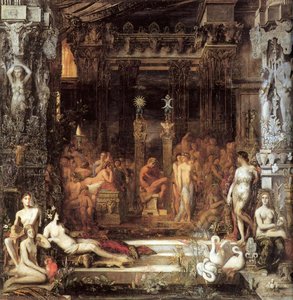
A Portal into the Mythic Dreamscape In the heart of nineteenth-century Paris, Gustave Moreau emerged not merely as a painter, but as a weaver of dreams, and nowhere is this more evident than in his monumental work, The Daughters of Thespius. Created in 1853, this breathtaking oil on canvas serves as an early testament to the artist's profound ability to conjure realms that exist at the intersection of reality and…

8
Jupiter and Semele (1895) (1889) -ja Gustave Moreau

Jupiter and Semele

1895 · Oil On Canvas

In the grand tapestry of nineteenth-century art, few threads shimmer with as much mystery and nocturnal beauty as Gustave Moreau’s Jupiter and Semele. Completed in 1895, this monumental canvas stands as a cornerstone of the Symbolist movement, embodying a profound fascination with dreamlike imagery and psychological exploration. The painting plunges viewers into a scene brimming with dramatic tension, capturing a pivotal moment from Greek mythology where the celestial and the…

9
A megjelenés (1876) (1889) -ja Gustave Moreau

A megjelenés

1876 · Olajfestmény vászonon · Fogg Museum, Cambridge

Ebben az olajvászonon egy fényes, lebegő fej foglalja el a kép felső közepét. Egy sugárzatos, csillagszerű fehér fényhalo, mely körbeveszi ezt a fejet, sugárvonalakat vetít a jelenet át. Ezen az apparíció alatt egy hosszú, hullámos barna hajú nő áll, díszes, félmeztelen ruhában. Az aprément, brokaírozott nyitott köpenyt, egy koronát és különféle ékszereket visel. Jobb feje a lebegő alak felé nyúl. A lábaிய részeknél egy leopárd pihen. A háttér nehéz, korinthusi…

10
Jákob és az Angyal (1876) (1889) -ja Gustave Moreau

Jákob és az Angyal

1876 · Olajfestmény vászonon · Fogg Museum, Cambridge

A vászon egy éjszakai küzdelemről mesél, amely a halálos Jákob és egy isteni jelenlég között zajlik. A kompozíció egy viharos táj előtt, egy táilő hold fényében helyezkedik el, a fókuszban pedig a birkózás fizikai feszültsége áll. A bal oldalon egy angyali alak öltözik bonyolult, ékszerű ruhába, fejét pedig sugárzó, többfínű haló ölüti körbe. Szemben vele egy izmos férfi, Jákob, dinamikus erőfeszítéssel küzd, testét pedig a találkozás hevétől torzítja a küzdelem.…

A Gustave Moreau válogatás folytatódik: 11 – 100

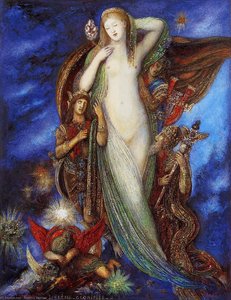
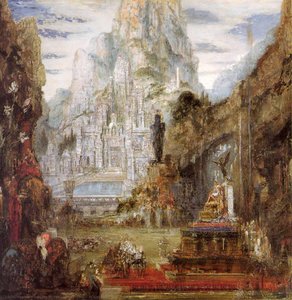
11Salome Dancing (1886) (1889) -ja Gustave MoreauSalome Dancing1886 · Musée d'Orsay 12Sálom börtönben (1876) (1889) -ja Gustave MoreauSálom börtönben1876 · Nemzetközi Nyugati Művészeti Múzeum 13Salomé tánc előtted Herodnak (1876) (1889) -ja Gustave MoreauSalomé tánc előtted Herodnak1876 · Armand Hammer Művészeti Múzeum 14The Muses Leaving Their Father Apollo to go and Enlighten th (1889) -ja Gustave MoreauThe Muses Leaving Their Father Apollo to go and Enlighten thMusée Gustave Moreau 15Hercules and the Lernaean Hydra (1876) (1889) -ja Gustave MoreauHercules and the Lernaean Hydra1876 · Musée Gustave Moreau 16helene glorifiee (1889) -ja Gustave Moreauhelene glorifiee 17Pietà (1854) (1889) -ja Gustave MoreauPietà1854 · Städel Múzeum 18Sainte Cécile et les Anges de la musique (1889) -ja Gustave MoreauSainte Cécile et les Anges de la musique 19The Triumph of Alexander the Great (1892) (1889) -ja Gustave MoreauThe Triumph of Alexander the Great1892 · Musée Gustave Moreau 20Salome Dancing before Herod (1889) -ja Gustave MoreauSalome Dancing before HerodHammer Museum 21Sapho halála (1850) (1889) -ja Gustave MoreauSapho halála1850 · Musée Gustave Moreau 22Jákob és az angyal (1878) (1889) -ja Gustave MoreauJákob és az angyal1878 · Musée Gustave Moreau 23Les Argonautes (1889) -ja Gustave MoreauLes Argonautes 24The Death of Sappho (1872) (1889) -ja Gustave MoreauThe Death of Sappho1872 · Musée Municipal 25Pieta (1889) -ja Gustave MoreauPietaNemzetközi Nyugati Művészeti Múzeum 26Hercules and the Hydra (1876) (1889) -ja Gustave MoreauHercules and the Hydra1876 27The Suitors (1889) -ja Gustave MoreauThe SuitorsMusée Gustave Moreau 28Prince Hamlet kill King Claudius (1889) -ja Gustave MoreauPrince Hamlet kill King Claudius 29La Toilette (1885) (1889) -ja Gustave MoreauLa Toilette1885 · Artizon Museum 30The Sphinx (1864) (1889) -ja Gustave MoreauThe Sphinx1864 31Jupiter et Sémélé (1889) -ja Gustave MoreauJupiter et Sémélé 32Ganymede (1886) (1889) -ja Gustave MoreauGanymede1886 33A beült Salóme (1875) (1889) -ja Gustave MoreauA beült Salóme1875 · Musée Gustave Moreau 34Saint Michael Vanquishing Satan (1882) (1889) -ja Gustave MoreauSaint Michael Vanquishing Satan1882 35La Vie de l'Humanité l'Age d'or, Adam Le soir. Le Sommeil (1889) -ja Gustave MoreauLa Vie de l'Humanité l'Age d'or, Adam Le soir. Le Sommeil 36Sappho (1893) (1889) -ja Gustave MoreauSappho1893 37A utazó angyalok vagy A utazók (1889) -ja Gustave MoreauA utazó angyalok vagy A utazók 38Saint George and the Dragon (1889) -ja Gustave MoreauSaint George and the Dragon 39Hercule et le Lion de Némée (1889) -ja Gustave MoreauHercule et le Lion de Némée 40The Birth of Venus (1889) -ja Gustave MoreauThe Birth of Venus 41Rape of Deianira (1850) (1889) -ja Gustave MoreauRape of Deianira1850 · Musée Gustave Moreau 42Apollo Vanquishing the Serpent Python (1885) (1889) -ja Gustave MoreauApollo Vanquishing the Serpent Python1885 · Kanadai Nemzeti Galéria 43Apollo and the Nine Muses (1889) -ja Gustave MoreauApollo and the Nine Muses 44Prometheus, Variant (1870) (1889) -ja Gustave MoreauPrometheus, Variant1870 · Musée Gustave Moreau 45Naissance de Vénus (1889) -ja Gustave MoreauNaissance de Vénus 46Léda (1889) -ja Gustave MoreauLéda 47Salome with Column (1890) (1889) -ja Gustave MoreauSalome with Column1890 48Szalomé (1875) (1889) -ja Gustave MoreauSzalomé1875 · Musée Gustave Moreau 49Jacob and the Angel (1889) -ja Gustave MoreauJacob and the Angel 50King David (1878) (1889) -ja Gustave MoreauKing David1878 · Musée Gustave Moreau 51Pasiphaë (1880) (1889) -ja Gustave MoreauPasiphaë1880 · Musée Gustave Moreau 52The Peacock complaining to Juno (1881) (1889) -ja Gustave MoreauThe Peacock complaining to Juno1881 53Salome Carrying the Head of John the Baptist on a Platter (1876) (1889) -ja Gustave MoreauSalome Carrying the Head of John the Baptist on a Platter1876 54La Vie de l'Humanité l'Age d'or, Adam Le Midi. L'Extase (1889) -ja Gustave MoreauLa Vie de l'Humanité l'Age d'or, Adam Le Midi. L'Extase 55Hercule et les filles de Thespius (1889) -ja Gustave MoreauHercule et les filles de Thespius 56St. Elisabeth of Hungary (The Miracle of the Roses) (1879) (1889) -ja Gustave MoreauSt. Elisabeth of Hungary (The Miracle of the Roses)1879 57L'enlèvement d'Europe ou Jupiter et Europe (1889) -ja Gustave MoreauL'enlèvement d'Europe ou Jupiter et EuropeMusée Gustave Moreau 58Cleopatra (1887) (1889) -ja Gustave MoreauCleopatra1887 59Jacob et l'Ange (1889) -ja Gustave MoreauJacob et l'AngeMusée Gustave Moreau 60The Pietà (1867) (1889) -ja Gustave MoreauThe Pietà1867 · Harvard Art Museums 61Salome in the Garden (1878) (1889) -ja Gustave MoreauSalome in the Garden1878 62Bethsabée (1889) -ja Gustave MoreauBethsabée 63Delilah (1896) (1889) -ja Gustave MoreauDelilah1896 · Museo de Arte de Ponce 64Diana bathing (1900) (1889) -ja Gustave MoreauDiana bathing1900 · Musée Gustave Moreau 65Galatée (1889) -ja Gustave MoreauGalatée 66Death of Sappho (1870) (1889) -ja Gustave MoreauDeath of Sappho1870 67Moïse sauvé des eaux (1889) -ja Gustave MoreauMoïse sauvé des eauxMusée Gustave Moreau 68Les Licornes (1889) -ja Gustave MoreauLes Licornes 69The Chimera (1867) (1889) -ja Gustave MoreauThe Chimera1867 · Fogg Art Museum 70Moses, in Sight of the Promised Land, Takes His Sandals Off (1854) (1889) -ja Gustave MoreauMoses, in Sight of the Promised Land, Takes His Sandals Off1854 · Musée Gustave Moreau 71Lucretia and Tarquin (1850) (1889) -ja Gustave MoreauLucretia and Tarquin1850 · Musée Gustave Moreau 72The childhood of Sixtus V. (1853) (1889) -ja Gustave MoreauThe childhood of Sixtus V.1853 · Musée d'Orsay 73Cléopâtre (1889) -ja Gustave MoreauCléopâtre 74Hercules and the Stymphalian Birds (1872) (1889) -ja Gustave MoreauHercules and the Stymphalian Birds1872 · Frances Lehman Loeb Art Center 75The Entombment (1867) (1889) -ja Gustave MoreauThe Entombment1867 · Harvard Art Museums 76Sémélé (1889) -ja Gustave MoreauSémélé 77Life of Humanity (1886) (1889) -ja Gustave MoreauLife of Humanity1886 · Musée Gustave Moreau 78Evening and Sorrow (1882) (1889) -ja Gustave MoreauEvening and Sorrow1882 79La Vie de l'Humanité l'Age de fer, Caïn. Le Soir. La Mort (1889) -ja Gustave MoreauLa Vie de l'Humanité l'Age de fer, Caïn. Le Soir. La Mort 80A Saint in the Desert (1879) (1889) -ja Gustave MoreauA Saint in the Desert1879 · Petit Palais 81The Poet and the Siren (1889) -ja Gustave MoreauThe Poet and the Siren 82Françoise de Rimini (1889) -ja Gustave MoreauFrançoise de Rimini 83Ebauche pour Le Triomphe d'Alexandre le Grand (1889) -ja Gustave MoreauEbauche pour Le Triomphe d'Alexandre le Grand 84Saint Martin (1882) (1889) -ja Gustave MoreauSaint Martin1882 85Young Man and Death (1865) (1889) -ja Gustave MoreauYoung Man and Death1865 86The Magi (1860) (1889) -ja Gustave MoreauThe Magi1860 · Musée Gustave Moreau 87Diomedes Devoured by His Horses (1865) (1889) -ja Gustave MoreauDiomedes Devoured by His Horses1865 · Detroit Institute of Arts 88untitled (6379) (1889) -ja Gustave Moreauuntitled (6379) 89Rose thé (1889) -ja Gustave MoreauRose thé 90Hercules and the Lernaean Hydra (1878) (1889) -ja Gustave MoreauHercules and the Lernaean Hydra1878 91Voices of Evening (1885) (1889) -ja Gustave MoreauVoices of Evening1885 · Musée Gustave Moreau 92The Chimera (1867) (1889) -ja Gustave MoreauThe Chimera1867 93Dalila (1889) -ja Gustave MoreauDalila 94Venice (1885) (1889) -ja Gustave MoreauVenice1885 · Musée Gustave Moreau 95Les Prétendants (1889) -ja Gustave MoreauLes Prétendants 96Poète persan (1889) -ja Gustave MoreauPoète persan 97Mystical Flower (1890) (1889) -ja Gustave MoreauMystical Flower1890 · Musée Gustave Moreau 98Scottish Horseman (1854) (1889) -ja Gustave MoreauScottish Horseman1854 · Musée Gustave Moreau 99The Poet and the Saint (1868) (1889) -ja Gustave MoreauThe Poet and the Saint1868 100Salome (Entering the Banquet Room) (1875) (1889) -ja Gustave MoreauSalome (Entering the Banquet Room)1875

Gustave Moreau híres festményei, korszakonként

A témák, amelyek Gustave Moreau figyelmét meghúzták

A négy leggyakorobban előforduló téma ebben az eredeti művekben, mindegyik a legkiválóbb példájával.

A műemlékek, amelyek Gustave Moreau eredeti műveit őrzik

A 8 olyan múzeum, amely a legtöbb ezen az oldalon szereplő festményet őrzi.

Múzeum Város Gustave Moreau művei Ebből a listából származó festmények
Musée Gustave Moreau, ParisMusée Gustave Moreau Paris 85 Jupiter és Semele, The Daughters of Thespius, The Muses Leaving Their Father Apollo to go and Enlighten th
Musée d'Orsay, PárizsMusée d'Orsay Párizs 7 Salome Dancing, The childhood of Sixtus V.
Fogg Museum, CambridgeFogg Museum Cambridge 4 A megjelenés, Jákob és az Angyal
Nemzetközi Nyugati Művészeti Múzeum, TokióNemzetközi Nyugati Művészeti Múzeum Tokió 3 Sálom börtönben, Pieta
Harvard Art Museums, CambridgeHarvard Art Museums Cambridge 3 The Pietà, The Entombment
Louvre Múzeum, PárizsLouvre Múzeum Párizs 2 Phaeton, Szon és Medeia
Metropolitan Művészeti Múzeum, New YorkMetropolitan Művészeti Múzeum New York 2 Salomé a János Apóstok Fejével
Petit Palais, ParisPetit Palais Paris 2 A Saint in the Desert

Gustave Moreau évtizede folgtva: az eredeti művek, amelyek meghatározzák az egyes korzakot

Művek évtizedenként

Váassz ki egy évtizedet, hogy megnézhesd az azt meghatározó eredetiműveket.

Gyűjtői kérdések Gustave Moreau festményeivel kapcsolatban

Melyik művel a(z) Gustave Moreau a leghíresebb?Fedje fel a választ

A Megjelenés (1876). Ezt követi Phaeton (1878) és A partihalászok, kb. 1885.

Hány éves volt Gustave Moreau, amikor a A Megjelenés készült?Fedje fel a választ

50 éves: A Megjelenés 1876-ből származik, Gustave Moreau pedig 1826-ben született.

Melyek a tíz leghíresebb Gustave Moreau festmény?Fedje fel a választ

A Megjelenés, Phaeton, A partihalászok, kb. 1885, Salomé a János Apóstok Fejével, Szon és Medeia, Jupiter és Semele, The Daughters of Thespius, Jupiter and Semele, A megjelenés és Jákob és az Angyal. A fenti rangsor a művek évszamarát és a múzeumát jelzi.

Hány festményet hagyott hátra Gustave Moreau?Fedje fel a választ

Katalógusunkban 535 mű található Gustave Moreau alkotótól, 1850 és 1896 év közötti időszakból.

Mely múzeumokban állnak Gustave Moreau remekművei?Fedje fel a választ

Leginkább Musée Gustave Moreau (Paris), Musée d'Orsay (Párizs) és Fogg Museum (Cambridge) található. A fenti múzeumi táblázatban mindegyik felsorolásra került.

Mely években festette Gustave Moreau leghíresebb műveit?Fedje fel a választ

1870s alatt: a jelen laphonon található 100 műből 23 készült ebben az időszakban, köztük A Megjelenés.

Mikszétek az első és az utolsó híres eredeti műve a(z) Gustave Moreau alkotótól?Fedje fel a választ

Ezen az oldalon a leghitelesebb Sapho halála (1850), a legutóbbi pedig Delilah (1896).

Milyen témaköröket választott leggyakrabban Gustave Moreau?Fedje fel a választ

Mythology (52), Religion (11) és Woman (11), a jelen oldalon található 100 műművészeti alkotás között.

Melyik technikát alkalmazta leggyakrabban Gustave Moreau?Fedje fel a választ

Oil On Canvas, a jelen oldalon található 100 műből 42 darab esetén.

Mely művészeti irányba tartozik Gustave Moreau?Fedje fel a választ

Szimbolista festészet, ezen az oldalon található eredetiek alapján.

Mely Gustave Moreau művei láthatóak a Musée Gustave Moreau kiállتításán?Fedje fel a választ

Jupiter és Semele, The Daughters of Thespius és The Muses Leaving Their Father Apollo to go and Enlighten th: a Musée Gustave Moreau, Paris 26 művet őrzi ezen az oldalon.

Gustave Moreau: életmű és életút

The Life and Art of Gustave Moreau

Gustave Moreau was a French artist who lived a life deeply connected to the streets of Paris. Born in the city on April 6, 1826, he spent his years navigating the shifting currents of the nineteenth century. He was a central figure in the Symbolist movement, a period that looked away from the literal world to find meaning in the unseen. His work was not a pursuit of mere imitation, but an attempt to give form to the internal landscape of the human psyche.

His output was immense. Throughout his life, he produced over 15,000 paintings, watercolors, and drawings. This vast collection reflects a man who was constantly translating myth and religion into a personal visual language. He worked with an intensity that saw him create a massive body of work before he passed away in Paris on April 18, 1898.

His art often focused on the heavy, psychological weight of ancient stories. Rather than simply illustrating a scene, he sought to capture the spiritual essence of his subjects. This approach made him a singular voice in a time when many of his peers were focused on the fleeting light of the natural world. His dedication to this inward exploration left behind a profound record of the human soul.

Early Life, Family and Training

Born into a bourgeois family in Paris, France, Gustave Moreau grew up in a household where structure and melody met. His father, Louis Jean Marie Moreau, worked as an architect and archivist, providing a sense of order and historical depth to their home. His mother, Adèle-Pauline Desmoutier, was a musician, and her influence added a rhythmic sensibility to the family's atmosphere. From a very young age, Gustave showed a natural talent for drawing, a gift that seemed to emerge almost instinctively as he explored the world around him.

His formal education began at Collège Rollin, which is known today as Collège-lycée Jacques-Decour. This early schooling provided the foundation for his later, more specialized studies. He eventually entered the École des Beaux-Arts, where he underwent rigorous academic training. It was here that he studied under figures such as François-Édouard Picot, learning the technical discipline required to master the classical traditions of his time.

Artistic Development and Italian Travels

By the 1850s, Moreau felt the pull of the past, a need to understand the foundations of the art he so deeply respected. This led him to Italy, a period that would fundamentally reshape his vision. He did not merely observe the works of the masters; he lived among them, spending his time making hundreds of copies and studies of Old Master paintings. These were not simple exercises for him. Through the act of replication, he sought to absorb the secrets of composition and the psychological depth found in the works of Michelangelo and Leonardo da Vinci. He studied their anatomy and their ability to capture the human spirit, absorbing their techniques to build his own visual language.

While the Italian masters provided a structural foundation, other influences added a layer of emotional intensity to his developing style. He found himself drawn to the dramatic use of color seen in the works of Eugène Delacroix. This fascination with how color could convey narrative and feeling became a cornerstone of his approach. He was not interested in the objective reality of the world around him, but rather in how light and pigment could express the internal movements of the soul. His time in Italy allowed him to synthesize these diverse influences, blending the classical precision of the Renaissance with a more modern, expressive use of color.

Technique and Symbolic Style

Moreau’s approach to the canvas was a slow, deliberate process. He favored a meticulous layering of paint, building up surfaces that possessed a heavy, physical presence. This method allowed him to create rich textures that seemed to hold light within them. To deepen the spiritual weight of his subjects, he often incorporated gold leaf, a choice that lent his scenes a Byzantine quality. He was less interested in the surface of the natural world and more focused on the expressive power of color and form to convey a specific mood or a hidden meaning.

His paintings are filled with a dense language of symbols. A serpent might appear to represent temptation, while jewels are used to signify earthly desires. These elements do not merely decorate the scene; they act as visual cues for the viewer to look toward the psychological or the spiritual. Through this intricate detail, he built a dreamlike atmosphere where the boundaries of reality felt thin. The figures in his work often seem to exist in a state of suspension, caught between the physical and the ethereal.

Notable Masterpieces and Works

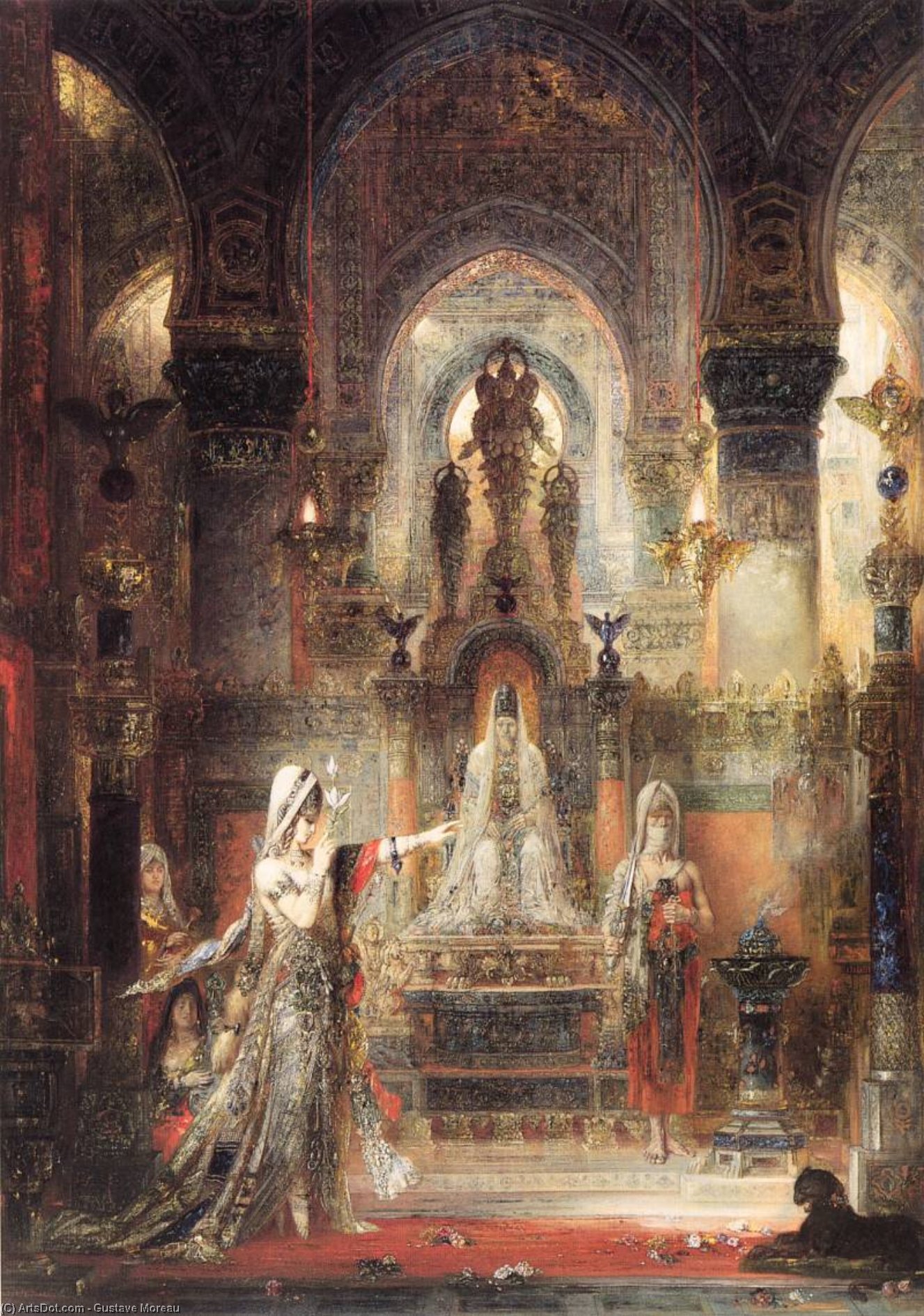
Many of Moreau's most recognized paintings emerged from his deep interest in the stories of antiquity and the Bible. In 1864, he exhibited Oedipus and the Sphinx, a work that helped establish his reputation. His fascination with the figure of Salome led to several different interpretations. One of his most famous works is Salome Dancing before Herod, which captures the tension of the biblical narrative through his unique, detailed approach. He also produced The Apparition between 1874 and 1876, a piece that highlights the strange, dreamlike atmosphere he often sought to create.

As his career progressed, his compositions grew in complexity. In 1885, he painted Voices of Evening, a watercolor that demonstrates his ability to use soft textures to convey a sense of spiritual quietude. Later in his life, in 1895, he completed Jupiter and Semele, a work that reflects the grand, mythological scale he favored. His canvases often felt less like windows into a real room and more like stages for the subconscious, where light and shadow worked together to suggest something beyond the physical world.

Circle, Pupils and Teaching

In his later years, Moreau moved from the quiet seclusion of his studio into the classroom. In 1893, he accepted a professorship at the École des Beaux-Arts, a position that allowed him to pass his ideas to a new generation of painters. He did not teach his students to merely mimic his hand or his specific way of applying paint. Instead, he encouraged them to look inward. He urged them to embrace their own imagination and to find their own unique modes of individual expression, pushing them to move beyond the rigid rules of the academy.

This emphasis on the internal life of the artist left a mark on many who sat in his lectures. Among those who studied under him was Henri Matisse, who would go on to reshape the landscape of modern art. Georges Rouault was another of his pupils, absorbing the lessons of symbolism and personal vision that Moreau championed. Through these students, his belief in the importance of the subconscious and the spiritual became a part of the broader evolution of French painting.

Legacy and Enduring Influence

By the 1890s, Moreau had become a central figure in the Symbolist movement. He did not seek the spotlight, yet his presence was felt deeply by those who followed him. His influence reached into the classrooms of the École des Beaux-Arts, where he encouraged his students to look inward and embrace their own imagination. This focus on individual expression helped pave the way for the modern art that would emerge in the decades following his death.

While his specific style was sometimes met with mixed reactions during his lifetime, his importance was recognized again in the latter half of the 20th century. This period saw a significant reevaluation of his work, as people looked past the surface to find the psychological depth he had spent his life exploring. He is now widely regarded as a precursor to modern art, a man who helped shift the focus of painting from the external world to the internal soul.

The Musée Gustave Moreau in Paris remains a place where his vision is preserved. The building itself, which he helped transform into a museum, keeps his memory alive in the very space where he lived and worked. It is a quiet place that holds the weight of his many years of study and creation.

Where to See the Works Today

To experience his art in the most intimate way, one can visit the Musée Gustave Moreau in Paris, France. This museum is housed in the very building that served as his home and studio. Walking through these spaces allows you to see the environment where he lived and worked, providing a direct connection to his daily life and creative process.

Beyond his personal residence, several major institutions hold his paintings. In Paris, the Louvre also maintains two of his works in its collection. For those traveling further, the Metropolitan Museum of Art in New York holds two more of his paintings, allowing his vision to reach audiences far beyond the streets of France.