Giovanni Bellini portréja

A 100 legnevezesebb Giovanni Bellini festmény, egy galériaválaszték

Frissítve: november 2026 · rangsorolva népszerűségi pontszámunk alapján (minden mű keresései, látogatásai és megrendelései alapján) · 419 mű Giovanni Bellini alkotása a katalógusunkban

Röviden

Giovanni Bellini hagyatékából a leghíresebb alkotás Szent Zachariás altartány (1505), amely a Velence városi San Zaccaria gyűjteményében található. Röviddel ezután követik őket Leonardo Loredan doge (1505) és A szenvedés a kertben (1465). Katalógusunkban 419 mű található Giovanni Bellini alkotótól; a galéria megőrizte a világ által leginkább csodált 100 darabot, melyeket a dátummal, a múzeummal és a történetükkel együtt mutatunk be.

1430 – 1516, Velence Reneszánsz A legtöbb mű: Gallerie dell'Accademia di Venezia

Giovanni Bellini legjobb 10 festménye: a galéria válogatása

1
Szent Zachariás altartány (1505) (1889) -ja Giovanni Bellini

Szent Zachariás altartány

1505 · Olajfestmény panelen · San Zaccaria, Velence

A velencezi San Zaccaria templom szent tiszteletet par excellence sugárzó, megnyugvott csendjében egy olyan világ kapuját nyitja meg, amelyben a földi és a szent realm lélegzetelállító intimitással találkozik egymással. Giovanni Bellini Szent Zachariás altartánya, amelyet 1505-ben fejezett be, sokkal több, mint egy vallási monumentum; ez a velencezi reneszánsz spirituális atmoszférájának mesteri alkotása. Ahogy a néző megközelíti ezt a monumentális művet, nem csupán szent alakok jelenletét figyeli meg, hanem egy szent…

2
Leonardo Loredan doge (1505) (1889) -ja Giovanni Bellini

Leonardo Loredan doge

1505 · Olajfestmény panelen · National Gallery, London

Leonardo Loredan előttünk ül, a csendes tekintély egyik alakja, aki egy mély ultramarin égboltból emelkedik elő. Nem találja a tekintetét a miénkkel; inkább kissé eltolódik a nézés, egy távoli pontra szegeződve a nézőn túl. Ő a Dózs, a Velencei Köztársaság uralkodója, és ruházatának minden apró részlete a tisztsége súlyát hirdeti. Egy szarv alakú dózsi kalap, a corno, pihen a fején, egy finom lenvi kalap rétegzete felett. A fény megkattint a…

3
A szenvedés a kertben (1465) (1889) -ja Giovanni Bellini

A szenvedés a kertben

1465 · Akril festmény vászonon · National Gallery, London

Giovanni Bellini A szenvedés a kertben című műve, mely körülbelül 1465-ben készült, nem csupán egy bibliai jelenet ábrázolása; az emberi érzelmek – a félelem, a kétség és végső módon az elfogadás – mélyreható, lüktető vizsgálata. Ez a temperával készült faalapú remekmű, amely ma a londoni National Gallery szentélyei között helyezkedik el, túlmutat vallási témáján, hogy Krisztus belső küzdelmét nyújtsa át az eljöven árulás előtti pillanatokban, egy rendkívül megható ábrázoláson keresztül.…

4
Madonna a rémedűn (Madonna del Prato) (1505) (1889) -ja Giovanni Bellini

Madonna a rémedűn (Madonna del Prato)

1505 · Olajfestmény panelen

Giovanni Bellini’s “Madonna del Prato,” painted in 1505, isn't merely a depiction of the Virgin Mary and Child; it’s an immersion into a world of serene contemplation – a quintessential Venetian Renaissance masterpiece that continues to resonate with viewers centuries later. This painting, housed within the hallowed halls of the National Gallery in London, offers a glimpse into Bellini’s profound understanding of color, light, and composition, showcasing his mastery over…

5
San Giobbe Altarpiece (detail) (1487) (1889) -ja Giovanni Bellini

San Giobbe Altarpiece (detail)

1487 · Oil On Panel · Gallerie dell'Accademia di Venezia, Velence

The San Giobbe Altarpiece (detail) emerges from the shadows of history to present a sacred moment of quietude. Created by the Venetian painter Giovanni Bellini, this work captures a religious scene where Mary holds a baby Jesus in her arms. The figures exist within a space that feels both intimate and monumental, a hallmark of the Renaissance art that defines this era. Every gaze and gesture within this detail invites…

6
Madonna and Child (1490) (1889) -ja Giovanni Bellini

Madonna and Child

1490 · Oil On Canvas · Accademia Carrara, Bergamo

This exquisite hand-painted reproduction captures the serene beauty of Giovanni Bellini's iconic “Madonna and Child,” a seminal work that embodies the profound spiritual and artistic currents flowing through Venice during the High Renaissance. Executed in 1490, this intimate portrayal of the Virgin Mary with her infant son is more than just a devotional image; it’s a testament to Bellini’s mastery of color, his deep understanding of human emotion, and his…

7
Madonna and Child (1485) (1889) -ja Giovanni Bellini

Madonna and Child

1485 · Oil On Panel · The Nelson-Atkins Museum of Art, Kansas City

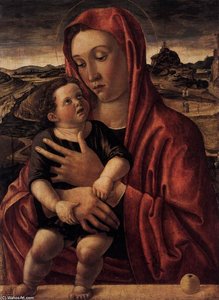
In this religious scene, Giovanni Bellini presents the Madonna and Child, a moment of quietude that feels suspended in time. The Virgin Mary gazes down with a pensive, sidelong look, her eyes reflecting a soft knowledge of her child's future. She holds the infant Christ, whose robust, three-dimensional body and energetic posture contrast with her serene stillness. There is a profound sense of maternal tenderness here, as if the viewer…

8
The Head of Christ (1505) (1889) -ja Giovanni Bellini

The Head of Christ

1505 · Oil On Panel · Kanadai Nemzeti Galéria, Ottawa

A centered, bust-length portrait of Jesus Christ emerges from a dark, undifferentiated background. The composition focuses entirely on the subject, utilizing a soft, luminous quality to establish a sense of divine peace. Light emanates from the front left, casting gentle shadows that provide three-dimensional depth to the facial features and the raised right hand. This hand is held in a gesture of blessing, while subtle, radiating golden lines behind the…

9
Polyptych of San Vincenzo Ferreri (1464) (1889) -ja Giovanni Bellini

Polyptych of San Vincenzo Ferreri

1464 · Oil · Szent János és Pál Bazilika, Velence

Giovanni Bellini’s 1464 Polyptych of San Vincenzo Ferreri stands as a monumental achievement in Venetian Renaissance art, a vibrant tapestry woven with religious devotion, intricate symbolism, and the artist's masterful command of color and form. Housed within the Basilica dei Santi Giovanni e Paolo in Venice, this expansive panel painting offers a profound visual narrative centered on the life and miracles of St. Vincent Ferrer, a Spanish Dominican friar renowned…

10
Krisztus feltámadása (1475) (1889) -ja Giovanni Bellini

Krisztus feltámadása

1475 · Olajfestmény vászonon · Berlin Állami Múzeumai, Berlin

The year is 1479, and Venice, the jewel of the Adriatic, pulsates with artistic innovation. Within its workshops, a young master named Giovanni Bellini is quietly revolutionizing painting – not through dramatic departures from tradition, but through a profound deepening of color, light, and emotional resonance. His “Resurrection of Christ,” a work now housed in prestigious collections, stands as a testament to this evolution, offering a glimpse into the burgeoning…

A Giovanni Bellini válogatás folytatódik: 11 – 100

11Four Allegories: Lust (or Perseverance) (1490) (1889) -ja Giovanni BelliniFour Allegories: Lust (or Perseverance)1490 · Gallerie dell'Accademia di Venezia 12Madonna and Child Giving a Blessing (1480) (1889) -ja Giovanni BelliniMadonna and Child Giving a Blessing1480 · Krakói Művészeti Nemzeti Múzeum 13Four Allegories: Fortune (or Melancholy) (1490) (1889) -ja Giovanni BelliniFour Allegories: Fortune (or Melancholy)1490 · Gallerie dell'Accademia di Venezia 14Madonna and Child with Saints John the Baptist and Elizabeth (1495) (1889) -ja Giovanni BelliniMadonna and Child with Saints John the Baptist and Elizabeth1495 · Städel Múzeum 15Madonna with Trees (1487) (1889) -ja Giovanni BelliniMadonna with Trees1487 · Gallerie dell'Accademia di Venezia 16Madonna with Blessing Child (1475) (1889) -ja Giovanni BelliniMadonna with Blessing Child1475 · Gallerie dell'Accademia di Venezia 17Continence of Scipio (detail) (1507) (1889) -ja Giovanni BelliniContinence of Scipio (detail)1507 · National Gallery of Art 18Transfiguration of Christ (detail) (1487) (1889) -ja Giovanni BelliniTransfiguration of Christ (detail)1487 · Museo di Capodimonte 19Dead Christ Supported by the Madonna and St John (Pietà) (1460) (1889) -ja Giovanni BelliniDead Christ Supported by the Madonna and St John (Pietà)1460 · Pinacoteca di Brera 20Madonna and Child with St. John the Baptist and a Saint (1500) (1889) -ja Giovanni BelliniMadonna and Child with St. John the Baptist and a Saint1500 21St Francis in Ecstasy (1480) (1889) -ja Giovanni BelliniSt Francis in Ecstasy1480 · The Frick Collection 22Four Allegories: Prudence (or Vanity) (1490) (1889) -ja Giovanni BelliniFour Allegories: Prudence (or Vanity)1490 · Gallerie dell'Accademia di Venezia 23Virgin and Child (1480) (1889) -ja Giovanni BelliniVirgin and Child1480 · Kelvingrove Art Gallery and Museum 24Transfiguration of Christ (detail) (1487) (1889) -ja Giovanni BelliniTransfiguration of Christ (detail)1487 · Museo di Capodimonte 25Polyptych of San Vincenzo Ferreri (left panel) (1464) (1889) -ja Giovanni BelliniPolyptych of San Vincenzo Ferreri (left panel)1464 · Szent János és Pál Bazilika 26Pietà (1472) (1889) -ja Giovanni BelliniPietà1472 · Doge-palota 27Sermon of St Mark in Alexandria (1504) (1889) -ja Giovanni BelliniSermon of St Mark in Alexandria1504 · Pinacoteca di Brera 28San Zaccaria Altarpiece (detail) (1505) (1889) -ja Giovanni BelliniSan Zaccaria Altarpiece (detail)1505 · San Zaccaria 29San Giobbe Altarpiece (detail) (12) (1487) (1889) -ja Giovanni BelliniSan Giobbe Altarpiece (detail) (12)1487 · Gallerie dell'Accademia di Venezia 30Pietà (detail) (15) (1472) (1889) -ja Giovanni BelliniPietà (detail) (15)1472 · Doge-palota 31Madonna and Child in a Landscape (1485) (1889) -ja Giovanni BelliniMadonna and Child in a Landscape1485 · National Gallery of Art 32Frari Triptych (detail) (1488) (1889) -ja Giovanni BelliniFrari Triptych (detail)1488 · Bavári Állami Festırménygyűjtemények 33Madonna and Child with St John the Baptist and a Saint (detail) (1500) (1889) -ja Giovanni BelliniMadonna and Child with St John the Baptist and a Saint (detail)1500 34pesaro - Pesaro Altarpiece (predella)2 (1479) (1889) -ja Giovanni Bellinipesaro - Pesaro Altarpiece (predella)21479 35St Jerome Reading in the Countryside (detail) (1480) (1889) -ja Giovanni BelliniSt Jerome Reading in the Countryside (detail)1480 · Galleria degli Uffizi 36Pesaro Altarpiece (predella) (1471) (1889) -ja Giovanni BelliniPesaro Altarpiece (predella)1471 · Musei Civici 37Dead Christ Supported by Two Angels (detail) (1460) (1889) -ja Giovanni BelliniDead Christ Supported by Two Angels (detail)1460 · Museo Correr 38Polyptych of San Vincenzo Ferreri (predella) (1464) (1889) -ja Giovanni BelliniPolyptych of San Vincenzo Ferreri (predella)1464 · Szent János és Pál Bazilika 39The Feast of the Gods, NG (1514) (1889) -ja Giovanni BelliniThe Feast of the Gods, NG1514 40San Giobbe Altarpiece (detail) (1487) (1889) -ja Giovanni BelliniSan Giobbe Altarpiece (detail)1487 41St Jerome Reading in the Countryside (1480) (1889) -ja Giovanni BelliniSt Jerome Reading in the Countryside1480 · National Gallery 422.frari triptych - frari triptych (1489) (1889) -ja Giovanni Bellini2.frari triptych - frari triptych1489 43Frari Triptych (detail) (18) (1488) (1889) -ja Giovanni BelliniFrari Triptych (detail) (18)1488 · Santa Maria Gloriosa dei Frari 44Head of the Redeemer (1500) (1889) -ja Giovanni BelliniHead of the Redeemer1500 45Szent Ijeron Olvasása (1490) (1889) -ja Giovanni BelliniSzent Ijeron Olvasása1490 · National Gallery of Art 46The Martyrdom of Saint Mark (1526) (1889) -ja Giovanni BelliniThe Martyrdom of Saint Mark1526 · Gallerie dell'Accademia di Venezia 47Sacred Conversation (detail) (1490) (1889) -ja Giovanni BelliniSacred Conversation (detail)1490 · Gallerie dell'Accademia di Venezia 48Madonna with the Child (1460) (1889) -ja Giovanni BelliniMadonna with the Child1460 49Transfiguration of Christ (1487) (1889) -ja Giovanni BelliniTransfiguration of Christ1487 · Museo di Capodimonte 50Sermon of St Mark in Alexandria (detail) (1504) (1889) -ja Giovanni BelliniSermon of St Mark in Alexandria (detail)1504 · Pinacoteca di Brera 51Madonna and Child (12) (1510) (1889) -ja Giovanni BelliniMadonna and Child (12)1510 · Galleria Borghese 52Leonardo Loredan (1501) (1889) -ja Giovanni BelliniLeonardo Loredan1501 53Madonna, with Child Standing on a Parapet (1460) (1889) -ja Giovanni BelliniMadonna, with Child Standing on a Parapet1460 · Berlin Állami Múzeumai 54Naked Young Woman in Front of the Mirror (1515) (1889) -ja Giovanni BelliniNaked Young Woman in Front of the Mirror1515 · Kunsthistorisches Museum 55Polyptych of San Vincenzo Ferreri (detail) (1464) (1889) -ja Giovanni BelliniPolyptych of San Vincenzo Ferreri (detail)1464 56Frari Triptych (detail) (10) (1488) (1889) -ja Giovanni BelliniFrari Triptych (detail) (10)1488 · Santa Maria Gloriosa dei Frari 57Madonna and Child with St John the Baptist and a Saint (detail) (1500) (1889) -ja Giovanni BelliniMadonna and Child with St John the Baptist and a Saint (detail)1500 · Gallerie dell'Accademia di Venezia 58The Virgin and Child (1480) (1889) -ja Giovanni BelliniThe Virgin and Child1480 · National Gallery 59Lamentation over the Dead Christ (detail) (1515) (1889) -ja Giovanni BelliniLamentation over the Dead Christ (detail)1515 · Gallerie dell'Accademia di Venezia 60Young Woman at Her Toilette (1515) (1889) -ja Giovanni BelliniYoung Woman at Her Toilette1515 · Kunsthistorisches Museum 61Four Allegories: Prudence and Falsehood (1490) (1889) -ja Giovanni BelliniFour Allegories: Prudence and Falsehood1490 62Madonna and Child with St John the Baptist and a Saint (detail) (1500) (1889) -ja Giovanni BelliniMadonna and Child with St John the Baptist and a Saint (detail)1500 63Transfiguration (1889) -ja Giovanni BelliniTransfigurationAuckland Art Gallery Toi o Tāmaki 64The Virgin and Child (1889) -ja Giovanni BelliniThe Virgin and ChildAshmolean Museum 65Dead Christ Supported by Two Angels (detail) (1480) (1889) -ja Giovanni BelliniDead Christ Supported by Two Angels (detail)1480 · Berlin Állami Múzeumai 66Transfiguration of Christ (1478) (1889) -ja Giovanni BelliniTransfiguration of Christ1478 · Museo di Capodimonte 67Pietà (1471) (1889) -ja Giovanni BelliniPietà1471 · Vatikáni Képtár 68Prudence (1490) (1889) -ja Giovanni BelliniPrudence1490 69Frari Triptych (detail) (17) (1488) (1889) -ja Giovanni BelliniFrari Triptych (detail) (17)1488 · Santa Maria Gloriosa dei Frari 70Dead Christ in the Sepulchre (Pietà) (1460) (1889) -ja Giovanni BelliniDead Christ in the Sepulchre (Pietà)1460 · Museo Poldi Pezzoli 71Madonna of Red Angels (1480) (1889) -ja Giovanni BelliniMadonna of Red Angels1480 72Pietà (detail) (14) (1460) (1889) -ja Giovanni BelliniPietà (detail) (14)1460 · Pinacoteca di Brera 73Pietà (detail) (13) (1460) (1889) -ja Giovanni BelliniPietà (detail) (13)1460 · Pinacoteca di Brera 74Frari Triptych (detail) (19) (1488) (1889) -ja Giovanni BelliniFrari Triptych (detail) (19)1488 · Santa Maria Gloriosa dei Frari 75Sacred Allegory (detail) (1490) (1889) -ja Giovanni BelliniSacred Allegory (detail)1490 · Galleria degli Uffizi 76Portrait of Giovanni Emo (1475) (1889) -ja Giovanni BelliniPortrait of Giovanni Emo1475 · National Gallery of Art 77Deposition (1515) (1889) -ja Giovanni BelliniDeposition1515 78Madonna and Child with Four Saints and Donator (1507) (1889) -ja Giovanni BelliniMadonna and Child with Four Saints and Donator1507 · San Francesco della Vigna 79Madonna and Child Blessing (details) (1510) (1889) -ja Giovanni BelliniMadonna and Child Blessing (details)1510 · Pinacoteca di Brera 80Madonna with Child (1465) (1889) -ja Giovanni BelliniMadonna with Child1465 · Sforza-kastély 81Pietà (detail) (11) (1505) (1889) -ja Giovanni BelliniPietà (detail) (11)1505 · Gallerie dell'Accademia di Venezia 82Head of the Redeemer (1500) (1889) -ja Giovanni BelliniHead of the Redeemer1500 · Gallerie dell'Accademia di Venezia 83The Virgin and Child (1470) (1889) -ja Giovanni BelliniThe Virgin and Child1470 · Harvard Art Museums 84Sacred Allegory (1490) (1889) -ja Giovanni BelliniSacred Allegory1490 · Galleria degli Uffizi 85Portrait of a Young Man (1480) (1889) -ja Giovanni BelliniPortrait of a Young Man1480 · Brooklyn Museum 86Alfonso I d'Este (1476–1534), Duke of Ferrara (501) (1889) -ja Giovanni BelliniAlfonso I d'Este (1476–1534), Duke of Ferrara501 87Madonna and Child Blessing (detail) (1510) (1889) -ja Giovanni BelliniMadonna and Child Blessing (detail)1510 · Pinacoteca di Brera 88Naked Young Woman in Front of the Mirror (detail) (1515) (1889) -ja Giovanni BelliniNaked Young Woman in Front of the Mirror (detail)1515 · Kunsthistorisches Museum 89the presentation at the temple ) (1459) (1889) -ja Giovanni Bellinithe presentation at the temple )1459 90Szent alegória ( részlet ) (1490) (1889) -ja Giovanni BelliniSzent alegória ( részlet )1490 · Galleria degli Uffizi 91Pesaro Altarpiece (predella) (1471) (1889) -ja Giovanni BelliniPesaro Altarpiece (predella)1471 · Musei Civici 92Portrait of a Young Man (1500) (1889) -ja Giovanni BelliniPortrait of a Young Man1500 · National Gallery of Art 93Presentation of Jesus (1500) (1889) -ja Giovanni BelliniPresentation of Jesus1500 · Kunsthistorisches Museum 94Christ Carrying the Cross (1500) (1889) -ja Giovanni BelliniChrist Carrying the Cross1500 · Toledo Művészeti Múzeum 95Madonna and Child (1460) (1889) -ja Giovanni BelliniMadonna and Child1460 · Civica Galleria d'Arte Moderna 96The descent of Christ into limbo (1450) (1889) -ja Giovanni BelliniThe descent of Christ into limbo1450 97Pietà with Saint John the Evangelist (1455) (1889) -ja Giovanni BelliniPietà with Saint John the Evangelist1455 · Krakói Művészeti Nemzeti Múzeum 98Madonna and Child (1455) (1889) -ja Giovanni BelliniMadonna and Child1455 · Metropolitan Művészeti Múzeum 99Polyptych of San Vincenzo Ferreri (central panel) (1464) (1889) -ja Giovanni BelliniPolyptych of San Vincenzo Ferreri (central panel)1464 · Szent János és Pál Bazilika 100Virgin and Child (1475) (1889) -ja Giovanni BelliniVirgin and Child1475 · Yale University Art Gallery

Giovanni Bellini híres festményei, korszakonként

A témák, amelyek Giovanni Bellini figyelmét meghúzták

A négy leggyakorobban előforduló téma ebben az eredeti művekben, mindegyik a legkiválóbb példájával.

A műemlékek, amelyek Giovanni Bellini eredeti műveit őrzik

A 8 olyan múzeum, amely a legtöbb ezen az oldalon szereplő festményet őrzi.

Múzeum Város Giovanni Bellini művei Ebből a listából származó festmények
Gallerie dell'Accademia di Venezia, VelenceGallerie dell'Accademia di Venezia Velence 27 San Giobbe Altarpiece (detail), Four Allegories: Lust (or Perseverance), Four Allegories: Fortune (or Melancholy)
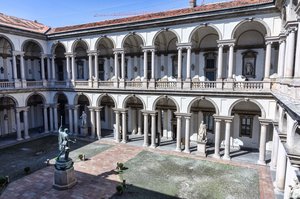
Pinacoteca di Brera, MilánóPinacoteca di Brera Milánó 10 Dead Christ Supported by the Madonna and St John (Pietà), Sermon of St Mark in Alexandria, Sermon of St Mark in Alexandria (detail)
National Gallery of Art, WashingtonNational Gallery of Art Washington 17 Continence of Scipio (detail), Madonna and Child in a Landscape, Szent Ijeron Olvasása
National Gallery, LondonNational Gallery London 15 Leonardo Loredan doge, A szenvedés a kertben, St Jerome Reading in the Countryside
Szent János és Pál Bazilika, VelenceSzent János és Pál Bazilika Velence 9 Polyptych of San Vincenzo Ferreri, Polyptych of San Vincenzo Ferreri (left panel), Polyptych of San Vincenzo Ferreri (predella)
Galleria degli Uffizi, TarunaGalleria degli Uffizi Taruna 7 St Jerome Reading in the Countryside (detail), Sacred Allegory (detail), Sacred Allegory
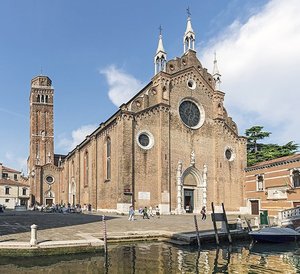
Santa Maria Gloriosa dei Frari, VelenceSanta Maria Gloriosa dei Frari Velence 6 Frari Triptych (detail) (18), Frari Triptych (detail) (10), Frari Triptych (detail) (17)
Kunsthistorisches Museum, BécsKunsthistorisches Museum Bécs 5 Naked Young Woman in Front of the Mirror, Young Woman at Her Toilette, Naked Young Woman in Front of the Mirror (detail)

Giovanni Bellini évtizede folgtva: az eredeti művek, amelyek meghatározzák az egyes korzakot

Művek évtizedenként

Váassz ki egy évtizedet, hogy megnézhesd az azt meghatározó eredetiműveket.

Gyűjtői kérdések Giovanni Bellini festményeivel kapcsolatban

Melyik művel a(z) Giovanni Bellini a leghíresebb?Fedje fel a választ

Szent Zachariás altartány (1505), San Zaccaria, Velence. Ezután Leonardo Loredan doge (1505) és A szenvedés a kertben (1465) következik.

Hány éves volt Giovanni Bellini, amikor a Szent Zachariás altartány készült?Fedje fel a választ

75 éves: Szent Zachariás altartány 1505-ből származik, Giovanni Bellini pedig 1430-ben született.

Melyek a tíz leghíresebb Giovanni Bellini festmény?Fedje fel a választ

Szent Zachariás altartány, Leonardo Loredan doge, A szenvedés a kertben, Madonna a rémedűn (Madonna del Prato), San Giobbe Altarpiece (detail), Madonna and Child, Madonna and Child, The Head of Christ, Polyptych of San Vincenzo Ferreri és Krisztus feltámadása. A fenti rangsor a művek évszamarát és a múzeumát jelzi.

Hány festményet hagyott hátra Giovanni Bellini?Fedje fel a választ

Katalógusunkban 419 mű található Giovanni Bellini alkotótól, 1450 és 1515 év közötti időszakból.

Mely múzeumokban állnak Giovanni Bellini remekművei?Fedje fel a választ

Leginkább Gallerie dell'Accademia di Venezia (Velence), Pinacoteca di Brera (Milánó) és National Gallery of Art (Washington) található. A fenti múzeumi táblázatban mindegyik felsorolásra került.

Mely években festette Giovanni Bellini leghíresebb műveit?Fedje fel a választ

1480s alatt: a jelen laphonon található 100 műből 24 készült ebben az időszakban, köztük San Giobbe Altarpiece (detail).

Mikszétek az első és az utolsó híres eredeti műve a(z) Giovanni Bellini alkotótól?Fedje fel a választ

Ezen az oldalon a leghitelesebb The descent of Christ into limbo (1450), a legutóbbi pedig Naked Young Woman in Front of the Mirror (1515).

Milyen témaköröket választott leggyakrabban Giovanni Bellini?Fedje fel a választ

Renaissance (24), Virgin mary (17) és Renaissance art (17), a jelen oldalon található 100 műművészeti alkotás között.

Melyik technikát alkalmazta leggyakrabban Giovanni Bellini?Fedje fel a választ

Oil On Panel, a jelen oldalon található 100 műből 50 darab esetén.

Mely művészeti irányba tartozik Giovanni Bellini?Fedje fel a választ

Reneszánsz, ezen az oldalon található eredetiek alapján.

Mely Giovanni Bellini művei láthatóak a Gallerie dell'Accademia di Venezia kiállتításán?Fedje fel a választ

San Giobbe Altarpiece (detail), Four Allegories: Lust (or Perseverance) és Four Allegories: Fortune (or Melancholy): a Gallerie dell'Accademia di Venezia, Velence 13 művet őrzi ezen az oldalon.

Giovanni Bellini: életmű és életút

The Life and Identity of Giovanni Bellini

In the winding streets of Venice, a city defined by its waters and its light, Giovanni Bellini began his life around 1430. He was a man born into a lineage of painters, a place where the brush was as essential as the salt air. While many know the name Bellini, it was Giovanni who likely achieved the greatest fame among his kin, carving out a presence that would define the Venetian Renaissance. His life was deeply intertwined with the very fabric of his city, from the quiet devotion of religious commissions to the grand halls of power.

His existence was a long, steady progression through the changing tides of Italian art. He did not merely observe the world; he sought to capture its essence through a changing medium, moving from the rigid traditions of his youth toward something far more luminous. This evolution was not a sudden leap but a gradual unfolding of talent that spanned many decades. He remained a fixture of the Venetian scene until his death in 1516, leaving behind a legacy that would shape the hands of those who followed him.

Early Life, Family and Training

The boy grew up within the busy, creative walls of the household of Jacopo Bellini. For many years, it was believed that Jacopo was his father, though modern inquiries into the family lineage suggest a different connection, perhaps that of an elder half-brother. Regardless of the exact bloodline, the young Giovanni was surrounded by the tools and pigments of the trade from his earliest days. He lived and worked closely with Gentile Bellini, his brother, absorbing the traditions that defined their family's place in the Venetian artistic landscape.

In 1443, the young apprentice accompanied his father on a working trip to Padua. This exposure to the artistic currents of the mainland likely helped shape his developing eye. During these formative years, his hands were accustomed to the old tempera method. This technique required a disciplined, careful application of pigment to avoid mistakes, as the medium dried with great speed. He learned to build his images through this meticulous process, long before the arrival of the new oils that would later transform his hand. His early works reflect this rigorous training, showing a devotion to the precise lines and structured compositions required by the tempera tradition.

Patrons, Workshop and Commissions

The prosperity of Venice often found its way into the hands of those who could capture its spirit on wood and canvas. For Bellini, this meant navigating a world of high-ranking officials and wealthy families who sought to secure their legacy through sacred art. The Pesaro family, for instance, entrusted him with the creation of the Frari Triptych, a work that would find its home in the Basilica di Santa Maria Gloriosa dei Frari. Such commissions were the lifeblood of his studio, providing the means to sustain a workshop that would eventually shape the very nature of Venetian painting.

His reputation extended into the very heart of the Venetian state. He was called upon to serve as the conservator of the paintings within the Doge's Palace, a duty that required both technical skill and a deep respect for the city's visual history. This position brought with it significant rewards and a steady security. He was granted a fixed annual pension of eighty ducats, a substantial sum that spoke to the value the state placed upon his hands. Furthermore, he was awarded a reversion of a broker's place in the Fondaco dei Tedeschi, a practical and lucrative piece of Venetian commerce that anchored his standing in the city's social fabric.

His workshop was a place of constant movement, where the traditions of his family met the changing needs of a growing Republic. While he worked on grand altarpieces for the great churches, his studio also managed the intricate details of smaller, more intimate devotional panels. This steady stream of work, from the grandest state commissions to the private requests of merchant families, ensured that his influence was felt in every corner of the city.

Technique and Style

As the years passed, Bellini’s hand underwent a profound transformation. In his youth, his brush followed the strict, linear precision of the International Gothic style, where every edge was clearly defined and every form was contained by a sharp outline. However, as he matured, he began to move away from this rigid clarity. He sought a softer way of seeing, one that favored the gentle modeling of forms and a more lyrical approach to the stories he painted. This shift allowed him to capture a sense of atmosphere that had previously been elusive in the works of his predecessors.

The true revolution in his method arrived with his embrace of oil paint. While many of his contemporaries still relied upon the quick-drying tempera, Bellini was among the first Venetian artists to fully exploit the unique potential of oil. By using these clear, slow-drying pigments, he gained the freedom to blend colors with a new level of subtlety. He could layer glazes to create deep, rich tints and delicate shadings that seemed to hold the light within them. This mastery of the medium changed the very nature of Venetian painting, moving it toward a more sensuous and coloristic style. His landscapes began to breathe with a natural light, and his figures gained a soft, realistic quality that spoke of a world governed by light and air rather than mere line.

Circle, Rivals and Pupils

The artist moved through a world of profound connections, where the boundaries of style were constantly being redrawn. He found a significant presence in his brother-in-law, Andrea Mantegna, whose influence helped shape the early direction of his work. This connection brought him into contact with new ideas regarding anatomical perspective, which he absorbed and integrated into his own evolving vision. As he moved away from the rigid lines of his youth, his art began to reflect a more natural understanding of the human form in space.

The legacy of the Bellini brothers provided the very foundation upon which the Venetian School was built. Through his workshop, Giovanni did more than just teach technique; he nurtured the spirits of those who would eventually redefine the art of Venice. His influence flowed directly into the hands of his most notable pupils, Giorgione and Titian. These men took the lessons learned under his guidance and pushed the boundaries of color and atmosphere even further, ensuring that the seeds planted in his studio would bloom across the generations.

Key Works

As his hand grew more certain, Bellini began to move away from the rigid, sculptural lines of Mantegna. This shift is clearly seen in his Agony in the Garden, where the landscape opens up into a low-lying expanse of natural light. The stiff drapery of his earlier years gave way to softer, sweeping folds, and the compositions became more intimate. He sought a new way to connect the viewer to the scene, often placing figures behind pedestals to create the illusion that they occupied the same space as the observer.

His religious commissions often transformed the very atmosphere of the spaces they inhabited. The Transfiguration, likely painted after 1470, shows a growing mastery of his craft, possessing a serenity that his earlier works lacked. In the Basilica di Santa Maria Gloriosa dei Frari, his Frari Triptych remains a significant presence, offering a window into the spiritual devotion of Venice. These works reveal a man deeply engaged with the changing light of his city.

By 1490, his ability to weave symbolism into his compositions had reached a new level of sophistication. In Sacred Allegory, he used oil to create a sense of depth and a quiet, contemplative mood. He was a painter who understood how to use color to suggest the weight of human emotion and the presence of the divine. His later years saw him perfecting this language of light and shadow.

Where to See the Works Today

To walk through the halls of the Gallerie dell'Accademia di Venezia is to encounter the very heart of his legacy, for this collection holds twenty-four of his works. Here, one might find the Madonna with Child Blessing from about 1460 or the Madonna with Trees. The city of Venice remains the most vital repository of his hand, keeping his spirit close to the waters where he lived and worked. Other treasures can be found in the Basilica dei Santi Giovanni e Paolo, where nine of his pieces reside, and within the San Zaccaria altarpiece.

His influence traveled far beyond the lagoons of his birth, reaching the great galleries of Europe. In London, the National Gallery preserves twelve works, including the Agony in the Garden and the The Virgin and Child. Across the sea, the National Gallery of Art in Washington also maintains twelve of his paintings, such as the Portrait of a Condottiere (Giovanni Emo). These collections allow a traveler to see how his use of light and color moved through different lands and eras.

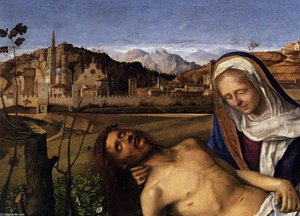
The Pinacoteca di Brera in Milan offers ten works to those who seek his more somber or complex compositions. In this space, the Dead Christ Supported by the Madonna and St John (Pietà) from about 1460 remains a powerful presence. Beyond these major institutions, his presence is felt in many other corners of the continent: