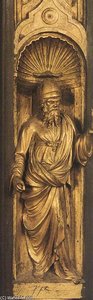
Ghiberti portréja

A 45 legnevesebbebb Ghiberti festmény, mindegyik egyedistens

Frissítve: november 2026 · rangsorolva népszerűségi pontszámunk alapján (minden mű keresései, látogatásai és megrendelései alapján) · 47 mű Ghiberti alkotása a katalógusunkban

Röviden

Solomon and the Queen of Sheba (1425) az a Ghiberti festmény, amely a legtöbb tekintetet felvonja; az eredeti mű a Baptistery of San Giovanni gyűjteményében található, Florencia. Ezután a tekintet The Flagellation (1403) és Entry into Jerusalem (1403) elemre irányul. A Ghiberti 47 műve közül a katalógusunkban megtalálható 45 legnépesebb alkotás, melyeket az év, a múzeum és az örökévalóságának okai kísérnek.

1378 – 1455, Firenze Early renaissance A legtöbb mű: Baptistery of San Giovanni

A galéria szemével: Ghiberti legjobb 10 festménye

1
Solomon and the Queen of Sheba (1425) (1889) -ja Ghiberti

Solomon and the Queen of Sheba

1425 · Acrylic On Canvas · Baptistery of San Giovanni, Florencia

Lorenzo Ghiberti’s Vision of Paradise: A Study in Bronze and Biblical Narrative The panel No. 10 from Lorenzo Ghiberti's monumental Gates of Paradise for the Baptistery of Florence stands as a testament to Renaissance artistic ambition and theological contemplation. Completed around 1425, this breathtaking depiction captures a pivotal moment from biblical lore – Solomon’s famed audience with Queen Sheba – transforming it into an emblem of divine wisdom confronting earthly…

2
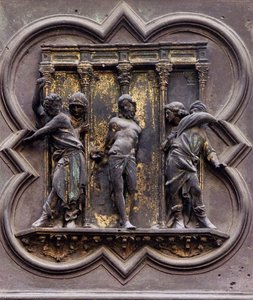
The Flagellation (1403) (1889) -ja Ghiberti

The Flagellation

1403 · Bronze · Baptistery of San Giovanni, Florencia

To stand before a depiction of The Flagellation, particularly one rendered with the masterful hand of Lorenzo Ghiberti, is to be plunged immediately into a vortex of human suffering and profound spiritual drama. This bronze sculpture, dating from 1403, is not merely an artistic representation; it is a visceral narrative moment frozen in time. The scene captures the raw intensity of physical torment, yet within that agony, Ghiberti masterfully embeds…

3
Entry into Jerusalem (1403) (1889) -ja Ghiberti

Entry into Jerusalem

1403 · Bronze · Baptistery of San Giovanni, Florencia

Lorenzo Ghiberti's "Entry into Jerusalem," a bronze relief panel executed in 1403, isn’t merely a depiction of a biblical event; it’s a carefully constructed tableau brimming with symbolic weight and technical brilliance. This work, part of the monumental pair adorning the north doors of Florence’s Baptistery – alongside Masaccio's equally stunning “Last Judgment” – immediately commands attention not just for its scale but for the palpable energy radiating from the…

4
Sibyl (detail from the east door) (1425) (1889) -ja Ghiberti

Sibyl (detail from the east door)

1425 · Bronze · Baptistery of San Giovanni, Florencia

To gaze upon this detail from Lorenzo Ghiberti’s celebrated East Door on the Florence Baptistery is to encounter a moment suspended between history and divine revelation. This bronze sculpture, depicting a Sibyl, is far more than mere ornamentation; it is a profound meditation on knowledge, foresight, and the enduring power of prophecy. The figure emerges with an almost palpable sense of gravitas, her form rendered in rich, aged bronze that…

5
St John the Baptist (detail) (1412) (1889) -ja Ghiberti

St John the Baptist (detail)

1412 · Bronze · Órsanmichele, Florencia

To gaze upon this detailed study of St John the Baptist is to encounter not merely a sculpture, but a profound meditation on spiritual fervor and timeless devotion. The subject, captured in exquisite bronze detail, immediately draws the viewer into an intimate moment with sacred history. The craftsmanship speaks volumes; every curl of hair, every ripple suggested in the beard, has been rendered with painstaking fidelity. It is a portrait…

6
Adoration of the Magi (1403) (1889) -ja Ghiberti

Adoration of the Magi

1403 · Bronze · Baptistery of San Giovanni, Florencia

Lorenzo Ghiberti's "Adoration of the Magi," completed in 1403, isn’t merely a depiction of a biblical scene; it’s a shimmering portal into the heart of Renaissance Florence. This bronze relief, originally destined for the doors of the Baptistery of San Giovanni, stands as a testament to Ghiberti's mastery of form, his profound understanding of perspective, and his ability to imbue religious narrative with an almost palpable sense of dynamism. More…

7
The Creation of Adam and Eve (detail) (1425) (1889) -ja Ghiberti

The Creation of Adam and Eve (detail)

1425 · Baptistery of San Giovanni, Florencia

To gaze upon this detail from Lorenzo Ghiberti's masterpiece, The Creation of Adam and Eve, is to witness not merely an artistic rendering, but the very moment of divine breath made visible. This close-up captures the electrifying instant when life sparks into being—a narrative charged with profound theological weight and breathtaking human connection. The composition centers on that iconic gesture: the near-touching of fingers between God and Adam. It is…

9
Solomon and the Queen of Sheba (detail) (1425) (1889) -ja Ghiberti

Solomon and the Queen of Sheba (detail)

1425 · Bronze · Baptistery of San Giovanni, Florencia

In this detailed relief, we observe a quiet encounter from the Old Testament. The scene captures the meeting between King Solomon and the Queen of Sheba, a moment defined by the exchange of wisdom and the presentation of rare treasures. The bronze medium allows for a remarkable depth of expression, where the weight of the figures and the intricate folds of their garments suggest a gravity that transcends the metal…

10
North Doors (Life of Christ) (1403) (1889) -ja Ghiberti

North Doors (Life of Christ)

1403 · Bronze · Baptistery of San Giovanni, Florencia

The North Doors (Life of Christ) are a monumental work of bronze sculpture located at the Baptistry in Florence, Italy. Created by Lorenzo Ghiberti, these doors consist of twenty-eight panels arranged in seven rows of four, with two panels per leaf. The composition features a mixtilinear frame known as a quatrefoil, which contains forty-seven heads of Prophets and Sibyls at the corners of the panels. Between the panels, decorative plant…

Ghiberti híres festményei, 11 és 45 között

11St John the Baptist (1412) (1889) -ja GhibertiSt John the Baptist1412 · Órsanmichele 12St John the Baptist (1412) (1889) -ja GhibertiSt John the Baptist1412 · Órsanmichele 13Eastern Door of the Baptistry (1425) (1889) -ja GhibertiEastern Door of the Baptistry1425 · Baptistery of San Giovanni 14Jacob and Esau (detail) (1425) (1889) -ja GhibertiJacob and Esau (detail)1425 · Baptistery of San Giovanni 15Pilate Washing His Hands (1403) (1889) -ja GhibertiPilate Washing His Hands1403 · Baptistery of San Giovanni 16Eastern Door of the Baptistry (1425) (1889) -ja GhibertiEastern Door of the Baptistry1425 · Baptistery of San Giovanni 17The Baptism of Christ (1427) (1889) -ja GhibertiThe Baptism of Christ1427 · San Giovanni 18Cain and Abel (detail) (1425) (1889) -ja GhibertiCain and Abel (detail)1425 · Baptistery of San Giovanni 19Cain and Abel (1425) (1889) -ja GhibertiCain and Abel1425 · Baptistery of San Giovanni 20North Doors (1401) (1889) -ja GhibertiNorth Doors1401 · Baptistery of San Giovanni 21Sacrifice of Isaac (1401) (1889) -ja GhibertiSacrifice of Isaac1401 · Museo Nazionale del Bargello 22Discovery of the Golden Cup (detail) (1425) (1889) -ja GhibertiDiscovery of the Golden Cup (detail)1425 · Baptistery of San Giovanni 23The Annunciation (1403) (1889) -ja GhibertiThe Annunciation1403 · Baptistery of San Giovanni 24The Story of Abraham (1425) (1889) -ja GhibertiThe Story of Abraham1425 · Baptistery of San Giovanni 25Creation of Adam and Eve (1425) (1889) -ja GhibertiCreation of Adam and Eve1425 · Baptistery of San Giovanni 26St Stephen (1428) (1889) -ja GhibertiSt Stephen1428 · Órsanmichele 27Door of a Ciborium (1450) (1889) -ja GhibertiDoor of a Ciborium1450 · Ospedale di Santa Maria Nuova 28Sacrifice of Isaac (1401) (1889) -ja GhibertiSacrifice of Isaac1401 · Museo Nazionale del Bargello 29Noah and the Flood (1425) (1889) -ja GhibertiNoah and the Flood1425 · Baptistery of San Giovanni 30The Story of Joseph (1425) (1889) -ja GhibertiThe Story of Joseph1425 · Baptistery of San Giovanni 31Saint Francis Receiving the Stigmata (1402) (1889) -ja GhibertiSaint Francis Receiving the Stigmata1402 · Yale University Art Gallery 32Last Supper (1403) (1889) -ja GhibertiLast Supper1403 · Baptistery of San Giovanni 33Door of a Ciborium (detail) (1450) (1889) -ja GhibertiDoor of a Ciborium (detail)1450 · Ospedale di Santa Maria Nuova 34St Matthew and Tabernacle (1419) (1889) -ja GhibertiSt Matthew and Tabernacle1419 · Órsanmichele 35Door of the Paradise (1452) (1889) -ja GhibertiDoor of the Paradise1452 36Madonna and Child (1889) -ja GhibertiMadonna and ChildBiennale Internazionale dell'Antiquariato di Firenze 37Eastern Door - Self-Portrait (1889) -ja GhibertiEastern Door - Self-Portrait 38Eastern Door - Jacob and Esau (1889) -ja GhibertiEastern Door - Jacob and Esau 39Eastern Door - The Creation of Adam and Eve (1889) -ja GhibertiEastern Door - The Creation of Adam and Eve 40Eastern Door - Creation of Adam and Eve (1889) -ja GhibertiEastern Door - Creation of Adam and Eve 41Tabernacle of the Linaioli (1433) (1889) -ja GhibertiTabernacle of the Linaioli1433 · San Marco Múzeum 42stained-glass window in San Lorenzo (1412) (1889) -ja Ghibertistained-glass window in San Lorenzo1412 · Museo dell'Opera del Duomo 43Assumption of the Virgin (1404) (1889) -ja GhibertiAssumption of the Virgin1404 · Museo dell'Opera del Duomo 44The Presentation in the Temple (1443) (1889) -ja GhibertiThe Presentation in the Temple1443 · Museo dell'Opera del Duomo 45The Prayer in the Garden (1443) (1889) -ja GhibertiThe Prayer in the Garden1443 · Museo dell'Opera del Duomo

Ghiberti híres festményei, korszakonként

A témák, amelyek Ghiberti figyelmét meghúzták

A négy leggyakorobban előforduló téma ebben az eredeti művekben, mindegyik a legkiválóbb példájával.

A műemlékek, amelyek Ghiberti eredeti műveit őrzik

A 8 olyan múzeum, amely a legtöbb ezen az oldalon szereplő festményet őrzi.

Múzeum Város Ghiberti művei Ebből a listából származó festmények
Baptistery of San Giovanni, FlorenciaBaptistery of San Giovanni Florencia 23 Solomon and the Queen of Sheba, The Flagellation, Entry into Jerusalem
Órsanmichele, FlorenciaÓrsanmichele Florencia 5 St John the Baptist (detail), St John the Baptist, St John the Baptist
Museo dell'Opera del Duomo, FirenzeMuseo dell'Opera del Duomo Firenze 4 stained-glass window in San Lorenzo, Assumption of the Virgin, The Presentation in the Temple
Museo Nazionale del Bargello, FiorenceMuseo Nazionale del Bargello Fiorence 2 Sacrifice of Isaac, Sacrifice of Isaac
Ospedale di Santa Maria Nuova, FirenzeOspedale di Santa Maria Nuova Firenze 2 Door of a Ciborium, Door of a Ciborium (detail)
San Giovanni, SienaSan Giovanni Siena 1 The Baptism of Christ
Yale University Art Gallery, New HavenYale University Art Gallery New Haven 1 Saint Francis Receiving the Stigmata
Biennale Internazionale dell'Antiquariato di Firenze, FirenzeBiennale Internazionale dell'Antiquariato di Firenze Firenze 1 Madonna and Child

Ghiberti évtizedekig: egy egyedi eredeti mű minden évtizedben

Művek évtizedenként

Váassz ki egy évtizedet, hogy megnézhesd az azt meghatározó eredetiműveket.

Ghiberti festményei: kérdések a galériának

Mi a leghíresebb műve Ghibertinek?Fedje fel a választ

Solomon and the Queen of Sheba (1425), Baptistery of San Giovanni, Florencia. Ezután The Flagellation (1403) és Entry into Jerusalem (1403) következik.

Milyen életkorában alkotta meg Ghiberti a(z) Solomon and the Queen of Sheba műszt?Fedje fel a választ

47 éves: Solomon and the Queen of Sheba 1425-ből származik, Ghiberti pedig 1378-ben született.

Melyik tíz festménye Ghiberti a leghíresebb?Fedje fel a választ

Solomon and the Queen of Sheba, The Flagellation, Entry into Jerusalem, Sibyl (detail from the east door), St John the Baptist (detail), Adoration of the Magi, The Creation of Adam and Eve (detail), Biblical Person (detail from the east door), Solomon and the Queen of Sheba (detail) és North Doors (Life of Christ). A fenti rangsor a művek évszamarát és a múzeumát jelzi.

Hány mű alkotása ismert Ghiberti nevében?Fedje fel a választ

Katalógusunkban 47 mű található Ghiberti alkotótól, 1401 és 1452 év közötti időszakból.

Hol tekinthetők meg a leghíresebb Ghiberti eredetijeit?Fedje fel a választ

Leginkább Baptistery of San Giovanni (Florencia), Órsanmichele (Florencia) és Museo dell'Opera del Duomo (Firenze) található. A fenti múzeumi táblázatban mindegyik felsorolásra került.

Melyik időszakban alkotta Ghiberti a leghíresebb festményeit?Fedje fel a választ

1420s alatt: a jelen laphonon található 45 műből 17 készült ebben az időszakban, köztük Solomon and the Queen of Sheba.

Melyik híres Ghiberti festmény a legkorábbi, és melyik a legutóbb készült?Fedje fel a választ

Ezen az oldalon a leghitelesebb North Doors (1401), a legutóbbi pedig Door of the Paradise (1452).

Milyen témakörket kedvelt Ghiberti?Fedje fel a választ

Bronze sculpture (13), Biblical narrative (12) és Bronze relief (7), a jelen oldalon található 45 műművészeti alkotás között.

Milyen anyagokkal festett leggyakrabban Ghiberti?Fedje fel a választ

Bronze, a jelen oldalon található 45 műből 20 darab esetén.

Mely művészeti irányba tartozik Ghiberti műve?Fedje fel a választ

Early renaissance és Renaissance, ezen az oldalon található eredetiek alapján.

Milyen Ghiberti eredeti műveket láthatok a Baptistery of San Giovanni kiállításaiban?Fedje fel a választ

Solomon and the Queen of Sheba, The Flagellation és Entry into Jerusalem: a Baptistery of San Giovanni, Florencia 23 művet őrzi ezen az oldalon.

Ghiberti: a művész portréja

A Florentine Renaissance Forged in Bronze: The Life and Legacy of Lorenzo Ghiberti

Lorenzo di Bartolo – a name destined to become synonymous with artistic innovation as Lorenzo Ghiberti – was born near Florence in 1378, into a world poised on the cusp of a transformative era. His early life, steeped in the practical artistry of goldsmithing, provided him with an unparalleled foundation in metalwork, a skill he would later elevate to breathtaking heights through his monumental sculptures. However, Ghiberti’s ambitions extended far beyond the confines of the workshop; formal painting lessons from Gherardo Starnina broadened his artistic horizons, laying the groundwork for a multifaceted talent that would soon captivate Florence and reshape the very definition of Renaissance sculpture. A brief sojourn in Rimini, assisting Carlo I Malatesta with frescoes during the devastating plague of 1400, exposed him to diverse artistic currents and honed his observational skills – experiences that unknowingly prepared him for the monumental competition that would launch his career into immortality.

The Baptistery Doors: A Triumph of Skill and Vision

In 1401, Florence held a contest of unparalleled significance: the selection of an artist to create new bronze doors for the city’s magnificent Baptistery – a commission considered the most prestigious in the entire region. This wasn't merely a job; it was a chance to etch one’s name into the very heart of Florentine history. Lorenzo Ghiberti, alongside the formidable Filippo Brunelleschi, entered this arena, each vying for the honor of depicting the *Sacrifice of Isaac* in relief. Ghiberti’s panel wasn't simply a demonstration of technical mastery; it was a revelation – an audacious leap forward in artistic sensibility. His innovative approach, characterized by graceful figures imbued with a profound sense of movement and a sophisticated understanding of perspective, secured his victory. This triumph wasn't merely about winning a commission; it was a declaration of a new artistic language, one that would forever alter the course of Florentine sculpture. He immediately began work on the North Doors, a project that would consume over two decades and transform the Baptistery into a breathtaking showcase of Renaissance artistry. The scale of this undertaking was staggering. Ghiberti’s workshop became a vibrant hub for emerging talent, attracting apprentices eager to learn from his unparalleled skill. Donatello, Masolino, and Paolo Uccello – all future masters – honed their craft within its walls, absorbing Ghiberti's techniques and contributing to the collective genius of the studio. The North Doors were not merely decorative; they were a testament to the power of human ingenuity and artistic vision. Each panel was meticulously crafted, reflecting a deep understanding of anatomy, drapery, and spatial relationships – elements that would become hallmarks of his later work.

The “Gates of Paradise”: A Masterpiece Unveiled

Following the resounding success of the North Doors, Ghiberti was entrusted with an even more ambitious undertaking: the creation of a second set for the Baptistery’s east entrance. These doors, completed in 1452 and forever known as the “Gates of Paradise,” represented the pinnacle of his artistic achievement – and earned him a nickname bestowed by none other than Michelangelo himself. Each panel depicts scenes from the Old Testament with an unprecedented level of realism, detail, and emotional depth. Ghiberti’s mastery of bronze casting and relief sculpture reached its zenith in these works. The panels aren't merely representations of biblical stories; they are immersive narratives brought to life through meticulous attention to anatomy, drapery, and spatial relationships. He pioneered the use of perspective to create a sense of depth and realism that was revolutionary for his time, drawing inspiration from classical antiquity while simultaneously forging a distinctly Renaissance style. The sheer scale and complexity of the “Gates of Paradise” demanded an extraordinary level of skill and dedication. Ghiberti’s workshop buzzed with activity as hundreds of workers labored alongside him, each contributing to the creation of this monumental masterpiece. The doors were not simply crafted; they were sculpted – imbued with a sense of life and movement that captivated viewers for centuries to come.

Style, Influences, and Lasting Impact

Ghiberti’s artistic style represents a beautiful synthesis of Gothic elegance and the emerging principles of Renaissance humanism. While rooted in the traditions of medieval craftsmanship, he embraced classical antiquity, incorporating elements of Roman art and sculpture into his work. This fusion created a unique aesthetic that was both refined and emotionally resonant. He wasn't simply imitating the past; he was reinterpreting it through a distinctly Renaissance lens. His use of light and shadow, combined with his masterful rendering of human figures, created a sense of drama and realism that was unparalleled in its time. Beyond his artistic achievements, Ghiberti left behind a valuable intellectual legacy in the form of *Commentarii*, an autobiographical treatise on art history, theory, and technique – one of the earliest examples of its kind by an artist. This meticulously documented account provides invaluable insights into the Renaissance artistic process, offering a rare glimpse into the mind of a master craftsman. He wasn’t just creating beautiful sculptures; he was also actively shaping the discourse surrounding art itself.

A Legacy Cast in Bronze

Lorenzo Ghiberti died in Florence in 1455, leaving behind a body of work that profoundly influenced subsequent generations of artists. His innovations paved the way for masters like Leonardo da Vinci and Michelangelo, solidifying his place as a pivotal figure in Western art history. The “Gates of Paradise” remain an enduring symbol of Florentine civic pride and artistic achievement – a testament to the power of human creativity and the enduring beauty of Renaissance artistry. Ghiberti’s meticulous attention to detail, his mastery of perspective, and his ability to imbue his sculptures with emotional depth set a new standard for artistic excellence. *His legacy continues to inspire artists and art lovers alike,* reminding us of the profound impact that one individual can have on the course of history.