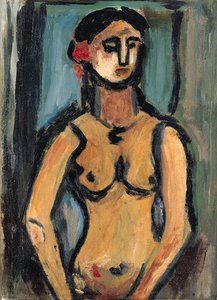
Georges Rouault portréja

Georges Rouault festményei: A 100 leghíresebb alkotás, egy galéria szemével

Frissítve: október 2026 · rangsorolva népszerűségi pontszámunk alapján (minden mű keresései, látogatásai és megrendelései alapján) · 268 mű Georges Rouault alkotása a katalógusunkban

Röviden

A galéria szerint Georges Rouault leghíresebb festménye a Head of Christ. Head of Christ 1 és The Breton Wedding (1937) kiegészítik azt a triót, amelyet minden szem felismer. A katalógusunkban szereplő 268 művész Georges Rouault alkotásából a galéria az alábbi 100 leghíresebbet mutatja be, amelyek mind egyedi originális művek, a készítés évszámával, a múzeum megnevezésével és a különlegességük leírásával.

1871 – 1958, Párizs 19. kerülete Fauvism A legtöbb mű: Art Institute of Chicago

A galéria top 10 Georges Rouault festménye

1
Head of Christ szerzője Georges Rouault

Head of Christ

Oil On Panel

The face emerges from a deep, saturated blue background. It is a man's countenance, fixed with an intense and focused gaze that meets the viewer directly. His eyes are wide, open, and heavy with a quiet, introspective weight. A beard provides a rough texture to his features, grounding the ethereal color of the backdrop in something physical and tactile. On the left side of the face, a small bird rests,…

2
Head of Christ 1 szerzője Georges Rouault

Head of Christ 1

Oil On Panel

In this portrait, the face of Christ emerges from a profound, saturated blue, a space that offers no horizon and no sense of physical depth. The subject's countenance is fixed with an intense, focused gaze that meets the viewer directly, creating an immediate sense of intimacy and confrontation. There is a heavy, introspective weight in the eyes, which appear wide and open, as if carrying the gravity of existence itself.…

3
The Breton Wedding (1937) szerzője Georges Rouault

The Breton Wedding

1937 · Oil On Canvas

Georges Rouault’s “The Breton Wedding” is not merely a depiction of a rural ceremony; it's a profound meditation on faith, community, and the quiet dignity of everyday life. Painted in 1937, this canvas pulsates with an intensely personal vision, born from Rouault’s own devout Catholic beliefs and his deep empathy for the marginalized. The scene unfolds within a church or cathedral – a space traditionally imbued with solemnity – yet…

4
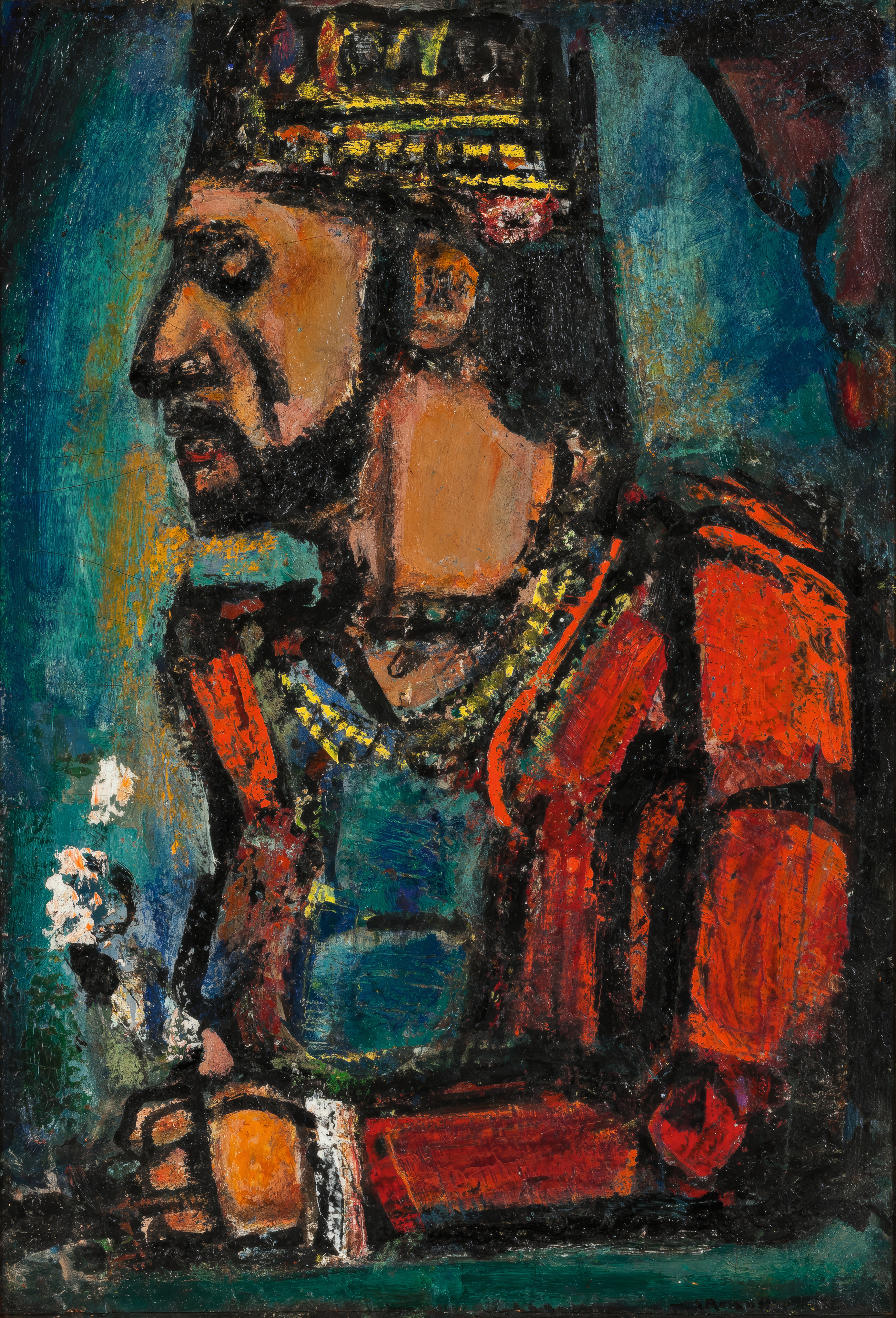
The old king (1937) szerzője Georges Rouault

The old king

1937 · Oil On Canvas

In the quiet, heavy atmosphere of Georges Rouault’s 1937 masterpiece, The Old King, one encounters a profound meditation on the human condition. The painting presents a solitary monarch, captured in profile, whose very presence seems to vibrate with an introspective melancholy. Draped in rich, crimson robes that catch the light with a somber intensity, the figure gazes inward, his expression etched with a deep, palpable sadness. This is not merely…

5
Jesus on the cross as forgotten there szerzője Georges Rouault

Jesus on the cross as forgotten there

Acrylic On Canvas

Georges Rouault’s “Jesus on the Cross as Forgotten There”: A Descent Into Spiritual Darkness The artwork presents a haunting meditation on faith and suffering, embodied in Georges Rouault's monumental print, "Jesus on the Cross as Forgotten There." Created in 1946 during the Second World War, amidst the pervasive anxieties of occupation and loss, this piece transcends mere depiction; it plunges into the abyss of existential despair, mirroring the artist’s own…

6
Femme Affranchie, A Quatorze Heures, Chante Midi szerzője Georges Rouault

Femme Affranchie, A Quatorze Heures, Chante Midi

Acrylic

Georges Rouault’s Femme Affranchie: A Portrait of Resilience Amidst Darkness The Denver Art Museum houses Georges Rouault's “Femme Affranchie, à Quatorze Heures, Chante Midi” (Woman Freed at Noon), a hauntingly beautiful engraving from his seminal Miserere et Guerre series completed in 1923. This artwork transcends mere visual representation; it embodies Rouault’s deeply felt empathy for the vulnerable and his unwavering commitment to exploring profound spiritual themes—a legacy born from witnessing…

7
The Judges (1908) szerzője Georges Rouault

The Judges

1908 · Oil · Statens Museum for Kunst, Koppenhága

In this 1908 oil painting, three seated figures occupy a shallow, darkened space. The composition is arranged horizontally, with the figures positioned in a way that fills the frame, creating a sense of enclosure. The lighting is low-key, emerging from an indistinct source to illuminate only specific portions of the subjects, such as the pale, ghostly whites of facial features and the edges of clothing. The rest of the scene…

8
Hollow dream szerzője Georges Rouault

Hollow dream

Oil On Canvas

The artwork Hollow dream is an oil painting on canvas that presents a portrait of a person, likely male, rendered in an expressionistic style. The composition is a vertical frame that is tightly focused on the head and shoulders, with the subject facing forward and slightly turned toward the viewer's left. The figure fills most of the frame against a dark, undefined background.

Georges Rouault festményei, 11. helyezéstől 100. helyezésig

11Night landscape szerzője Georges RouaultNight landscape 12The Girls (1907) szerzője Georges RouaultThe Girls1907 13Bouquet II (1938) szerzője Georges RouaultBouquet II1938 14Christ szerzője Georges RouaultChrist 15Away the smile of Reims szerzője Georges RouaultAway the smile of Reims 16The Apprentice szerzője Georges RouaultThe Apprentice 17It would be so sweet to love szerzője Georges RouaultIt would be so sweet to love 18The Three Judges (1928) szerzője Georges RouaultThe Three Judges1928 · Art Institute of Chicago 19Dolls, puppets fire hall and the ''Bride'' szerzője Georges RouaultDolls, puppets fire hall and the ''Bride'' 20Legendary Landscape (1935) szerzője Georges RouaultLegendary Landscape1935 21Judge (1907) szerzője Georges RouaultJudge1907 22'Man of myrrh' szerzője Georges Rouault'Man of myrrh' 23Woman in Profile (1918) szerzője Georges RouaultWoman in Profile1918 24Pierrot (1910) szerzője Georges RouaultPierrot1910 25Grotesque (1917) szerzője Georges RouaultGrotesque1917 26Crucifixion szerzője Georges RouaultCrucifixion 27Two Women's Heads (1902) szerzője Georges RouaultTwo Women's Heads1902 28The holy face szerzője Georges RouaultThe holy face 29Project for the reincarnation of Father Ubu 3 szerzője Georges RouaultProject for the reincarnation of Father Ubu 3 30Christ and the Fisherman szerzője Georges RouaultChrist and the FishermanFine Arts Museums of San Francisco 31Eternally scourged szerzője Georges RouaultEternally scourged 32And Veronique, The Tender Lin Pass On The Road Again szerzője Georges RouaultAnd Veronique, The Tender Lin Pass On The Road Again 33His lawyer,in empty phrases, claims his total unconsciousness szerzője Georges RouaultHis lawyer,in empty phrases, claims his total unconsciousness 34King Ubu 1 szerzője Georges RouaultKing Ubu 1 35The Superman (1916) szerzője Georges RouaultThe Superman1916 36The Dwarf (1937) szerzője Georges RouaultThe Dwarf1937 · Art Institute of Chicago 37Dancer for the Ballets Russes szerzője Georges RouaultDancer for the Ballets Russes 38Pierrot 2 szerzője Georges RouaultPierrot 2 39Twilight or Ile de France szerzője Georges RouaultTwilight or Ile de France 40Night Fall szerzője Georges RouaultNight Fall 41'... when the night came. The moon rose' szerzője Georges Rouault'... when the night came. The moon rose' 42The blind man sometimes consoles the light szerzője Georges RouaultThe blind man sometimes consoles the light 43Nude with arms raised (combed) szerzője Georges RouaultNude with arms raised (combed) 44Dura Lex Sed Lex szerzője Georges RouaultDura Lex Sed Lex 45Newspaper Seller (1909) szerzője Georges RouaultNewspaper Seller1909 · Antwerpeni Királyi Szépművészeti Múzeum 46Christ on the Cross szerzője Georges RouaultChrist on the CrossKanadai Nemzeti Galéria 47Verlaine szerzője Georges RouaultVerlaineThe Phillips Collection 48Profile of a Woman szerzője Georges RouaultProfile of a WomanChimei Museum 49Have mercy on me God szerzője Georges RouaultHave mercy on me God 50The Purotins szerzője Georges RouaultThe Purotins 51Circus Trainer szerzője Georges RouaultCircus Trainer 52Banks of the Seine I szerzője Georges RouaultBanks of the Seine I 53Soliloquies of a clown szerzője Georges RouaultSoliloquies of a clown 54Promenad of Ubu szerzője Georges RouaultPromenad of Ubu 55Discordia II szerzője Georges RouaultDiscordia II 56Ballerine szerzője Georges RouaultBallerine 57The Three Judges szerzője Georges RouaultThe Three Judges 58Proud woman szerzője Georges RouaultProud woman 59the minx szerzője Georges Rouaultthe minx 60Head of a Girl (Tête de Fille) szerzője Georges RouaultHead of a Girl (Tête de Fille) 61Self-Portrait III szerzője Georges RouaultSelf-Portrait III 62Pierrot with bouquet szerzője Georges RouaultPierrot with bouquet 63decorative figures szerzője Georges Rouaultdecorative figures 64Black Pierrot szerzője Georges RouaultBlack Pierrot 65German officer szerzője Georges RouaultGerman officer 66Circus. The Yellow Clown szerzője Georges RouaultCircus. The Yellow Clown 67The poor or the orphan szerzője Georges RouaultThe poor or the orphan 68Passion. Ecce Dolor szerzője Georges RouaultPassion. Ecce Dolor 69Girl at bar (sketch) szerzője Georges RouaultGirl at bar (sketch) 70The Bride (Aunt Sallys) szerzője Georges RouaultThe Bride (Aunt Sallys) 71Pere Ubu szerzője Georges RouaultPere Ubu 72I will go to heaven ... Madame X szerzője Georges RouaultI will go to heaven ... Madame X 73Good black (for Ubu) szerzője Georges RouaultGood black (for Ubu) 74Circus Figures szerzője Georges RouaultCircus Figures 75Girl with hat szerzője Georges RouaultGirl with hat 76Faubourg des Longues Peines szerzője Georges RouaultFaubourg des Longues Peines 77Recontre, from Passion szerzője Georges RouaultRecontre, from Passion 78Monsieur Louis szerzője Georges RouaultMonsieur Louis 79The Courtisan szerzője Georges RouaultThe Courtisan 80Clown and Monkey szerzője Georges RouaultClown and Monkey 81Clown 1 szerzője Georges RouaultClown 1 82We must die szerzője Georges RouaultWe must die 83King Ubu szerzője Georges RouaultKing Ubu 84Girls szerzője Georges RouaultGirls 85Adds szerzője Georges RouaultAdds 86Carmencita II szerzője Georges RouaultCarmencita II 87Women supported on a counter szerzője Georges RouaultWomen supported on a counter 88Clown szerzője Georges RouaultClown 89The Italian Woman szerzője Georges RouaultThe Italian Woman 90The Amazon or The clown szerzője Georges RouaultThe Amazon or The clown 91Siluette of woman szerzője Georges RouaultSiluette of woman 92Nude (sketch) szerzője Georges RouaultNude (sketch) 93Madame Paul Flat szerzője Georges RouaultMadame Paul Flat 94Christ on the cross szerzője Georges RouaultChrist on the cross 95Tramp; and Aide-Borreau szerzője Georges RouaultTramp; and Aide-Borreau 96Sunt Lacrymae Rerum szerzője Georges RouaultSunt Lacrymae Rerum 97The one who doesn't use makeup szerzője Georges RouaultThe one who doesn't use makeup 98The Horseman (Le Pere Ubu on Horseback) szerzője Georges RouaultThe Horseman (Le Pere Ubu on Horseback) 99Christian intimacy szerzője Georges RouaultChristian intimacy 100The Dancer szerzője Georges RouaultThe Dancer

Georges Rouault híres festményei, korszakonként

Early 20th Century

1907 – 1910 · 3 mű ebben a listában

A témák, amelyek Georges Rouault figyelmét meghúzták

A négy leggyakorobban előforduló téma ebben az eredeti művekben, mindegyik a legkiválóbb példájával.

A műemlékek, amelyek Georges Rouault eredeti műveit őrzik

A 7 olyan múzeum, amely a legtöbb ezen az oldalon szereplő festményet őrzi.

Múzeumok Város Georges Rouault művei Ebből a listából származó festmények
Art Institute of Chicago, ChicagoArt Institute of Chicago Chicago 2 The Three Judges, The Dwarf
The Phillips Collection, Washington, D.C.The Phillips Collection Washington, D.C. 3 Verlaine
Statens Museum for Kunst, KoppenhágaStatens Museum for Kunst Koppenhága 1 The Judges
Fine Arts Museums of San Francisco, San FranciscoFine Arts Museums of San Francisco San Francisco 1 Christ and the Fisherman
Antwerpeni Királyi Szépművészeti Múzeum, AntwerpenAntwerpeni Királyi Szépművészeti Múzeum Antwerpen 1 Newspaper Seller
Kanadai Nemzeti Galéria, OttawaKanadai Nemzeti Galéria Ottawa 1 Christ on the Cross
Chimei Museum, TainanChimei Museum Tainan 1 Profile of a Woman

Georges Rouault, egy aláírott festmény évtizedenként

Művek évtizedenként

Váassz ki egy évtizedet, hogy megnézhesd az azt meghatározó eredetiműveket.

Georges Rouault festményei: a galéria válaszai

Melyik Georges Rouault festmény a leghíresebb?Fedje fel a választ

Head of Christ. Ezt követi Head of Christ 1 és The Breton Wedding (1937).

Melyek Georges Rouault top 10 festménye?Fedje fel a választ

Head of Christ, Head of Christ 1, The Breton Wedding, The old king, Jesus on the cross as forgotten there, Femme Affranchie, A Quatorze Heures, Chante Midi, The Judges, Hollow dream, The Poulot or partner, Red Zone és Landscape from the Bible, Christ and the fishermen. A fenti rangsor a művek évszamarát és a múzeumát jelzi.

Hány műve született Georges Rouault nevére?Fedje fel a választ

Katalógusunkban 268 mű található Georges Rouault alkotótól, 1902 és 1938 év közötti időszakból.

Hol találhatóak Georges Rouault leghíresebb eredeti művei?Fedje fel a választ

Leginkább Art Institute of Chicago (Chicago), The Phillips Collection (Washington, D.C.) és Statens Museum for Kunst (Koppenhága) található. A fenti múzeumi táblázatban mindegyik felsorolásra került.

Mikor festette Georges Rouault le leghíresebb műveit?Fedje fel a választ

1900s alatt: a jelen laphonon található 100 műből 5 készült ebben az időszakban, köztük The Judges.

Melyek Georges Rouault legkorábbi és legutóbbi híres művei?Fedje fel a választ

Ezen az oldalon a leghitelesebb Two Women's Heads (1902), a legutóbbi pedig Bouquet II (1938).

Mely témakörökkel foglaltaszkodott a legtöbbször Georges Rouault?Fedje fel a választ

Suffering (13), Darkness (11) és Portrait (7), a jelen oldalon található 100 műművészeti alkotás között.

Melyik technikával foglalt leginkább Georges Rouault?Fedje fel a választ

Oil On Canvas, a jelen oldalon található 100 műből 11 darab esetén.

Mely művészeti irányhoz tartozik Georges Rouault?Fedje fel a választ

Fauvism és Expressionism, ezen az oldalon található eredetiek alapján.

Mely Georges Rouault eredeti műveit őrzi a Art Institute of Chicago?Fedje fel a választ

The Three Judges és The Dwarf: a Art Institute of Chicago, Chicago 2 művet őrzi ezen az oldalon.

Georges Rouault: a művész

A Life Forged in Parisian Shadows

Georges Rouault, born in Paris in 1871 amidst the turmoil of the Commune, lived a life deeply etched by hardship and spiritual seeking. His earliest years were spent literally in the shadows – his family sought refuge in a cellar during the city’s bombardment, an event that would resonate throughout his artistic vision. This humble beginning, coupled with a devoutly Catholic upbringing fostered by his mother, instilled within him a profound empathy for the marginalized and suffering, themes that would become central to his oeuvre. He wasn't destined for formal academic privilege; instead, he embarked on an apprenticeship as a glass painter at fourteen, a craft that profoundly shaped his aesthetic sensibilities. The vibrant hues and bold outlines inherent in stained glass became foundational to his mature style – a characteristic use of dark contours framing luminous color fields, reminiscent of medieval artistry. This early immersion wasn’t merely technical; it was spiritual, imbuing him with an appreciation for the narrative power of light and image. He simultaneously pursued formal training at the École des Beaux-Arts, where he became a devoted pupil of Gustave Moreau, whose Symbolist leanings further nurtured Rouault's inclination towards emotionally charged subject matter.

Early Years and Influences

Rouault’s artistic journey began not with grand ambitions but with a practical apprenticeship in the stained-glass workshops of Paris. This early experience, working with vibrant colors and precise lines, profoundly influenced his later style – particularly the use of stark black outlines to frame luminous fields of color. Crucially, he also attended evening classes at the École des Beaux-Arts, where he studied under Gustave Moreau, a master whose Symbolist aesthetic deeply resonated with Rouault’s nascent artistic sensibilities. Moreau's emphasis on emotional expression and symbolic representation became a cornerstone of Rouault’s own approach to painting. Moreau’s influence extended beyond technique; it instilled in Rouault a fascination with the human condition – its joys, sorrows, and inherent contradictions. The young artist was particularly drawn to themes of suffering and redemption, which would become recurring motifs in his work. He also benefited from exposure to other artists of the time, including Henri Matisse and Albert Marquet, who were experimenting with bold colors and simplified forms—though Rouault’s temperament steered him toward a more somber and introspective path than some of his contemporaries. The atmosphere of artistic experimentation within Moreau's studio proved fertile ground for Rouault’s development, shaping his unique visual language.

From Fauvism’s Embrace to Expressionist Depths

Rouault’s artistic journey wasn’t one of immediate recognition or easy categorization. While initially influenced by the Symbolists, he found himself drawn into the orbit of the burgeoning Fauvist movement in the early 20th century. He befriended artists like Henri Matisse and Albert Marquet, participating in exhibitions alongside them, yet his temperament always steered him toward a more somber and introspective path than the purely aesthetic explorations of his contemporaries. The vibrant colors of Fauvism served as a springboard, but Rouault quickly transcended its limitations, infusing his canvases with an emotional intensity that foreshadowed Expressionism. He began to focus on subjects often overlooked or deemed unworthy of artistic attention: prostitutes, clowns, judges, and prisoners. These weren’t merely depictions of societal outcasts; they were poignant allegories for the human condition – explorations of sin, redemption, and the inherent dignity within suffering. His characterizations, often grotesque yet deeply empathetic, resonated with a growing sense of unease and alienation in modern society, influencing a generation of Expressionist painters who sought to convey inner turmoil through distorted forms and jarring colors.

A Moral Compass in Canvas and Print

The First World War proved to be a pivotal moment for Rouault, solidifying his commitment to religious faith and deepening the moral weight of his art. He largely withdrew from public exhibitions during this period, dedicating himself to intensely personal projects like the *Miserere* series – a monumental cycle of etchings depicting scenes of human suffering inspired by the Psalms. These works, created over more than a decade, are arguably his most powerful and enduring achievement. The plates themselves were reworked repeatedly, reflecting Rouault’s relentless pursuit of emotional truth and spiritual understanding. He wasn't interested in mere representation; he sought to capture the raw essence of human experience – the anguish, the despair, but also the glimmer of hope that persists even in the darkest corners of existence. Beyond *Miserere*, his paintings continued to explore similar themes, often featuring figures isolated and burdened by their circumstances, yet imbued with a quiet dignity. His depictions of clowns, for example, weren’t simply comedic; they were tragic figures embodying the absurdity and loneliness of life.

Legacy and Recognition

Georges Rouault's artistic legacy extends far beyond his technical innovations or stylistic affiliations. He was a profoundly spiritual artist who used his craft as a means of moral inquiry and empathetic connection. His work challenged conventional notions of beauty, embracing ugliness and suffering as integral aspects of the human experience. He rejected the purely decorative in favor of art that confronted viewers with uncomfortable truths about themselves and their society. In later life, he received commissions for religious works, including designs for Sergei Diaghilev’s ballet *The Prodigal Son*, further cementing his reputation as a uniquely devout artist. A curious and perhaps tragic footnote to his career is the fact that, late in life, Rouault destroyed approximately 300 of his paintings – an act driven by self-criticism and a relentless pursuit of artistic perfection. This dramatic gesture underscores the intensity of his creative process and his unwavering commitment to expressing his inner vision. Rouault died in Paris in 1958, leaving behind a body of work that continues to resonate with audiences today—a testament to the enduring power of art born from compassion, faith, and an unflinching gaze upon the complexities of the human heart.

Minden 268 műmű Georges Rouault alkotása →