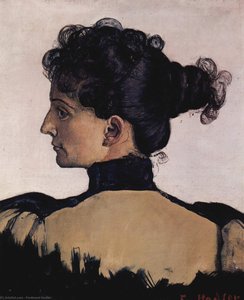
Ferdinand Hodler portréja

Ferdinand Hodler festményei: A 100 leghíresebb alkotás, egy galéria szemével

Frissítve: november 2026 · rangsorolva népszerűségi pontszámunk alapján (minden mű keresései, látogatásai és megrendelései alapján) · 609 mű Ferdinand Hodler alkotása a katalógusunkban

Röviden

A galéria szerint Ferdinand Hodler leghíresebb festménye a Eiger, Monch and Jungfrau in Moonlight (1908). Woman in Ecstasy (1911) és Eiger, Monch and Jungfrau in Moonlight (1908) kiegészítik azt a triót, amelyet minden szem felismer. A katalógusunkban szereplő 609 művész Ferdinand Hodler alkotásából a galéria az alábbi 100 leghíresebbet mutatja be, amelyek mind egyedi originális művek, a készítés évszámával, a múzeum megnevezésével és a különlegességük leírásával.

1853 – 1918, Bern Swiss symbolism A legtöbb mű: Bosnia-Herzegovina Országos Galériája

A galéria top 10 Ferdinand Hodler festménye

1
Eiger, Monch and Jungfrau in Moonlight (1908) (1889) -ja Ferdinand Hodler

Eiger, Monch and Jungfrau in Moonlight

1908 · Oil On Canvas

In the quietude of 1908, Ferdinand Hodler captured a nocturnal moment in his painting, Eiger, Monch and Jungfrau in Moonlight. The scene is dominated by three majestic mountains, arranged with a distinct sense of scale: the leftmost peak appears smaller, followed by a middle mountain with a slightly larger summit, while the rightmost peak stands as the largest of the trio. Above this rugged landscape, two airplanes traverse the sky—one…

2
Woman in Ecstasy (1911) (1889) -ja Ferdinand Hodler

Woman in Ecstasy

1911 · Oil On Canvas

To encounter Ferdinand Hodler’s Woman in Ecstasy is to step into a realm where the boundaries between the physical form and the ethereal spirit dissolve. Painted in 1911, this monumental canvas serves as a cornerstone of the Art Nouveau movement, capturing far more than a mere moment of movement; it embodies an entire era's yearning for beauty, transcendence, and liberation. The painting depicts a woman caught in the throes of…

3
Eiger, Monch and Jungfrau in Moonlight (1908) (1889) -ja Ferdinand Hodler

Eiger, Monch and Jungfrau in Moonlight

1908 · Oil On Canvas

In this 1908 oil on canvas, the landscape is dominated by three majestic mountain peaks: the Eiger, the Monch, and the Jungfrau. These summits are arranged in a rhythmic, ascending scale, with the leftmost peak appearing smaller, followed by a middle mountain with a slightly larger summit, and the rightmost peak standing as the largest of the trio. The scene is set during a moonlight night, characterized by a palette…

4
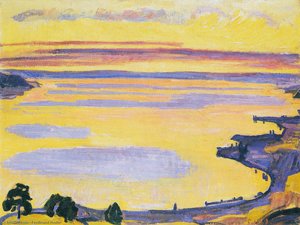
Sunset on Lake Geneva (1915) (1889) -ja Ferdinand Hodler

Sunset on Lake Geneva

1915 · Oil On Canvas · Kunsthaus Zürich, Zürich

The painting depicts a sunset over Lake Geneva. The sky above the water is rendered in shades of yellow, orange, and pink, creating a vibrant atmosphere. In the foreground, mountains are visible, providing depth to the landscape. A boat is positioned on the water, contributing to the serene scene.

5
Study of two figures (1897) (1889) -ja Ferdinand Hodler

Study of two figures

1897 · Acrylic On Paper · Bosnia-Herzegovina Országos Galériája, Szarajevó

Ferdinand Hodler’s “Study of Two Figures” is not a grand, dramatic statement; rather, it's an invitation to linger in the quiet intimacy of a shared moment. Painted in 1897, this graphite drawing on paper captures two women seated together, their postures suggesting a profound sense of contemplation and perhaps even melancholy. Hodler, a pivotal figure within Swiss Symbolism, wasn’t interested in literal representation but rather in conveying emotional atmosphere and…

6
Unity (1911) (1889) -ja Ferdinand Hodler

Unity

1911 · Painting

In the monumental mural Unity, created in 1911, Ferdinand Hodler presents a profound meditation on the collective human spirit. This expansive work, stretching across an impressive scale, transcends mere portraiture to become a rhythmic tapestry of existence. The composition is masterfully arranged in rows of figures that seem to pulse with a shared vitality; some individuals press toward the foreground with palpable presence, while others recede into the background, creating…

7
Lake Geneva in Chexbres (1904) (1889) -ja Ferdinand Hodler

Lake Geneva in Chexbres

1904 · Oil On Canvas

To gaze upon Ferdinand Hodler's Lake Geneva in Chexbres is to be invited into a moment suspended between the vastness of nature and the quiet contemplation of the human spirit. This magnificent oil on canvas, dating from 1904, captures more than just a picturesque vista; it encapsulates the very essence of the Swiss landscape filtered through the profound lens of an artistic master. The scene unfolds across a broad expanse…

8
Composition study (1887) (1889) -ja Ferdinand Hodler

Composition study

1887 · Oil On Canvas · Bosnia-Herzegovina Országos Galériája, Szarajevó

Ferdinand Hodler's "Composition Study," created in 1887, isn’t merely a sketch of three figures engaged in strenuous activity; it’s a profound meditation on the human condition, rendered with an arresting blend of anatomical precision and evocative symbolism. This work, now housed within the Tretyakov Gallery in Moscow, offers a rare glimpse into the artist's deeply personal vision – a world shaped by loss, contemplation, and a fascination with the ephemeral…

9
Self-portrait with stand (1879) (1889) -ja Ferdinand Hodler

Self-portrait with stand

1879 · Oil On Canvas · Kunst Museum Winterthur | Reinhart am Stadtgarten, Winterthur

To stand before Ferdinand Hodler’s Self-portrait with stand is to encounter a moment suspended between public presentation and private contemplation. This striking work, dating from 1879, captures the artist not merely as a likeness, but as a study in poised masculinity and burgeoning artistic self-awareness. The subject, impeccably dressed in a suit and tie, adopts a formal bearing, suggesting an occasion of importance or perhaps simply the necessary facade required…

10
The Wetterhorn (1912) (1889) -ja Ferdinand Hodler

The Wetterhorn

1912 · Oil On Canvas

To stand before Ferdinand Hodler’s The Wetterhorn is to be enveloped by the sublime majesty of the Swiss Alps, rendered through a lens of profound introspection. Painted in 1912, this oil on canvas masterpiece transcends mere topographical depiction; it is a meditation on permanence against the backdrop of fleeting human experience. The sheer scale of the snow-covered peak dominates the composition, its striking blue hue lending the entire scene an…

Ferdinand Hodler festményei, 11. helyezéstől 100. helyezésig

11Hilly Landscape with Ravens, in the Bernese Oberland (1910) (1889) -ja Ferdinand HodlerHilly Landscape with Ravens, in the Bernese Oberland1910 12View of Lake Leman from Chexbres (1905) (1889) -ja Ferdinand HodlerView of Lake Leman from Chexbres1905 · Kunstmuseum Basel 13Stockhorn chain (blue sky) (1889) -ja Ferdinand HodlerStockhorn chain (blue sky) 14Woman on her deathbed (1889) -ja Ferdinand HodlerWoman on her deathbed 15Lake Geneva from Chexbres (1904) (1889) -ja Ferdinand HodlerLake Geneva from Chexbres1904 · Musée cantonal des Beaux-Arts 16Portrait of Fraulein Kyburz (1873) (1889) -ja Ferdinand HodlerPortrait of Fraulein Kyburz1873 · Rhode Island School of Design Museum of Art 17Portrait of a Spanish woman (1889) -ja Ferdinand HodlerPortrait of a Spanish woman 18Studies of self-portrait (1911) (1889) -ja Ferdinand HodlerStudies of self-portrait1911 19Berthe Hodler portréta (1902) (1889) -ja Ferdinand HodlerBerthe Hodler portréta1902 · Bosnia-Herzegovina Országos Galériája 20Landscape of the Swiss Alps (1918) (1889) -ja Ferdinand HodlerLandscape of the Swiss Alps1918 · Izrael Múzeum 21The fall in Silvaplana (1907) (1889) -ja Ferdinand HodlerThe fall in Silvaplana1907 · Kunsthaus Zürich 22Thun with symmetric mirroring (1909) (1889) -ja Ferdinand HodlerThun with symmetric mirroring1909 · Musée d'Art et d'Histoire de Genève 23Jeanne Cerani-Charles (1889) -ja Ferdinand HodlerJeanne Cerani-Charles 24Day (Truth) (1889) -ja Ferdinand HodlerDay (Truth)Art Institute of Chicago 25From Le Grand Muveran Villars (1912) (1889) -ja Ferdinand HodlerFrom Le Grand Muveran Villars1912 · Von der Heydt Museum 26The cobbler by the window (1882) (1889) -ja Ferdinand HodlerThe cobbler by the window1882 27Forest Stream at Champery (1916) (1889) -ja Ferdinand HodlerForest Stream at Champery1916 28The shoemaker (1878) (1889) -ja Ferdinand HodlerThe shoemaker1878 29Modern Rütli (1878) (1889) -ja Ferdinand HodlerModern Rütli1878 · Gottfried Keller Foundation 30The Reaper (1878) (1889) -ja Ferdinand HodlerThe Reaper1878 31Gymnasts' Banquet (1877) (1889) -ja Ferdinand HodlerGymnasts' Banquet1877 · Kunsthaus Zürich 32The Miller, his Son and the Donkey (1888) (1889) -ja Ferdinand HodlerThe Miller, his Son and the Donkey1888 · Musée d'Art et d'Histoire de Genève 33The Disillusioned One (1892) (1889) -ja Ferdinand HodlerThe Disillusioned One1892 · Los Angeles County Museum of Art 34Study of the disappointed souls or Weary of life (1891) (1889) -ja Ferdinand HodlerStudy of the disappointed souls or Weary of life1891 35Overall study of the life of weary (1887) (1889) -ja Ferdinand HodlerOverall study of the life of weary1887 36Surprised by the Storm (1887) (1889) -ja Ferdinand HodlerSurprised by the Storm1887 37Night (1890) (1889) -ja Ferdinand HodlerNight1890 38Worship (1893) (1889) -ja Ferdinand HodlerWorship1893 39Childhood (1893) (1889) -ja Ferdinand HodlerChildhood1893 · Städel Múzeum 40Battle scenes (1896) (1889) -ja Ferdinand HodlerBattle scenes1896 41The Halberdier (1895) (1889) -ja Ferdinand HodlerThe Halberdier1895 · Dallas Museum of Art 42View into Infinity (1903) (1889) -ja Ferdinand HodlerView into Infinity1903 · Hamburger Kunsthalle 43The Adored Youth (1904) (1889) -ja Ferdinand HodlerThe Adored Youth1904 44Character study (1902) (1889) -ja Ferdinand HodlerCharacter study1902 45The Woodcutter (1910) (1889) -ja Ferdinand HodlerThe Woodcutter1910 · Von der Heydt Museum 46Character study (1906) (1889) -ja Ferdinand HodlerCharacter study1906 47Farewell participating female figure (1908) (1889) -ja Ferdinand HodlerFarewell participating female figure1908 48Pulling soldiers (1908) (1889) -ja Ferdinand HodlerPulling soldiers1908 49The working mower (1909) (1889) -ja Ferdinand HodlerThe working mower1909 50Pulling soldiers (1908) (1889) -ja Ferdinand HodlerPulling soldiers1908 51Woman in Ecstasy (1911) (1889) -ja Ferdinand HodlerWoman in Ecstasy1911 52Jeanne Günzburger (1912) (1889) -ja Ferdinand HodlerJeanne Günzburger1912 · Toledo Művészeti Múzeum 53Portrait of Emma Schmidt-Müller (1915) (1889) -ja Ferdinand HodlerPortrait of Emma Schmidt-Müller1915 54Josef Müller (1916) (1889) -ja Ferdinand HodlerJosef Müller1916 55Der Frühling (Fassung IV) (1912) (1889) -ja Ferdinand HodlerDer Frühling (Fassung IV)1912 56The Patient (1914) (1889) -ja Ferdinand HodlerThe Patient1914 · Kunstmuseum Basel 57Head of a Soldier (1917) (1889) -ja Ferdinand HodlerHead of a Soldier1917 · Art Institute of Chicago 58Valentine Godé-Darel one day before her death (1915) (1889) -ja Ferdinand HodlerValentine Godé-Darel one day before her death1915 · Kunstmuseum Basel 59Swearing from behind (1912) (1889) -ja Ferdinand HodlerSwearing from behind1912 60Two swearing (1912) (1889) -ja Ferdinand HodlerTwo swearing1912 61Study of self-portrait (1916) (1889) -ja Ferdinand HodlerStudy of self-portrait1916 62Standing draped figure (1913) (1889) -ja Ferdinand HodlerStanding draped figure1913 63Untitled (529) (1889) -ja Ferdinand HodlerUntitled (529) 64Lake Thun Landscape (1889) -ja Ferdinand HodlerLake Thun Landscape 65Female figure with garland (1895) (1889) -ja Ferdinand HodlerFemale figure with garland1895 · Bosnia-Herzegovina Országos Galériája 66Self portrait (1916) (1889) -ja Ferdinand HodlerSelf portrait1916 67Prayer in the Saint Pierre Cathedral in Geneva (1882) (1889) -ja Ferdinand HodlerPrayer in the Saint Pierre Cathedral in Geneva1882 · Winterthuri Művészeti Intézet épülete 68Mother and Child (1889) -ja Ferdinand HodlerMother and Child 69Pulling soldiers (1908) (1889) -ja Ferdinand HodlerPulling soldiers1908 70Walking at the forest edge (1885) (1889) -ja Ferdinand HodlerWalking at the forest edge1885 71Lake Geneva on the evening in Chexbres (1895) (1889) -ja Ferdinand HodlerLake Geneva on the evening in Chexbres1895 72Lake Thun, Symmetric reflection (1905) (1889) -ja Ferdinand HodlerLake Thun, Symmetric reflection1905 73The river Aare in Solothurn (1915) (1889) -ja Ferdinand HodlerThe river Aare in Solothurn1915 74The Orator (1912) (1889) -ja Ferdinand HodlerThe Orator1912 75What are flowers saing (1893) (1889) -ja Ferdinand HodlerWhat are flowers saing1893 76Lake Geneva with Mont Blanc in the morning light (1918) (1889) -ja Ferdinand HodlerLake Geneva with Mont Blanc in the morning light1918 77The Lake Geneva from Chexbres (1898) (1889) -ja Ferdinand HodlerThe Lake Geneva from Chexbres1898 78Spring (1901) (1889) -ja Ferdinand HodlerSpring1901 79Transfiguration (1906) (1889) -ja Ferdinand HodlerTransfiguration1906 80Valentine Godé-Darel on her Deathbed (1915) (1889) -ja Ferdinand HodlerValentine Godé-Darel on her Deathbed1915 81Emotion (study) (1902) (1889) -ja Ferdinand HodlerEmotion (study)1902 82valentine gode darel sun (1889) -ja Ferdinand Hodlervalentine gode darel sun 83The road to Evordes (1889) -ja Ferdinand HodlerThe road to Evordes 84The Black Lutschina (1905) (1889) -ja Ferdinand HodlerThe Black Lutschina1905 85A morning in Interlaken (1875) (1889) -ja Ferdinand HodlerA morning in Interlaken1875 · Kunstmuseum Bern 86Dying cadet (1896) (1889) -ja Ferdinand HodlerDying cadet1896 87Thun, Stockhornkette (1910) (1889) -ja Ferdinand HodlerThun, Stockhornkette1910 88Thunersee with Niesen (1889) -ja Ferdinand HodlerThunersee with Niesen 89The road to a particular interest (1890) (1889) -ja Ferdinand HodlerThe road to a particular interest1890 · Kunst Museum Winterthur | Reinhart am Stadtgarten 90Portrait of Berthe Jacques, wife of the artist (1894) (1889) -ja Ferdinand HodlerPortrait of Berthe Jacques, wife of the artist1894 91Figure study (1901) (1889) -ja Ferdinand HodlerFigure study1901 · Bosnia-Herzegovina Országos Galériája 92Sensation (1901) (1889) -ja Ferdinand HodlerSensation1901 93Lake Silvaplana in Autumn (1907) (1889) -ja Ferdinand HodlerLake Silvaplana in Autumn1907 · Kunsthaus Zürich 94Dents du Midi in Clouds (1917) (1889) -ja Ferdinand HodlerDents du Midi in Clouds1917 95Grammont (1889) -ja Ferdinand HodlerGrammont 96Autumn Landscape near Solothurn (1889) -ja Ferdinand HodlerAutumn Landscape near Solothurn 97The reader 1 (1889) -ja Ferdinand HodlerThe reader 1Thyssen-Bornemisza Múzeum 98untitled (774) (1889) -ja Ferdinand Hodleruntitled (774) 99Prayer in the Cathedral of St. Pierre, Geneva (1882) (1889) -ja Ferdinand HodlerPrayer in the Cathedral of St. Pierre, Geneva1882 100At the foot of the Petit Saleve (1890) (1889) -ja Ferdinand HodlerAt the foot of the Petit Saleve1890

Ferdinand Hodler híres festményei, korszakonként

A témák, amelyek Ferdinand Hodler figyelmét meghúzták

A négy leggyakorobban előforduló téma ebben az eredeti művekben, mindegyik a legkiválóbb példájával.

A műemlékek, amelyek Ferdinand Hodler eredeti műveit őrzik

A 8 olyan múzeum, amely a legtöbb ezen az oldalon szereplő festményet őrzi.

Múzeum Város Ferdinand Hodler művei Ebből a listából származó festmények
Bosnia-Herzegovina Országos Galériája, SzarajevóBosnia-Herzegovina Országos Galériája Szarajevó 74 Study of two figures, Composition study, Berthe Hodler portréta
Kunsthaus Zürich, ZürichKunsthaus Zürich Zürich 16 Sunset on Lake Geneva, The fall in Silvaplana, Gymnasts' Banquet
Kunstmuseum Basel, BázlKunstmuseum Basel Bázl 5 View of Lake Leman from Chexbres, The Patient, Valentine Godé-Darel one day before her death
Musée d'Art et d'Histoire de Genève, GenfMusée d'Art et d'Histoire de Genève Genf 8 Thun with symmetric mirroring, The Miller, his Son and the Donkey
Art Institute of Chicago, ChicagoArt Institute of Chicago Chicago 3 Day (Truth), Head of a Soldier
Von der Heydt Museum, WuppertalVon der Heydt Museum Wuppertal 3 From Le Grand Muveran Villars, The Woodcutter
Kunst Museum Winterthur | Reinhart am Stadtgarten, WinterthurKunst Museum Winterthur | Reinhart am Stadtgarten Winterthur 2 Self-portrait with stand, The road to a particular interest
Städel Múzeum, FrankfurtStädel Múzeum Frankfurt 3 Childhood

Ferdinand Hodler, egy aláírott festmény évtizedenként

Művek évtizedenként

Váassz ki egy évtizedet, hogy megnézhesd az azt meghatározó eredetiműveket.

Ferdinand Hodler festményei: a galéria válaszai

Melyik Ferdinand Hodler festmény a leghíresebb?Fedje fel a választ

Eiger, Monch and Jungfrau in Moonlight (1908). Ezt követi Woman in Ecstasy (1911) és Eiger, Monch and Jungfrau in Moonlight (1908).

Hány éves volt Ferdinand Hodler, amikor elkészítette a(t): Eiger, Monch and Jungfrau in Moonlight?Fedje fel a választ

55 éves: Eiger, Monch and Jungfrau in Moonlight 1908-ből származik, Ferdinand Hodler pedig 1853-ben született.

Melyek Ferdinand Hodler top 10 festménye?Fedje fel a választ

Eiger, Monch and Jungfrau in Moonlight, Woman in Ecstasy, Eiger, Monch and Jungfrau in Moonlight, Sunset on Lake Geneva, Study of two figures, Unity, Lake Geneva in Chexbres, Composition study, Self-portrait with stand és The Wetterhorn. A fenti rangsor a művek évszamarát és a múzeumát jelzi.

Hány műve született Ferdinand Hodler nevére?Fedje fel a választ

Katalógusunkban 609 mű található Ferdinand Hodler alkotótól, 1873 és 1918 év közötti időszakból.

Hol találhatóak Ferdinand Hodler leghíresebb eredeti művei?Fedje fel a választ

Leginkább Bosnia-Herzegovina Országos Galériája (Szarajevó), Kunsthaus Zürich (Zürich) és Kunstmuseum Basel (Bázl) található. A fenti múzeumi táblázatban mindegyik felsorolásra került.

Mikor festette Ferdinand Hodler le leghíresebb műveit?Fedje fel a választ

1910s alatt: a jelen laphonon található 100 műből 29 készült ebben az időszakban, köztük Woman in Ecstasy.

Melyek Ferdinand Hodler legkorábbi és legutóbbi híres művei?Fedje fel a választ

Ezen az oldalon a leghitelesebb Portrait of Fraulein Kyburz (1873), a legutóbbi pedig Landscape of the Swiss Alps (1918).

Mely témakörökkel foglaltaszkodott a legtöbbször Ferdinand Hodler?Fedje fel a választ

Landscape (28), Woman (17) és Man (16), a jelen oldalon található 100 műművészeti alkotás között.

Melyik technikával foglalt leginkább Ferdinand Hodler?Fedje fel a választ

Oil On Canvas, a jelen oldalon található 100 műből 64 darab esetén.

Mely művészeti irányhoz tartozik Ferdinand Hodler?Fedje fel a választ

Swiss symbolism és Art nouveau, ezen az oldalon található eredetiek alapján.

Mely Ferdinand Hodler eredeti műveit őrzi a Bosnia-Herzegovina Országos Galériája?Fedje fel a választ

Study of two figures, Composition study és Berthe Hodler portréta: a Bosnia-Herzegovina Országos Galériája, Szarajevó 5 művet őrzi ezen az oldalon.

Ferdinand Hodler: a művész

A halandóság architektúrája

Hodler Ferdinand 1853-ban született Svájc, Bern városában, korai éveket a csendes, kitartó gyász határozott. Mielőtt a kamaszévesztet into, a tbc, amely elvitte az apját és két fiatalabb testvérét, üresítette a családot. Ez a korai találkozás a veszteséggel ismétlődő motívummá vált művészetében, egy árnyékként, amely a läröcképzés szerény kezdeteitől a professzionális karrierje csúcspontjáig követte őt. Dekoratív festőként kezdte képzését, segítve bátyja helyett a reklámfeliratok készítésében; ez a gyakorlati oktatás pontos kontrollt impartált számára a vonal és a forma felett. Ez a mesteri alapozatás biztosította azt a technikai szigorúságot, amely később támogatotta komplexebb filozófiai törekvéseit is.

1871-ben Genfbe való költözése szakított a fiatossági évek kereskedelmi igényeitől. A városban mélyebb kapcsolódást keresett a művészethez, tudományos előadásokra járt, és a helyi múzeumban a mesterek műveit másolta. Itt kezdődött meg az elmozdulás korai tájképei és portréi apróbb, aprmányos realizalmától. Már nem elég volt neki csupán visszaadni az Alpok látnivalóit vagy egy modell külső külsejét; az élet mögöttes ritmusait akarta megörökíteni. Ez az átmenet az objektívől a szubjektív felé végül sajátos vizuális nyelv kialakításához vezetett.

A párhuzamosság logikája

A modern festészet fejlődésében Hodler legjelentősebb hozzájárulása a párhuzamosság (parallelizmus) elmélete volt. Ez nem csupán kompozíciós technika volt, hanem egy olyan módja a világnak a szemlélésének, amely egy összefüggő, ritmikus mintázatok soraként tekintette azt. Megfigyelte, hogyan tükrözik egymást gyakran a természet formái – egy hegyoldal, egy emberi végtag íve vagy a víz tükröződése – egy strukturált, geométrikus harmóniában. A figurák és a táj elemei ismétlődő, ritmikus cadencnában történő elrendezésével megpróbálta ábrázolni azt a strukturális rendet, amely szerint ő irányítja a természet világát. Ez a megközelítés lehetővé tette számára, hogy áthidalja a szakadékot egy jelen fizikai valósága és a megfigyelő érzelmi állapota között.

Műve gyakran a szimbolizmus és egy strukturáltabb, modern érzékenység közötti térben helyezkedett el. Az olyan alkotásokban, mint a 1890-ben elkészült Az éjszaka, a fekvő alakokon keresztül kutatta az elக்szunyasztottság és a halandóság témáit, ami a korabeli uralkodó ízlések kihívása volt. Képesége a klasszikus forma ötvözésére a modern, szinte strukturális intenzitással a 1897-es Igazság II című művében nyilvánul meg. Nem támaszkodott a kortársai kaotikus ecsettel való munkálkodására; helyette tudatos, gyakran visszafogott oker, barna és zöld árnyalatokat használt a tartósság és a súly érzetének megteremtésére. Vászai nem csupán ablakok voltak egy jelenbe, hanem szervezett környezetek, ahol az emberi szellem és a táj egy közös geometria által kötődött össze.

Egy élet a tájakban

A svájci táj állandó jelenessé vált művészetében, különösen az Alpok pompás látnete. A hegyeket nem csupán földrajzi domborzatokként, hanem spirituális entitásként tekintette. Az Eiger, a Mönch és a Jungfrau ábrázolói, vagy a Dents du Midi nézetei a hegyek skáláját az érzelmi rezonancia nyelvére fordítási vágyát tükrözik. Gyakran alkalmazott rétegezési folyamatot, ahol vékony színes átmosásokat alkalmazott a vastagabb impastó felett a specifikus fényesség elérése érdekében, különösen a Genfi-tó feletti fény későbbi tanulmányai során. Ezek a művek a hangulat mesteri uralmát demonstrates, megörökítve az Alpok fényének ködös, éterikus minőségét anélkül, hogy feladta volna a terep strukturális integritását.

1918-as genfi halálaig Hodler svájci művésztörténetének központi alakjává vált. Hatása látható az expreszionizmus fejlődésében is, mivel szubjektív érzelmeire és ritmikus formáira való hangsúlyozása alapja lett azoknak, akik a hagyományos ábrázoláson túlra akartak lépni. Mély pszichológiai mélységű festő maradt, amelynek eszközei a létezés és a halál alapvető kérdéseinek szembenállását szolgáltatták. Öröksége abban rejlik, ahogyan kényszerítette a nézőt, hogy a világ felszínén túlkeressen: hogy megtalálja azokat a néma, ismétlődő mintákat, amelyek összefogják azt.