Ernst Barlach portréja

A 12 legnevesebbebb Ernst Barlach festmény, mindegyik egyedistens

Frissítve: november 2026 · rangsorolva népszerűségi pontszámunk alapján (minden mű keresései, látogatásai és megrendelései alapján) · 12 mű Ernst Barlach alkotása a katalógusunkban

Röviden

Frenzy (Der Berserker) (1910) az a Ernst Barlach festmény, amely a legtöbb tekintetet felvonja; az eredeti mű a Nelson-Atkins Múzeum gyűjteményében található, Kansas City. Ezután a tekintet Man in Ecstasy (1912) és The Flutist (1936) elemre irányul. A Ernst Barlach 12 műve közül a katalógusunkban megtalálható 12 legnépesebb alkotás, melyeket az év, a múzeum és az örökévalóságának okai kísérnek.

1870 – 1938 Expressionism A legtöbb mű: Nelson-Atkins Múzeum

A galéria szemével: Ernst Barlach legjobb 10 festménye

1
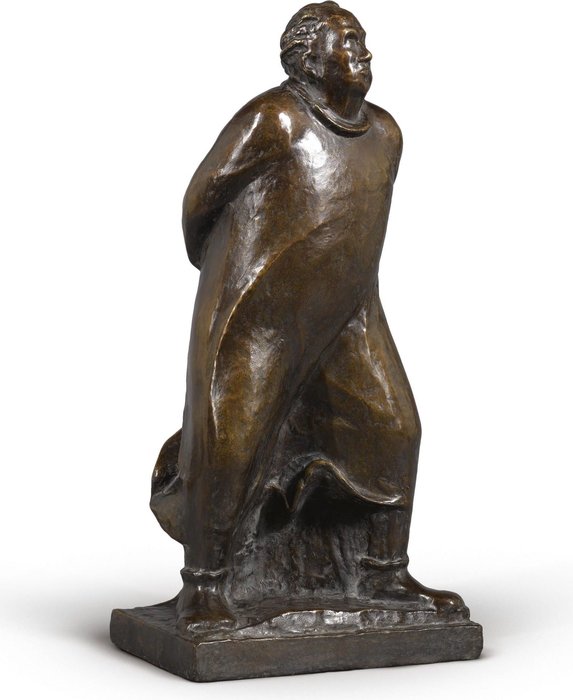
Frenzy (Der Berserker) (1910) (1889) -ja Ernst Barlach

Frenzy (Der Berserker)

1910 · Bronze · Nelson-Atkins Múzeum, Kansas City

In the heavy, bronze contours of Ernst Barlach’s Frenzy (Der Berserker), one does not merely observe a sculpture; one encounters a visceral eruption of human emotion. Created in 1910, this masterpiece stands as a profound testament to the power of German Expressionism, capturing a moment where physical form and psychological turmoil become indistinguishable. The figure, cast in enduring bronze, presents a powerful, solid silhouette that seems to vibrate with an…

2
Man in Ecstasy (1912) (1889) -ja Ernst Barlach

Man in Ecstasy

1912 · Bronze · Aichi Prefectural Museum of Art, Nagoya

Man in Ecstasy is a bronze sculpture created by Ernst Barlach in 1912. The work captures a human figure in a state of intense spiritual rapture or ecstasy, utilizing the expressive qualities of the medium to convey deep subjective emotion.

3
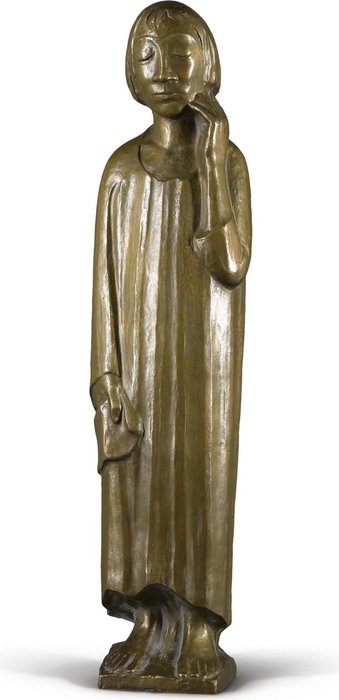
The Flutist (1936) (1889) -ja Ernst Barlach

The Flutist

1936 · Bronze · Lehmbruck Museum, Düsseldorf

In this bronze sculpture, titled The Flutist, Ernst Barlach presents a solitary figure captured in a moment of quietude. Created in 1936, the work depicts a musician seated in a chair, legs crossed, with the head tilted slightly downward toward the instrument. There is a palpable sense of introspection in the posture, as if the act of playing is a private communion between the man and his music. The figure's…

4
Panic Terror (1912) (1889) -ja Ernst Barlach

Panic Terror

1912 · Wood · Staatliche Kunsthalle Karlsruhe, Karlsruhe

In 1912, the sculptor Ernst Barlach carved a moment of raw friction into Baltic birch. The work, titled Panic Terror, captures a sudden, violent collision between two human forms. It is a physical knot of resistance and weight. The wood bears the marks of a struggle that feels both immediate and ancient.

5
The Singing Man (1928) (1889) -ja Ernst Barlach

The Singing Man

1928 · Bronze

Ernst Barlach’s 1928 bronze sculpture, The Singing Man, captures a singular moment of release. The figure is seated, leaning back with a posture of profound relaxation, head tilted upward as if lost in a private melody. This gesture suggests a transition between the physical and the spiritual, a fleeting instance of joy that seems to touch a realm beyond the immediate. The form is characterized by simplified, elongated lines and…

7
Shepherd in a Storm (1908) (1889) -ja Ernst Barlach

Shepherd in a Storm

1908 · Wood · Kunsthalle Bremen, Brema

In the evocative sculpture Shepherd in a Storm, created in 1908 by the German Expressionist master Ernst Barlach, we encounter a profound meditation on human resilience. The piece captures a moment of intense struggle, where a shepherd, with his head bowed and hat pulled low against the elements, battles an unseen, relentless wind. This atmospheric tension serves as a powerful metaphor for the adversities and tempests that define the human…

Ernst Barlach híres festményei, 11 és 12 között

A témák, amelyek Ernst Barlach figyelmét meghúzták

A négy leggyakorobban előforduló téma ebben az eredeti művekben, mindegyik a legkiválóbb példájával.

A műemlékek, amelyek Ernst Barlach eredeti műveit őrzik

A 5 olyan múzeum, amely a legtöbb ezen az oldalon szereplő festményet őrzi.

Múzeum Város Ernst Barlach művei Ebből a listából származó festmények
Nelson-Atkins Múzeum, Kansas CityNelson-Atkins Múzeum Kansas City 1 Frenzy (Der Berserker)
Aichi Prefectural Museum of Art, NagoyaAichi Prefectural Museum of Art Nagoya 1 Man in Ecstasy
Lehmbruck Museum, DüsseldorfLehmbruck Museum Düsseldorf 1 The Flutist
Staatliche Kunsthalle Karlsruhe, KarlsruheStaatliche Kunsthalle Karlsruhe Karlsruhe 1 Panic Terror
Kunsthalle Bremen, BremaKunsthalle Bremen Brema 1 Shepherd in a Storm

Ernst Barlach évtizedekig: egy egyedi eredeti mű minden évtizedben

Művek évtizedenként

Váassz ki egy évtizedet, hogy megnézhesd az azt meghatározó eredetiműveket.

Ernst Barlach festményei: kérdések a galériának

Mi a leghíresebb műve Ernst Barlachnek?Fedje fel a választ

Frenzy (Der Berserker) (1910), Nelson-Atkins Múzeum, Kansas City. Ezután Man in Ecstasy (1912) és The Flutist (1936) következik.

Milyen életkorában alkotta meg Ernst Barlach a(z) Frenzy (Der Berserker) műszt?Fedje fel a választ

40 éves: Frenzy (Der Berserker) 1910-ből származik, Ernst Barlach pedig 1870-ben született.

Melyik tíz festménye Ernst Barlach a leghíresebb?Fedje fel a választ

Frenzy (Der Berserker), Man in Ecstasy, The Flutist, Panic Terror, The Singing Man, Untitled (727), Shepherd in a Storm, Untitled (305), Untitled (207) és Untitled (902). A fenti rangsor a művek évszamarát és a múzeumát jelzi.

Hány mű alkotása ismert Ernst Barlach nevében?Fedje fel a választ

Katalógusunkban 12 mű található Ernst Barlach alkotótól, 1908 és 1936 év közötti időszakból.

Hol tekinthetők meg a leghíresebb Ernst Barlach eredetijeit?Fedje fel a választ

Leginkább Nelson-Atkins Múzeum (Kansas City), Aichi Prefectural Museum of Art (Nagoya) és Lehmbruck Museum (Düsseldorf) található. A fenti múzeumi táblázatban mindegyik felsorolásra került.

Melyik időszakban alkotta Ernst Barlach a leghíresebb festményeit?Fedje fel a választ

1910s alatt: a jelen laphonon található 12 műből 3 készült ebben az időszakban, köztük Frenzy (Der Berserker).

Melyik híres Ernst Barlach festmény a legkorábbi, és melyik a legutóbb készült?Fedje fel a választ

Ezen az oldalon a leghitelesebb Shepherd in a Storm (1908), a legutóbbi pedig The Flutist (1936).

Milyen témakörket kedvelt Ernst Barlach?Fedje fel a választ

Sculpture (4), Man (3) és Bronze (2), a jelen oldalon található 12 műművészeti alkotás között.

Milyen anyagokkal festett leggyakrabban Ernst Barlach?Fedje fel a választ

Bronze, a jelen oldalon található 12 műből 4 darab esetén.

Mely művészeti irányba tartozik Ernst Barlach műve?Fedje fel a választ

Expressionism, ezen az oldalon található eredetiek alapján.

Ernst Barlach: a művész portréja

Ernst Barlach: Life and Legacy

Early Life and Education

  • Born in Wedel, Holstein (Germany) on January 2nd, 1870, Ernst Heinrich Barlach was the eldest of four sons.
  • His father, Dr. Georg Barlach, was a physician who died when Ernst was fourteen, leading to a move with his family.
  • He received his early education in Ratzeburg and Schönberg, growing up in a devout Lutheran household.
  • Barlach began his artistic training at the Gewerbeschule Hamburg (Hamburg School of Applied Arts) from 1888 to 1891.
  • He continued his studies at the Königliche Akademie der bildenden Künste zu Dresden (Royal Academy of Fine Arts in Dresden) between 1891 and 1895, creating his first major sculpture, Die Krautpflückerin (The Herb Plucker).
  • He briefly studied at the Académie Julian in Paris from 1895 to 1897 but remained critical of simply copying French styles.

Artistic Development and Influences

  • Initially, Barlach worked in an Art Nouveau style, creating illustrations for the magazine Jugend and ceramic sculptures.
  • A pivotal trip to Russia in 1906 profoundly influenced his artistic direction, exposing him to new perspectives and a more expressive aesthetic.
  • Financial support from art dealer Paul Cassirer allowed Barlach to develop his unique style, focusing on the emotional intensity of human figures.
  • He drew inspiration from early Gothic art, particularly its dramatic drapery and spiritual yearning.
  • Barlach’s work also reflects influences from Russian folk art and a growing interest in portraying the lives of ordinary people.

Key Themes and Artistic Style

  • Barlach's sculptures, prints, and writings often explored themes of human suffering, spiritual longing, and social injustice.
  • His figures are characterized by their elongated forms, expressive gestures, and a sense of inner turmoil.
  • He frequently used wood carving and bronze as his primary mediums, emphasizing the tactile qualities of these materials.
  • The Singing Man, Frenzy (Der Berserker), and Shepherd in a Storm are examples of his emotionally charged and symbolic works.

World War I and its Aftermath

  • Initially, Barlach was a patriotic supporter of World War I, anticipating artistic renewal through conflict.
  • His experience as an infantry soldier from 1915 to 1916 profoundly changed his views, transforming him into a staunch pacifist.
  • The horrors of war became a central theme in his subsequent work, leading to powerful anti-war sculptures like Der Rächer (The Avenger).

Recognition and Controversy

  • Barlach gained significant recognition after the war, becoming a member of prestigious art academies in Prussia and Munich.
  • However, his anti-war stance and expressive style drew criticism during the rise of Nazism.
  • His works were labeled as “degenerate art” by the Nazi regime and confiscated from museums.
  • The Magdeburg Cenotaph, a WWI memorial depicting the pain and futility of war, sparked intense controversy and was temporarily removed.

Legacy and Historical Significance

  • Ernst Barlach died in Güstrow, Mecklenburg, on October 24th, 1938, but his artistic legacy endures.
  • He is considered one of the most important German Expressionist sculptors of the 20th century.
  • His work continues to resonate with audiences today, offering a powerful commentary on the human condition and the devastating consequences of war.
  • Barlach’s commitment to artistic integrity in the face of political oppression makes him an important figure in art history.