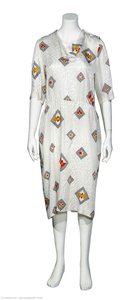
Schiaparelli portréja

Schiaparelli festményei: A 18 leghíresebb alkotás, egy galéria szemével

Frissítve: november 2026 · rangsorolva népszerűségi pontszámunk alapján (minden mű keresései, látogatásai és megrendelései alapján) · 18 mű Schiaparelli alkotása a katalógusunkban

Röviden

A galéria szerint Schiaparelli leghíresebb festménye a The Tears Dress (1938), amelynek eredeti példája a Victoria and Albert Museum múzeumában található, London városában. Evening Hat with Rhinestone Trim és Evening ensemble (1937) kiegészítik azt a triót, amelyet minden szem felismer. A katalógusunkban szereplő 18 művész Schiaparelli alkotásából a galéria az alábbi 18 leghíresebbet mutatja be, amelyek mind egyedi originális művek, a készítés évszámával, a múzeum megnevezésével és a különlegességük leírásával.

1890 – 1973, Róma Surrealism A legtöbb mű: Victoria and Albert Museum

A galéria top 10 Schiaparelli festménye

1
The Tears Dress (1938) (1889) -ja Schiaparelli

The Tears Dress

1938 · Black and White Photography · Victoria and Albert Museum, London

The gown hangs with a heavy, quiet grace. It is a sheath of viscose rayon and silk marocain, pale and smooth before the disruption begins. Across this surface, jagged lines cascade like sudden wounds. These irregular shapes mimic the appearance of shredded flesh, a trompe-l'œil trick that blurs the boundary between fabric and skin. The print creates an illusion of something torn, a visual echo of the psychological fractures felt…

2
Evening Hat with Rhinestone Trim (1889) -ja Schiaparelli

Evening Hat with Rhinestone Trim

Mixed Media · Kunstgewerbemuseum, Berlin

To gaze upon this exquisite evening hat is to be transported to an era where fashion was not merely adornment, but wearable sculpture—a breathtaking confluence of artistry and ephemeral glamour. The piece itself, rendered in deep black netting and adorned with delicate rhinestone trim, possesses an immediate aura of sophisticated mystery. It does not shout its presence; rather, it whispers tales of grand galas, hushed ballroom conversations, and the dazzling…

3
Evening ensemble (1937) (1889) -ja Schiaparelli

Evening ensemble

1937 · Acrylic On Canvas · Metropolitan Művészeti Múzeum, New York

Elsa Schiaparelli wasn't merely a fashion designer; she was a provocateur, a visual poet, and a key figure in the burgeoning world of surrealism. Her 1937 creation, "Evening Ensemble," embodies this spirit with audacious elegance and a deliberate rejection of conventional beauty standards. This isn’t simply a gown and jacket; it's a carefully constructed dialogue between art, fashion, and the subconscious – a testament to Schiaparelli’s radical vision that continues…

4
Shocking (1937) (1889) -ja Schiaparelli

Shocking

1937 · Design Objects

In the pantheon of twentieth-century design, few names evoke as much immediate intrigue and avant-garde audacity as Elsa Schiaparelli. Her creation, Shocking, is not merely a perfume; it is a profound intersection of fashion, fine art, and olfactory storytelling. This exquisite piece, dating from 1937, serves as a masterclass in the Surrealist movement's ability to permeate everyday objects with dreamlike, often provocative, energy. The composition presented—a curated arrangement featuring the…

5
Ruha (1940) (1889) -ja Schiaparelli

Ruha

1940 · Akril festmény vászonon · Röhsska Museum, Göteborg

Egy Szellemű Elegancia: Elsa Schiaparelli Öltözködési Művészete és Az Éjjeli Ruházat Megőröklése Elsa Luisa Maria Schiaparelli, egy név, amely szokatlan stílus és szürrealista innováció szinonimája lett a XX. századi divathistóriában – végrehajtott átalakulást az ismert művészek körében. Született Párizsban 1890-ben, egy aristokrata családba, életét minden hagyományos szabványtól elszakadt szívélyes önállóság vezette, melyet tudományos kíváncsiság és egy különös hajlam övezett az eltántulóhoz. Édesapja, Celestino Schiaparelli, egy világhírű arabisztáor és sanszkrit szakember…

6
Evening ensemble (1937) (1889) -ja Schiaparelli

Evening ensemble

The Evening ensemble, created in 1937 by Elsa Schiaparelli, is a notable example of surrealist couture. This formal ensemble consists of a sleek sheath gown and a jacket, representing a collaboration between Schiaparelli and André Perugia. The gown is constructed from deep purple silk velvet, featuring a trompe l’œil technique where metallic threads are woven into the fabric to create a shimmer reminiscent of dappled light. The accompanying jacket is…

7
Gold Lamé Evening Gown (1889) -ja Schiaparelli

Gold Lamé Evening Gown

Acrylic On Canvas · Kunstgewerbemuseum, Berlin

The world of haute couture in the 1930s was dominated by elegance and restraint, yet Elsa Schiaparelli dared to inject a potent dose of surrealism into the very heart of Parisian fashion. Her “Gold Lamé Evening Gown,” a breathtaking example of her singular vision, isn’t merely a dress; it's a meticulously crafted embodiment of the era’s anxieties and aspirations, a shimmering testament to collaboration with artists like Salvador Dalí, and…

8
The Circus Collection (1938) (1889) -ja Schiaparelli

The Circus Collection

1938 · Acrylic On Canvas · Victoria and Albert Museum, London

The Surrealist Echoes of “The Circus Collection” Elsa Schiaparelli’s “The Circus Collection,” debuting in Paris during the summer of 1938, stands as an emblem of her singular artistic vision—a defiant rejection of convention fused with a fascination for theatrical spectacle and unsettling beauty. More than just a fashion show; it was a meticulously crafted performance designed to shock and delight audiences accustomed to the polished elegance of established couture houses.…

9
Evening Cape (1938) (1889) -ja Schiaparelli

Evening Cape

The light catches the gold of the dress, turning the fabric into a shimmering sun that seems to pulse against the darkness. A woman stands at the center of this celestial vision, her form draped in an extravagant evening cape that defies the quiet elegance of the era. Every inch of the garment tells a story of cosmic wonder, as if she has stepped directly out of a dream of…

10
Jacket (1900) (1889) -ja Schiaparelli

Jacket

1900

Pink wool jacket with metal star closures. Silk plaid lining edge shaped unlined, no label, lining replacement fabric.

Schiaparelli festményei, 11. helyezéstől 18. helyezésig

A témák, amelyek Schiaparelli figyelmét meghúzták

A négy leggyakorobban előforduló téma ebben az eredeti művekben, mindegyik a legkiválóbb példájával.

A műemlékek, amelyek Schiaparelli eredeti műveit őrzik

A 8 olyan múzeum, amely a legtöbb ezen az oldalon szereplő festményet őrzi.

Múzeum Város Schiaparelli művei Ebből a listából származó festmények
Victoria and Albert Museum, LondonVictoria and Albert Museum London 2 The Tears Dress, The Circus Collection
Kunstgewerbemuseum, BerlinKunstgewerbemuseum Berlin 2 Evening Hat with Rhinestone Trim, Gold Lamé Evening Gown
Metropolitan Művészeti Múzeum, New YorkMetropolitan Művészeti Múzeum New York 2 Evening ensemble, Evening ensemble
Röhsska Museum, GöteborgRöhsska Museum Göteborg 2 Ruha, Dress
The Kyoto Costume Institute, KyotoThe Kyoto Costume Institute Kyoto 2 Evening Cape, Evening Coat
the Robert and Penny Fox Historic Costume Collection at Drexel University, Philadelphiathe Robert and Penny Fox Historic Costume Collection at Drexel University Philadelphia 1 Evening Gown
Museum of the City of New York, New YorkMuseum of the City of New York New York 1 Strapless Evening dress in white-on-white dotted organdy
Iwami Art Museum, MasudaIwami Art Museum Masuda 1 Evening Dress (Circus Collection)

Schiaparelli, egy aláírott festmény évtizedenként

Művek évtizedenként

Váassz ki egy évtizedet, hogy megnézhesd az azt meghatározó eredetiműveket.

Schiaparelli festményei: a galéria válaszai

Melyik Schiaparelli festmény a leghíresebb?Fedje fel a választ

The Tears Dress (1938), Victoria and Albert Museum, London. Ezután Evening Hat with Rhinestone Trim és Evening ensemble (1937) következik.

Hány éves volt Schiaparelli, amikor elkészítette a(t): The Tears Dress?Fedje fel a választ

48 éves: The Tears Dress 1938-ből származik, Schiaparelli pedig 1890-ben született.

Melyek Schiaparelli top 10 festménye?Fedje fel a választ

The Tears Dress, Evening Hat with Rhinestone Trim, Evening ensemble, Shocking, Ruha, Evening ensemble, Gold Lamé Evening Gown, The Circus Collection, Evening Cape és Jacket. A fenti rangsor a művek évszamarát és a múzeumát jelzi.

Hány műve született Schiaparelli nevére?Fedje fel a választ

Katalógusunkban 18 mű található Schiaparelli alkotótól, 1900 és 1950 év közötti időszakból.

Hol találhatóak Schiaparelli leghíresebb eredeti művei?Fedje fel a választ

Leginkább Victoria and Albert Museum (London), Kunstgewerbemuseum (Berlin) és Metropolitan Művészeti Múzeum (New York) található. A fenti múzeumi táblázatban mindegyik felsorolásra került.

Mikor festette Schiaparelli le leghíresebb műveit?Fedje fel a választ

1930s alatt: a jelen laphonon található 18 műből 10 készült ebben az időszakban, köztük The Tears Dress.

Melyek Schiaparelli legkorábbi és legutóbbi híres művei?Fedje fel a választ

Ezen az oldalon a leghitelesebb Jacket (1900), a legutóbbi pedig Strapless Evening dress in white-on-white dotted organdy (1950).

Mely témakörökkel foglaltaszkodott a legtöbbször Schiaparelli?Fedje fel a választ

Fashion (3), Woman (2) és Fashion design (2), a jelen oldalon található 18 műművészeti alkotás között.

Melyik technikával foglalt leginkább Schiaparelli?Fedje fel a választ

Acrylic On Canvas, a jelen oldalon található 18 műből 3 darab esetén.

Mely művészeti irányhoz tartozik Schiaparelli?Fedje fel a választ

Surrealism, ezen az oldalon található eredetiek alapján.

Mely Schiaparelli eredeti műveit őrzi a Victoria and Albert Museum?Fedje fel a választ

The Tears Dress és The Circus Collection: a Victoria and Albert Museum, London 2 művet őrzi ezen az oldalon.

Schiaparelli: a művész

A Rebel Spirit in Haute Couture: The World of Elsa Schiaparelli

Elsa Luisa Maria Schiaparelli, a name that will forever be linked to audacious style and surrealist innovation, fundamentally reshaped the landscape of 20th-century fashion. Born into an aristocratic Roman family in 1890, her life was anything but conventional—a deliberate departure from the expected paths laid out for women of her social standing. Unlike many of her contemporaries who embraced established societal norms and sought acceptance within traditional structures, Schiaparelli possessed a fiercely independent spirit, fueled by intellectual curiosity and an unyielding desire to challenge conventions. Her father, Celestino Schiaparelli, a distinguished scholar specializing in Islamic studies and Sanskrit, cultivated an environment rich with learning and philosophical inquiry—a stark contrast to the often restrictive atmosphere of aristocratic life. Equally significant was her uncle, Giovanni Schiaparelli – a renowned astronomer celebrated for his groundbreaking observations of Martian “canals” – whose fascination with the cosmos and the unknown ignited within Elsa a lifelong curiosity about the unconventional and the extraordinary. This unique upbringing, steeped in both intellectual rigor and cosmic wonder, instilled in her a profound love for art, mythology, and esoteric thought—elements that would profoundly shape her distinctive aesthetic vision and inform her revolutionary approach to fashion design. Early rebellious tendencies manifested not only in defying societal expectations but also in a series of personal challenges, including a tumultuous marriage to the enigmatic Wilhelm de Kerlor, a self-proclaimed psychic whose influence further propelled her into a world of spiritualism and occult practices—themes that subtly yet powerfully permeated her later designs.

From Knitwear to Surrealist Statements: The Rise of a Fashion House

Schiaparelli’s initial foray into the world of fashion was driven by a pragmatic desire for creative expression, born from a dissatisfaction with the prevailing styles of the era. She began her career in the late 1920s experimenting primarily with knitwear—a field she recognized as underserved by designers seeking comfortable yet sophisticated clothing. Recognizing a gap in the market, Schiaparelli established her own fashion house in Paris in 1927, quickly expanding beyond simple knitwear to encompass a full range of haute couture designs. However, it was during the 1930s that Schiaparelli truly came into her own, forging groundbreaking collaborations with leading artists of the Surrealist movement—a pivotal moment that would define her legacy and set her apart from her contemporaries. This period marked a radical departure from the prevailing elegance of Parisian fashion, characterized by flowing silhouettes and understated glamour. The Surrealists, fascinated by dreams, irrationality, and the subconscious, offered Schiaparelli a fertile ground for experimentation. Her designs were deliberately provocative, playful, and often unsettling—challenging conventional notions of beauty and embracing the absurd. She didn’t simply create clothes; she crafted visual narratives that invited interpretation and sparked conversation. Her partnerships with artists like Salvador Dalí and Jean Cocteau proved particularly fruitful, resulting in iconic creations that continue to captivate audiences today.

Shocking Pink and Trompe-l'œil: Defining a Unique Aesthetic

Schiaparelli’s designs were instantly recognizable for their bold use of color, most notably her signature “shocking pink”—a vibrant, almost aggressive hue that defied the muted palettes favored by many of her contemporaries. This audacious choice became emblematic of her rebellious spirit and her determination to challenge established norms—a statement of individuality in a world increasingly dominated by conformity. Beyond color, Schiaparelli masterfully employed *trompe-l'œil* effects—creating illusions that blurred the boundaries between art and fashion. She incorporated unexpected materials into her designs – leather, metal, even newspaper print – pushing the limits of textile innovation and demonstrating a willingness to experiment with unconventional forms. Her collections often drew inspiration from mythology, nature, and everyday objects, transforming them into wearable works of art. The Circus Collection of 1938 stands as a particularly striking example of this playful approach, featuring theatrical costumes adorned with whimsical motifs and exaggerated silhouettes—a celebration of fantasy and spectacle. The use of *trompe-l'œil* wasn’t merely decorative; it was integral to her artistic vision, adding layers of meaning and complexity to each garment. An Evening Coat from 1936 showcased her daring use of leather in high fashion, demonstrating her ability to seamlessly blend traditional couture techniques with avant-garde concepts.

Key Collaborations and Lasting Influence

Schiaparelli’s most celebrated collaborations cemented her place as a true visionary. Her partnership with Salvador Dalí produced some of the most iconic images in fashion history, including the Lobster Dress (1937), featuring a vibrant lobster painted onto silk—a surrealist masterpiece that continues to fascinate and inspire. The Shoe Hat (1938)—a headpiece shaped like a high-heeled shoe—is another testament to their creative synergy, demonstrating a playful subversion of traditional fashion norms. Jean Cocteau’s contributions, particularly his intricate embroidery designs, added further depth and artistry to Schiaparelli's collections. Beyond these specific collaborations, Schiaparelli’s influence extended throughout the fashion industry. She challenged conventional notions of beauty, embraced experimentation, and paved the way for future designers to incorporate artistic elements into their work. Her legacy is evident in the continued appreciation of her designs and the enduring fascination with her unique aesthetic—a testament to her pioneering spirit and her unwavering commitment to creative expression. Despite facing financial difficulties and a decline in popularity after World War II, Schiaparelli’s influence remains undeniable, solidifying her place as one of the most revolutionary figures in fashion history.

Major Achievements

  • 1927: Establishes her own fashion house in Paris.
  • 1930s: Forges groundbreaking collaborations with Surrealist artists like Salvador Dalí and Jean Cocteau.
  • 1937: Creates the iconic Lobster Dress, a collaboration with Salvador Dalí.
  • 1938: Designs the Shoe Hat, another iconic creation by Schiaparelli and Dalí.
  • 1954: Closes her fashion house after decades of success.