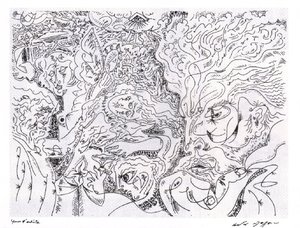
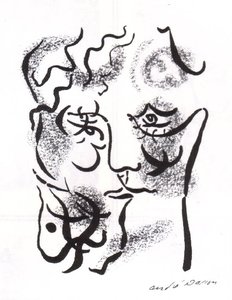
André Masson portréja

André Masson festményei: A 100 leghíresebb alkotás, egy galéria szemével

Frissítve: november 2026 · rangsorolva népszerűségi pontszámunk alapján (minden mű keresései, látogatásai és megrendelései alapján) · 273 mű André Masson alkotása a katalógusunkban

Röviden

A galéria szerint André Masson leghíresebb festménye a Goethe vagy a növények metamorfózisa (1940). Massacre (1932) és Children of the Islands (1926) kiegészítik azt a triót, amelyet minden szem felismer. A katalógusunkban szereplő 273 művész André Masson alkotásából a galéria az alábbi 100 leghíresebbet mutatja be, amelyek mind egyedi originális művek, a készítés évszámával, a múzeum megnevezésével és a különlegességük leírásával.

1896 – 1987, Balagny-sur-Thérain Szürrealizmus A legtöbb mű: Tate Modern

A galéria top 10 André Masson festménye

1
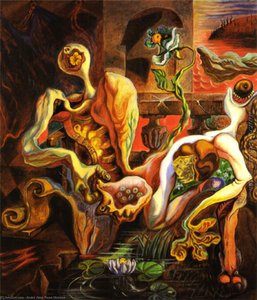
Goethe vagy a növények metamorfózisa (1940) (1889) -ja André Masson

Goethe vagy a növények metamorfózisa

1940 · Olajfestmény vászonon

A Goethe vagy a növények metamorfózisa című vászon André Masson keze által kelt életre. 1940-ben a művész egy organikus változás látomását rögzítette, átfordítva a botanikai metamorfózis fogalmát egy vizuális nyelvbe. Ez a mű ma már a jeruzsálemiek Izraeli Múzeum falai között él, Izrael Államban.

2
Massacre (1932) (1889) -ja André Masson

Massacre

1932 · Crayon

The scene unfolds within the chaotic energy of Massacre, a work that pulses with a frantic, unsettling life. André Masson, the hand behind this turbulent vision, captures a moment of profound disorder. The figures within the composition seem caught in a perpetual state of struggle, their forms blurring into a swirling mass of movement. It is a vision of conflict that refuses to settle, pulling the viewer into its restless,…

3
Children of the Islands (1926) (1889) -ja André Masson

Children of the Islands

1926 · Mixed Media

In Children of the Islands by André Masson, a group of figures emerges from a dreamlike haze. Created about 1926, the work presents these beings within an undefined island setting. They appear as children or perhaps mythical entities, caught in the middle of an unknown activity. The scene feels primal, as if a ritual is unfolding in a place where time has no meaning.

4
Portrait of Emily Brontë (1945) (1889) -ja André Masson

Portrait of Emily Brontë

1945 · Ink On Paper

The gaze of the subject meets us through the Portrait of Emily Brontë, a striking work by the French artist André Masson. Created in 1945, this piece captures the essence of the author Emily Brontë through a highly stylized lens. The portrait does not seek a simple likeness, but rather reaches for the very spirit of the woman behind the prose. It exists as a profound encounter with her character,…

5
Portrait of the poet Kleist (1939) (1889) -ja André Masson

Portrait of the poet Kleist

1939 · Oil On Canvas

The Portrait of the poet Kleist emerges from the canvas as a profound encounter with the psyche of a literary figure. Created by the artist André Masson, this work captures the essence of the poet Kleist through a lens of surrealist exploration. The painting, dating to 1939, presents the subject not as a static figure from history, but as a living presence caught in a moment of intense spiritual or…

6
Meditation on an Oak Leaf (1942) (1889) -ja André Masson

Meditation on an Oak Leaf

1942 · Oil

In this work, titled Meditation on an Oak Leaf, we encounter the specific vision of André Masson. Created in 1942, the painting emerged during a period of significant transition for the artist. Masson, who was born in Balagny-sur-Thérain, France, on January 4, 1896, developed a practice that sought to bridge the gap between the conscious mind and the primal impulses of the subconscious.

7
Landscape with Rocks (1923) (1889) -ja André Masson

Landscape with Rocks

1923

Landscape with Rocks is a work by André Masson. The artist, born in Balagny-sur-Thérain, France, on January 4, 1896, captured this scene in 1923. His hand moved across the surface to fix this specific moment in time.

8
The horses of Diomedes (1934) (1889) -ja André Masson

The horses of Diomedes

1934 · Oil

The painting titled The Horses of Diomedes is a surrealist work by the artist André Masson. Created in 1934, the piece captures a moment of tension through its specific arrangement of figures. It presents a scene where several people and horses occupy the space, their forms caught in a state of constant motion.

André Masson festményei, 11. helyezéstől 100. helyezésig

11Entanglement (1941) (1889) -ja André MassonEntanglement1941 12The Capuchin monastery in Ceret (1919) (1889) -ja André MassonThe Capuchin monastery in Ceret1919 13Massacre (1931) (1889) -ja André MassonMassacre1931 14Sleep in the tower (1938) (1889) -ja André MassonSleep in the tower1938 15The metamorphosis of the lovers (1938) (1889) -ja André MassonThe metamorphosis of the lovers1938 16The construction of Daedalus (1940) (1889) -ja André MassonThe construction of Daedalus1940 17The meals (1922) (1889) -ja André MassonThe meals1922 18Portrait of Roland Tual (1921) (1889) -ja André MassonPortrait of Roland Tual1921 19Torso (1926) (1889) -ja André MassonTorso1926 20Automatic drawing 04 (1926) (1889) -ja André MassonAutomatic drawing 041926 21Automatic drawing 05 (1925) (1889) -ja André MassonAutomatic drawing 051925 22Automatic Drawing (1926) (1889) -ja André MassonAutomatic Drawing1926 23Automatic drawing 03 (1925) (1889) -ja André MassonAutomatic drawing 031925 24Automatic drawing 02 (1926) (1889) -ja André MassonAutomatic drawing 021926 25The meals (1923) (1889) -ja André MassonThe meals1923 26Wing (1925) (1889) -ja André MassonWing1925 27Cemetery (1924) (1889) -ja André MassonCemetery1924 28Players (1923) (1889) -ja André MassonPlayers1923 29The cardinal points (1924) (1889) -ja André MassonThe cardinal points1924 30The man with the orange (1923) (1889) -ja André MassonThe man with the orange1923 31Man (1924) (1889) -ja André MassonMan1924 32Man holding a rope (1924) (1889) -ja André MassonMan holding a rope1924 33Woman holding a bird (1924) (1889) -ja André MassonWoman holding a bird1924 34Armour (1925) (1889) -ja André MassonArmour1925 35The Constellations (1925) (1889) -ja André MassonThe Constellations1925 36Two naked (1924) (1889) -ja André MassonTwo naked1924 37Vents (1924) (1889) -ja André MassonVents1924 38Anatomy of my world, birth (1938) (1889) -ja André MassonAnatomy of my world, birth1938 39Characters (1934) (1889) -ja André MassonCharacters1934 40Melusine (1937) (1889) -ja André MassonMelusine1937 41Bullfighting (1937) (1889) -ja André MassonBullfighting1937 42Baudelaire (1943) (1889) -ja André MassonBaudelaire1943 43Goethe (1939) (1889) -ja André MassonGoethe1939 44Through the Looking Glass (1941) (1889) -ja André MassonThrough the Looking Glass1941 45Holderlin s poetry (1940) (1889) -ja André MassonHolderlin s poetry1940 46Portrait of Blake (1939) (1889) -ja André MassonPortrait of Blake1939 47Portrait of André Breton (1941) (1889) -ja André MassonPortrait of André Breton1941 48The assassination of the PLC (1941) (1889) -ja André MassonThe assassination of the PLC1941 49The Witch (1942) (1889) -ja André MassonThe Witch1942 50Earth (1939) (1889) -ja André MassonEarth1939 51Melusine (1942) (1889) -ja André MassonMelusine1942 52Portrait of George Duthuit (1945) (1889) -ja André MassonPortrait of George Duthuit1945 53Self-Portrait (1944) (1889) -ja André MassonSelf-Portrait1944 54Pasiphae (1945) (1889) -ja André MassonPasiphae1945 55The Sibyl, portrait of Madame Masson (1944) (1889) -ja André MassonThe Sibyl, portrait of Madame Masson1944 56In the Forest (1944) (1889) -ja André MassonIn the Forest1944 57Minors (1945) (1889) -ja André MassonMinors1945 58Resistance (1944) (1889) -ja André MassonResistance1944 59Reader with Red Book (1950) (1889) -ja André MassonReader with Red Book1950 60The tree and the nest (1964) (1889) -ja André MassonThe tree and the nest1964 61Meditation Loth (1969) (1889) -ja André MassonMeditation Loth1969 62Nereid (1968) (1889) -ja André MassonNereid1968 63Study for a Self Portrait (1968) (1889) -ja André MassonStudy for a Self Portrait1968 64The maid (1973) (1889) -ja André MassonThe maid1973 65Titan (1971) (1889) -ja André MassonTitan1971 66Portrait of the Artist (1972) (1889) -ja André MassonPortrait of the Artist1972 67Bad night (1970) (1889) -ja André MassonBad night1970 68Woman attacked by birds (1973) (1889) -ja André MassonWoman attacked by birds1973 69Queen Zenobia (1971) (1889) -ja André MassonQueen Zenobia1971 70Presentation (1971) (1889) -ja André MassonPresentation1971 71The bird market (1970) (1889) -ja André MassonThe bird market1970 72Winged Idol (1970) (1889) -ja André MassonWinged Idol1970 73The fairy of the ruins (1970) (1889) -ja André MassonThe fairy of the ruins1970 74Return of the Crusades (1974) (1889) -ja André MassonReturn of the Crusades1974 75Fruits devastating (1975) (1889) -ja André MassonFruits devastating1975 76Disguised leg (1975) (1889) -ja André MassonDisguised leg1975 77Guitar and Profile (1924) (1889) -ja André MassonGuitar and Profile1924 · Tate Modern 78Portrait of Curt Valentin (1946) (1889) -ja André MassonPortrait of Curt Valentin1946 79Kitchen maids (1889) -ja André MassonKitchen maids 80Leda (1947) (1889) -ja André MassonLeda1947 81Childbirth (1955) (1889) -ja André MassonChildbirth1955 · Tate Modern 82A tükör foglya: Halott átalakítása (1939) (1889) -ja André MassonA tükör foglya: Halott átalakítása1939 · MoMA - Museum of Modern Art 83Fragments of gardens tantalum (1889) -ja André MassonFragments of gardens tantalum 84Around fat (1889) -ja André MassonAround fat 85One on the other (1889) -ja André MassonOne on the other 86Traveller's night (1889) -ja André MassonTraveller's night 87Ibdes de Aragon (1889) -ja André MassonIbdes de Aragon 88Composition at the apple (1922) (1889) -ja André MassonComposition at the apple1922 89Women (1921) (1889) -ja André MassonWomen1921 90The Glades (1922) (1889) -ja André MassonThe Glades1922 91The Figure (1924) (1889) -ja André MassonThe Figure1924 · Art Institute of Chicago 92Automatic Drawing (1927) (1889) -ja André MassonAutomatic Drawing1927 93Tribute to Saint-Pol Roux (1925) (1889) -ja André MassonTribute to Saint-Pol Roux1925 94Automatic drawing 06 (1925) (1889) -ja André MassonAutomatic drawing 061925 95Automatic Drawing (1925) (1889) -ja André MassonAutomatic Drawing1925 96Automatic drawing 04 (1925) (1889) -ja André MassonAutomatic drawing 041925 97Automatic drawing 02 (1925) (1889) -ja André MassonAutomatic drawing 021925 98Automatic drawing 03 (1926) (1889) -ja André MassonAutomatic drawing 031926 · Statens Museum for Kunst 99Frenzy plant (1925) (1889) -ja André MassonFrenzy plant1925 100The Sleeper (1924) (1889) -ja André MassonThe Sleeper1924

André Masson híres festményei, korszakonként

A témák, amelyek André Masson figyelmét meghúzták

A négy leggyakorobban előforduló téma ebben az eredeti művekben, mindegyik a legkiválóbb példájával.

A műemlékek, amelyek André Masson eredeti műveit őrzik

A 4 olyan múzeum, amely a legtöbb ezen az oldalon szereplő festményet őrzi.

Múzeum Város André Masson művei Ebből a listából származó festmények
Tate Modern, LondonTate Modern London 4 Guitar and Profile, Childbirth
MoMA - Museum of Modern Art, New YorkMoMA - Museum of Modern Art New York 5 A tükör foglya: Halott átalakítása
Art Institute of Chicago, ChicagoArt Institute of Chicago Chicago 1 The Figure
Statens Museum for Kunst, KoppenhágaStatens Museum for Kunst Koppenhága 1 Automatic drawing 03

André Masson, egy aláírott festmény évtizedenként

Művek évtizedenként

Váassz ki egy évtizedet, hogy megnézhesd az azt meghatározó eredetiműveket.

André Masson festményei: a galéria válaszai

Melyik André Masson festmény a leghíresebb?Fedje fel a választ

Goethe vagy a növények metamorfózisa (1940). Ezt követi Massacre (1932) és Children of the Islands (1926).

Hány éves volt André Masson, amikor elkészítette a(t): Goethe vagy a növények metamorfózisa?Fedje fel a választ

44 éves: Goethe vagy a növények metamorfózisa 1940-ből származik, André Masson pedig 1896-ben született.

Melyek André Masson top 10 festménye?Fedje fel a választ

Goethe vagy a növények metamorfózisa, Massacre, Children of the Islands, Portrait of Emily Brontë, Portrait of the poet Kleist, Meditation on an Oak Leaf, Landscape with Rocks, The horses of Diomedes, Seeded Earth és Gradiva. A fenti rangsor a művek évszamarát és a múzeumát jelzi.

Hány műve született André Masson nevére?Fedje fel a választ

Katalógusunkban 273 mű található André Masson alkotótól, 1919 és 1975 év közötti időszakból.

Hol találhatóak André Masson leghíresebb eredeti művei?Fedje fel a választ

Leginkább Tate Modern (London), MoMA - Museum of Modern Art (New York) és Art Institute of Chicago (Chicago) található. A fenti múzeumi táblázatban mindegyik felsorolásra került.

Mikor festette André Masson le leghíresebb műveit?Fedje fel a választ

1920s alatt: a jelen laphonon található 100 műből 37 készült ebben az időszakban, köztük Children of the Islands.

Melyek André Masson legkorábbi és legutóbbi híres művei?Fedje fel a választ

Ezen az oldalon a leghitelesebb The Capuchin monastery in Ceret (1919), a legutóbbi pedig Fruits devastating (1975).

Mely témakörökkel foglaltaszkodott a legtöbbször André Masson?Fedje fel a választ

Arts (10), Portraits (8) és Figures (4), a jelen oldalon található 100 műművészeti alkotás között.

Melyik technikával foglalt leginkább André Masson?Fedje fel a választ

Oil, a jelen oldalon található 100 műből 2 darab esetén.

Mely művészeti irányhoz tartozik André Masson?Fedje fel a választ

Szürrealizmus, ezen az oldalon található eredetiek alapján.

Mely André Masson eredeti műveit őrzi a Tate Modern?Fedje fel a választ

Guitar and Profile és Childbirth: a Tate Modern, London 2 művet őrzi ezen az oldalon.

André Masson: a művész

André Masson: A Surrealist Pioneer’s Journey Through the Unconscious

André Masson, a name synonymous with both surrealism and groundbreaking artistic techniques, was born in Balagny-sur-Thérain, a small town just north of Paris, on January 4th, 1896. His life unfolded as a fascinating tapestry woven from early artistic training, wartime experiences, and an unwavering dedication to exploring the depths of the human subconscious. Masson’s legacy isn't simply defined by his paintings; it resides in his revolutionary approach to artmaking – a method that blurred the lines between conscious control and spontaneous expression, forever altering the landscape of 20th-century art.

Early Years and Artistic Foundations

Masson’s artistic journey began at the tender age of eleven when he enrolled at the Académie Royale des Beaux-Arts in Brussels. Under the tutelage of Constant Montald, he received a solid foundation in traditional painting techniques, developing a keen eye for form and composition. However, it was during this period that his initial inclinations towards Cubism began to surface – an early engagement with the radical experimentation taking place within the modern art world. These formative years instilled in him not just technical skill but also a restless curiosity, a desire to push beyond conventional boundaries and delve into uncharted artistic territories.

The Surrealist Embrace: Automatic Drawing and Beyond

Masson’s life took a dramatic turn in the mid-1920s when he became deeply immersed in the burgeoning Surrealist movement. He wholeheartedly embraced automatic drawing – a technique that involved creating artwork without conscious control, allowing the subconscious to dictate the hand's movements. This wasn’t merely chance; it was a deliberate attempt to bypass rational thought and tap into the raw, unfiltered imagery residing within the mind. He collaborated closely with other prominent Surrealists like Antonin Artaud, Michel Leiris, Joan Miró, Georges Bataille, Jean Dubuffet, and Georges Malkine, fostering an incredibly vibrant artistic community fueled by shared experimentation and a desire to challenge established norms. Masson’s work during this period frequently explored themes of violence, eroticism, and metamorphosis – subjects that deliberately defied traditional artistic conventions, reflecting a profound shift in perspective.

Innovative Techniques: Sand, Glue, and the Canvas

Masson's most distinctive contribution to art lies in his innovative techniques. He developed a method of applying sand and glue directly onto canvas, creating textured, layered paintings based on the unpredictable patterns formed by the materials. This process wasn’t about meticulous control; it was about embracing chance and allowing the resulting shapes to guide the artist’s hand. He also pioneered automatic drawing – numerous pen-and-ink works showcasing his innovative approach to art. These techniques combined to produce a uniquely expressive style, characterized by dynamic lines, biomorphic forms, and a palpable sense of movement. His work during this period often explored violent or erotic themes, reflecting a departure from traditional artistic conventions.

War, Exile, and American Influence

The outbreak of World War II dramatically altered the course of Masson’s life. His work was condemned as “degenerate” by the Nazis, forcing him to flee France with the assistance of Varian Fry. He sought refuge in the United States, where he encountered a new wave of artistic experimentation. This period proved profoundly influential, exposing him to American Abstract Expressionists like Jackson Pollock and significantly shaping his own evolving style. Returning to France after the war, Masson settled in Aix-en-Provence, shifting his focus towards landscape painting – a move that reflected a desire for greater naturalism while retaining the expressive qualities of his earlier work.

Legacy and Enduring Impact

André Masson’s impact on the art world is undeniable. He wasn't simply an artist; he was a pioneer who redefined the possibilities of artistic expression. His exploration of the subconscious, combined with his innovative techniques, continues to inspire artists today. His influence can be seen across various movements, from Cubism to Abstract Expressionism, solidifying his position as one of the most important figures in modern art history. Masson’s legacy is a testament to the power of artistic experimentation and the enduring allure of the unconscious mind.