


1


Frissítve: október 2026 · rangsorolva népszerűségi pontszámunk alapján (minden mű keresései, látogatásai és megrendelései alapján) · 36 mű Alan Davie alkotása a katalógusunkban
Röviden
A galéria szerint Alan Davie leghíresebb festménye a Woman Arranging Flowers (1945). Untitled Abstract és Self Portrait with Brushes (1937) kiegészítik azt a triót, amelyet minden szem felismer. A katalógusunkban szereplő 36 művész Alan Davie alkotásából a galéria az alábbi 36 leghíresebbet mutatja be, amelyek mind egyedi originális művek, a készítés évszámával, a múzeum megnevezésével és a különlegességük leírásával.


 Joe's Magic Lantern1961
12
 Joe's Lucky Dip1961
13
 Keep Your Fingers Crossed1961
14
 Hopi Studies No.32, Opus 0.11731991 · University of Hertfordshire
15
 Hopi Studies No.30 (Big Blue) (Opus O.1171)1991
16
 Homage to an Earth Goddess No.61992
17
 Symbols in a Landscape1994 · The Pier Arts Centre
18
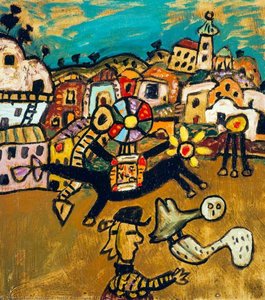 Village Witch (Opus O.1263)1994
19
 Magic Casket1997 · Scottish National Gallery of Modern Art
20
 Celtic Landscape (Dreamscape)1996 · The Pier Arts Centre
21
 Magic Landscape (Opus O.1337)1996
22
 The Alchemist's Mirror No.1 (Opus 1357)1997
23
 Cosmic Signals I2000
24
 Cosmic Signals No.72000
25
 The Golden Palace1999
26
 Magician's Mirror No.22000 · The Mercer Art Gallery
27
 Serpent's Idea of a Horse2000
28
 The Magician's Mirror No.3 (Opus 1450)2000
29
 Without Devices2004 · Pembroke College Oxford Jcr Art Collection
30
 Around and Around in the PinkKanadai Nemzeti Galéria
31
 Kaleidoscope for a Parrot
32
 Prize for a Serpent
33
 Flowers on a TableThe Fleming Collection
34Prophet in a Tree, 1963Fitzwilliam Múzeum
35
 Double MonumentRobinson College
36
 Hallucination with Monster and Cock
A 8 olyan múzeum, amely a legtöbb ezen az oldalon szereplő festményet őrzi.
| Múzeumok | Város | Alan Davie művei | Ebből a listából származó festmények |
|---|---|---|---|
 The Pier Arts Centre |
Stromness | 2 | Symbols in a Landscape, Celtic Landscape (Dreamscape) |
 University of Hertfordshire |
North Hatley | 1 | Hopi Studies No.32, Opus 0.1173 |
 Scottish National Gallery of Modern Art |
Edinburgh | 1 | Magic Casket |
 The Mercer Art Gallery |
Harrogate | 1 | Magician's Mirror No.2 |
 Pembroke College Oxford Jcr Art Collection |
Oxford | 1 | Without Devices |
 Kanadai Nemzeti Galéria |
Ottawa | 1 | Around and Around in the Pink |
 The Fleming Collection |
London | 1 | Flowers on a Table |
 Fitzwilliam Múzeum |
Cambridge | 1 | Prophet in a Tree, 1963 |
Váassz ki egy évtizedet, hogy megnézhesd az azt meghatározó eredetiműveket.
Woman Arranging Flowers (1945). Ezt követi Untitled Abstract és Self Portrait with Brushes (1937).
25 éves: Woman Arranging Flowers 1945-ből származik, Alan Davie pedig 1920-ben született.
Woman Arranging Flowers, Untitled Abstract, Self Portrait with Brushes, The Saint, Entrance to a Paradise, Jingling Space, Ram Grip, Piggy Chain, Joy Bag No. 1 és Entrance For A Red Temple No. 4. A fenti rangsor a művek évszamarát és a múzeumát jelzi.
Katalógusunkban 36 mű található Alan Davie alkotótól, 1937 és 2004 év közötti időszakból.
Leginkább The Pier Arts Centre (Stromness), University of Hertfordshire (North Hatley) és Scottish National Gallery of Modern Art (Edinburgh) található. A fenti múzeumi táblázatban mindegyik felsorolásra került.
1990s alatt: a jelen laphonon található 36 műből 10 készült ebben az időszakban, köztük Hopi Studies No.32, Opus 0.1173.
Ezen az oldalon a leghitelesebb Self Portrait with Brushes (1937), a legutóbbi pedig Without Devices (2004).
Abstract expressionism, ezen az oldalon található eredetiek alapján.
Symbols in a Landscape és Celtic Landscape (Dreamscape): a The Pier Arts Centre, Stromness 2 művet őrzi ezen az oldalon.

