


1


Frissítve: november 2026 · rangsorolva népszerűségi pontszámunk alapján (minden mű keresései, látogatásai és megrendelései alapján) · 30 mű Thomas Malton Junior alkotása a katalógusunkban
Röviden
Thomas Malton Junior hagyatékából a leghíresebb alkotás Westminster Abbey From The Schools (1791), amely a Birmingham városi Birmingham Museum and Art Gallery gyűjteményében található. Röviddel ezután követik őket High Street, Oxford (1798) és King's Parade, Cambridge (1798). Katalógusunkban 30 mű található Thomas Malton Junior alkotótól; a galéria megőrizte a világ által leginkább csodált 30 darabot, melyeket a dátummal, a múzeummal és a történetükkel együtt mutatunk be.


 Magdalen College
12
 The circus, bath
13
 Harewood house, north front
14
 The Market Place
15
 The Completion Of The Royal Crescent,
16
 The Strand with Somerset House and St. Mary's Church
17
 The great portico
18
 View Of Somerset House And The Thames
19
 Internal View Of St. Paul's Cathedral From The North
20
 The South Parade
21
 Pulteney bridge
22
 Pulteney bridge,
23
 North East View Of Sir Charles Azgill's Villa
24
 The Hall at Purbrook, 18th century
25
 Hanover square
26
 Interior Of St. Paul's Cathedral
27
 Harewood House From The North West
28
 Harewood House_2
29
 Lawrence jewry guildhall hi
30
 The South Front of the Senate House, and West End
A négy leggyakorobban előforduló téma ebben az eredeti művekben, mindegyik a legkiválóbb példájával.
A 3 olyan múzeum, amely a legtöbb ezen az oldalon szereplő festményet őrzi.
| Múzeum | Város | Thomas Malton Junior művei | Ebből a listából származó festmények |
|---|---|---|---|
 Yale Center for British Art |
New Haven | 2 | High Street, Oxford, King's Parade, Cambridge |
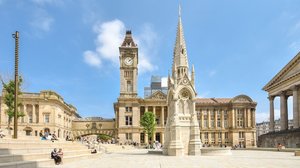 Birmingham Museum and Art Gallery |
Birmingham | 1 | Westminster Abbey From The Schools |
 Magyar Nemzeti Galéria |
Budapest | 1 | Newgate prison |
Alig egy évtized alatt, 1791 és 1798 között, a világ minden dátumozott Thomas Malton Junior eredetije ebben a válogatásban: íme, év évre.
Váasszon egy évet az eredetiek megtekintéséhez.
Westminster Abbey From The Schools (1791), Birmingham Museum and Art Gallery, Birmingham. Ezután High Street, Oxford (1798) és King's Parade, Cambridge (1798) következik.
43 éves: Westminster Abbey From The Schools 1791-ből származik, Thomas Malton Junior pedig 1748-ben született.
Westminster Abbey From The Schools, High Street, Oxford, King's Parade, Cambridge, Newgate prison, Harewood House, Hall''s Library At Margate, New College Ante-chapel, Queen's square, New college chapel és The royal crescent. A fenti rangsor a művek évszamarát és a múzeumát jelzi.
Katalógusunkban 30 mű található Thomas Malton Junior alkotótól, 1791 és 1798 év közötti időszakból.
Leginkább Yale Center for British Art (New Haven), Birmingham Museum and Art Gallery (Birmingham) és Magyar Nemzeti Galéria (Budapest) található. A fenti múzeumi táblázatban mindegyik felsorolásra került.
1798 alatt: a jelen laphonon található 30 műből 2 készült ebben az időszakban, köztük High Street, Oxford.
Ezen az oldalon a leghitelesebb Westminster Abbey From The Schools (1791), a legutóbbi pedig High Street, Oxford (1798).
Buildings (5), Royalty (3) és Temples (2), a jelen oldalon található 30 műművészeti alkotás között.
High Street, Oxford és King's Parade, Cambridge: a Yale Center for British Art, New Haven 2 művet őrzi ezen az oldalon.
In the vibrant, soot-streaked atmosphere of Georgian London, a period defined by both architectural grandeur and burgeoning Romanticism, the name Thomas Malton Junior resonates with the precision of a master draughtsman. Born into a lineage of artistic excellence, Malton was the son of the esteemed architectural draughtsman Thomas Malton Senior, inheriting not just a family name but a profound technical vocabulary. His early life was steeped in the study of perspective and the meticulous rendering of form, a discipline that would later allow him to bridge the gap between the rigid structures of neoclassicism and the emotive fluidity of landscape painting. As an apprentice to the legendary Sir John Soane, Malton was positioned at the very heart of Britain’s architectural evolution, witnessing firsthand the transformative energy of projects like St Paul's Cathedral.
This apprenticeship served as more than mere vocational training; it was a profound intellectual immersion. Working alongside Soane, Malton developed an unparalleled ability to capture complex spatial relationships and the interplay of light within monumental structures. His hands, trained in the exacting science of architectural drawing, learned to translate stone and mortar into evocative watercolor and aquatint. This period of his life is immortalized in various sketches held within the Soane Museum, which reveal a young artist grappling with the scale and majesty of the burgeoning neoclassical movement. His technical prowess was further recognized at the Royal Academy Schools, where he earned both the Silver and Gold Medals, marking him as one of the most promising talents of his generation.
While his foundations were laid in the service of architecture, Malton’s true passion blossomed in the expansive vistas of the English countryside. He transitioned from a draughtsman of buildings to a chronicler of places, producing works that captured the soul of the landscape. His approach was uniquely dualistic: he possessed the eye of an architect, capable of rendering Harewood House with symmetrical perfection and neoclassical grace, yet he also embraced the atmospheric realism required to depict the swirling Thames or the misty reaches of Yorkshire. This ability to marry structural accuracy with a sense of ephemeral beauty allowed him to create landscapes that felt both permanent and fleeting.
His most enduring contribution to the visual record of Britain lies in his topographical series, most notably A Picturesque Tour through the Cities of London and Westminster. Through these aquatint plates, Malton provided a window into a vanishing world, documenting the intricate details of London’s urban fabric with a clarity that remains breathtaking today. His work often featured:
Beyond his own canvas and plate, Malton Junior played a quiet but pivotal role in the development of British art through his work as an educator. In the evenings, within the studios of London, he conducted drawing and perspective classes that attracted some of the most significant names in art history. It is a remarkable testament to his technical mastery that J.M.W. Turner—the very titan of Romanticism—sat as one of his pupils, learning the fundamental laws of light and shadow from Malton’s disciplined instruction. In this way, Malton acted as a vital conduit, passing the rigorous traditions of architectural draughtsmanship to the next generation of landscape visionaries.
Though he lived a life of relative financial comfort following his marriage to Elizabeth Gordon, Malton never lost the industrious spirit of his youth. Whether he was working as a scene painter or producing delicate etchings, his output remained characterized by a deep respect for the natural world and the built environment alike. His death in 1804 marked the end of an era, yet his influence endured through the students he mentored and the enduring beauty of his topographical records. Today, we look upon his works not merely as historical documents, but as poetic meditations on the intersection of human ingenuity and the timeless elegance of the natural landscape.

