Stanislas Lépine portréja

Stanislas Lépine festményei: A 100 leghíresebb alkotás, egy galéria szemével

Frissítve: november 2026 · rangsorolva népszerűségi pontszámunk alapján (minden mű keresései, látogatásai és megrendelései alapján) · 123 mű Stanislas Lépine alkotása a katalógusunkban

Röviden

A galéria szerint Stanislas Lépine leghíresebb festménye a Portrait of Stanisław Potocki (1782-1831). (1788), amelynek eredeti példája a Varsói Nemzeti Múzeum múzeumában található, Varsó városában. Pont de la Tournelle, Paris (1862) és The Tuileries Basin (1877) kiegészítik azt a triót, amelyet minden szem felismer. A katalógusunkban szereplő 123 művész Stanislas Lépine alkotásából a galéria az alábbi 100 leghíresebbet mutatja be, amelyek mind egyedi originális művek, a készítés évszámával, a múzeum megnevezésével és a különlegességük leírásával.

1835 – 1892, Caen Quiet landscape impressionism A legtöbb mű: Carnavalet Museum

A galéria top 10 Stanislas Lépine festménye

1
Portrait of Stanisław Potocki (1782-1831). (1788) (1889) -ja Stanislas Lépine

Portrait of Stanisław Potocki (1782-1831).

1788 · Oil On Canvas · Varsói Nemzeti Múzeum, Varsó

A young child sits at the heart of this scene, draped in ornate, aristocratic attire that speaks of high status and ceremony. This small figure rides a sturdy brown horse, which is positioned atop a large, golden sled. The arrangement feels both dreamlike and deliberate, as if a moment of play has been frozen in a grand, symbolic gesture. Warm earth tones dominate the view, with deep browns, shimmering golds,…

2
Pont de la Tournelle, Paris (1862) (1889) -ja Stanislas Lépine

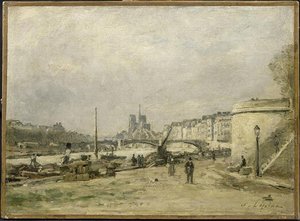
Pont de la Tournelle, Paris

1862 · Oil On Canvas · National Gallery of Art, Washington

The oil on canvas depicts a river scene in Paris, centered on the Pont de la Tournelle. The composition follows a horizontal emphasis, established by the expanse of the river and the line of the bridge. Verticality is provided by the architectural forms of the buildings lining the banks. In the foreground and midground, the water's surface reflects the structures above, creating a series of curved lines and light patterns.…

3
The Tuileries Basin (1877) (1889) -ja Stanislas Lépine

The Tuileries Basin

1877 · Sculpture

The work carries the weight of antiquity, appearing as a quiet observer of classical ideals. The composition relies on the interplay between the solid, heavy presence of the stone and the perceived lightness of the figure's upward gaze. There is a sense of weightlessness in the way the drapery falls, despite the material's inherent density. The neutral, seamless background strips away any sense of environment, forcing a direct encounter with…

4
The Rue de Norvins, Montmartre (1878) (1889) -ja Stanislas Lépine

The Rue de Norvins, Montmartre

1878 · Oil · Kelvingrove Art Gallery and Museum, Glasgow

In this 1878 oil painting, we find ourselves standing at the edge of a sloping street in Montmartre. The Rue de Norvins recedes into a soft, hazy distance, drawing the eye through a deep linear perspective toward a pale horizon. There is a stillness here, a sense of a morning caught in a moment of transition. A woman walks in the foreground, accompanied by a child and a small dog,…

5
Rue Mont-Cenis, Montmartre (1872) (1889) -ja Stanislas Lépine

Rue Mont-Cenis, Montmartre

1872 · Oil On Canvas · National Gallery of Ireland, Dublin

This oil on canvas depicts a narrow, cobblestone street within the Montmartre district of Paris. The composition relies on a strong linear perspective, where the buildings on either side of the road form a receding corridor that directs the eye toward the center of the background. The architecture is rendered in a palette of muted tones, specifically grey, beige, ochre, and soft browns. Above the rooftops, the sky appears as…

6
A Courtyard on the rue de la Fontenelle (1874) (1889) -ja Stanislas Lépine

A Courtyard on the rue de la Fontenelle

1874 · Oil · Norton Simon Múzeum, Pasadena

The scene is a vertically oriented view of a courtyard, framed by two tall, slender trees on the left and right edges. These trees form a natural archway that directs the eye toward the center of the composition. A solitary woman walks toward the viewer in the foreground, carrying a basket. In the distance, near a dark doorway, smaller and less distinct figures are visible. The ground is a pathway…

7
Country Road (1878) (1889) -ja Stanislas Lépine

Country Road

1878 · Oil On Canvas

In this 1878 oil on canvas, we find ourselves in a serene rural landscape that captures a fleeting instance of rest. Two young men are positioned on a grassy bank, their presence adding a human element to the winding dirt road that leads the eye through a field. A solitary tree rises in the midground, providing a vertical anchor to the composition. The scene is bathed in the soft, diffused…

8
Canal in Saint-Denis, Effect of Moonlight (1876) (1889) -ja Stanislas Lépine

Canal in Saint-Denis, Effect of Moonlight

1876 · Oil On Canvas

The composition centers on a horizontal view of a canal in Saint-Denis under moonlight. The water occupies the foreground and middle ground, acting as a reflective surface for the moon and the surrounding architecture. On the left, a row of buildings lines the canal edge, while trees appear on the right side of the frame. A bridge spans the water in the distance, creating a sense of depth through size…

9
QUAIS DE LA SEINE, PONT MARIE (1889) -ja Stanislas Lépine

QUAIS DE LA SEINE, PONT MARIE

Oil On Canvas

The Seine flows through the center of the frame, a grey ribbon cutting through the heart of Paris. Water moves toward the viewer, carrying the weight of an overcast sky in its ripples. The Pont Marie spans the current, its arches breaking the horizontal rhythm of the riverbanks. Buildings line the quays, their facades rendered in muted tones of beige and brown. A few figures move along the banks, small…

10
Prairies à Tournebouse (1889) -ja Stanislas Lépine

Prairies à Tournebouse

Oil On Canvas

The composition of Prairies à Tournebouse is organized horizontally, emphasizing the breadth of the terrain. In the foreground, tall grasses and wildflowers occupy the lower edge of the frame, rendered with visible, broken brushstrokes that suggest texture and movement. A river curves through the middle ground, its surface reflecting the cool blues of the sky. In the distance, a village is nestled among a cluster of trees, positioned near the…

Stanislas Lépine festményei, 11. helyezéstől 100. helyezésig

11Caen: Customs (1860) (1889) -ja Stanislas LépineCaen: Customs1860 · Musée des Beaux-Arts de Tours 12Landscape with Farm Buildings (1863) (1889) -ja Stanislas LépineLandscape with Farm Buildings1863 · Scottish National Gallery 13Montmartre (1863) (1889) -ja Stanislas LépineMontmartre1863 · Scottish National Gallery 14The Pont de la Tournelle, Paris (1862) (1889) -ja Stanislas LépineThe Pont de la Tournelle, Paris1862 · National Gallery 15The Seine at Sèvres (1862) (1889) -ja Stanislas LépineThe Seine at Sèvres1862 16Entrance to the Port (1858) (1889) -ja Stanislas LépineEntrance to the Port1858 17Ships in Port (1860) (1889) -ja Stanislas LépineShips in Port1860 18The Saint Pierre Basin (1863) (1889) -ja Stanislas LépineThe Saint Pierre Basin1863 19Bridge in a French City (1870) (1889) -ja Stanislas LépineBridge in a French City1870 20The Seine à Bercy (1868) (1889) -ja Stanislas LépineThe Seine à Bercy1868 · National Gallery of Ireland 21Landscape with a Bridge (1871) (1889) -ja Stanislas LépineLandscape with a Bridge1871 · Hermitaeus-múzeum 22Nuns and Schoolgirls in the Tuileries Gardens, Paris (1871) (1889) -ja Stanislas LépineNuns and Schoolgirls in the Tuileries Gardens, Paris1871 · National Gallery 23Moonlit River (1868) (1889) -ja Stanislas LépineMoonlit River1868 24The Seine at la Garenne Saint-Denis (1870) (1889) -ja Stanislas LépineThe Seine at la Garenne Saint-Denis1870 25The Seine at Ile Saint-Denis (1870) (1889) -ja Stanislas LépineThe Seine at Ile Saint-Denis1870 26View of the Seine (1870) (1889) -ja Stanislas LépineView of the Seine1870 27Farmyard in Normandy (1868) (1889) -ja Stanislas LépineFarmyard in Normandy1868 28The Marne at Charenton, A Fisherman (1871) (1889) -ja Stanislas LépineThe Marne at Charenton, A Fisherman1871 29Harbor at Low Tide (1873) (1889) -ja Stanislas LépineHarbor at Low Tide1873 30The Seine at La Garenne Saint-Denis (1875) (1889) -ja Stanislas LépineThe Seine at La Garenne Saint-Denis1875 · Ashmolean Museum 31Yacht sur la Riviere (1874) (1889) -ja Stanislas LépineYacht sur la Riviere1874 · Russell-Cotes Art Gallery - Museum 32View on the Seine, Paris (1872) (1889) -ja Stanislas LépineView on the Seine, Paris1872 · Art Institute of Chicago 33View on the Outskirts of Caen (1872) (1889) -ja Stanislas LépineView on the Outskirts of Caen1872 · National Gallery of Art 34View of Brie-sur-Marne (1873) (1889) -ja Stanislas LépineView of Brie-sur-Marne1873 · Musée d'Orsay 35The Pont Neuf, Paris (1875) (1889) -ja Stanislas LépineThe Pont Neuf, Paris1875 · Norton Simon Múzeum 36The Canal Saint-Denis by Moonlight (1877) (1889) -ja Stanislas LépineThe Canal Saint-Denis by Moonlight1877 · Wallraf-Richartz Múzeum 37Montmartre, the rue Cortot (1874) (1889) -ja Stanislas LépineMontmartre, the rue Cortot1874 38A Plow Horse in a Field (1874) (1889) -ja Stanislas LépineA Plow Horse in a Field1874 · National Gallery of Art 39Street in Montmartre, Snow Effect (1878) (1889) -ja Stanislas LépineStreet in Montmartre, Snow Effect1878 40Country Road (1876) (1889) -ja Stanislas LépineCountry Road1876 41The Pont des Arts, Paris (1875) (1889) -ja Stanislas LépineThe Pont des Arts, Paris1875 42Place de la Concord (1878) (1889) -ja Stanislas LépinePlace de la Concord1878 43The Pont de Bercy as seen from the Quai de La Gare (1875) (1889) -ja Stanislas LépineThe Pont de Bercy as seen from the Quai de La Gare1875 44The Seine at Ile Saint-Denis (1877) (1889) -ja Stanislas LépineThe Seine at Ile Saint-Denis1877 45The Pont National as Seen from Quai d'Ivry, Paris (1873) (1889) -ja Stanislas LépineThe Pont National as Seen from Quai d'Ivry, Paris1873 46Montmartre, the Rue Saint-Vincent (1873) (1889) -ja Stanislas LépineMontmartre, the Rue Saint-Vincent1873 47Paris, the Pont des Arts (1878) (1889) -ja Stanislas LépineParis, the Pont des Arts1878 48The Ourcq Canal, Towpath, Moonlight (1876) (1889) -ja Stanislas LépineThe Ourcq Canal, Towpath, Moonlight1876 49The Banks of the Marne (1880) (1889) -ja Stanislas LépineThe Banks of the Marne1880 · Musée des Beaux-Arts 50The Seine, at Passy (1880) (1889) -ja Stanislas LépineThe Seine, at Passy1880 · Carnavalet Museum 51Pont des Arts, View from Pont Royal (1884) (1889) -ja Stanislas LépinePont des Arts, View from Pont Royal1884 · Carnavalet Museum 52Saint-Michel Bridge (1880) (1889) -ja Stanislas LépineSaint-Michel Bridge1880 · Carnavalet Museum 53L'île de la Cité and l'île Saint-Louis, viewed from the Pont d'Austerlitz (1880) (1889) -ja Stanislas LépineL'île de la Cité and l'île Saint-Louis, viewed from the Pont d'Austerlitz1880 · Carnavalet Museum 54The Artesian Well of Grenelle, (place de Breteuil) (1880) (1889) -ja Stanislas LépineThe Artesian Well of Grenelle, (place de Breteuil)1880 · Carnavalet Museum 55Sunset on a River (1880) (1889) -ja Stanislas LépineSunset on a River1880 · Scottish National Gallery 56A Gateway behind Trees (1881) (1889) -ja Stanislas LépineA Gateway behind Trees1881 · National Gallery 57The Apple Market (1880) (1889) -ja Stanislas LépineThe Apple Market1880 · Art Institute of Chicago 58A Stream in France (1880) (1889) -ja Stanislas LépineA Stream in France1880 · Art Institute of Chicago 59The Courtyard (1880) (1889) -ja Stanislas LépineThe Courtyard1880 · Art Institute of Chicago 60View of the Louvre (1883) (1889) -ja Stanislas LépineView of the Louvre1883 · National Gallery of Art 61Canal Saint-Martin (1885) (1889) -ja Stanislas LépineCanal Saint-Martin1885 62The Estacade Bridge (1880) (1889) -ja Stanislas LépineThe Estacade Bridge1880 · Walters Art Museum 63The Pont de l'Estacade, Paris (1880) (1889) -ja Stanislas LépineThe Pont de l'Estacade, Paris1880 · Norton Simon Múzeum 64River Scene with Ducks (1879) (1889) -ja Stanislas LépineRiver Scene with Ducks1879 65The Seine at Ivry (1885) (1889) -ja Stanislas LépineThe Seine at Ivry1885 66Vue de la Butte, Montmartre (1892) (1889) -ja Stanislas LépineVue de la Butte, Montmartre1892 · City Art Gallery 67A Quarry at Caen (1892) (1889) -ja Stanislas LépineA Quarry at Caen1892 · Musée des Beaux-Arts de Caen 68Le quai aux fleurs (titre attribué) Le quai aux fleurs et le pont d'Arcole (autre titre) (1889) -ja Stanislas LépineLe quai aux fleurs (titre attribué) Le quai aux fleurs et le pont d'Arcole (autre titre) 69La Seine devant Saint Denis (titre attribué) Vue sur la Seine (ancien titre donné sans raison dans les anciens catalogues) (1889) -ja Stanislas LépineLa Seine devant Saint Denis (titre attribué) Vue sur la Seine (ancien titre donné sans raison dans les anciens catalogues) 70The Banks of the Saine at St. Cloud (1889) -ja Stanislas LépineThe Banks of the Saine at St. Cloud 71Farmyard in Normandy (1889) -ja Stanislas LépineFarmyard in Normandy 72CHALAND A QUAI (1889) -ja Stanislas LépineCHALAND A QUAI 73Chantiers navals à Caen (1889) -ja Stanislas LépineChantiers navals à Caen 74La Seine à Saint Ouen (1889) -ja Stanislas LépineLa Seine à Saint Ouen 75QUAI DE LA SEINE A PARIS (1889) -ja Stanislas LépineQUAI DE LA SEINE A PARIS 76MONTMARTRE, RUE SAINT VINCENT (1889) -ja Stanislas LépineMONTMARTRE, RUE SAINT VINCENT 77LE FILS DE L'ARTISTE (1889) -ja Stanislas LépineLE FILS DE L'ARTISTE 78Péniche sur la Seine (1889) -ja Stanislas LépinePéniche sur la SeinePréfecture de L'isère 79Bateaux sur le fleuve, clair de lune (titre attribué) (1889) -ja Stanislas LépineBateaux sur le fleuve, clair de lune (titre attribué) 80La Seine avec vue du Panthéon (1889) -ja Stanislas LépineLa Seine avec vue du Panthéon 81LE MARCHE AUX POMMES (1889) -ja Stanislas LépineLE MARCHE AUX POMMES 82LE PORT DE CAEN (1889) -ja Stanislas LépineLE PORT DE CAEN 83Les bords de la Seine (1889) -ja Stanislas LépineLes bords de la SeineLeeds Art Gallery 84Treescape (1889) -ja Stanislas LépineTreescapeThe Dick Institute 85The Shepherdess (1889) -ja Stanislas LépineThe ShepherdessAberdeen Art Gallery 86La forêt de Fontainebleau, France (1889) -ja Stanislas LépineLa forêt de Fontainebleau, FranceBowes Museum 87View of Paris (1889) -ja Stanislas LépineView of ParisRhode Island School of Design Museum of Art 88The coast of Normandy (1889) -ja Stanislas LépineThe coast of NormandyFitzwilliam Museum 89The Pont de l'Alma near Paris (1889) -ja Stanislas LépineThe Pont de l'Alma near ParisScottish National Gallery 90View of the Seine (1889) -ja Stanislas LépineView of the SeineGhent Művészeti Múzeum (MSK) 91Landscape (1889) -ja Stanislas LépineLandscapeMcmanus: Dundee's Art Galleries And Museums 92River Scene (1889) -ja Stanislas LépineRiver SceneTowneley Hall Art Gallery And Museum 93Montmartre (1889) -ja Stanislas LépineMontmartreNational Museum Cardiff 94Landscape with River (1889) -ja Stanislas LépineLandscape with RiverHarvard Art Museums 95Woman by a Stream (1889) -ja Stanislas LépineWoman by a Stream 96The Seine. The Trocadero and the Grenelle Bridge, seen from the javel wharf (1889) -ja Stanislas LépineThe Seine. The Trocadero and the Grenelle Bridge, seen from the javel wharf 97In the Luxembourg Garden (1889) -ja Stanislas LépineIn the Luxembourg Garden 98Les Champs-Elysées (1889) -ja Stanislas LépineLes Champs-Elysées 99FAUBOURG DE PARIS SOUS LA NEIGE (1889) -ja Stanislas LépineFAUBOURG DE PARIS SOUS LA NEIGE 100Les Bords de La Marne. Pêche à l'épervier à la boucle de Saint Maur (1889) -ja Stanislas LépineLes Bords de La Marne. Pêche à l'épervier à la boucle de Saint Maur

Stanislas Lépine híres festményei, korszakonként

A témák, amelyek Stanislas Lépine figyelmét meghúzták

A négy leggyakorobban előforduló téma ebben az eredeti művekben, mindegyik a legkiválóbb példájával.

A műemlékek, amelyek Stanislas Lépine eredeti műveit őrzik

A 8 olyan múzeum, amely a legtöbb ezen az oldalon szereplő festményet őrzi.

Múzeum Város Stanislas Lépine művei Ebből a listából származó festmények
Carnavalet Museum, ParisCarnavalet Museum Paris 6 The Seine, at Passy, Pont des Arts, View from Pont Royal, Saint-Michel Bridge
National Gallery of Art, WashingtonNational Gallery of Art Washington 4 Pont de la Tournelle, Paris, View on the Outskirts of Caen, A Plow Horse in a Field
Scottish National Gallery, EdinburghScottish National Gallery Edinburgh 4 Landscape with Farm Buildings, Montmartre, Sunset on a River
Art Institute of Chicago, ChicagoArt Institute of Chicago Chicago 4 View on the Seine, Paris, The Apple Market, A Stream in France
Norton Simon Múzeum, PasadenaNorton Simon Múzeum Pasadena 3 A Courtyard on the rue de la Fontenelle, The Pont Neuf, Paris, The Pont de l'Estacade, Paris
National Gallery, LondonNational Gallery London 3 The Pont de la Tournelle, Paris, Nuns and Schoolgirls in the Tuileries Gardens, Paris, A Gateway behind Trees
National Gallery of Ireland, DublinNational Gallery of Ireland Dublin 2 Rue Mont-Cenis, Montmartre, The Seine à Bercy
Varsói Nemzeti Múzeum, VarsóVarsói Nemzeti Múzeum Varsó 1 Portrait of Stanisław Potocki (1782-1831).

Stanislas Lépine, egy aláírott festmény évtizedenként

Művek évtizedenként

Váassz ki egy évtizedet, hogy megnézhesd az azt meghatározó eredetiműveket.

Stanislas Lépine festményei: a galéria válaszai

Melyik Stanislas Lépine festmény a leghíresebb?Fedje fel a választ

Portrait of Stanisław Potocki (1782-1831). (1788), Varsói Nemzeti Múzeum, Varsó. Ezután Pont de la Tournelle, Paris (1862) és The Tuileries Basin (1877) következik.

Melyek Stanislas Lépine top 10 festménye?Fedje fel a választ

Portrait of Stanisław Potocki (1782-1831)., Pont de la Tournelle, Paris, The Tuileries Basin, The Rue de Norvins, Montmartre, Rue Mont-Cenis, Montmartre, A Courtyard on the rue de la Fontenelle, Country Road, Canal in Saint-Denis, Effect of Moonlight, QUAIS DE LA SEINE, PONT MARIE és Prairies à Tournebouse. A fenti rangsor a művek évszamarát és a múzeumát jelzi.

Hány műve született Stanislas Lépine nevére?Fedje fel a választ

Katalógusunkban 123 mű található Stanislas Lépine alkotótól, 1858 és 1892 év közötti időszakból.

Hol találhatóak Stanislas Lépine leghíresebb eredeti művei?Fedje fel a választ

Leginkább Carnavalet Museum (Paris), National Gallery of Art (Washington) és Scottish National Gallery (Edinburgh) található. A fenti múzeumi táblázatban mindegyik felsorolásra került.

Mikor festette Stanislas Lépine le leghíresebb műveit?Fedje fel a választ

1870s alatt: a jelen laphonon található 100 műből 34 készült ebben az időszakban, köztük The Tuileries Basin.

Melyek Stanislas Lépine legkorábbi és legutóbbi híres művei?Fedje fel a választ

Ezen az oldalon a leghitelesebb Entrance to the Port (1858), a legutóbbi pedig Vue de la Butte, Montmartre (1892).

Mely témakörökkel foglaltaszkodott a legtöbbször Stanislas Lépine?Fedje fel a választ

Sky (47), Water (43) és River (41), a jelen oldalon található 100 műművészeti alkotás között.

Melyik technikával foglalt leginkább Stanislas Lépine?Fedje fel a választ

Oil On Canvas, a jelen oldalon található 100 műből 59 darab esetén.

Mely művészeti irányhoz tartozik Stanislas Lépine?Fedje fel a választ

Quiet landscape impressionism, ezen az oldalon található eredetiek alapján.

Mely Stanislas Lépine eredeti műveit őrzi a Carnavalet Museum?Fedje fel a választ

The Seine, at Passy, Pont des Arts, View from Pont Royal és Saint-Michel Bridge: a Carnavalet Museum, Paris 5 művet őrzi ezen az oldalon.

Stanislas Lépine: a művész

A Quiet Observer of the Seine: The Life and Art of Stanislas Lépine

Stanislas Victor Edouard Lépine, született 1835-ben Caen városban, Franciaországban, egy igazi, néha alig ismert szerepet tölt be a 19. századi francia festészet történetében. Bár nem tekinthető a modern művészet forradalmi ágát megalapozó impresszionisták középpontos tagjaként, munkássága jelentősen követte az akkor meglévő Barbizon-iskola hagyományait és a modern művészet felvillanását. Lépine életútja csendes elkötelezettséggel kezdődött, melyet mély érzékenységgel volt áthatva a fény, az atmoszféra és a francia vidéki tájak, különösen a Seine folyó szépségei iránt. Korai képességei irányították őt formális tanulmányok felé, de 1859-ben, Normandyban tett látogatása Camille Corotnak, a híres festőnek, volt kulcsfontosságú esemény. A következő évben Lépine hivatalosan lépett be Corot műhelyébe, mely kapcsolat mélyrehatóan befolyásolta művészi látását és technikáját. Ez a mentori kapcsolat mélyrehatóan tanította őt a plein air festészet gyakorlatának – azaz a természet közvetlen megfestésére – és arra, hogy rögzítse a fény és az atmoszférát ábrázoló elmosódott, légies vonású festészeti stílust.

A Fény és Az Atmoszféra Szívélyes Ölelkezése

Lépine alkotásai azonnal felismerhetőek nyugodt hangulatukkal, finom fényességükkel és gyakran intim méretükkel. Elsősorban tájképeket festett, de a témája kiterjedt a vidéki tájakon túl a fejlődő városi környezetre Párizsban is. A folyók jelenetei domináltak oeuvre-ében; a Seine, a zűrből áradó tevékenysége, csillogó tükröződései és állandóan változó fénye nyújtott végtelen ihletet. Párizsi városképek és csendesebb vidéki helyszínek is megtalálták a helyük vásznain, melyeket laza, légies vonású festészeti stílusukkal ábrázoltak, mely elsősorban az egy jelenkép rögzítésére összpontosított, nem pedig a részletességre. Lépine nem volt érdekelt nagyszerű történetek vagy drámai kompozíciók teremtésében; ehelyett Lépine arra törekedett, hogy egy érzéki és realista képet festjen, mely bevonja a nézőt csendes gondolati pillanatokba. Színpalettája inkább letisztult tónusokat alkalmazott, melyeket ügyesen használtak fel a fény árnyékainak finom nüanszaik rögzítésére, így egy nyugodt és mélyen vonzó atmoszférát teremtettek. Ez a hajlandóság az atmoszférát ábrázoló technikára illeszkedik az impresszionistákhoz, de stílusa egyedülálló maradt – kevésbé radikális kísérletezéssel és szubjektív intenzitással, mint ahogy sok társalanya. Ez a különbség számos kritikus és művészettörténész szemszögéből azt sugallta, hogy ő egy olyan átmeneti figura volt, aki segített megnyitni az utat a mozgás felé vezető útnak, nem pedig aktív tagja a mozgalomnak. Mindazonáltal részvételével az első kiállításon jelzett hajlandóságával kihívta a művészeti hagyományok szabályait, megerősítve ezzel helyét a 19. századi művészi innovációk szélesebb kontextusában. A Barbizon-iskola hangsúlyozott közvetlen megfigyelésével és az impresszionisták szubjektív tapasztalatok keresése közötti kapcsolatot követte.

Egy Periférikus Szereplő Forradalmi Mozgalomban

1874-ben Lépine részt vett az első impresszionista kiállításon, melyet Nadar műtermében tartottak. Bár munkássága nem tekinthető a mozgalom központi tagjának, ez a lépés jellegzi őt egy új irányba vezető hajlandóságként. Míg a plein air festészet iránti érdeke és az elmosódott, légies vonású stílusa megosztotta sokan, a művész személyisége és stíluspreferenciája végül távolabb helyezte őt a mozgalom központi irányelveitől. Bár a fény rögzítésére összpontosított és megosztott az érdeklődést a mozgás iránt, munkássága nem volt olyan radikális kísérletezéssel és szubjektív intenzitással, mint ahogy sok társalanya. Továbbra is ragaszkodott a hagyományos technikákhoz és a reprezentáció természetesebb megközelítéséhez. Ez a különbség számos kritikus és művészettörténész szemszögéből azt sugallta, hogy ő egy olyan előfutár volt, aki segített megnyitni az utat a mozgás felé vezető útnak, nem pedig aktív tagja a mozgalomnak. Mindazonáltal részvételével az első kiállításon jelzett hajlandóságával kihívta a művészeti hagyományok szabályait, megerősítve ezzel helyét a 19. századi művészi innovációk szélesebb kontextusában.

Elismerés és örökség

Lépine karrierje során Lépine rendszeresen kiállított a Salonon és más hírös kiállításokon, fokozatosan nyerett kritikusi elismerést érzékes tájképeinek és városi életének ábrázolásában. Munkássága vonzotta a közönséget a nyugodt szépségéhez és alig merészes, kifinomult stílusához. Egy jelentős felismerési pillanat érte 1889-ben, amikor aranyérmet kapott az Universelle kiállításon a *Pont de l'Estacade* című festményéért. Ez a hírös jutalom megerősítette helyét a művészi közösségben és nagyobb figyelmet vonzott munkásságára. Ma Lépine alkotásai megtalálhatók számos nyilvános és magán gyűjteményben, ami bizonyítja tartó örökségüket és történelmi jelentőségüket. Bár gyakran árnyékolták ki a híresebb társainál, egyre inkább elismerték őt egy mesternek az atmoszférát ábrázoló tájképfestők között – egy művésszel, aki rögzítette 19. századi Franciaország esszenciáját lenyűgöző érzékenységgel és képzettséggel. Nyugodt és gondolatmülettel teli képei értékes betekintést nyújtanak egy elmúlt korba, emlékeztetve minket a hétköznapi élet szépségeire.

Témák és Ismétlődő Motívumok

  • A Seine folyó: A művész egész karrierjében domináns téma, ami nem csak egy földrajzi helyszínt, hanem a francia élet és az idő múlásának szimbóluma is.
  • Párizsi városképek: Képeket festett Párizs utcáiról, hidakra és épületekre, melyek rögzítették a 19. századi fejlődő városi környezetet.
  • Vidéki tájak: Tákat festett vidéki farmyardokról, mezőknek és falvaknak, bemutatva a vidéki élet csendes és egyszerű szépségét.
  • Plen air festészet: A technikájának meghatározó eleme, mely hangsúlyozza a természet közvetlen megfigyelését és az elmosódott, légies hatások rögzítését.
  • Holdfény-képek: Lépine különösen ügyes volt a holdfény finom nüanszáinak ábrázolásában, így vonzó és éteri képeket teremtett