Robert L Alexander portréja

A 21 legnevezesebb Robert L Alexander festmény, egy galériaválaszték

Frissítve: november 2026 · rangsorolva népszerűségi pontszámunk alapján (minden mű keresései, látogatásai és megrendelései alapján) · 27 mű Robert L Alexander alkotása a katalógusunkban

Röviden

Robert L Alexander hagyatékából a leghíresebb alkotás A Tangier Gateway (1887). Röviddel ezután követik őket The Happy Mother (1887) és Wat and Wearie (1886). Katalógusunkban 27 mű található Robert L Alexander alkotótól; a galéria megőrizte a világ által leginkább csodált 21 darabot, melyeket a dátummal, a múzeummal és a történetükkel együtt mutatunk be.

1840 – 1923 A legtöbb mű: Scottish National Gallery

Robert L Alexander legjobb 10 festménye: a galéria válogatása

1
A Tangier Gateway (1887) (1889) -ja Robert L Alexander

A Tangier Gateway

1887 · Oil

The sun hangs high over a stone archway in Tangier, casting a soft light that filters through the opening to reveal a slice of brilliant blue sky. Within this frame, a man moves with a quiet, practiced rhythm, guiding two donkeys through the ancient masonry. The animals walk close together, their forms overlapping as they navigate the narrow passage. One donkey leads the way, its head slightly forward, while the…

2
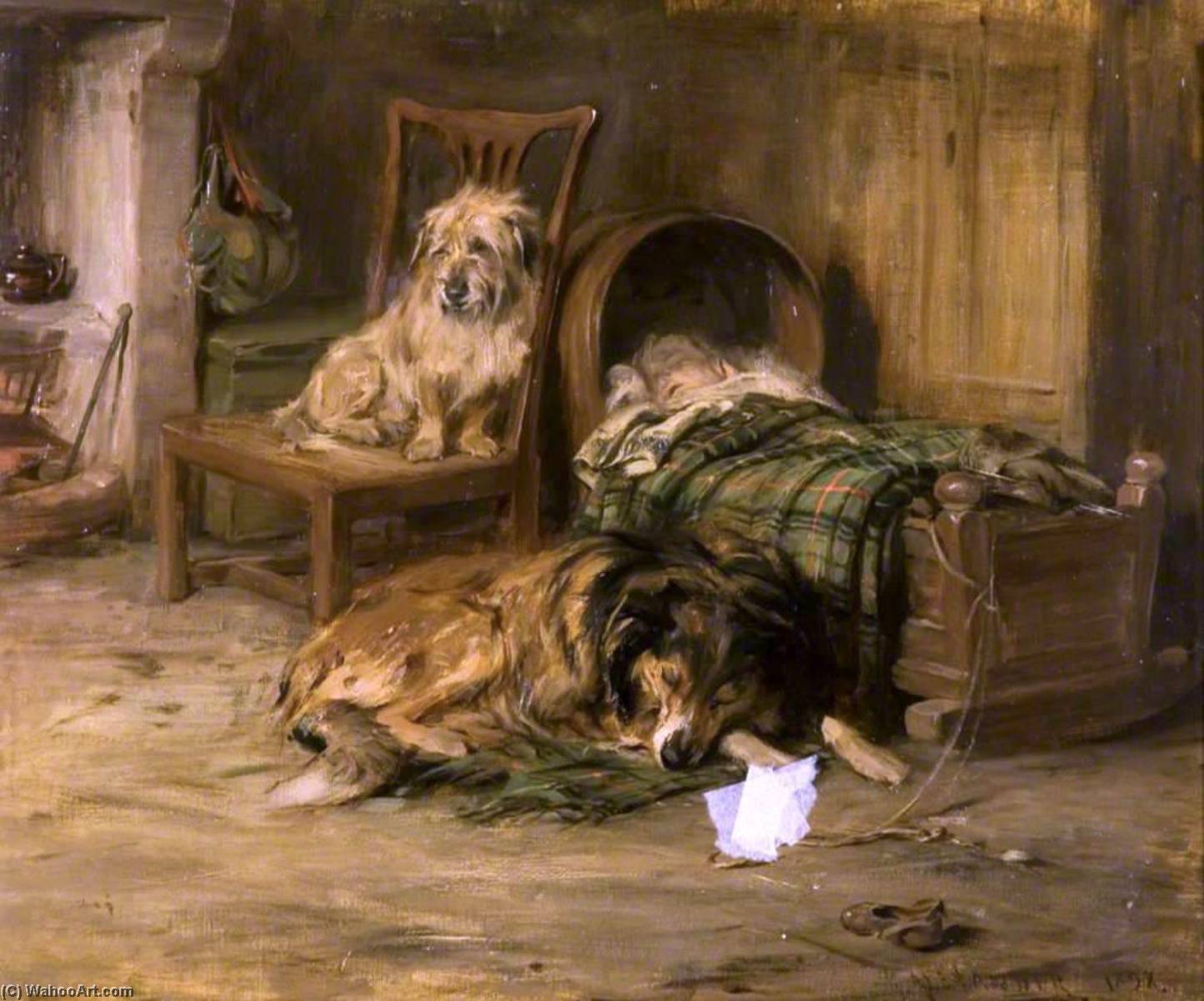
The Happy Mother (1887) (1889) -ja Robert L Alexander

The Happy Mother

1887 · Oil On Canvas · Scottish National Gallery, Edinburgh

The Happy Mother is an oil on canvas painting by the artist Robert L Alexander. Created in 1887, this work belongs to the period when the artist was establishing his reputation within the Scottish art circles. The medium of oil on canvas allows for a detailed rendering of the textures present in the subject matter.
3
Wat and Wearie (1886) (1889) -ja Robert L Alexander

Wat and Wearie

1886 · Oil On Canvas · Royal Scottish Academy of Art - Architecture, Edinburgh

A man and his horse move along a rural path under the soft, diffused light of late afternoon. The figure, dressed in the practical attire of a 19th-century laborer, walks ahead with a sack slung over his shoulder, his silhouette defined by the heavy folds of his clothing. Beside him, the horse turns its head toward the viewer, its gaze creating a direct connection with the observer. The scene is…

10
The Happy Mother (1887) (1889) -ja Robert L Alexander

The Happy Mother

1887 · Scottish National Gallery, Edinburgh

The Happy Mother is a captivating oil on canvas painting created by Robert L Alexander in 1887. This beautiful artwork is currently housed at the National Galleries of Scotland in the United Kingdom. The painting measures 82 x 116 cm and showcases the artist's exceptional skill in capturing the warmth and bond between a mother dog and her puppies. A Heartwarming Scene The scene depicts a mother dog lying down…

A Robert L Alexander válogatás folytatódik: 11 – 21

A témák, amelyek Robert L Alexander figyelmét meghúzták

A négy leggyakorobban előforduló téma ebben az eredeti művekben, mindegyik a legkiválóbb példájával.

A műemlékek, amelyek Robert L Alexander eredeti műveit őrzik

A 8 olyan múzeum, amely a legtöbb ezen az oldalon szereplő festményet őrzi.

Múzeum Város Robert L Alexander művei Ebből a listából származó festmények
Scottish National Gallery, EdinburghScottish National Gallery Edinburgh 2 The Happy Mother, The Happy Mother
Perth And Kinross Council, PerthPerth And Kinross Council Perth 2 Head of a Jack Russell Terrier, Donkey and Foal
Royal Scottish Academy of Art - Architecture, EdinburghRoyal Scottish Academy of Art - Architecture Edinburgh 1 Wat and Wearie
Dundee Art Gallery And Museum, DundeeDundee Art Gallery And Museum Dundee 1 Drowsy Cronies
City Art Centre, EdinburghCity Art Centre Edinburgh 1 Feeding the Horse
Kunstmuseum Den Haag, HágaKunstmuseum Den Haag Hága 1 A St Bernard Dog
The National Trust For Scotland, ForresThe National Trust For Scotland Forres 1 Mr Wu – A Pekingese
The Fleming Collection, LondonThe Fleming Collection London 1 The Dogs' Dinner (possibly 'More Free Than Welcome')

Robert L Alexander évtizede folgtva: az eredeti művek, amelyek meghatározzák az egyes korzakot

Művek évtizedenként

Váassz ki egy évtizedet, hogy megnézhesd az azt meghatározó eredetiműveket.

Gyűjtői kérdések Robert L Alexander festményeivel kapcsolatban

Melyik művel a(z) Robert L Alexander a leghíresebb?Fedje fel a választ

A Tangier Gateway (1887). Ezt követi The Happy Mother (1887) és Wat and Wearie (1886).

Hány éves volt Robert L Alexander, amikor a A Tangier Gateway készült?Fedje fel a választ

47 éves: A Tangier Gateway 1887-ből származik, Robert L Alexander pedig 1840-ben született.

Melyek a tíz leghíresebb Robert L Alexander festmény?Fedje fel a választ

A Tangier Gateway, The Happy Mother, Wat and Wearie, A Basset Hound, Head of a Deerhound, Goat and Kids, Auld Freens, Head of a Jack Russell Terrier, Head of a Jack Russell Terrier és The Happy Mother. A fenti rangsor a művek évszamarát és a múzeumát jelzi.

Hány festményet hagyott hátra Robert L Alexander?Fedje fel a választ

Katalógusunkban 27 mű található Robert L Alexander alkotótól, 1874 és 1916 év közötti időszakból.

Mely múzeumokban állnak Robert L Alexander remekművei?Fedje fel a választ

Leginkább Scottish National Gallery (Edinburgh), Perth And Kinross Council (Perth) és Royal Scottish Academy of Art - Architecture (Edinburgh) található. A fenti múzeumi táblázatban mindegyik felsorolásra került.

Mely években festette Robert L Alexander leghíresebb műveit?Fedje fel a választ

1880s alatt: a jelen laphonon található 21 műből 4 készült ebben az időszakban, köztük A Tangier Gateway.

Mikszétek az első és az utolsó híres eredeti műve a(z) Robert L Alexander alkotótól?Fedje fel a választ

Ezen az oldalon a leghitelesebb Head of a Goat (1874), a legutóbbi pedig Head of a Jack Russell Terrier (1916).

Milyen témaköröket választott leggyakrabban Robert L Alexander?Fedje fel a választ

Man (2), Horse (2) és Scottish art (2), a jelen oldalon található 21 műművészeti alkotás között.

Melyik technikát alkalmazta leggyakrabban Robert L Alexander?Fedje fel a választ

Oil On Canvas, a jelen oldalon található 21 műből 2 darab esetén.

Mely Robert L Alexander művei láthatóak a Scottish National Gallery falán?Fedje fel a választ

The Happy Mother és The Happy Mother: a Scottish National Gallery, Edinburgh 2 művet őrzi ezen az oldalon.

Robert L Alexander: életmű és életút

A Life Immersed in the Scottish Countryside: The World of Robert Alexander

Robert Alexander, born in 1840 in the small village of Dalgarven near Kilwinning in Ayrshire, Scotland, was an artist whose work became synonymous with the gentle warmth of domestic life and the rugged beauty of his homeland. His path to becoming a celebrated painter wasn’t conventional; rather than formal art schooling, Alexander began as an apprentice to a house-painter in Irvine, learning the fundamentals of landscape painting alongside more practical skills. This early grounding instilled in him not only technical proficiency but also a keen observation of light and form that would later characterize his distinctive style. He subsequently found employment with the Royal Scottish Museum in Edinburgh, further honing his abilities before dedicating himself fully to easel painting around 1868 – the year he first exhibited at the prestigious Royal Scottish Academy.

Capturing the Essence of Animals: A Rising Star

Alexander quickly distinguished himself by focusing on animal subjects, particularly dogs and horses. He didn’t merely *depict* these creatures; he sought to capture their personalities, their inherent dignity, and their connection to the rural world around them. His work resonated with a growing Victorian audience that appreciated both realism and sentimentality. He possessed an exceptional skill for portraying expressive eyes and textured coats, bringing his subjects vividly to life on canvas. This talent led to consistent exhibitions at the RSA – over 125 works were displayed throughout his lifetime – establishing him as a prominent figure in Scottish art circles. His election as an Associate of the Royal Scottish Academy (ARSA) in 1878 and then as a full Royal Scottish Academician (RSA) in 1888 solidified his position within the artistic establishment.

Impressionistic Touches and Pastoral Charm

While firmly rooted in realism, Alexander’s work demonstrates a clear influence of Impressionism. This is not to say he abandoned precise detail altogether, but rather that he embraced a looser brushstroke and a more nuanced understanding of light and color. His paintings often evoke a sense of atmosphere, capturing the fleeting moments of everyday life with remarkable sensitivity. Works like “Goat and Kids” exemplify this approach – a serene scene rendered with earthy tones and a delicate play of sunlight. He wasn’t interested in grand historical narratives or dramatic compositions; instead, he found beauty in the simple rhythms of rural existence: feeding horses, quiet moments within barns, and the tender bonds between animals and people. His paintings offer a glimpse into a world where life moved at a slower pace, and nature held a central place.

Legacy and Historical Significance

Robert Alexander’s contribution to Scottish animal painting is undeniable. He elevated the genre beyond mere portraiture, infusing his work with both artistic skill and emotional depth. He was not simply recording what he saw; he was interpreting it through a lens of warmth, understanding, and genuine affection. His paintings provide valuable insights into Victorian rural life and the evolving relationship between humans and animals. Furthermore, Alexander’s influence extended to his own family – his son, John Edwin Alexander, also became a successful artist, continuing the legacy of capturing the beauty of the Scottish countryside. Today, Robert Alexander's works are cherished for their charm, realism, and ability to transport viewers to a simpler, more idyllic time. His paintings continue to be exhibited and admired, ensuring that his vision of Scotland’s pastoral heart endures.