A Pioneering Vision: The Life and Art of Rita Angus
Rita Angus, a name synonymous with bold vision and uncompromising artistic expression, remains one of New Zealand’s most significant and enigmatic figures in 20th-century art. Born on March 12, 1908, in Hastings, her life unfolded as a tapestry woven from nomadic experiences, personal upheaval, and an unwavering dedication to translating the complexities of human emotion and the beauty of the natural world onto canvas. From the outset, Angus’s artistic talent was evident – nurtured by private lessons during her childhood, she quickly demonstrated a remarkable ability to capture both the physical details and the underlying spirit of her subjects. Her formal education at Palmerston North Girls' High School laid a solid foundation in traditional techniques, but it was her subsequent studies at Canterbury College School of Art that truly ignited her creative fire, exposing her to the works of masters like Richard Wallwork, Archibald Nicoll, Cecil Kelly, and Leonard Booth – artists who instilled in her a deep appreciation for both classical training and the burgeoning possibilities of modern art.
Forging a Distinctive Style
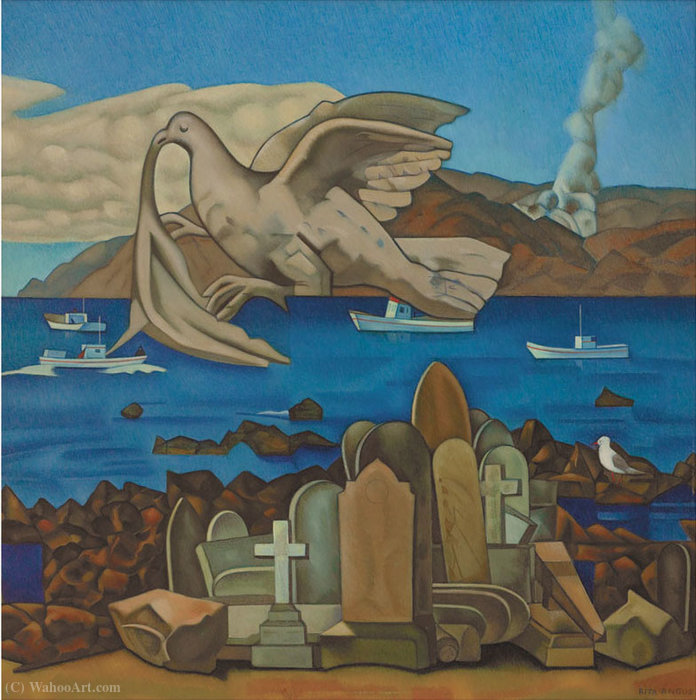
The early years of Rita Angus’s career were marked by a profound sense of displacement and a relentless pursuit of artistic authenticity. Her marriage to fellow artist Alfred Cook in 1930, though initially promising, proved tragically short-lived, dissolving in separation and divorce just five years later. This period of personal turbulence coincided with the emergence of her unique artistic style – one characterized by an arresting combination of sharp, precise forms, a vibrant and often emotionally charged color palette, and a deliberate rejection of conventional realism. Angus wasn’t simply replicating what she saw; she was distilling her experiences, emotions, and observations into a highly stylized visual language. Influenced profoundly by the works of Byzantine artists – particularly their use of gold leaf and symbolic imagery – as well as the geometric fragmentation of Cubism pioneered by Picasso and Braque, she developed a distinctive approach to composition and perspective. Crucially, Angus drew inspiration from the landscapes of New Zealand, absorbing the unique light and atmosphere of Canterbury and Otago, while simultaneously exploring themes of peace, humanity, and individual identity. She was deeply affected by the political and social climate of her time, particularly the horrors of World War II and the rise of fascism, which fueled her pacifist beliefs and informed a series of powerful self-portraits – *Rutu*, for example, became a potent symbol of feminine strength and resilience in the face of adversity.
Landscapes of the Soul and Portraits of Identity
The 1930s and 1940s witnessed a remarkable flowering of Angus’s artistic output, as she explored both the external world through landscapes and the internal landscape of her own psyche through portraits. Her depictions of New Zealand’s dramatic scenery – from the rugged peaks of the Southern Alps to the rolling plains of Canterbury – are imbued with a sense of immediacy and emotional intensity, capturing not just the physical beauty of the land but also its inherent spirit. Paintings like *Cass* (1936), depicting a humble railway station in the heart of Canterbury, exemplify her ability to transform ordinary scenes into works of profound symbolic significance. During this period, she also developed a distinctive style of portraiture, moving beyond mere likeness to capture the essence and personality of her subjects – their hopes, fears, and vulnerabilities. Her portraits are often strikingly intimate, revealing a deep understanding of human psychology and a willingness to confront difficult truths. Her exploration of self-portraiture was particularly significant, offering a series of visual meditations on identity, memory, and the passage of time.
Legacy and Enduring Influence
The later years of Rita Angus’s life were marked by personal challenges, including mental illness and financial hardship. Despite these difficulties, she continued to paint with unwavering passion until her death on January 25, 1970, in Wellington. While recognition for her work came relatively late in her lifetime, it has steadily grown over the decades, solidifying her position as a central figure in New Zealand art history. Today, Rita Angus is celebrated not only for her artistic achievements but also for her pioneering spirit and her unwavering commitment to expressing her unique vision. Her distinctive style – characterized by sharp lines, bold colors, and symbolic depth – continues to inspire artists across generations. The preservation of her former home in Wellington as the Rita Angus Cottage, now an artist residency, stands as a tangible testament to her legacy, providing a space where contemporary artists can connect with her spirit and continue pushing creative boundaries. Her work serves as a powerful reminder that art can be both a reflection of personal experience and a vehicle for social commentary – a message that resonates deeply in our own time.
Key Works
- Cass (1936): Perhaps her most famous painting, depicting a Canterbury railway station with striking clarity and symbolism.
- Rutu (1940s): A powerful representation of peace and feminine strength as part of her goddess series.
- Central Otago (early 1950s): An evocative landscape capturing the stark beauty of New Zealand’s interior.
- Fay and Jane Birkinshaw (1946): A compelling portrait showcasing her skill in capturing personality and relationships.
- Self-Portraits (various dates): Over fifty self-portraits offering intimate glimpses into the artist’s evolving identity.




 Te Papa