Jacopo Pontormo portréja

A 100 legnevezesebb Jacopo Pontormo festmény, egy galériaválaszték

Frissítve: október 2026 · rangsorolva népszerűségi pontszámunk alapján (minden mű keresései, látogatásai és megrendelései alapján) · 176 mű Jacopo Pontormo alkotása a katalógusunkban

Röviden

Jacopo Pontormo hagyatékából a leghíresebb alkotás A leszállítás. Röviddel ezután követik őket A látomás (1528) és Halberdier (1520). Katalógusunkban 176 mű található Jacopo Pontormo alkotótól; a galéria megőrizte a világ által leginkább csodált 100 darabot, melyeket a dátummal, a múzeummal és a történetükkel együtt mutatunk be.

1494 – 1556, Empoli Manierizmus A legtöbb mű: Galleria degli Uffizi

Jacopo Pontormo legjobb 10 festménye: a galéria válogatása

1
A leszállítás (1889) -ja Jacopo Pontormo

A leszállítás

Tempera fán

Pontormo executed the Deposition between 1525 and 1528. Commissioned by Lodovico Capponi in 1526, the work occupies the Capponi Chapel within the Church of Santa Felicita in Florence. The subject matter focuses on the deposition of Christ's body following the crucifixion.

2
A látomás (1528) (1889) -ja Jacopo Pontormo

A látomás

1528 · Freskó

Jacopo Carucci, melyet a művészettörténet Pontormoként ismer, 1528-ban hozott létre ezt a lenyűgöző freskót, megörökítve egy mély vallási jelentőségű pillanatot sajátos manierista stílusával. A „Megtekintés” (A látomás) Pontormo kompozíciós feladatok, színek és érzelmi mélység feletti mesteri tudásának bizonyszáma, amely egyaránt keresett darabbá teszi a művészrajongók és a gyűjtők számára is.

3
Halberdier (1520) (1889) -ja Jacopo Pontormo

Halberdier

1520 · Olajfestmény vászonon · J. Paul Getty Múzeum, Los Angeles

Az erő és az egyéniség lenyűgöző portréja Ez a megdöbbentő műalkotás egy tekintélyt parancsoló alakot örökít meg, testet öntve a kitartásba, az önbizalomba és a kulturális büszkeségbe. A hagyományos viseletbe öltözött, fúzsérrel lévő fiatalember alakja tekintélyt és méltóságot árad. Személyes, közvetlen tekintete azonnal magával ragadja a nézőt, egy gondolkodásra és csodálatra késztető pillanatba invitálva őt. A művész mesteri ábrázolása kiemeli az alak fizikai jelenlétét és érzelmi mélységét, így ez a…

4
Virgin and Child, known as the Madonna del Libro (1545) (1889) -ja Jacopo Pontormo

Virgin and Child, known as the Madonna del Libro

1545 · Oil On Panel · Yale University Art Gallery, New Haven

The painting presents an intimate, oval-shaped arrangement of two figures set against a dark, indeterminate background. The Virgin Mary occupies the upper portion of the frame, her head tilted slightly as she looks toward the Christ Child. Her skin possesses a smooth, porcelain-like texture, illuminated by a focused light source that creates a sharp contrast against the shadows. She wears a deep crimson red garment, while a dark, midnight blue…

5
Study of a Woman, possibly Maria Salviati (1543) (1889) -ja Jacopo Pontormo

Study of a Woman, possibly Maria Salviati

1543 · Chalk · Galleria degli Uffizi, Taruna

To gaze upon this study of a woman is to step directly into the charged atmosphere of mid-sixteenth-century Florence. It is not merely a portrait, but an intimate psychological excavation, capturing the ephemeral grace and profound introspection characteristic of the Italian Mannerist period. The subject, rendered with exquisite delicacy, possesses a serene yet enigmatic quality; her direct gaze seems to meet the viewer's own, inviting a silent communion across the…

6
Ten thousand martyrs (1529) (1889) -ja Jacopo Pontormo

Ten thousand martyrs

1529 · Oil On Canvas · Galleria degli Uffizi, Taruna

Jacopo Pontormo's "Ten Thousand Martyrs," painted in 1529, is not merely a depiction of historical suffering; it’s a visceral plunge into the heart of religious trauma and defiant resistance. This monumental fresco, now rendered in exquisite detail as a hand-painted reproduction by WahooArt.com, captures a pivotal moment from early Christian history – the brutal execution of ten thousand soldiers who had converted to Christianity during the reign of Emperor Decius.…

7
Supper at Emmaus (1889) -ja Jacopo Pontormo

Supper at Emmaus

Oil On Canvas

The work before us is Supper at Emmaus, a significant oil on canvas painted by Pontormo in 1525. This piece captures the specific biblical moment of the apparition of Christ to the Apostles, a narrative drawn from the Gospel of Luke, specifically chapter 24, verses 13 through 35. It is a scene of profound recognition, documenting the instant the disciples realize the identity of the man they are dining with…

8
Portrait of Francesco da Castiglione (1520) (1889) -ja Jacopo Pontormo

Portrait of Francesco da Castiglione

1520 · Oil On Canvas · Pitti-palota, Firenze

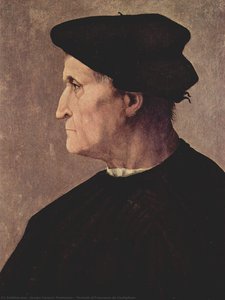
The year is 1520, and within the bustling artistic landscape of Florence, Jacopo Carucci Pontormo—a name now inextricably linked with both innovation and melancholy—crafted a portrait that transcends mere likeness. “Portrait of Francesco da Castiglione” isn’t simply a depiction of an elderly man; it's a carefully constructed meditation on age, wisdom, and the quiet dignity of a life well-lived. The painting immediately draws the eye with its rich, earthy palette…

9
Cupid and Apollo (1513) (1889) -ja Jacopo Pontormo

Cupid and Apollo

1513 · Oil On Panel

Cupid and Apollo is a painting by the Italian Mannerist painter Pontormo. The work depicts a mythological encounter between the figures of Apollo and Cupid. This composition centers on the interaction between a standing male figure in classical armor on the left and a winged youth on the right. The scene is set against a dark, void-like background that isolates the two subjects.

10
Apollo and Daphne (1513) (1889) -ja Jacopo Pontormo

Apollo and Daphne

1513 · Oil

In this dramatic scene by Pontormo, the air crackles with the sudden, frantic energy of a chase reaching its breaking point. The painting, created about 1513, captures the very moment of metamorphosis from Ovid's myth. Apollo reaches out, his fingers straining to grasp the nymph, but his pursuit is met with a terrifying transformation. Daphne is no longer merely a fleeing woman; she is caught in the midst of becoming…

A Jacopo Pontormo válogatás folytatódik: 11 – 100

11Two Male Figures Looking in a Mirror and a Putto. (1518) (1889) -ja Jacopo PontormoTwo Male Figures Looking in a Mirror and a Putto.1518 12Visitation (1515) (1889) -ja Jacopo PontormoVisitation1515 13Saint Francis (1517) (1889) -ja Jacopo PontormoSaint Francis1517 14Study of a seated man (1518) (1889) -ja Jacopo PontormoStudy of a seated man1518 15Study of nude (1518) (1889) -ja Jacopo PontormoStudy of nude1518 16Archangel Michael (1519) (1889) -ja Jacopo PontormoArchangel Michael1519 · St Andreas Picture Gallery 17St. Matthew the Evangelist (1525) (1889) -ja Jacopo PontormoSt. Matthew the Evangelist1525 18Annunciation (1527) (1889) -ja Jacopo PontormoAnnunciation1527 19Portrait of a Young Man (Alessandro de Medici ) (1526) (1889) -ja Jacopo PontormoPortrait of a Young Man (Alessandro de Medici )1526 20The Holy Family (1525) (1889) -ja Jacopo PontormoThe Holy Family1525 21Noli me tangere (1531) (1889) -ja Jacopo PontormoNoli me tangere1531 · Casa Buonarroti 22Portrait of Niccolò Ardinghelli (1542) (1889) -ja Jacopo PontormoPortrait of Niccolò Ardinghelli1542 23Porträt des Giovanni della Casa (1503-1556) (1550) (1889) -ja Jacopo PontormoPorträt des Giovanni della Casa (1503-1556)1550 24Christ seated, as a nude figure (1889) -ja Jacopo PontormoChrist seated, as a nude figure 25Alessandro de' Medici (1535) (1889) -ja Jacopo PontormoAlessandro de' Medici1535 · Art Institute of Chicago 26Noli Me Tangere (1889) -ja Jacopo PontormoNoli Me Tangere 27Portrait of Two Friends (1889) -ja Jacopo PontormoPortrait of Two Friends 28Madonna and Child (1532) (1889) -ja Jacopo PontormoMadonna and Child1532 · Museum of John Paul II Collection 29Portrait of Alessandro de' Medici (1550) (1889) -ja Jacopo PontormoPortrait of Alessandro de' Medici1550 · Nemzeti Ókori Művészeti Múzeum 30St. Sebastian (1515) (1889) -ja Jacopo PontormoSt. Sebastian1515 · Musée des Beaux-Arts de Dijon 31Reclining Male Nude (1540) (1889) -ja Jacopo PontormoReclining Male Nude1540 · Kanadai Nemzeti Galéria 32Johannes születése (1526) (1889) -ja Jacopo PontormoJohannes születése1526 · Galleria degli Uffizi 33Volta (1515) (1889) -ja Jacopo PontormoVolta1515 34Volta (1515) (1889) -ja Jacopo PontormoVolta1515 35Volta (1515) (1889) -ja Jacopo PontormoVolta1515 36Volta (1515) (1889) -ja Jacopo PontormoVolta1515 37Volta (1515) (1889) -ja Jacopo PontormoVolta1515 38Scene with cherubs on papal coat of arms (1515) (1889) -ja Jacopo PontormoScene with cherubs on papal coat of arms1515 39Study of a Boy Turning His Head (1529) (1889) -ja Jacopo PontormoStudy of a Boy Turning His Head1529 · Galleria degli Uffizi 40VillaMedici - Salon (1521) (1889) -ja Jacopo PontormoVillaMedici - Salon1521 41VillaMedici - Vertumnus and Pomona (detail) (1521) (1889) -ja Jacopo PontormoVillaMedici - Vertumnus and Pomona (detail)1521 42Alessandro de' Medici (1520) (1889) -ja Jacopo PontormoAlessandro de' Medici1520 · Philadelphia Művészeti Múzeum 43Madonna and Child with Two Saints (1520) (1889) -ja Jacopo PontormoMadonna and Child with Two Saints1520 44Madonna and Child with the Young St John (1520) (1889) -ja Jacopo PontormoMadonna and Child with the Young St John1520 45Christ before Pilate (1520) (1889) -ja Jacopo PontormoChrist before Pilate1520 46Supper at Emmaus (1520) (1889) -ja Jacopo PontormoSupper at Emmaus1520 47Supper at Emmaus (1525) (1889) -ja Jacopo PontormoSupper at Emmaus1525 · Galleria degli Uffizi 48Cosimo I de' Medici (1537) (1889) -ja Jacopo PontormoCosimo I de' Medici1537 · Pitti-palota 49View on the Louvre and the Tour de Nesle form the Île de la Cité (1662) (1889) -ja Jacopo PontormoView on the Louvre and the Tour de Nesle form the Île de la Cité1662 50Madonna with St. Francis and St. Jerome (1522) (1889) -ja Jacopo PontormoMadonna with St. Francis and St. Jerome1522 · Galleria degli Uffizi 51portrait of Francesca Capponi as Saint Mary Magdalene (1889) -ja Jacopo Pontormoportrait of Francesca Capponi as Saint Mary Magdalene 52autoportrait of Giovanni Antonio Lappoli (1889) -ja Jacopo Pontormoautoportrait of Giovanni Antonio Lappoli 53Bust of the Virgin (1889) -ja Jacopo PontormoBust of the VirginHarvard Art Museums 54Two nudes (1889) -ja Jacopo PontormoTwo nudes 55Four Evangelists (1889) -ja Jacopo PontormoFour Evangelists 56Study for the Deluge (1889) -ja Jacopo PontormoStudy for the Deluge 57Christ the Judge with the Creation of Eve (1889) -ja Jacopo PontormoChrist the Judge with the Creation of Eve 58Moses Receiving the Tables (1889) -ja Jacopo PontormoMoses Receiving the Tables 59Seated Male Nule (1889) -ja Jacopo PontormoSeated Male Nule 60Compositional study for Moses Receiving the Tables of the Law (1889) -ja Jacopo PontormoCompositional study for Moses Receiving the Tables of the Law 61View of the Capponi Chapel (1889) -ja Jacopo PontormoView of the Capponi Chapel 62Study for Deluge (1889) -ja Jacopo PontormoStudy for Deluge 63Male Nude (1889) -ja Jacopo PontormoMale Nude 64Figure study 1 (1889) -ja Jacopo PontormoFigure study 1 65Halberdier 1 (1889) -ja Jacopo PontormoHalberdier 1 66Salon (1889) -ja Jacopo PontormoSalon 67Kicking player (1889) -ja Jacopo PontormoKicking player 68Three Graces (1889) -ja Jacopo PontormoThree Graces 69Visitation 2 (1889) -ja Jacopo PontormoVisitation 2 70Annunciation 2 (1889) -ja Jacopo PontormoAnnunciation 2 71Venus and Cupid (1889) -ja Jacopo PontormoVenus and CupidRoyal Collection 72Leda and the Swan (1889) -ja Jacopo PontormoLeda and the Swan 73Figure study (1889) -ja Jacopo PontormoFigure study 74Joseph's Broders beg for Help (1889) -ja Jacopo PontormoJoseph's Broders beg for Help 75Deposition (detail)3 (1889) -ja Jacopo PontormoDeposition (detail)3 76Seated Nude with Raised Arm (1889) -ja Jacopo PontormoSeated Nude with Raised Arm 77Compositional study for Christ the Judge with the Creation of Eve (1889) -ja Jacopo PontormoCompositional study for Christ the Judge with the Creation of Eve 78Joseph Revealing Himself to his Brothers (1889) -ja Jacopo PontormoJoseph Revealing Himself to his Brothers 79Adoration of the Magi (1889) -ja Jacopo PontormoAdoration of the Magi 80Salon 1 (1889) -ja Jacopo PontormoSalon 1 81Saint Agustine (1889) -ja Jacopo PontormoSaint Agustine 82Adam and Eve at Work (1889) -ja Jacopo PontormoAdam and Eve at Work 83Joseph Revealing Himself to his Brothers 1 (1889) -ja Jacopo PontormoJoseph Revealing Himself to his Brothers 1 84Annunciation (detail) (1889) -ja Jacopo PontormoAnnunciation (detail) 85Joseph with Jacob in Egypt (1889) -ja Jacopo PontormoJoseph with Jacob in Egypt 86Portrait of Niccolò Ardinghelli (1889) -ja Jacopo PontormoPortrait of Niccolò Ardinghelli 87Madonna and Child with St. Anne and the Saints (1889) -ja Jacopo PontormoMadonna and Child with St. Anne and the Saints 88Sacra Conversazione (1889) -ja Jacopo PontormoSacra Conversazione 89Portrait of a Lady with Dog (1889) -ja Jacopo PontormoPortrait of a Lady with Dog 90The Resurrection of Christ (1889) -ja Jacopo PontormoThe Resurrection of Christ 91Saint Julian (1889) -ja Jacopo PontormoSaint Julian 92St. Quentin (1889) -ja Jacopo PontormoSt. Quentin 93Annunciation 1 (1889) -ja Jacopo PontormoAnnunciation 1 94Madonna and Child with Angels (1889) -ja Jacopo PontormoMadonna and Child with Angels 95Portrait of Maria Salviati with little Cosimo de Medici (1889) -ja Jacopo PontormoPortrait of Maria Salviati with little Cosimo de MediciWalters Art Museum 96The Penitence of St. Jerome (1889) -ja Jacopo PontormoThe Penitence of St. Jerome 97Annunciation (detail)2 (1889) -ja Jacopo PontormoAnnunciation (detail)2 98Female nude 2 (1889) -ja Jacopo PontormoFemale nude 2 99Crucifixion with the virgin and St. John (1889) -ja Jacopo PontormoCrucifixion with the virgin and St. John 100St Luke (1889) -ja Jacopo PontormoSt Luke

Jacopo Pontormo híres festményei, korszakonként

A témák, amelyek Jacopo Pontormo figyelmét meghúzták

A négy leggyakorobban előforduló téma ebben az eredeti művekben, mindegyik a legkiválóbb példájával.

A műemlékek, amelyek Jacopo Pontormo eredeti műveit őrzik

A 8 olyan múzeum, amely a legtöbb ezen az oldalon szereplő festményet őrzi.

Múzeum Város Jacopo Pontormo művei Ebből a listából származó festmények
Galleria degli Uffizi, TarunaGalleria degli Uffizi Taruna 10 Study of a Woman, possibly Maria Salviati, Ten thousand martyrs, Johannes születése
Pitti-palota, FirenzePitti-palota Firenze 3 Portrait of Francesco da Castiglione, Cosimo I de' Medici
J. Paul Getty Múzeum, Los AngelesJ. Paul Getty Múzeum Los Angeles 1 Halberdier
Yale University Art Gallery, New HavenYale University Art Gallery New Haven 1 Virgin and Child, known as the Madonna del Libro
St Andreas Picture Gallery, EmpoliSt Andreas Picture Gallery Empoli 1 Archangel Michael
Casa Buonarroti, FirenzeCasa Buonarroti Firenze 1 Noli me tangere
Art Institute of Chicago, ChicagoArt Institute of Chicago Chicago 1 Alessandro de' Medici
Museum of John Paul II Collection, WarsawMuseum of John Paul II Collection Warsaw 1 Madonna and Child

Jacopo Pontormo évtizede folgtva: az eredeti művek, amelyek meghatározzák az egyes korzakot

Művek évtizedenként

Váassz ki egy évtizedet, hogy megnézhesd az azt meghatározó eredetiműveket.

Gyűjtői kérdések Jacopo Pontormo festményeivel kapcsolatban

Melyik művel a(z) Jacopo Pontormo a leghíresebb?Fedje fel a választ

A leszállítás. Ezt követi A látomás (1528) és Halberdier (1520).

Melyek a tíz leghíresebb Jacopo Pontormo festmény?Fedje fel a választ

A leszállítás, A látomás, Halberdier, Virgin and Child, known as the Madonna del Libro, Study of a Woman, possibly Maria Salviati, Ten thousand martyrs, Supper at Emmaus, Portrait of Francesco da Castiglione, Cupid and Apollo és Apollo and Daphne. A fenti rangsor a művek évszamarát és a múzeumát jelzi.

Hány festményet hagyott hátra Jacopo Pontormo?Fedje fel a választ

Katalógusunkban 176 mű található Jacopo Pontormo alkotótól, 1513 és 1550 év közötti időszakból.

Mely múzeumokban állnak Jacopo Pontormo remekművei?Fedje fel a választ

Leginkább Galleria degli Uffizi (Taruna), Pitti-palota (Firenze) és J. Paul Getty Múzeum (Los Angeles) található. A fenti múzeumi táblázatban mindegyik felsorolásra került.

Mely években festette Jacopo Pontormo leghíresebb műveit?Fedje fel a választ

1520s alatt: a jelen laphonon található 100 műből 19 készült ebben az időszakban, köztük A látomás.

Mikszétek az első és az utolsó híres eredeti műve a(z) Jacopo Pontormo alkotótól?Fedje fel a választ

Ezen az oldalon a leghitelesebb Cupid and Apollo (1513), a legutóbbi pedig Porträt des Giovanni della Casa (1503-1556) (1550).

Milyen témaköröket választott leggyakrabban Jacopo Pontormo?Fedje fel a választ

Man (12), Renaissance (9) és Saints (9), a jelen oldalon található 100 műművészeti alkotás között.

Melyik technikát alkalmazta leggyakrabban Jacopo Pontormo?Fedje fel a választ

Oil On Panel, a jelen oldalon található 100 műből 12 darab esetén.

Mely művészeti irányba tartozik Jacopo Pontormo?Fedje fel a választ

Manierizmus, ezen az oldalon található eredetiek alapján.

Mely Jacopo Pontormo művei láthatóak a Galleria degli Uffizi kiállتításán?Fedje fel a választ

Study of a Woman, possibly Maria Salviati, Ten thousand martyrs és Johannes születése: a Galleria degli Uffizi, Taruna 6 művet őrzi ezen az oldalon.

Jacopo Pontormo: életmű és életút

A melankolikus víziós: Jacopo Pontormo élete és öröksége

Jacopo Carucci, akiket a történelem az emlékezetes Pontormo néven ismer, egy olyan művész volt, akinek ecsetje az átmenet legmélyebb lényegét örökítette meg. Pontorme kis toszkai falujában született körülbelül 1494-ben; korai éveket magány és melankólia mély érzése határoztak meg, tulajdonságok, amelyek később páratlan pszichológiai mélységet kölcsönöztek vászonainak. Fiatal tanoncként Firenzében a változó művészeti paradigmok világában mozogott, végül a firenzei manierista mozgalom központi alakjaként emelkedett ki. Ellentétben a magasreneszánsz mestereivel, akik az egyensúlyon és a matematikai harmónián keresztül keresték a tökéletességet, Pontormo befelé tekintett, törekedve az emberi lélek zord, gyakran nyugtalanító összetettségének kifejezésére. Formálódó éveit óriások árnyékai formálták. Domenico del Pollaiuolo tanítása és Michelangelo Buonarroty monumentális hatása alatt sajátította el a reneszánsz mestertől elvárt anatomikai precizitást, mégis benne élt visszatarthatatlan vágy a valóság éppen ilyen torzítására az érzelmi hatás érdekében. Nemcsak Michelangelo szobori súlyából merített inspirációt, hanem Albrecht Dürer bonyolult, érzelmeket árasztó metszeteiből is. Az olasz formák és a északeurópai kifejező részletek ezen egyedülálló szintézise lehetővé tette számára egy olyan stílus úttörőinek való megszületését, amelyben a alakok úgy tűntek, mintha elveszítenék kötődésüket a gravitációhoz, és álarnyékos, álomszerű terekben lebegnének.

A manierizmus architektúrája: Stílus és innováció

Egy Pontormo-festmény megtekintése olyan birodalomba való belépés, ahol a fizika és a perspektíva ismerős törvényei felfüggesztésre kerülnek. Művészete tudatos eltérés elődei nyugodt, perspektívus regularitásától. Remekműveiben, mint például a "Visszatérés" (Visitation) vagy a hátborzongató "Letekintés" (Deposition), megfigyelhető maniertista esztétikájának minden jellegzetessége: megnyúlt végtagok, csavarodott és természetellenes testhelyzetek, valamint vibráló, szinte savas színek palettája, amely idegen fényben csillan és ütközik egymással. A reneszánsz stabil, háromszög alakú kompozícióit felváltotta viharos, zsúfolt elrendezések, amelyek nyugtalanság tengerét és spirituális bizonytalanságot idéznek. Pontormo technikai zsenialitása abban rejlett, hogy a színeket és a formákat pszichológiai eszközként tudta alkalmazni. Alakjai gyakran bizonytalan környezetben lebegnek, súlytól megváltan, mély instabilitás érzését keltve. Ez nem csupán mesterkedés volt; tudatos kísérlet volt arra, hogy közvetítse egy olyan korszak spirituális szorongásait, amely a reneszánsz bizonyossága és a barokk közelgő drámája közé szorult. Legyen szó az "Emmauszbeli vacsorán" (Supper at Emmaus) megjelenő drámai fényről, vagy Krisztus-ábrázolása során felfedezhető éles, érzelmes intenzitásról, Pontormo minden egyes ecsetvonatral a gyász, az áldozatkészség és az isteni lényeg témáinak feltárására szolgált.

Tartós nyom a művészettörténetben

Jacopo Pontormo történelmi jelentőségét nem lehet alulbecsülni. Vitalis hidat képezett, átfordítva a 15. század klasszikus ideáljait arra a kifejező, teátrális nyelvességre, amely meghatározta a 16. századi művészet jelentős részét. Hatása áradt a firenzei iskolán keresztül, alakítva olyan utódok munkásságát, mint Bronzino, és biztosítva, hogy a szépség és a mesterfogás közötti feszültség központi párbeszéd maradjon az európai festészetben. Művészete ma is tanúbizonysága az egyéni látásnak a hagyomány feletti erejének. Portréin keresztül, mint például a királyi "Cosimo I de' Medici", és mélyen szimbolikus vallásos alkotásaiban bebizonyította, hogy a művészet lehet több mint a valóság tükre; lehet abba a abgrundba nyíló ablakba, amely a tudatalatti rejtelmeit tárja fel. Bár élete gyakran övezte személyes bánat árnyéka, színeinek ragyogása és kompozícióinak összetettsége ma is lenyűgöző, minden nézőt arra hívva, hogy veszzen el a firenzei mester gyönyörű, torzított és mélyen emberi világában.