Philip James de Loutherbourg: A Life of Art, Theatre, and Intrigue
Philip James de Loutherbourg, also known as Philip Jacques de Loutherbourg, was a Franco-British painter celebrated for his dramatic depictions of naval battles, expansive landscapes, and innovative contributions to theatre design. His career spanned several decades, marked by artistic versatility, a brief foray into the occult, and significant influence on subsequent generations of artists. He remains an enigmatic figure whose work continues to fascinate art historians and enthusiasts alike.
Early Life and Artistic Training
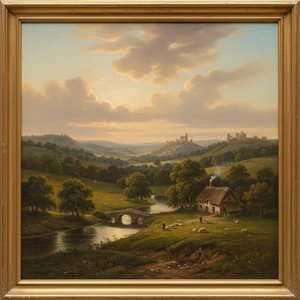
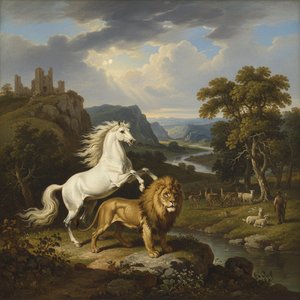
Born in Strasbourg in 1740, Loutherbourg’s formative years were steeped in artistic tradition thanks to his father, a skilled engraver and miniaturist who instilled in him a profound appreciation for meticulous craftsmanship and visual storytelling. Initially destined for the ministry – a path deemed unsuitable by his temperament – he decisively redirected his ambitions toward pursuing a vocation in art. His formal education commenced in Paris under the tutelage of Charles-André van Loo and Francesco Giuseppe Casanova, luminaries of the artistic milieu. Loutherbourg swiftly distinguished himself with exceptional talent, garnering recognition at the Salon of 1763 with a landscape brimming with figures and animals – an early demonstration of his penchant for capturing both grandeur and human presence within natural settings. He continued to exhibit successfully at subsequent Salons, earning commendation from discerning critics like Denis Diderot, who recognized his ability to convey emotion and intellectual depth through visual mediums. In 1767, he ascended to the French Academy, a prestigious honor reflecting his burgeoning reputation as a rising star within the artistic community.
Career in England: Naval Scenes, Landscapes, and Theatre
A pivotal moment arrived in 1771 when Loutherbourg relocated to London, establishing himself as a prominent artist amidst the vibrant intellectual currents of Georgian England. David Garrick’s patronage proved instrumental in propelling his career forward, securing commissions for groundbreaking stage designs at Drury Lane Theatre – an institution renowned for its theatrical innovation. His contributions to Drury Lane were revolutionary; he conceived and executed the Eidophusikon in 1781 – a marvel of mechanical theatre that harnessed perspective and illusionistic techniques to transport audiences into immersive scenes. This ingenious invention cemented his position as a pioneer in theatrical technology, foreshadowing developments in cinematic art decades later. Simultaneously, Loutherbourg gained acclaim for his history paintings, particularly his evocative portrayals of naval battles. His magnum opus,
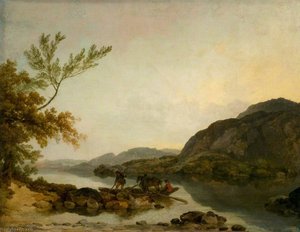
Lord Howe's Action, or the Glorious First of June (1795), commemorated a decisive British victory and solidified his standing as a masterful chronicler of maritime events – an artwork imbued with palpable energy and dramatic composition. While some critics noted a tendency toward theatrical stylization in his landscapes, they acknowledged their ability to capture the picturesque beauty of the English countryside and reflect the aesthetic ideals prevalent during his time.
Notable Works
Loutherbourg’s artistic legacy rests upon several iconic paintings that exemplify his distinctive style:
- Lord Howe's Action, or the Glorious First of June – A monumental depiction of naval warfare, capturing the intensity and chaos of battle with masterful brushstrokes and dramatic lighting.
- The Destruction of the Armada – An ambitious historical canvas portraying the defeat of the Spanish Armada, showcasing Loutherbourg’s skill in conveying narrative complexity and emotional resonance.
- Coalbrookdale by Night – A luminous landscape capturing the industrial glow of Coalbrookdale at night, demonstrating his fascination with capturing both natural beauty and technological advancement.
A Period of Occult Interests and Later Years
In a surprising deviation from artistic pursuits, Loutherbourg briefly abandoned painting in 1789 to immerse himself in the esoteric realm of alchemy and the supernatural. He became associated with Alessandro di Cagliostro – a controversial figure celebrated for his flamboyant pronouncements of immortality and occult powers – embarking on a journey alongside Cagliostro before his tragic demise. Details surrounding this period remain shrouded in obscurity, yet it underscores Loutherbourg’s intellectual curiosity and willingness to explore unconventional avenues of knowledge. Following public condemnation of his faith-healing practices, he returned to painting with renewed vigor, focusing on history subjects and continuing to produce landscapes and portraits – a testament to his resilience and unwavering dedication to his craft.
Legacy and Influence
Philip James de Loutherbourg’s enduring legacy transcends mere artistic achievement; he bridged the gap between historical painting, landscape art, and theatrical design, leaving an indelible mark on the cultural landscape of his era. His Eidophusikon profoundly influenced subsequent developments in stagecraft, anticipating the rise of cinematic spectacle. Furthermore, his dramatic naval scenes captured the spirit of a nation asserting its maritime dominance – an artistic contribution that resonates powerfully with contemporary audiences. Loutherbourg’s works are housed in prominent museums worldwide, including the National Maritime Museum and the British Museum, ensuring that his vision continues to inspire admiration and scholarly inquiry. Perhaps most notably, he exerted considerable influence on artists like J.M.W. Turner, demonstrating his pivotal role in shaping Romantic art in Britain – an artist whose emotive landscapes and dramatic compositions owe a debt to Loutherbourg’s pioneering spirit.