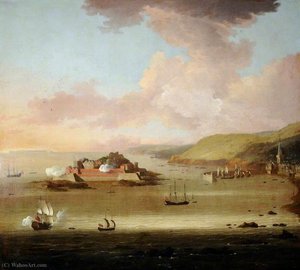
Peter Monamy portréja

A 71 legnevesebbebb Peter Monamy festmény, mindegyik egyedistens

Frissítve: november 2026 · rangsorolva népszerűségi pontszámunk alapján (minden mű keresései, látogatásai és megrendelései alapján) · 72 mű Peter Monamy alkotása a katalógusunkban

Röviden

The Opening of the First Eddystone Lighthouse in 1698 (1703) az a Peter Monamy festmény, amely a legtöbb tekintetet felvonja; az eredeti mű a Yale Center for British Art gyűjteményében található, New Haven. Ezután a tekintet Shipping in a Calm (1712) és Royal Yacht Becalmed at Anchor (1720) elemre irányul. A Peter Monamy 72 műve közül a katalógusunkban megtalálható 71 legnépesebb alkotás, melyeket az év, a múzeum és az örökévalóságának okai kísérnek.

1681 – 1749, London Neoclassicism A legtöbb mű: National Maritime Museum

A galéria szemével: Peter Monamy legjobb 10 festménye

Peter Monamy híres festményei, 11 és 71 között

11The Capture of Louisburg, 28 June 1745 (1750) (1889) -ja Peter MonamyThe Capture of Louisburg, 28 June 17451750 · National Maritime Museum 12The Burning of HMS Royal James at the Battle of Solebay, 28 May 1672 (1750) (1889) -ja Peter MonamyThe Burning of HMS Royal James at the Battle of Solebay, 28 May 16721750 · National Maritime Museum 13Sovereign of the Seas (1889) -ja Peter MonamySovereign of the SeasNational Maritime Museum 14A Naval Engagement between an English Ship and Barbary Ships (1889) -ja Peter MonamyA Naval Engagement between an English Ship and Barbary ShipsAntony House 15Ships on the sea (1889) -ja Peter MonamyShips on the seaVarsói Nemzeti Múzeum 16The morning gun (1889) -ja Peter MonamyThe morning gun 17Shipping in a Stormy Sea off a Castle (1889) -ja Peter MonamyShipping in a Stormy Sea off a Castle 18Winstanley's lighthouse (1889) -ja Peter MonamyWinstanley's lighthouse 19King George II in the Royal Yacht on a Return from Hanover (1889) -ja Peter MonamyKing George II in the Royal Yacht on a Return from Hanover 20A Squadron at Sea (1889) -ja Peter MonamyA Squadron at Sea 21A Man-of-War Firing a Salute in a Calm (1889) -ja Peter MonamyA Man-of-War Firing a Salute in a Calm 22Four British Warships and a Fishing Smack in a Strong Wind (1889) -ja Peter MonamyFour British Warships and a Fishing Smack in a Strong Wind 23Vessels at Sea (1889) -ja Peter MonamyVessels at Sea 24Ships in Distress in a Storm (1889) -ja Peter MonamyShips in Distress in a Storm 25British Men-o'-war And Other Ships (1889) -ja Peter MonamyBritish Men-o'-war And Other Ships 26A yacht becalmed (1889) -ja Peter MonamyA yacht becalmedNational Maritime Museum 27Warships Firing A Salute (1889) -ja Peter MonamyWarships Firing A Salute 28The British Fleet Sailing into Lisbon Harbour (1889) -ja Peter MonamyThe British Fleet Sailing into Lisbon Harbour 29Battle of La Hoque, May (1889) -ja Peter MonamyBattle of La Hoque, May 30Seascape (1889) -ja Peter MonamySeascape 31Shipping off Spithead (1889) -ja Peter MonamyShipping off Spithead 32Men-of-War and Other Shipping off the Coast (1889) -ja Peter MonamyMen-of-War and Other Shipping off the Coast 33Man o' War at Sea, HMS 'Lion' and Others (1889) -ja Peter MonamyMan o' War at Sea, HMS 'Lion' and Others 34Harbor Scene: An English Ship with Sails Loosened Firing a Gun (1889) -ja Peter MonamyHarbor Scene: An English Ship with Sails Loosened Firing a GunMetropolitan Művészeti Múzeum 35The Capture of Porto Bello by Admiral Edward Vernon with Only Six Men o' War, 22 November (1739) (1889) -ja Peter MonamyThe Capture of Porto Bello by Admiral Edward Vernon with Only Six Men o' War, 22 November (1739)Shugborough Hall 36Shore Scene with Figures, Man o' War and Rowing Boats (1889) -ja Peter MonamyShore Scene with Figures, Man o' War and Rowing Boats 37Men o' War and Other Shipping (1889) -ja Peter MonamyMen o' War and Other Shipping 38A calm (1889) -ja Peter MonamyA calm 39English Men o' War and Other Shipping off the Coast (1889) -ja Peter MonamyEnglish Men o' War and Other Shipping off the Coast 40The Battle of Cape Passaro (1889) -ja Peter MonamyThe Battle of Cape Passaro 41An english ship becalmed (1889) -ja Peter MonamyAn english ship becalmedNational Maritime Museum 42An English Fleet Coming to Anchor (1889) -ja Peter MonamyAn English Fleet Coming to AnchorNational Maritime Museum 43Seacape with Ships and Boats (1889) -ja Peter MonamySeacape with Ships and Boats 44Ship at Anchor (1889) -ja Peter MonamyShip at Anchor 45Man of War (1889) -ja Peter MonamyMan of War 46Destruction of the 'Soleil Royal' at the Battle of La Hogue (1889) -ja Peter MonamyDestruction of the 'Soleil Royal' at the Battle of La HogueNational Maritime Museum 47British Men o' War and an Indiaman (1889) -ja Peter MonamyBritish Men o' War and an Indiaman 48A Man-o'-War in a Rough Sea (1889) -ja Peter MonamyA Man-o'-War in a Rough SeaDunham Massey Hall 49Shipping Scene with a Laden Man o' War (1889) -ja Peter MonamyShipping Scene with a Laden Man o' War 50English Warships at Anchor in a Calm, Drying Sails (1889) -ja Peter MonamyEnglish Warships at Anchor in a Calm, Drying SailsNational Maritime Museum 51The Capture of the 'Princesa' (1889) -ja Peter MonamyThe Capture of the 'Princesa'National Maritime Museum 52Men o' War in a Choppy Sea (1889) -ja Peter MonamyMen o' War in a Choppy Sea 53The 'Princesa' Action (1889) -ja Peter MonamyThe 'Princesa' Action 54Shipping in a Choppy Sea (1889) -ja Peter MonamyShipping in a Choppy Sea 55The Capture of the Spanish Galleon 'St Joseph' (1889) -ja Peter MonamyThe Capture of the Spanish Galleon 'St Joseph'National Maritime Museum 56A British Man o' War Firing a Salute (1889) -ja Peter MonamyA British Man o' War Firing a Salute 57The Royal Yacht off the Isle of Wight (1889) -ja Peter MonamyThe Royal Yacht off the Isle of Wight 58A Man-of-War Firing a Gun at Sundown (1889) -ja Peter MonamyA Man-of-War Firing a Gun at SundownNational Maritime Museum 59A Gentleman Taking Leave of His Family (1889) -ja Peter MonamyA Gentleman Taking Leave of His Family 60Ship on Fire (1889) -ja Peter MonamyShip on Fire 61An english east indiaman (1889) -ja Peter MonamyAn english east indiamanNational Maritime Museum 62Embarkation of Troops, Ships at Anchor Firing the Evening Salute (1889) -ja Peter MonamyEmbarkation of Troops, Ships at Anchor Firing the Evening Salute 63A Ship Saluting a Fort (1889) -ja Peter MonamyA Ship Saluting a FortNational Maritime Museum 64Loss of HMS 'Victory', 4 October (1744) (1889) -ja Peter MonamyLoss of HMS 'Victory', 4 October (1744)National Maritime Museum 65Shipwreck (1889) -ja Peter MonamyShipwreck 66An English Ketch Rigged Yacht, thought to be the 'Isabella', with Other Ships and Vessels near the Shore (1889) -ja Peter MonamyAn English Ketch Rigged Yacht, thought to be the 'Isabella', with Other Ships and Vessels near the ShoreNational Maritime Museum 67Action between HMS 'Mary Rose' and Seven Algerines, 8 December (1889) -ja Peter MonamyAction between HMS 'Mary Rose' and Seven Algerines, 8 DecemberNational Maritime Museum 68View of Castle Cornet and St Peter Port (1889) -ja Peter MonamyView of Castle Cornet and St Peter Port 69An Indiaman and a Royal Yacht in a Storm off a Rocky Coast with a Castle (1889) -ja Peter MonamyAn Indiaman and a Royal Yacht in a Storm off a Rocky Coast with a CastleNational Maritime Museum 70An English Flagship and Other Vessels Becalmed at Sun Down (1889) -ja Peter MonamyAn English Flagship and Other Vessels Becalmed at Sun DownNational Maritime Museum 71The Landing of the Prince of Orange (1889) -ja Peter MonamyThe Landing of the Prince of Orange

Peter Monamy híres festményei, korszakonként

A témák, amelyek Peter Monamy figyelmét meghúzták

A négy leggyakorobban előforduló téma ebben az eredeti művekben, mindegyik a legkiválóbb példájával.

A műemlékek, amelyek Peter Monamy eredeti műveit őrzik

A 8 olyan múzeum, amely a legtöbb ezen az oldalon szereplő festményet őrzi.

Múzeum Város Peter Monamy művei Ebből a listából származó festmények
National Maritime Museum, LondonNational Maritime Museum London 19 Three English Flagships Becalmed, The Capture of Louisburg, 28 June 1745, The Burning of HMS Royal James at the Battle of Solebay, 28 May 1672
Yale Center for British Art, New HavenYale Center for British Art New Haven 6 The Opening of the First Eddystone Lighthouse in 1698, Shipping in a Calm, Royal Yacht Becalmed at Anchor
Felbrigg Hall, NorwichFelbrigg Hall Norwich 1 Four British Warships and a Fishing-smack in a Strong Wind
Ardress HouseArdress House 1 Stormy Seascape
Royal Collection, LondonRoyal Collection London 1 A Calm with a Royal Yacht Firing a Salute
Antony HouseAntony House 1 A Naval Engagement between an English Ship and Barbary Ships
Varsói Nemzeti Múzeum, VarsóVarsói Nemzeti Múzeum Varsó 1 Ships on the sea
Metropolitan Művészeti Múzeum, New YorkMetropolitan Művészeti Múzeum New York 1 Harbor Scene: An English Ship with Sails Loosened Firing a Gun

Peter Monamy évtizedekig: egy egyedi eredeti mű minden évtizedben

Művek évtizedenként

Váassz ki egy évtizedet, hogy megnézhesd az azt meghatározó eredetiműveket.

Peter Monamy festményei: kérdések a galériának

Mi a leghíresebb műve Peter Monamynek?Fedje fel a választ

The Opening of the First Eddystone Lighthouse in 1698 (1703), Yale Center for British Art, New Haven. Ezután Shipping in a Calm (1712) és Royal Yacht Becalmed at Anchor (1720) következik.

Milyen életkorában alkotta meg Peter Monamy a(z) The Opening of the First Eddystone Lighthouse in 1698 műszt?Fedje fel a választ

22 éves: The Opening of the First Eddystone Lighthouse in 1698 1703-ből származik, Peter Monamy pedig 1681-ben született.

Melyik tíz festménye Peter Monamy a leghíresebb?Fedje fel a választ

The Opening of the First Eddystone Lighthouse in 1698, Shipping in a Calm, Royal Yacht Becalmed at Anchor, An Evening Calm, Four British Warships and a Fishing-smack in a Strong Wind, Stormy Seascape, Three English Flagships Becalmed, A Calm with a Royal Yacht Firing a Salute, An English Royal Yacht Standing Offshore in a Calm és British Men-of-War and a Sloop. A fenti rangsor a művek évszamarát és a múzeumát jelzi.

Hány mű alkotása ismert Peter Monamy nevében?Fedje fel a választ

Katalógusunkban 72 mű található Peter Monamy alkotótól, 1703 és 1730 év közötti időszakból.

Hol tekinthetők meg a leghíresebb Peter Monamy eredetijeit?Fedje fel a választ

Leginkább National Maritime Museum (London), Yale Center for British Art (New Haven) és Felbrigg Hall (Norwich) található. A fenti múzeumi táblázatban mindegyik felsorolásra került.

Melyik időszakban alkotta Peter Monamy a leghíresebb festményeit?Fedje fel a választ

1720s alatt: a jelen laphonon található 71 műből 7 készült ebben az időszakban, köztük Royal Yacht Becalmed at Anchor.

Melyik híres Peter Monamy festmény a legkorábbi, és melyik a legutóbb készült?Fedje fel a választ

Ezen az oldalon a leghitelesebb The Opening of the First Eddystone Lighthouse in 1698 (1703), a legutóbbi pedig An English Royal Yacht Standing Offshore in a Calm (1730).

Milyen témakörket kedvelt Peter Monamy?Fedje fel a választ

Wars (15), Men (13) és 18th century (9), a jelen oldalon található 71 műművészeti alkotás között.

Mely művészeti irányba tartozik Peter Monamy műve?Fedje fel a választ

Neoclassicism, ezen az oldalon található eredetiek alapján.

Milyen Peter Monamy eredeti műveket láthatok a National Maritime Museum kiállításaiban?Fedje fel a választ

Three English Flagships Becalmed, The Capture of Louisburg, 28 June 1745 és The Burning of HMS Royal James at the Battle of Solebay, 28 May 1672: a National Maritime Museum, London 19 művet őrzi ezen az oldalon.

Peter Monamy: a művész portréja

A Life Immersed in the Maritime World

Peter Monamy, born in London in 1681, occupies a pivotal position in the development of English marine painting. He wasn’t merely a recorder of ships and seascapes; he was a chronicler of an era—an age defined by Britain's burgeoning naval power and its expanding global reach. His life, deeply intertwined with the maritime world through familial connections to Guernsey in the Channel Islands, instilled within him a lifelong fascination with all things nautical. This wasn’t simply aesthetic appreciation; it was an intimate understanding born from heritage and observation. Monamy didn’t just paint ships, he understood them—their construction, their function, and the lives of those who sailed upon them.

From Decorative Arts to Masterful Seascapes

Monamy's artistic journey began with a solid grounding in the decorative arts. At fifteen years old, he was apprenticed to William Clark, a master painter-stainer specializing in interior decoration and ornamental painting. This apprenticeship wasn’t confined to narrow specialization; it encompassed overdoor paintings, overmantels, and even large-scale house murals—a broad education that honed his technical skills and exposed him to diverse artistic challenges. Significantly, he shared this workshop with James Thornhill, who would later achieve renown as a historical painter, indicating the high caliber of Clark’s tutelage. This early experience in decorative painting likely informed Monamy's meticulous attention to detail and his ability to create visually compelling compositions. It provided him with a foundation upon which he could build his unique style, moving beyond mere ornamentation towards capturing the dynamism and drama of life at sea. The influence of earlier Dutch masters, particularly the Van de Veldes—renowned for their realistic maritime depictions—is evident in Monamy’s work, but he wasn't simply an imitator; he synthesized these influences with his own keen observation and artistic sensibilities.

Capturing the Essence of Naval Life

Monamy’s style is characterized by a remarkable realism and an unwavering focus on detail, particularly in his renderings of ships. He possessed an exceptional ability to depict rigging, sails, and hull construction with accuracy, demonstrating a profound understanding of shipbuilding techniques. However, his paintings weren’t merely technical exercises; they were imbued with a sense of movement and atmosphere. He frequently depicted scenes of action—naval battles, turbulent storms, and the everyday bustle of port life—conveying a palpable sense of drama and excitement. Sovereign of the Seas, for example, stands as a testament to his skill in portraying large warships with meticulous precision, while The Capture of Porto Bello by Admiral Edward Vernon showcases his ability to document significant historical events with both artistic flair and factual accuracy. These weren’t just paintings; they were visual records of Britain's naval triumphs and its growing maritime dominance. His works resonated deeply with a public eager for depictions of national pride and military prowess, securing commissions from both private collectors and government officials.

Notable Achievements & Influences

Monamy’s dedication to realism extended beyond mere depiction; he sought to convey the psychological impact of seafaring life on his subjects. He meticulously studied human anatomy and facial expressions, striving to capture subtle nuances that conveyed emotion and character. This humanist approach distinguishes him from many of his contemporaries who prioritized idealized representations over truthful portrayals. Furthermore, Monamy’s artistic vision was shaped by a deep appreciation for the legacy of Dutch maritime painters like Rembrandt and Jacob van Ruysdael—artists who championed chiaroscuro lighting and dramatic compositions. He skillfully adapted these techniques to his own canvases, creating paintings that pulsate with energy and luminosity. His work served as an inspiration for subsequent generations of British marine artists, establishing a distinctive aesthetic tradition rooted in Baroque realism.

A Lasting Legacy

Peter Monamy’s contribution to English art extends beyond his individual paintings. He played a crucial role in establishing a distinct British tradition within marine painting, bridging the gap between earlier Dutch influences and a uniquely English style. His detailed and realistic depictions of ships and naval life helped define the genre for generations to come. He wasn’t simply copying what had been done before; he was adapting it, refining it, and imbuing it with a distinctly British sensibility. He died in 1749, leaving behind a body of work that continues to be appreciated by art historians and enthusiasts alike. His legacy isn’t just about technical skill—it's about his ability to capture the spirit of an era, to convey the power and majesty of the sea, and to immortalize the ships and sailors who navigated its treacherous waters. His paintings remain invaluable historical documents as well as enduring artistic achievements, offering a glimpse into a pivotal period in British history and the lives of those who shaped it.